
12 February 2026 The Future is the Product of the Past

Submerged Land Bridge Beneath the Aegean May Have Carried Early Humans From Türkiye to Europe

A groundbreaking archaeological study has revealed that early humans may have crossed from modern-day Türkiye into mainland Europe via a now-submerged land bridge. The research, published in the Journal of Island and Coastal Archaeology, identifies the northeastern Aegean coast of Ayvalık as a previously undocumented migration route, reshaping our understanding of human dispersal into Europe.

A Landmark Discovery in Ayvalık

The team of archaeologists, led by Dr. Göknur Karahan from Hacettepe University, unearthed 138 lithic artifacts across ten sites within a 200 km² region of Ayvalık. These tools, ranging from handaxes and cleavers to sophisticated Levallois-style flakes, date back to the Paleolithic era and suggest human presence in the region hundreds of thousands of years ago.

Dr. Karahan emphasized the significance of the discovery: “Our archaeological findings reveal that Ayvalık once served as a vital land bridge for human movement during the Pleistocene era. When sea levels were much lower, the area’s islands and peninsulas were connected, creating a continuous landmass between Anatolia and Europe.”

Rethinking Human Migration Routes

For decades, researchers believed Homo sapiens primarily entered Europe through the Balkans and the Levant. However, the Ayvalık evidence suggests an alternative path across the northeastern Aegean, potentially revising one of the most fundamental narratives of early human history.

Professor Kadriye Özçelik of Ankara University, a co-author of the study, explained: “Paleogeographic reconstructions indicate that during glacial periods, the Ayvalık landscape formed part of a larger terrestrial environment. This offered early humans a direct passage into Europe and provided opportunities for interaction and exchange.”


📣 Our WhatsApp channel is now LIVE! Stay up-to-date with the latest news and updates, just click here to follow us on WhatsApp and never miss a thing!!


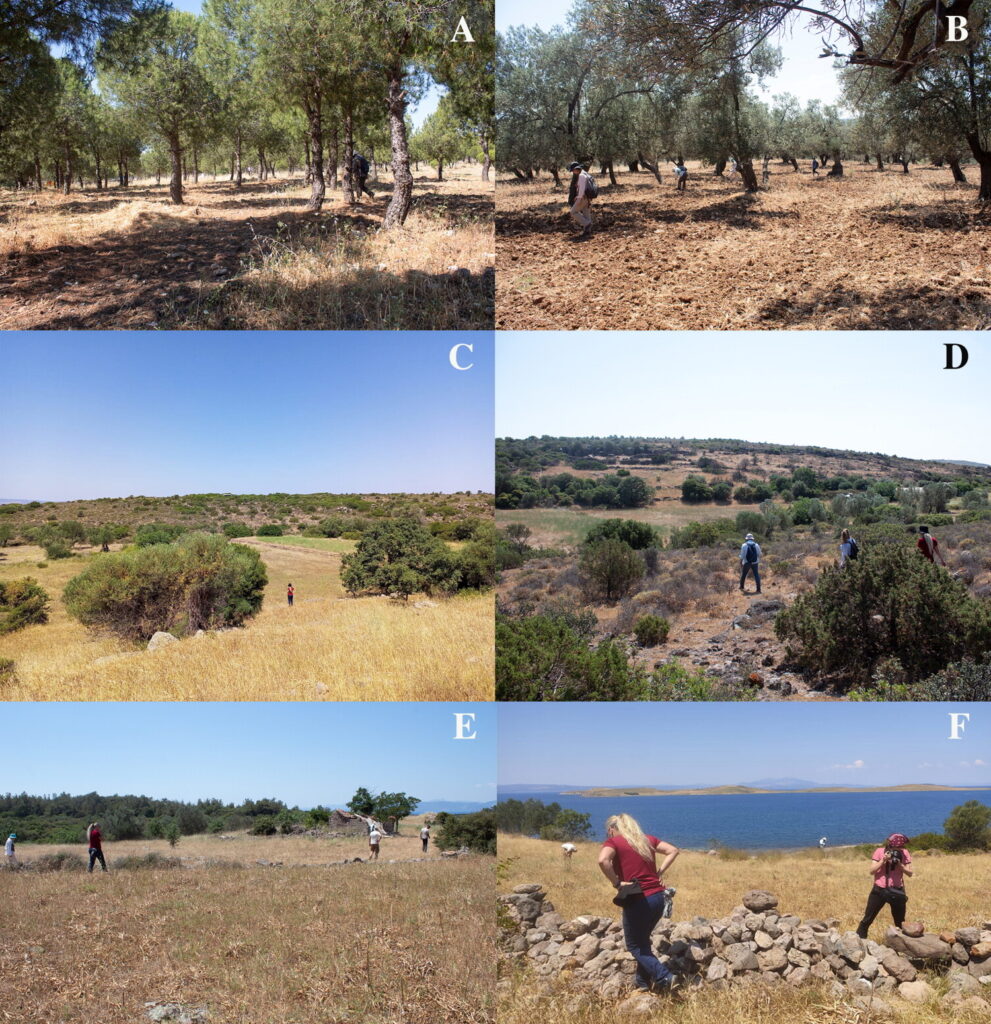
General view of selected Paleolithic findspots identified during the Ayvalık survey. Atatürk Koruluğu (A); Eski Altınova Yolu (B); Tuz Gölü II (C); Tuz Gölü I (D); Sahilkent (E); Hakkı Bey Yarımadası (F). The images reflect the diverse environmental settings of the survey area, including pine forests, olive groves, and coastal scrublands. Credit: Journal of Island and Coastal Archaeology

Iconic Tools, Global Connections

Among the most remarkable finds were Levallois-style flakes, a hallmark of Middle Paleolithic technology associated with both Neanderthals and early Homo sapiens. These stone tools link Ayvalık not only to Europe but also to wider technological traditions spanning Africa and Asia.

“These artefacts are iconic,” said Dr. Karahan. “Their presence in Ayvalık shows the region’s integration into global patterns of human innovation and mobility.”

The Ice Age Land Bridge

During the Ice Age, sea levels dropped more than 100 meters, exposing vast coastal plains that now lie underwater. This transformed Ayvalık’s archipelago into a broad land corridor, facilitating the movement of human groups and animals between continents.

The discovery underscores how shifting coastlines and climate-driven changes shaped human survival and migration. The artifacts found along today’s coastline provide evidence of people adapting to dynamic landscapes, using locally available flint and chalcedony to craft their tools.
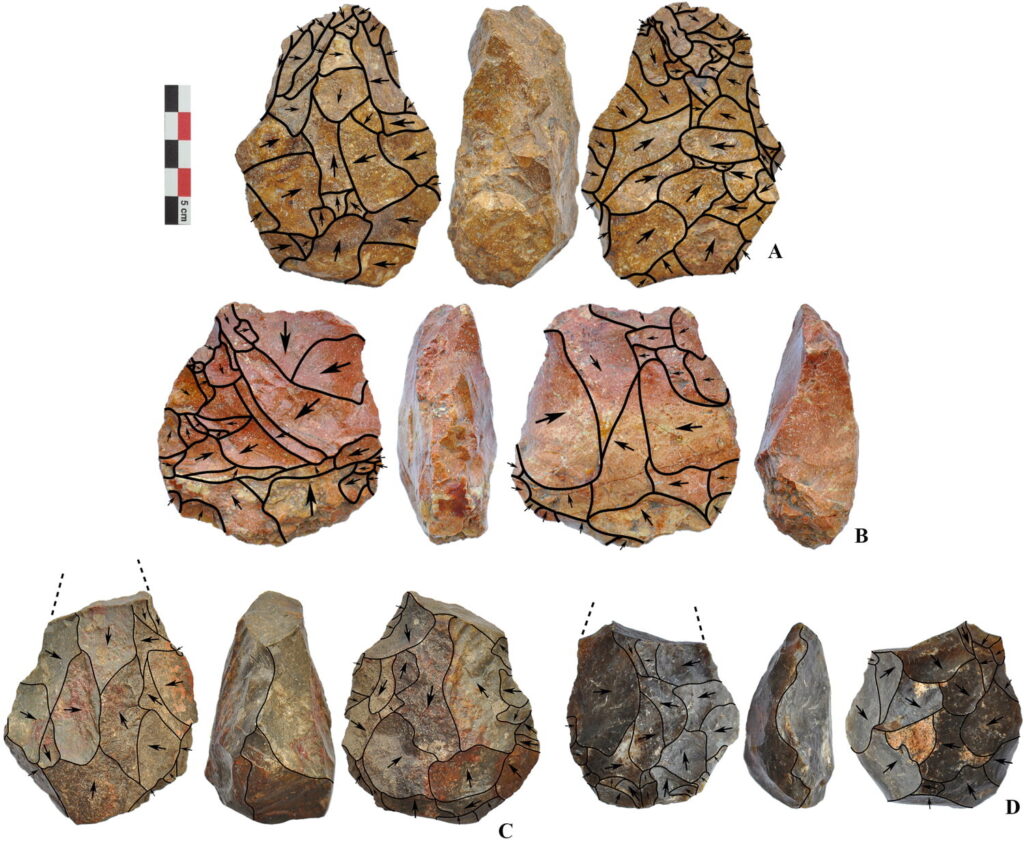

Large cutting tools. A handaxe from Şirinkent I (A); A cleaver from Şirinkent I (B); Handaxes with broken distal ends from Sahilkent (C and D).Credit: Journal of Island and Coastal Archaeology

A Fully Female-Led Research Team

Another remarkable aspect of this project is its leadership. The excavation was carried out by a team of expert female archaeologists from Türkiye. Their work not only highlights Ayvalık’s Paleolithic significance but also underscores the growing role of women in shaping archaeological research and rewriting human history.

Dr. Hande Bulut from Düzce University, another co-author, stressed the broader implications: “Our findings position Ayvalık as a long-term hominin habitat, a crucial area for understanding Paleolithic technology in the eastern Aegean. It opens new debates on Aegean connectivity and technological evolution.”

Why It Matters for Prehistory

The discovery of diverse Paleolithic tools, including Levallois flakes and large cutting implements, paints a vivid picture of adaptation and innovation. The toolkit reflects not only survival strategies but also cultural connections across vast regions.

By placing Ayvalık on the prehistoric map, the study challenges scholars to reconsider the complex networks of migration that shaped Europe’s earliest populations. Instead of a single dominant route, the findings support a mosaic of pathways through which humans expanded their range.
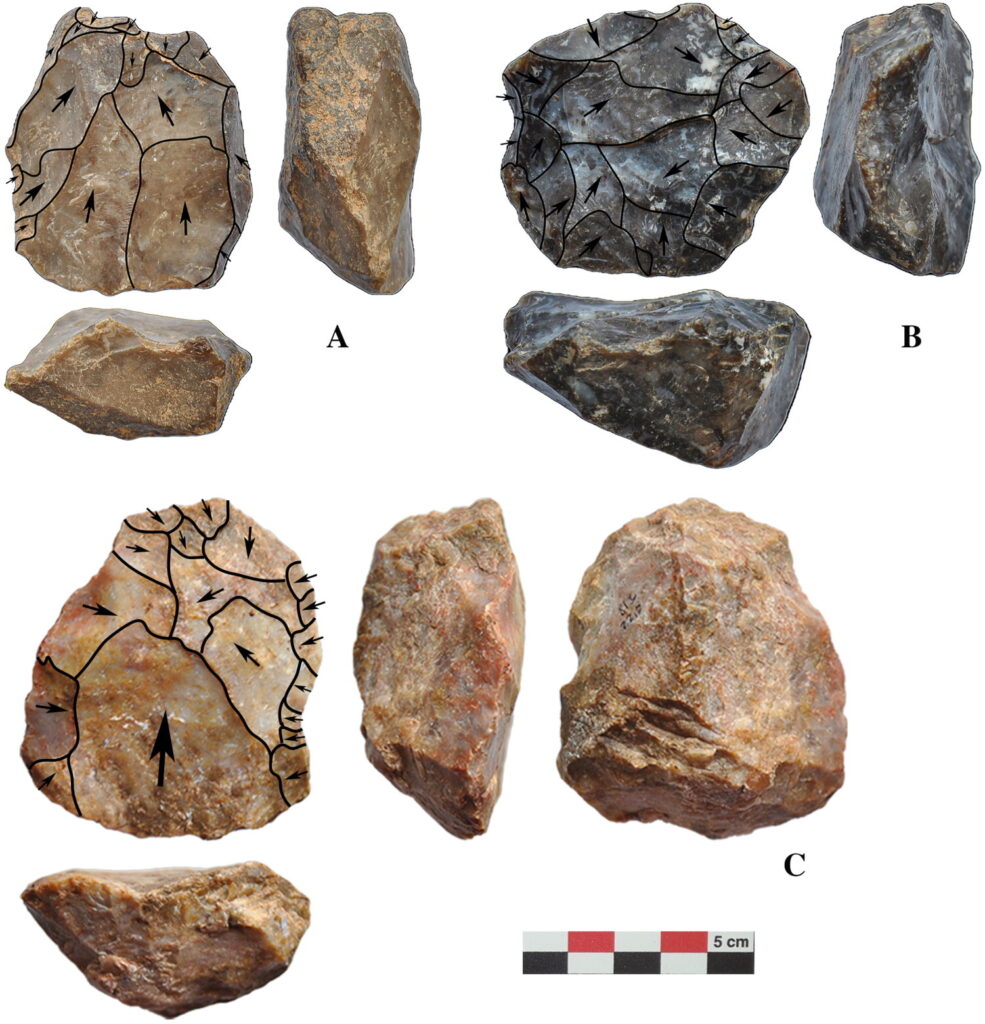
 Cores. Levallois cores from Sahilkent (A and B); Levallois core from Şirinkent II (C). Credit: Journal of Island and Coastal Archaeology
Cores. Levallois cores from Sahilkent (A and B); Levallois core from Şirinkent II (C). Credit: Journal of Island and Coastal Archaeology

Future Research Potential

While this survey was limited to a two-week investigation in June 2022, the results exceeded expectations. The authors emphasize the need for further multidisciplinary research, including stratigraphic excavation, absolute dating, and paleoenvironmental studies, to clarify the full extent of Ayvalık’s role in human evolution.

Despite challenges posed by the region’s active geology and muddy landscapes, the team identified high-quality raw material sources for tool-making. This discovery points to Ayvalık not only as a migration corridor but also as a potential hub of technological development.

Adding a New Chapter to Human History

The implications of this research extend beyond archaeology. It redefines how we think about resilience, innovation, and mobility in the face of changing environments. It also highlights Türkiye’s pivotal role as a crossroads in human prehistory—a bridge between continents, cultures, and eras.

As Dr. Karahan concluded: “It feels like we are adding an entirely new page to the story of human dispersal. These findings will inspire future exploration and may shift the direction of Pleistocene archaeology for decades to come.”

Bulut, H., Karahan, G., & Özçelik, K. (2025). Discovering the Paleolithic Ayvalık: A Strategic Crossroads in Early Human Dispersals Between Anatolia and Europe. Journal of Island and Coastal Archaeology, 1–23. https://doi.org/10.1080/15564894.2025.2542777

Related Articles

Obsidian Research in Alberta Uncovers Evidence of Extensive Long-Distance Trade Among Indigenous Peoples Before European Contact

31 March 2025

31 March 2025

Recent research into obsidian artifacts in Alberta, a province located in western Canada, has unveiled significant evidence of long-distance trade...

Samen Underground City Getting Prepared for Public Visits

6 June 2021

6 June 2021

Samen Underground City is a unique structure in Iran and the extent of such a structure has not been observed...

Sidamara, the largest sarcophagus of the Ancient World, got Eros relief 140 years later

1 July 2022

1 July 2022

The Sidamara Sarcophagus, which is considered to be one of the largest sarcophagi of the ancient world and weighs many...

2000-Year-Old Roman Origins Confirmed for Elche’s Monumental L’Assut de l’Argamassa Dam

17 May 2025

17 May 2025

An archaeological research project has unveiled that the imposing L’Assut de l’Argamassa dam in Elche, Spain, long suspected to be...

A Rare Glass Jewel Depicting the Crucifixion Found in an Abandoned Anglo-Saxon Village

18 January 2026

18 January 2026

Archaeological investigations ahead of the Sizewell C nuclear power station project in Suffolk have revealed a remarkable discovery: a rare...

Purdue Professor Documents 53 Biblical Figures Confirmed by Archaeology

5 September 2025

5 September 2025

For centuries, debates have raged over whether the Bible is history, myth, or something in between. Now, significant research by...

Archaeologists have unearthed a stone chest containing the ritual deposit of 15 anthropomorphic figurines

1 September 2023

1 September 2023

Archaeologists have unearthed a stone chest containing the ritual deposit of 15 anthropomorphic figurines that were placed as votive offerings...

A Circular Building with Six Towers of the Achaemenid Period discovered in Khorasan

3 April 2024

3 April 2024

Archaeologists have uncovered an almost circular adobe building with six towers, built in the 6th century BC, near Birjand in...

Ancient Funerary Stones Looted from Yemen Will Be Exhibited at the Victoria & Albert Museum

14 September 2023

14 September 2023

The Victoria & Albert Museum (V&A) has signed a historic agreement with the Yemeni government to temporarily keep and display...

Ancient Footprints Offer Evidence Humans Wore Shoes 148,000 Years Ago

12 September 2023

12 September 2023

A new analysis of ancient footprints in South Africa suggests that the humans who made these tracks might have been...

1900 years old a Customs Inscription from the Lycian civilization reveals Anatolia’s strategic importance in maritime trade

16 September 2023

16 September 2023

A Customs Inscription from the Lycian civilization, located in Andriake port in the southern province of Antalya’s Demre district, tells...

Newly Found 2,600-Year-Old Seal Could Be From a Royal Official in King Josiah’s Time

6 August 2025

6 August 2025

Newly discovered clay seal may connect to a high-ranking official from King Josiah’s court, offering a rare, tangible link to...

Tragurium Twins: A Rare Roman Archaeological Discovery in Croatia

12 March 2025

12 March 2025

Recent archaeological excavations in Croatia have unearthed a remarkable and heart-wrenching discovery: the remains of twin babies interred together in...

2,600-Year-Old Lost Temple Built of Green Tuff Stone Unearthed at Oluz Höyük, Northern Türkiye

22 September 2025

22 September 2025

Archaeologists have uncovered a 2,600-year-old temple in northern Türkiye, a monumental sanctuary built from striking greenish volcanic tuff. Discovered at...

Scotland’s Earliest Known Coin Minted in Edinburgh Discovered by Metal Detectorist

29 December 2025

29 December 2025

A groundbreaking archaeological discovery has revealed the earliest known coin minted in Scotland, shedding new light on the country’s medieval...