
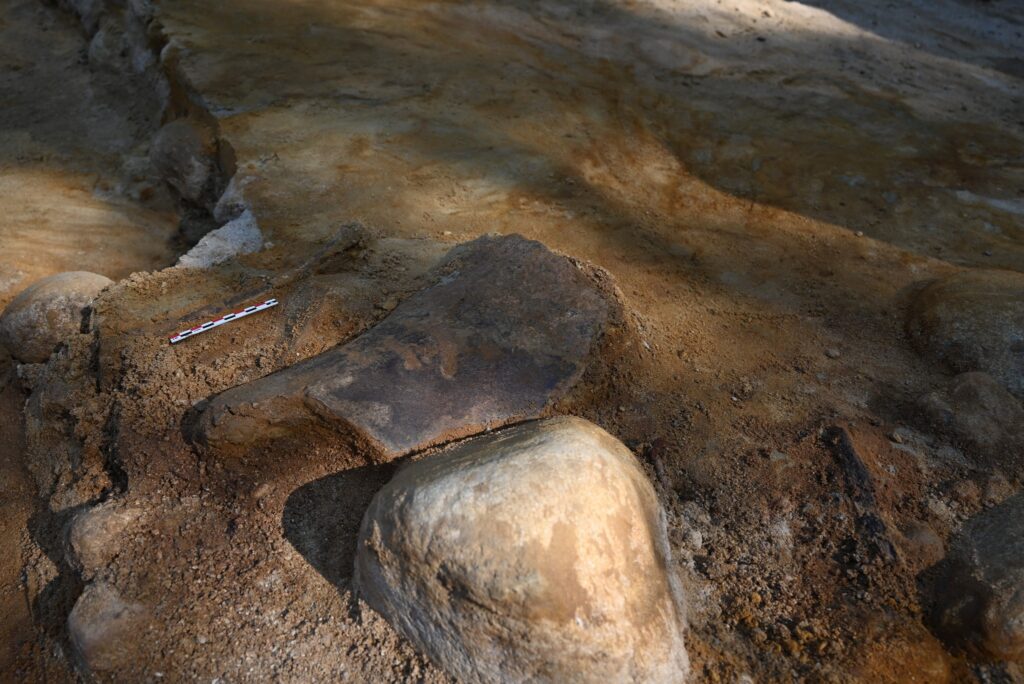
Archaeologists in Poland have uncovered a remarkable 70,000-year-old Neanderthal workshop in the Zwoleńka River Valley, offering unprecedented insight into the daily lives of these ancient humans. The discovery reveals that Neanderthals not only hunted large animals such as mammoths, rhinos, and horses, but also skillfully maintained and repaired the tools they used for butchering.
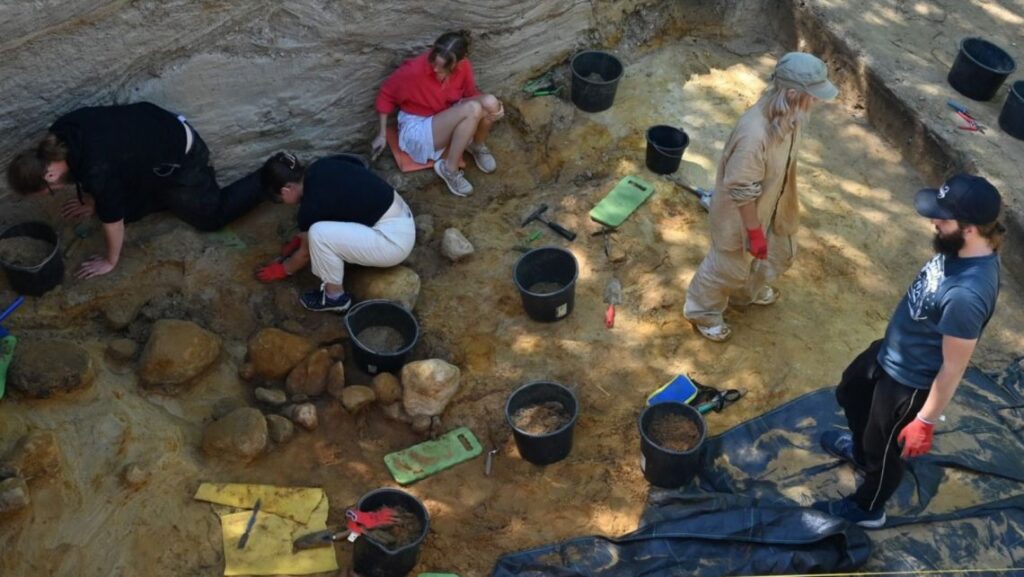
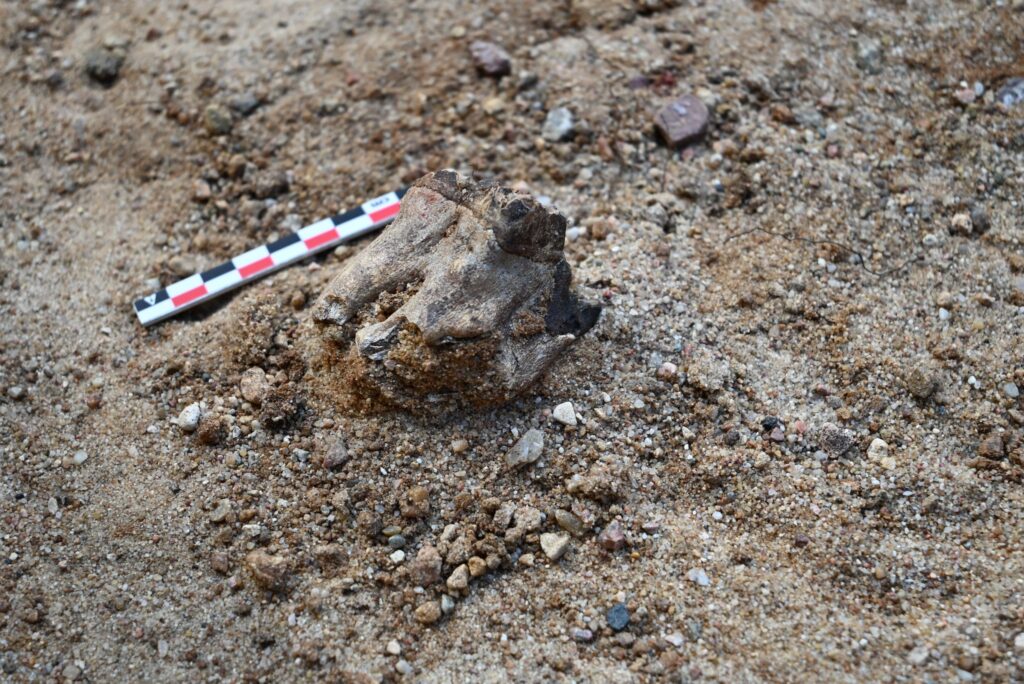
The excavation, led by teams from the State Archaeological Museum in Warsaw, the Faculty of Archaeology at the University of Warsaw, and the Institute of Archaeology at the University of Wrocław, is revisiting a site first explored in the 1980s. Over several excavation seasons, researchers have unearthed hundreds of flint tools, including knives and scrapers, alongside mammal bones and teeth.
“This is the only Middle Paleolithic site in Poland currently under active research,” said Dr. Witold Grużdź, project leader from the State Archaeological Museum. “Our findings suggest Neanderthals were active in this region between 64,000 and 75,000 years ago.”
A Rare Window into Neanderthal Life
Neanderthal discoveries in Poland are scarce, particularly outside southern regions such as the Kraków-Częstochowa Upland and Lower Silesia. Most of central and northern Poland was covered by ice sheets during the time Neanderthals roamed Europe, making this Mazovian site uniquely significant.
“Neanderthal finds are rare,” said Dr. Katarzyna Pyżewicz from the University of Warsaw. “Every discovery adds immense value to our understanding of their lives. These sites are often buried several meters below the surface, making them challenging to locate.”
The Zwoleńka site stands out as one of the few open-air Neanderthal locations in Poland where organic materials, such as bones, have survived. Typically, such remains are preserved only in caves, making this find particularly important for understanding Neanderthal behavior in non-cave environments.
Tools and Techniques of Ancient Hunters
Analysis of the artifacts suggests the workshop functioned as a repair and maintenance center for flint tools. Archaeologists found evidence that finished tools were brought to the site for sharpening and refurbishment, likely to aid in butchering large animals.
“Based on similar Middle Paleolithic sites, these tools were used to quarter animal carcasses, probably including mammoths, rhinos, and horses,” Dr. Pyżewicz explained. “Wear patterns on the tools confirm their use in cutting and processing large animals.”
Over three excavation seasons, researchers cataloged hundreds of flint artifacts. From archival data, about 330 items were initially recorded in the 1980s. Subsequent fieldwork added over 170 new items last season, with a similar number recovered in the most recent digs.
Challenging the “Primitive” Stereotype
Neanderthals, once considered primitive predecessors of modern humans, are now recognized as intelligent and sophisticated. Fossil evidence and genetic studies indicate that they engaged in complex social behaviors, created tools, possibly produced art, and even buried their dead. Recent discoveries confirm that they created cave art over 64,000 years ago and interbred with Homo sapiens, leaving traces of their DNA in many modern populations outside Africa.
“Neanderthals were robust, skilled hunters and toolmakers,” Dr. Grużdź said. “This site reinforces the idea that they were adaptive, intelligent, and capable of planning complex tasks, such as tool maintenance and large-animal butchery.”
Future Research and Insights
Researchers continue to study the Zwoleńka site to better understand the lives of Neanderthals in central Europe. One challenge lies in dating the materials accurately, as many artifacts were redeposited by river activity, meaning they may have been moved from their original locations.
“Our dates refer to when these materials were transported, not necessarily when the Neanderthals used them,” Dr. Grużdź explained. “This suggests that some artifacts could be even older than currently estimated. Future research will help us resolve this puzzle.”
The discovery in Mazovia offers a rare glimpse into a Neanderthal community far north of the more commonly studied southern sites in Poland. By combining archaeological excavation with careful analysis of tools and bones, scientists are reconstructing the daily life, diet, and technological abilities of a species once misunderstood—and now increasingly appreciated for its intelligence and adaptability.
Cover Image Credit: Faculty of Archaeology at the University of Warsaw,
