
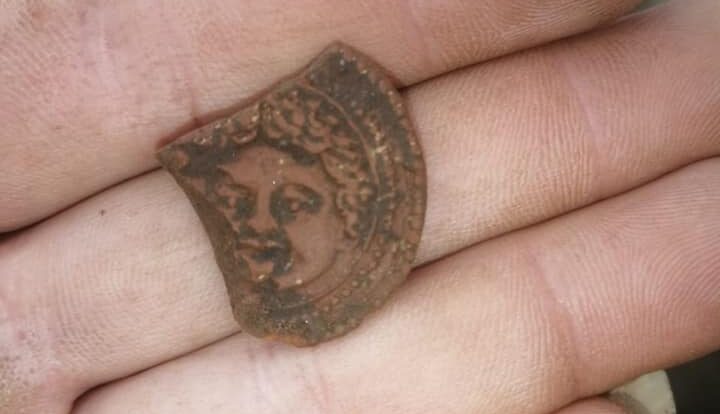
On Russia’s Archaeologist Day, the State Karachay-Cherkess Historical, Cultural, and Natural Museum-Reserve unveiled, for the very first time, a remarkable selection of artifacts recently unearthed in the republic. Visitors were granted rare access to the museum’s storerooms, revealing treasures that have never before been displayed to the public.”
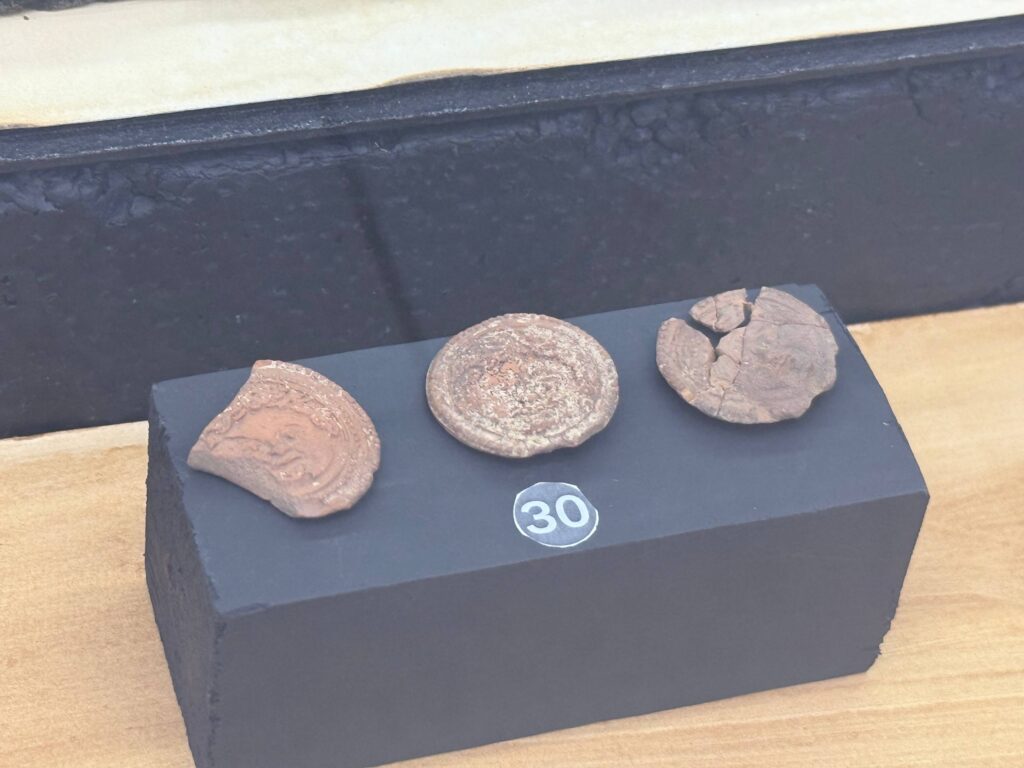
High in the Caucasus Mountains, where alpine meadows touch the sky, archaeologists have recently brought to light a discovery as chilling as it is mesmerizing — small ceramic amulets depicting the petrifying face of the Gorgon Medusa, now on public view for the very first time.
The find was announced by Magomet Izhayev, head of the archaeology department at the State Karachay-Cherkess Historical, Cultural, and Natural Museum-Reserve, who presented five unique discoveries from the region. But it was the gorgoneions — Medusa’s fearsome visage immortalized in clay — that stole the spotlight.
The Moon Glade and Its Mystique
The amulets were discovered at the Moon Glade in Arkhyz, a plateau famed for its ancient settlements and mountain passes that once formed part of the Silk Road’s northern arteries.
The Moon Glade — a lush alpine plateau encircled by peaks — has long drawn archaeologists for its traces of ancient settlements, burial mounds, and ritual sites. Its strategic position near historic mountain passes made it a meeting point for traders, warriors, and pilgrims. The discovery of gorgoneions here suggests a place of spiritual significance, perhaps where travelers sought protection before embarking on perilous journeys through the Caucasus passes.
“The site was likely a convergence point,” says Izhayev. “Merchants, warriors, and pilgrims passed through here, and these talismans may have been meant to guard them from harm.”
Some scholars propose that these talismans may have been imported via Silk Road merchants carrying luxury goods from Byzantium or Hellenistic-influenced Black Sea colonies. Others speculate that they were crafted locally by artisans who had absorbed Mediterranean iconography through trade and cultural exchange.
Medusa in Myth and History
In Greek mythology, Medusa was the most famous of the three Gorgon sisters — a mortal woman cursed with hair of living serpents. Her gaze could turn men to stone. In antiquity, her terrifying image was not only a tale of warning but a tool of protection. Shields, armor, temple pediments, and jewelry bore her likeness to ward off evil.
The Arkhyz gorgoneions share features with Mediterranean examples — wide, staring eyes, a grimace revealing fangs, and the iconic serpent curls. Such amulets were typically worn, mounted on doorways, or placed in tombs to repel danger in both this world and the next.
Other Treasures From the Mountain Valleys
While the Gorgon amulets are the headline find, they are part of a broader picture of Karachay-Cherkessia’s rich archaeological heritage:
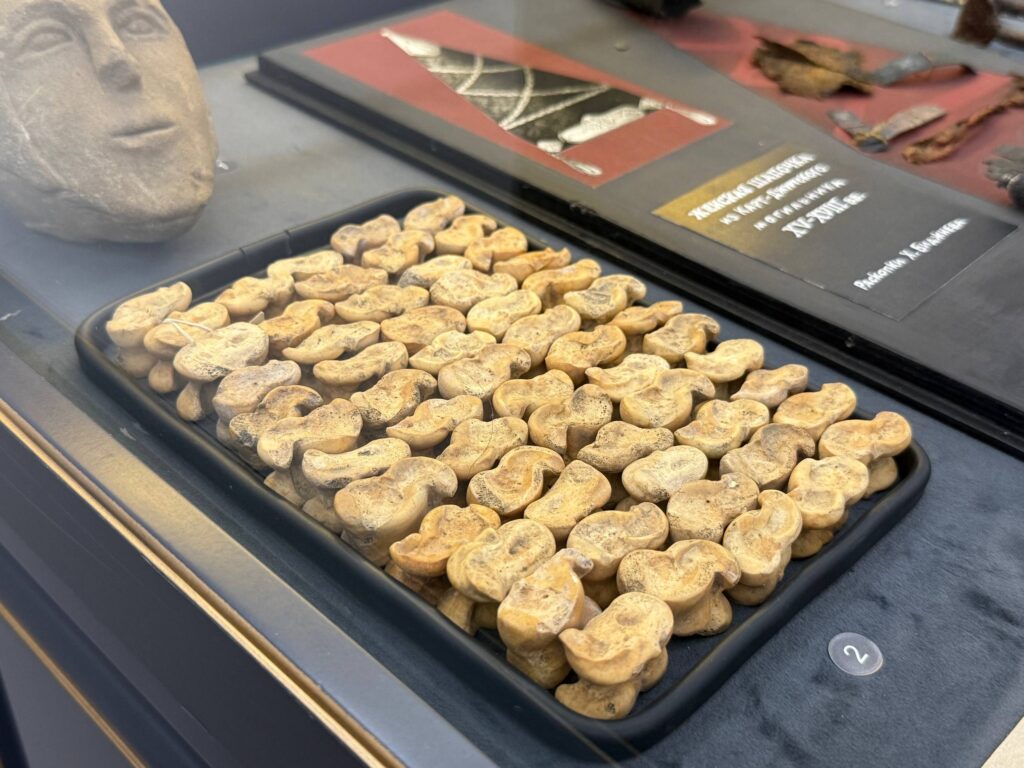
Medieval Gaming Bones – Along the river Bolshoy Zelenchuk, archaeologists discovered a complete set of 59 carved sheep bones — gaming pieces known as alchiki — dating back 600–700 years to the Golden Horde period. These pieces were used in dexterity-based games requiring precision throwing, sharp eyesight, and quick reflexes. Each set was unique in weight, shape, and balance, making them personal treasures for players. The find suggests a vibrant social life in medieval Caucasus villages, where games doubled as training for hunting and combat skills.
Alan Composite Bow – In the 1960s, an excavation at Moschevaya Balka, high in the Laba River valley, revealed an Alan warrior’s grave dating to the 8th–10th centuries. Among the grave goods were the bone-tipped ends of a composite bow, a well-preserved leather quiver, arrows, a flint pouch, and an axe. The Alan bow was a sophisticated weapon, constructed from multiple layers of wood reinforced with sinew, horn, and bone. Manufacturing such a bow was a painstaking process, and owning one was a mark of high status. This discovery underlines the Alans’ prowess as horse-archers — feared across Eurasia.
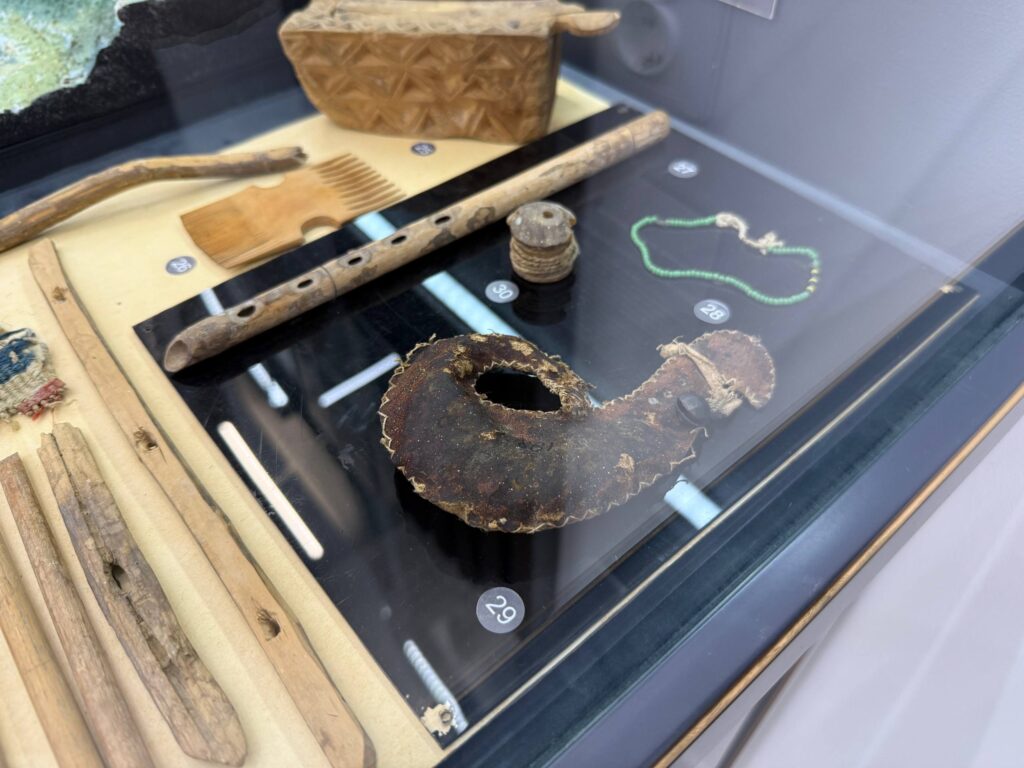
Child’s Leather Rooster – Also from Moschevaya Balka comes a tiny leather toy shaped like a rooster, dating from the same Alan period. The site, once a bustling node of the Silk Road’s northern branch, yielded other intimate glimpses of daily life — a wooden comb, a reed flute, a bundle of beads, and a spindle. These finds suggest that even in a region known for warriors and traders, family life and children’s play thrived.
Silk Road Fabrics – The museum holds rare silk fragments over a millennium old, found at Moschevaya Balka. These include Chinese, Iranian, Sogdian, and Byzantine weaves, brought via caravans traveling the northern Silk Road. Historical records indicate that local rulers provided armed escorts, charged customs duties, and offered rest stations to traders. The fabrics’ exquisite patterns tell of cultural exchange, luxury goods markets, and the political networks that sustained them.
A Crossroads of Cultures and Myths
The Arkhyz Moon Glade finds, especially the gorgoneions, underscore Karachay-Cherkessia’s place as a meeting point between worlds — where mountain tribes, Silk Road caravans, and far-flung myths all converged.
From the haunting gaze of Medusa to the delicate threads of Silk Road fabrics, the archaeological treasures of Karachay-Cherkessia reflect a land where cultures met, mingled, and transformed each other. The Gorgon talismans are perhaps the most compelling — a reminder that myths travel far, adapting to new landscapes and new peoples, yet retaining their power to protect and to fascinate.
The Gorgon’s image, born in the myths of the Aegean, traveled across seas and steppes to rest in the Caucasus soil. Over a thousand years later, her clay likeness emerges again, still staring, still guarding — a reminder that some symbols never lose their power.
Cover Image Credit: In 2020, a terracotta medallion depicting Gorgon Medusa was discovered at Moon Glade in Arkhyz. Russian Archaeological News – PRC
