
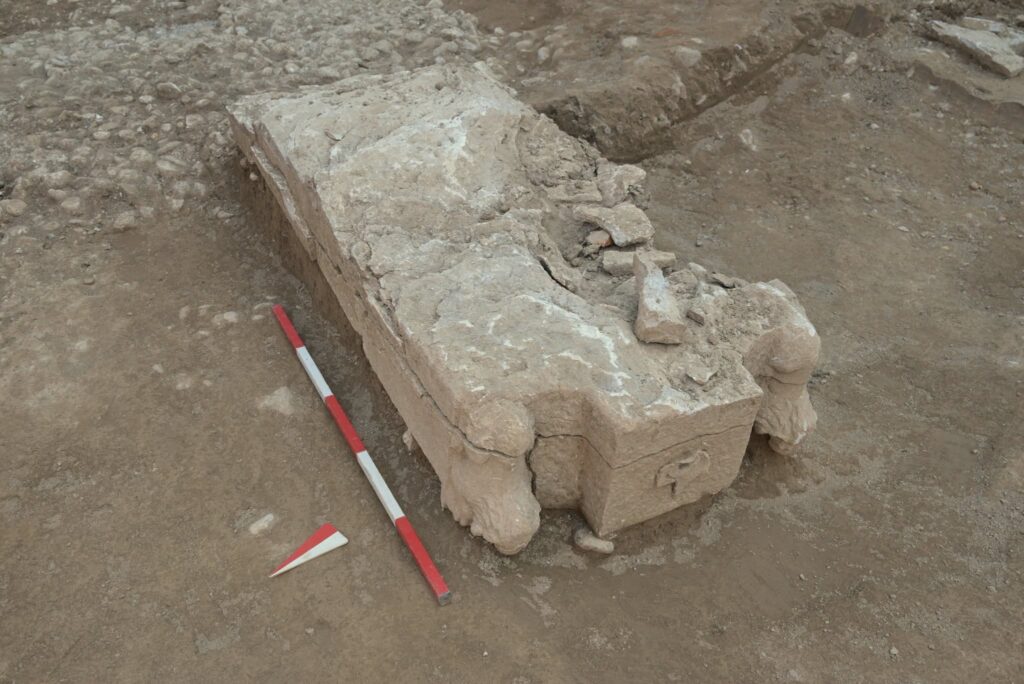
Archaeologists working beneath central Ljubljana have uncovered an almost complete Roman funerary monument that specialists say has no known parallel in Slovenia.
The monument was discovered during excavations at the Ljubljana Passenger Centre, or Potniški Center Ljubljana, where construction work has exposed an exceptionally well-preserved section of the northern cemetery of Emona.
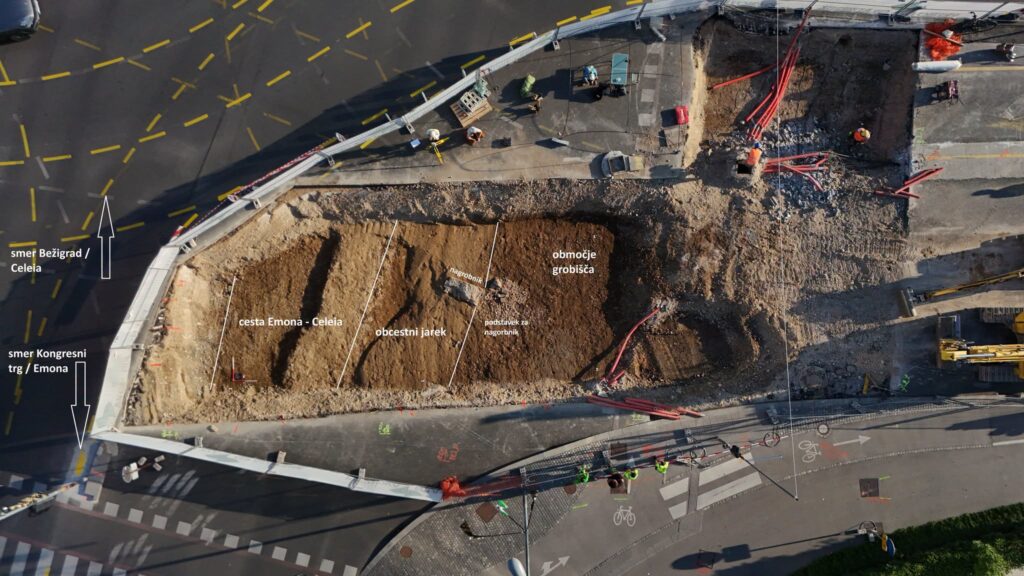
According to an official field update published by the Ljubljana archaeology project (Ne)odkrita arheologija Ljubljane, the stone monument was found beside the ancient road that once led from Emona toward Celeia, the Roman predecessor of present-day Celje.
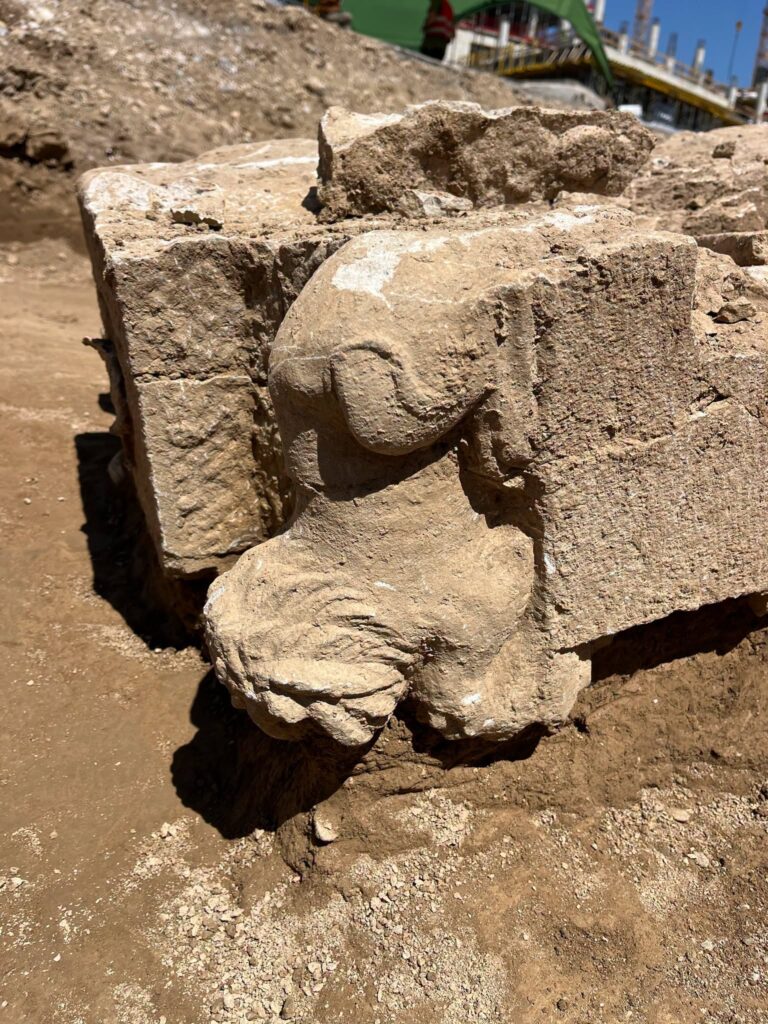
Although most of the monument survives, it is broken into numerous fragments. Conservators are now securing the individual pieces before the structure is lifted from the excavation area. Moving it without this preliminary stabilization could cause further damage.
Researchers expect the recovery operation to provide the first opportunity to examine the monument in detail. For now, much of its surface remains difficult to study because of its position in the ground.
A Monument Without a Known Slovenian Parallel
The monument appears to have fallen from its original roadside position into a ditch running beside the route to Celeia.
Roman cemeteries were commonly established outside city walls, particularly along the roads leading toward urban gates. Tombs, inscriptions and commemorative monuments placed beside these routes allowed families to preserve the names and social standing of the dead in highly visible locations.
The City Museum of Ljubljana notes that roads leaving Emona were bordered by burial grounds. The northern cemetery was located beyond the city’s northern boundary, close to areas now occupied by central Ljubljana.
Researchers and Slovenian specialists in Roman-period monuments have described the newly uncovered structure as a type of funerary monument not previously documented in the country. However, its date, design and possible inscription cannot be determined securely until it has been lifted, conserved and examined.
The field announcement does not yet identify the person commemorated by the monument or provide a precise date for its construction.
Roman Emona Beneath Modern Ljubljana
Emona, formally known as Colonia Iulia Aemona, stood beneath the centre of modern Ljubljana. An inscription recording a gift from the emperors Augustus and Tiberius confirms that the Roman colony was already established by AD 14.
The walled settlement covered an area of roughly 400 by 500 metres and may have had between 3,000 and 5,000 inhabitants. Its streets followed a regular Roman grid, while its forum, houses, drainage systems and defensive walls reflected the urban planning found across the Roman world.
Emona occupied an important geographical position near routes connecting northern Italy, the eastern Alps and the lands farther east. Archaeological remains preserved beneath Ljubljana include Roman houses, mosaics, sewers, an early Christian complex and sections of the city wall.
The current excavations are being conducted under considerable time pressure. Archaeologists have only a limited period to investigate this section of the cemetery before the intersection is returned to construction crews.
Despite summer heat and the approaching deadline, the excavation team said work was proceeding according to schedule. The monument’s removal and subsequent conservation are expected to reveal whether it carries an inscription, carved decoration or structural details that could explain why specialists consider it unique.
Further information is expected after the monument has been safely recovered and examined away from the site.
