
14 February 2026 The Future is the Product of the Past

New Archaeological Discovery Extends Human Settlement of Kodiak Island by 7,800 Years

Archaeologists at the Alagnaruartuliq site (KAR-00064) on Kodiak Island’s Karluk Lake have uncovered evidence of one of the oldest known human settlements in the region. Radiocarbon dating of wood charcoal from an ancient hearth indicates that Alutiiq/Sugpiaq ancestors lived and crafted tools here approximately 7,800 years ago. This pushes Kodiak Island’s human history back at least 300 years.

Ancient Hearth Reveals Early Alutiiq Presence

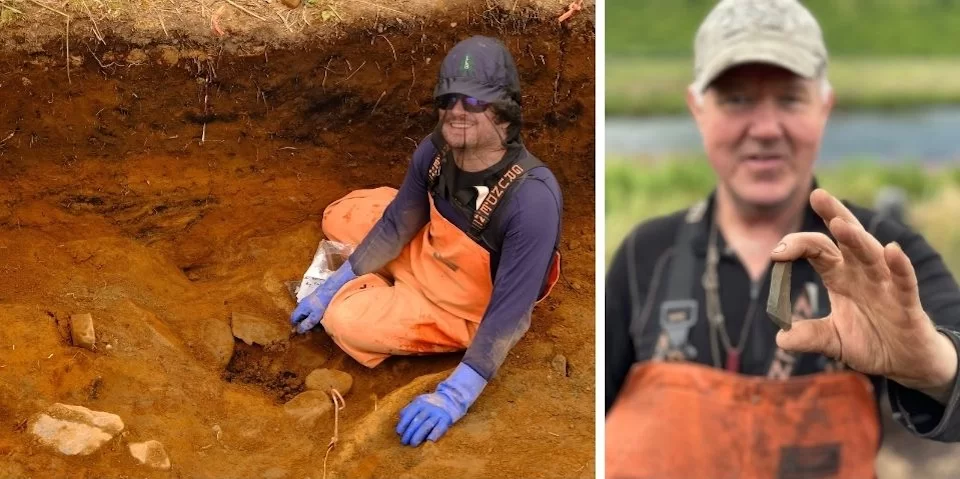
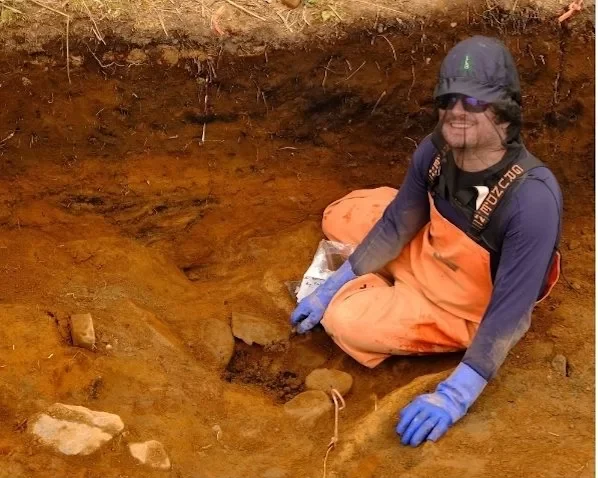
During excavations beneath more recent house depressions, researchers discovered a small cobble hearth accompanied by stone tools typical of Kodiak’s earliest settlements. “This discovery gives us a glimpse into the lives of Kodiak’s first inhabitants,” said Molly Odell, Director of Archaeology at the Alutiiq Museum.

To verify the age of the site, archaeologists conducted radiocarbon dating on two separate samples of charcoal, both producing consistent results. “We are confident the hearth was used around 7,800 years ago,” Odell added, “making it the oldest confirmed settlement on Kodiak Island.”

Why This Discovery Matters

Alutiiq Museum Curator of Archaeology Patrick Saltonstall emphasized that early settlers along Alaska’s Gulf Coast may have reached Kodiak much earlier than previously documented. “People were living in coastal Alaska at least 10,000 years ago,” he said.

“It makes sense that Kodiak, with its rich maritime resources, would have been settled early, even if evidence has been difficult to locate due to coastal erosion and changing sea levels.”


📣 Our WhatsApp channel is now LIVE! Stay up-to-date with the latest news and updates, just click here to follow us on WhatsApp and never miss a thing!!


Trevor Lamb excavates a small cobble hearth at the Alagnaruartuliq site. Charcoal from this feature dated to about 7800 years ago. Credit: Alutiiq Museum

Kodiak Island’s Interior: A Critical Habitat

The Alagnaruartuliq site, meaning “lots of kinds of berries” in the Alutiiq language, highlights the importance of Kodiak Island’s interior, not just its coastal areas. Archaeological surveys suggest early inhabitants used river valleys, salmon streams, meadows, and alpine areas intensively for fishing, hunting, and gathering.

“Researchers have long focused on Kodiak’s coast, but the interior was equally critical for early human survival,” said Amy Steffian, Chief Curator at the Alutiiq Museum. “This site confirms that Alutiiq ancestors exploited inland resources from the very beginning of settlement.”

Hunting and Gathering 7,800 Years Ago

Although salmon populations in the region stabilized and grew after 6,300 years ago, early Karluk Lake visitors likely hunted waterfowl, foxes, river otters, and bears. They also gathered plant foods from Kodiak’s abundant interior ecosystems.

These findings illustrate a diversified subsistence strategy used by Alutiiq ancestors long before the arrival of more recent communities.
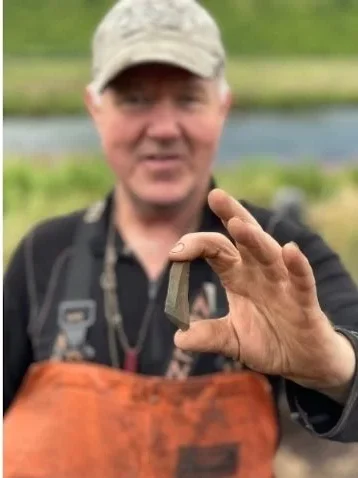

Patrick Saltonstall holds a stone blade from the oldest level of Alagnaruartuliq site. Credit: Alutiiq Museum

Continuing Research at Karluk Lake

This summer, the Alutiiq Museum launched a new season of archaeological research at Karluk Lake, focusing on a 1,500-year-old settlement. While researchers do not expect to find another early settlement, Saltonstall remains optimistic: “Archaeology is full of surprises. Each new site can teach us more about the earliest people on Kodiak Island.”

Alutiiq Museum Executive Director April Laktonen Counceller emphasized the importance of preserving and studying these sites. “Every artifact we document adds to our understanding of Alutiiq history and culture,” she said. The museum’s research is supported by Koniag and the National Park Service’s Alaska Native Tribal Affairs and Heritage Assistance Programs.

About the Alutiiq Museum

The Alutiiq Museum is a non-profit organization dedicated to preserving and sharing the history and culture of the Alutiiq, an Alaska Native tribal people. Governed by representatives of Kodiak Alutiiq organizations, the museum relies on donations, memberships, grants, contracts, and sales to fund its programs and research initiatives.

Alutiiq Museum

Cover Image Credit: Alutiiq Museum

Related Articles

4000-year-old boat salvaged near the ancient city of Uruk one of the most important cities in ancient Mesopotamia

6 April 2022

6 April 2022

A team of archaeologists from the Iraqi German Mission of the State Board of Antiquities and the Orient Department of...

Ancient Agora Discovered in Hyllarima: Shops to Be Excavated in the Heart of the City

29 June 2025

29 June 2025

A major archaeological discovery has been made in the ancient city of Hyllarima in southwestern Türkiye—the city’s central agora has...

New research reveals that Baltic amber was transported to the most westerly region of the continent more than 5,000 years ago

21 October 2023

21 October 2023

A team of scientists has identified the oldest pieces of Baltic amber ever found on the Iberian Peninsula, revealing that...

Rare waka unearthed from New Zealand River, after being hidden for 153 years

16 June 2023

16 June 2023

A waka -the traditional canoe of the Maori people- believed to be over 150 years old has been salvaged from...

The Sedgeford Anglo-Saxon malting complex may be the largest ever discovered in the UK

23 July 2023

23 July 2023

As archaeological excavations resume on a hill in Sedgeford, near Hunstanton, a seaside town in Norfolk, England, now more evidence...

Archaeologists have found seven pairs of Anglo-Saxon brooches in seven graves during an excavation in Gloucestershire

5 April 2022

5 April 2022

Archaeologists have found seven pairs of Anglo-Saxon saucer brooches, one pair in each of seven burials unearthed in an excavation...

The free online course from the Colchester Museums and University of Reading Department of Archeology

12 July 2021

12 July 2021

The opportunity to be among the first to examine 2,000-year-old cremated remains from Roman Britain and learn about the origins...

Scientists may have discovered pieces of the Asteroid that caused the extinction of the Dinosaurs

14 May 2022

14 May 2022

Scientists are piecing together remnants of the day the extinction of the dinosaurs began. A tiny fragment of the asteroid...

Mystery of Knaresborough Roman hoard revealed by Newcastle experts

13 January 2024

13 January 2024

Archaeologists at Newcastle University have investigated one of the most unusual late-Roman metalware ever discovered in the British Isles. Although...

1-meter tall bronze statue found in China’s Sanxingdui Ruins-Video

17 June 2022

17 June 2022

Chinese archaeologists have discovered a 1-meter tall bronze statue at the site of ancient Sanxingdui ruins site in southwest China’s...

Mystery of the 1,700-year-old Mosaic Solved: The Medallion in the Mosaic uncovered to be the Symbol of a Roman Military Unit

10 August 2024

10 August 2024

The mystery of the 1,700-year-old mosaic, which was found during excavations in Amasya province in northern Turkey 11 years ago...

Rare Ancient Mosaics Seized in Türkiye: Crowned Sea Goddess and Mythical Creatures Uncovered in Smuggling Plot

2 September 2025

2 September 2025

In a decisive cultural heritage protection operation, gendarmerie officers in the Nurdağı district of Gaziantep province in southeastern Türkiye seized...

Most important Discovery in New Zealand Archaeology: Ocean Waka

5 March 2025

5 March 2025

What began as a routine search for wood by Vincent and Nikau Dix on Rēkohu (Chatham Islands) has led to...

7,600-year-old child skeleton and a silver ring found in Türkiye’s Domuztepe Mound

12 September 2024

12 September 2024

A child skeleton and a silver ring presumed to be used for babies dating back to 7,600 years ago were...

One of the World’s Oldest Streets Unearthed at Canhasan 3 in Türkiye, Dating Back 9,750 Years

26 August 2025

26 August 2025

Nearly 10,000 years ago, long before the rise of cities, a community in central Anatolia was already experimenting with new...