
Archaeologists have discovered evidence of a Roman military camp in Spain’s Cerdanya region that may be linked to the violent suppression of the Ceretani revolt in 39 BCE.
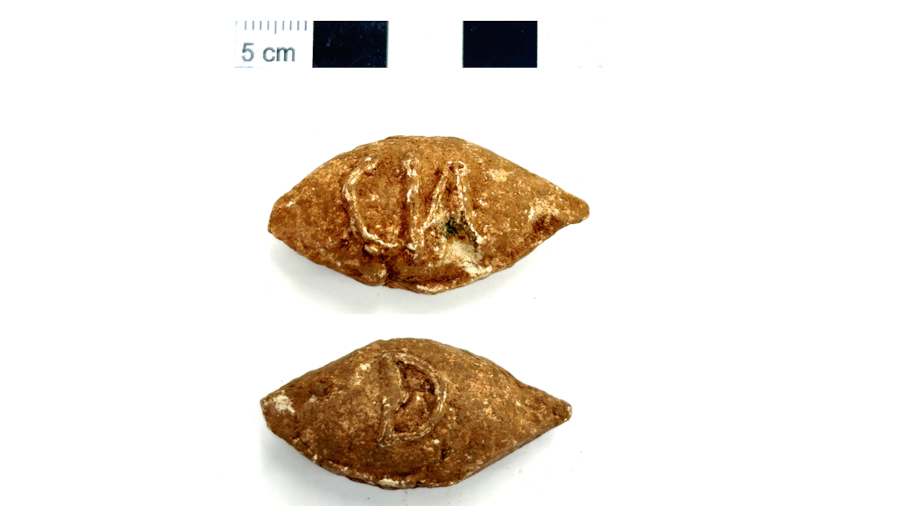
Among the finds are two lead sling bullets inscribed with the abbreviated name of Gnaeus Domitius Calvinus, the Roman governor and commander who defeated the uprising. Researchers from the Autonomous University of Barcelona say the discovery may identify the location of one of the final military episodes in Rome’s long conquest of what is now Catalonia.
Roman Military Evidence at Collet de Jovell
The site was identified at Collet de Jovell, near the municipality of Urús, during a systematic archaeological survey conducted in April 2024.
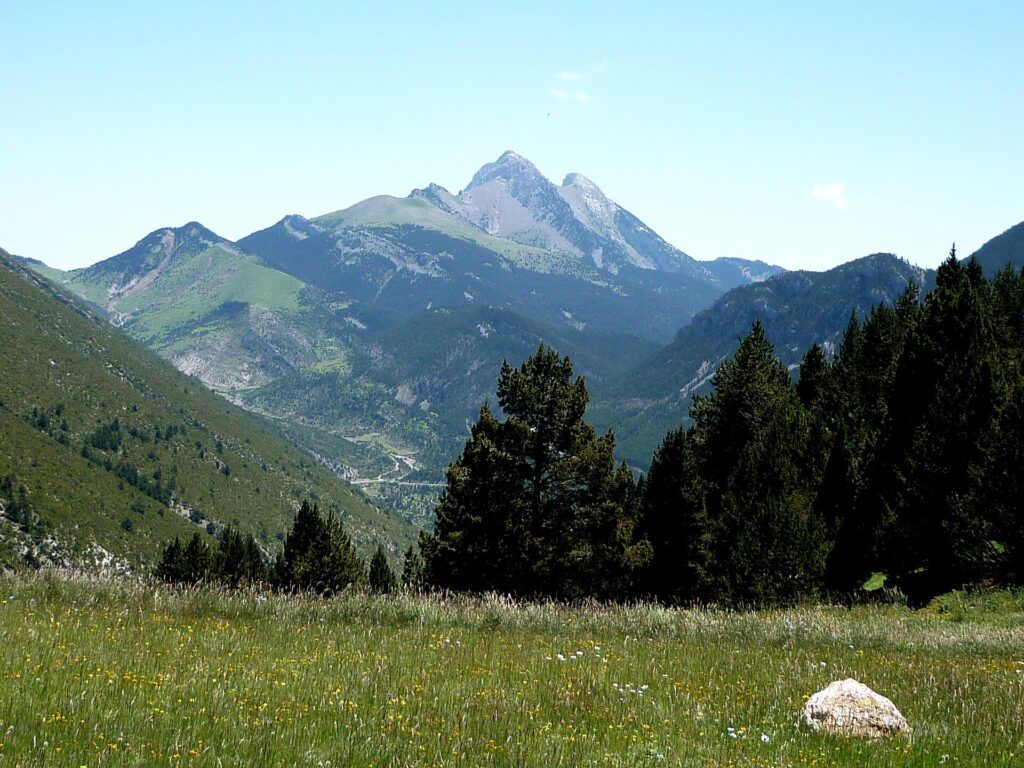
The wooded location overlooks one of the routes leading into the Cerdanya plain, a broad mountain basin in the eastern Pyrenees. Its position would have allowed Roman forces to monitor movement through the surrounding valleys and control access to the ancestral territory of the Ceretani.
Researchers recovered iron studs from Roman military sandals, known as clavi caligae, along with sling bullets, coins, fibulae and other objects associated with soldiers. Each find was recorded by GPS and incorporated into a geographic information system to reconstruct the distribution of military activity across the site.
The artifacts generally date to the second half of the first century BCE. Two sling bullets, however, provide a much narrower chronological link.
Both bear the inscription “CN D,” interpreted by the researchers as Gnaeus Domitius. The name refers to Gnaeus Domitius Calvinus, a Roman general and political ally of Octavian who governed Hispania Citerior at the time of the Ceretani revolt.
The UAB team’s leading hypothesis is that Collet de Jovell was a temporary Roman camp established during the campaign of 39 BCE.
Who Were the Ceretani?
The Ceretani were an indigenous Iron Age community whose territory centred on Cerdanya. The mountain valleys supported agriculture, livestock herding, mining and regional trade, while also commanding important routes across the Pyrenees.
Archaeological work at settlements such as Tossal de Baltarga and El Castellot de Bolvir has revealed communities closely adapted to the highland environment. These settlements were not isolated: their inhabitants maintained economic and cultural connections with populations beyond the mountains.
Cerdanya’s roads, grazing lands and mineral resources also made the region strategically important to expanding powers. Earlier research has shown that Roman military installations in northeastern Iberia were frequently positioned to oversee major routes, local settlements and economically valuable resources.
Why Did the Ceretani Revolt?
The exact cause of the 39 BCE uprising remains unknown. Cassius Dio, the principal ancient source, described the fighting but did not explain what triggered the rebellion.
The revolt probably emerged from the broader pressure created by Roman expansion. Military occupation, demands for taxes and supplies, interference in local political structures, and attempts to control mountain routes may all have contributed to Ceretani resistance.
Rome had first entered northeastern Iberia through Emporion in 218 BCE during the Second Punic War. Nearly two centuries later, some Pyrenean communities were apparently still resisting direct Roman authority.
According to Cassius Dio, Ceretani fighters ambushed a Roman force commanded by one of Calvinus’s officers. The soldiers abandoned their commander and fled. Calvinus responded by punishing the troops, reportedly executing one man in every ten from two military units before renewing the campaign.
After restoring discipline, he attacked the Ceretani and defeated them with little difficulty. He was later awarded a Roman triumph for his victories in Hispania.
Discovery Changes the Geography of the Revolt
Historians had traditionally placed the campaign farther west in the Pyrenees. The finds from Collet de Jovell instead locate the fighting inside the documented heartland of the Ceretani.
Researchers believe the Roman victory was followed by severe repression and the abandonment of numerous indigenous settlements. Local political and social structures were dismantled as the region was incorporated more firmly into the Roman provincial system.
The camp therefore provides more than evidence of troop movements. It may mark the battlefield landscape of the last known armed confrontation between Roman forces and an indigenous community in present-day Catalonia.
