
25 June 2026 The Future is the Product of the Past

2nd-Century BC Thracian Warrior with Ceremonial Wreath Discovered

Archaeologists Uncover Richly Furnished Grave of Thracian Warrior with Horse, Weapons, and Gold-Gilded Ornaments in Southern Bulgaria

A new archaeological discovery in southern Bulgaria has unveiled a richly adorned grave of a Thracian aristocratic warrior, shedding fresh light on ancient burial practices in the region during the Hellenistic period.

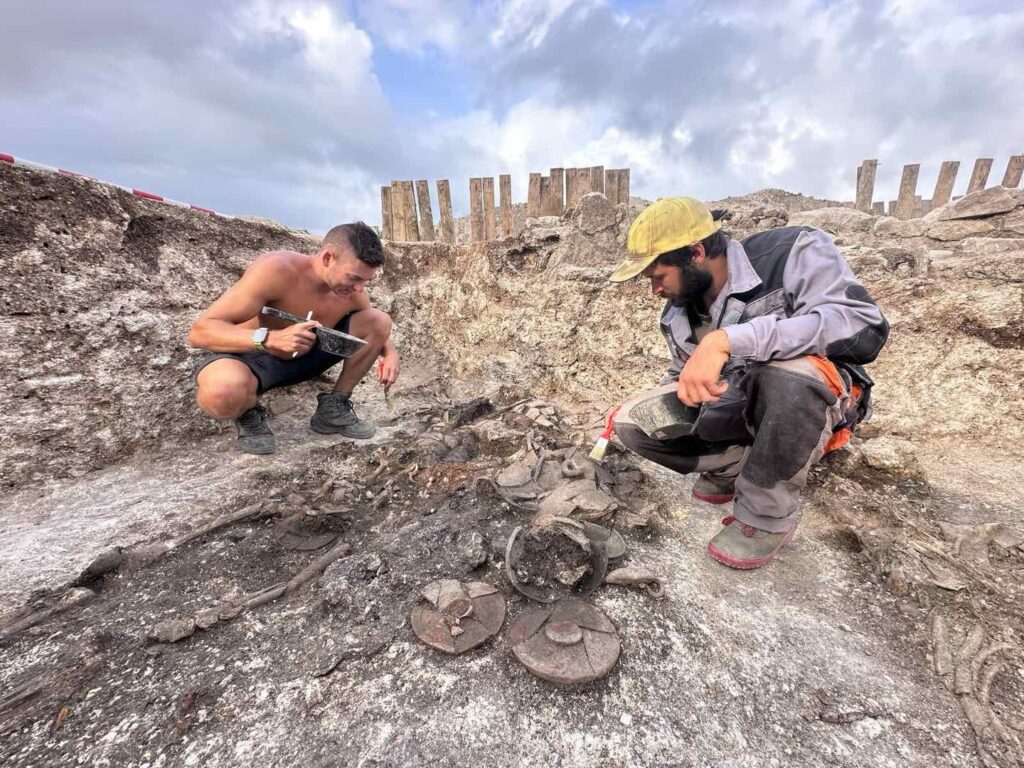
During rescue excavations near the village of Kapitan Petko Voivoda in the Haskovo region, archaeologists from the Bulgarian Academy of Sciences (BAS) uncovered an untouched grave pit measuring 3 by 3 meters and one meter deep. The site lies along the route of a cable connection between the town of Topolovgrad and a nearby solar park. The discovery was announced by Topolovgrad Municipality.

Led by archaeologists Vladimir Staykov and Deyan Dichev, with expert consultation from renowned Thracian researcher Dr. Daniela Agre, the excavation team believes the grave belonged to a high-ranking Thracian warrior from the late 2nd century BC. The warrior was buried with ceremonial gifts, parts of his weaponry, and a wreath placed upon his head — a symbol of honor and elite status in ancient Thracian and Hellenistic culture.
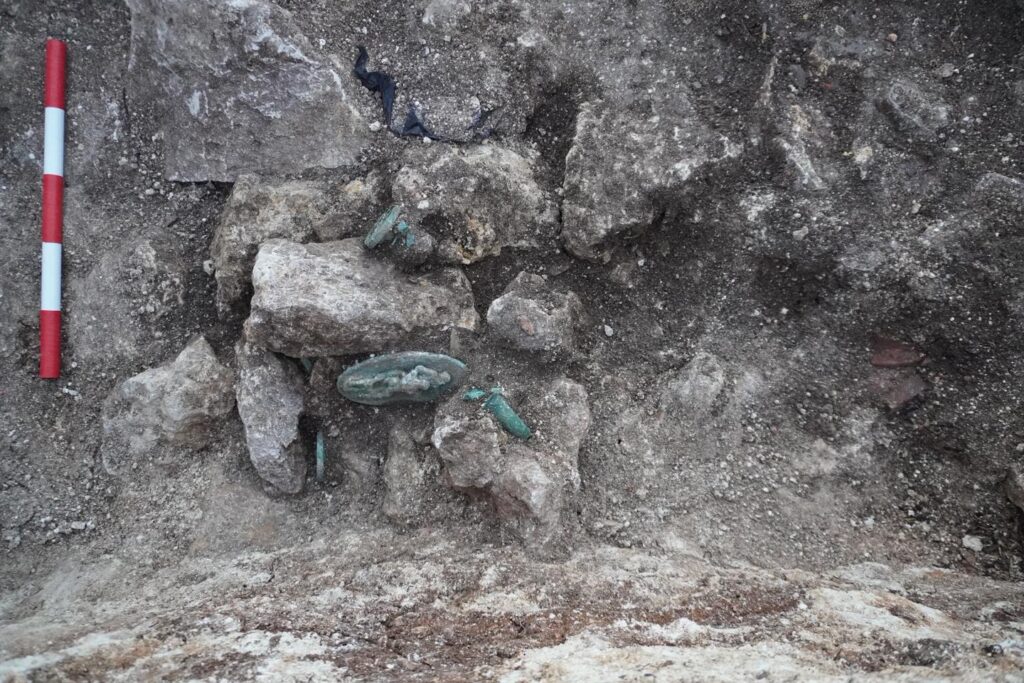
Above the horse’s head, archaeologists discovered bronze and gilded harness decorations featuring high-relief depictions of mythological figures. Credit: Община Тополовград - Topolovgrad Municipality
Above the horse’s head, archaeologists discovered bronze and gilded harness decorations featuring high-relief depictions of mythological figures. Credit: Община Тополовград – Topolovgrad Municipality

Perhaps the most striking aspect of the burial was the presence of the warrior’s riding horse, placed on the left side of the body. Above the horse’s head, archaeologists discovered bronze and gilded harness decorations featuring high-relief depictions of mythological figures. One artifact showcases a scene from the Labors of Heracles (Hercules), crafted with exceptional artistry that speaks to the advanced metallurgical skills of the era.


📣 Our WhatsApp channel is now LIVE! Stay up-to-date with the latest news and updates, just click here to follow us on WhatsApp and never miss a thing!!


The team has linked this recent grave to another opulent burial found just 60 meters to the north in 2024, beneath a small burial mound. That site, also excavated by Dr. Agre’s team, revealed a Thracian noble associated with Roman military forces and included rare gold jewelry. Together, these discoveries suggest the area was a significant burial site for elite Thracian warriors during the Late Hellenistic period.

“This is the second consecutive year that the land around Kapitan Petko Voivoda has revealed extraordinary archaeological treasures,” the researchers stated. “The ongoing excavations are not only enriching our understanding of Thracian culture but also raising new questions about the intersection of local traditions and Roman influence.”

The findings are currently being prepared for conservation and public display. Artifacts from the 2024 discovery have already been restored and placed in a specially built vault at the Historical Museum in Topolovgrad. It is expected that the newly uncovered artifacts from 2025 will join the collection, further enhancing the museum’s role as a regional center for Thracian history and heritage.
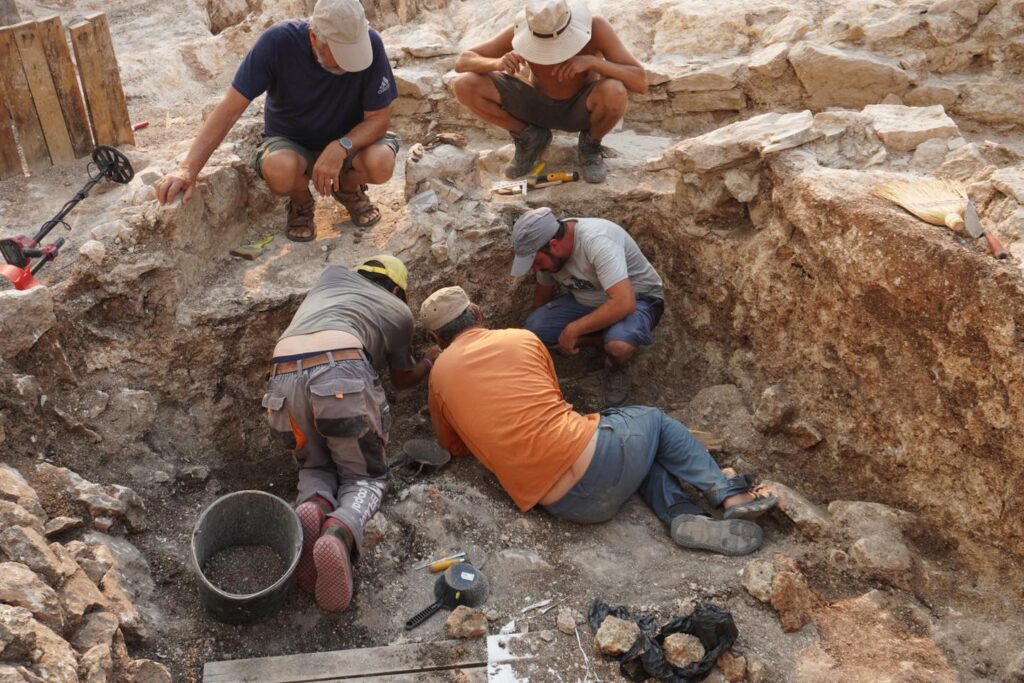
Archaeologists Uncover Richly Furnished Grave of Thracian Warrior with Horse, Weapons, and Gold-Gilded Ornaments in Southern Bulgaria. Credit: Община Тополовград - Topolovgrad Municipality
Archaeologists Uncover Richly Furnished Grave of Thracian Warrior with Horse, Weapons, and Gold-Gilded Ornaments in Southern Bulgaria. Credit: Община Тополовград – Topolovgrad Municipality

The excavation team includes archaeology students from Sofia University “St. Kliment Ohridski,” offering them a unique opportunity for field training and contributing to the growing interest in Bulgaria’s ancient past.

With excavations ongoing, archaeologists are hopeful that further analysis and discoveries in the area will deepen understanding of Thracian burial customs, social hierarchies, and their interactions with the expanding Roman world.

Община Тополовград – Topolovgrad Municipality

Cover Image Credit: Община Тополовград – Topolovgrad Municipality

Related Articles

Mosaic Discovered in Illegal Dig in Zile Points to Ancient Roman Public Structure

12 July 2025

12 July 2025

Zile, a district in the Tokat province of northern Türkiye, has long been recognized as one of Anatolia’s most historically...

The Discovery of a Unique Pre-Viking Helmet Fragment in Lejre, Denmark

23 January 2025

23 January 2025

In Lejre, the northwestern part of the island of Zealand in eastern Denmark, detectorists have uncovered an exceptionally rare fragment...

The 3400-year-old city belonging to a mysterious Kingdom emerged from the Tigris river

30 May 2022

30 May 2022

Archaeologists from Germany and Kurdistan have discovered a 3,400-year-old Mittani Empire-era city on the Tigris River. The ruins emerged on...

Nets Hidden in Pottery: 6,000-Year-Old Jomon Fishing Technology Reconstructed with X-ray CT Scans

28 September 2025

28 September 2025

In a remarkable study, Japanese archaeologists have digitally and physically resurrected fishing nets from the Jomon period, offering an unprecedented...

God Vishnumurthy Statue Found in a Well in Karnataka

28 February 2021

28 February 2021

A statue of the god Vishnumurthy dumped into a well was found near a destroyed Udupi temple in the state...

Largest Headhunting Massacre of Women and Children in Neolithic China

12 November 2023

12 November 2023

A new study discovers that ancient headless skeletons discovered in mass graves in China are the remains of victims who...

5,000-Year-Old Mysterious Ritual Pits Unearthed in Germany Reveal Burned Homes, Dog Sacrifices, and Human Skulls

1 August 2025

1 August 2025

Archaeologists uncover over 5,000-year-old ritual pits filled with burned structures, dog remains, and human skulls in Saxony-Anhalt, suggesting complex ceremonies...

Ancient Roman Road with Porticoes and Rare Artifacts Discovered in Switzerland

6 May 2025

6 May 2025

A major rescue excavation in Kaiseraugst, northern Switzerland, has revealed a substantial Roman road complete with porticoes, alongside poignant infant...

Archaeologists have discovered the origins a Herefordshire Stone Age monument

22 August 2021

22 August 2021

Archaeologists have finally uncovered the mysterious origins of Arthur’s Stone, named after the mysterious legends of King Arthur, who inspired...

2,700-Year-Old Saka Burial Mounds Unearthed Near Kyrgyzstan’s Issyk-Kul Lake

2 May 2026

2 May 2026

A rescue excavation near Cholpon-Ata, on the northern edge of Kyrgyzstan’s Lake Issyk-Kul, has revealed a group of burial mounds...

The ‘extraordinary’ Roman mosaic depicting scenes from Homer’s Iliad unearthed in a Rutland farmer’s field is the first of its kind in England

25 November 2021

25 November 2021

The 1,500-year-old mosaic discovered by a farmer was considered Britain’s “most exciting” Roman find. The artwork was discovered on private...

Archaeologists say 12,000-year-old flutes discovered in northern Israel may have been used to lure falcons

9 June 2023

9 June 2023

New research reveals that about 12,000 years ago, in northern Israel, humans turned the bones of small birds into instruments...

Researchers have found in miniature ceramic bottles evidence of the oldest known use of cosmetics in the Balkans

14 July 2021

14 July 2021

In miniature ceramic bottles from excavations ascribed to the Lasinja Culture in the Southeast Prealps and the Vinča Culture in...

The earliest human remains 11,000-year-old discovered in northern Britain

25 January 2023

25 January 2023

An international team of archaeologists at the University of Central Lancashire (UCLan) has discovered 11,000-year-old human remains in the Heaning...

Burial of Ascetic Monk in Chains Reveals Surprising Identity: A Woman in Byzantine Jerusalem

15 February 2025

15 February 2025

A recent archaeological discovery near Jerusalem has challenged long-held beliefs about ascetic practices in the Byzantine era, revealing the remains...