
9 December 2025 The Future is the Product of the Past

Hidden Gods of Kurul Castle: Dionysus and Pan Figurines Capture Spotlight as Dig Resumes

Excavations are set to resume next week at the ancient Kurul Castle in Ordu, the first scientifically excavated archaeological site in Türkiye’s Eastern Black Sea region.

Recent and past discoveries continue to illuminate the sacred and political life of the Hellenistic Pontic Kingdom, with striking links to the cult of Dionysus and its royal patron: King Mithridates VI Eupator.

Led by the Turkish Ministry of Culture and Tourism with support from the Ordu Metropolitan Municipality, the site has been under systematic excavation since 2010. The dig, now entering its 16th season, has brought to light more than 5,000 artifacts—including the celebrated statue of the Mother Goddess Cybele, dating to approximately 2,100 years ago.

“Kurul Castle is exceptional because it was home to a single ancient civilization, allowing us to explore uninterrupted cultural layers,” noted Uğur Toparlak, Ordu’s Director of Culture and Tourism. “This is not only a heritage site but also a rare archaeological window into religious and political life.”
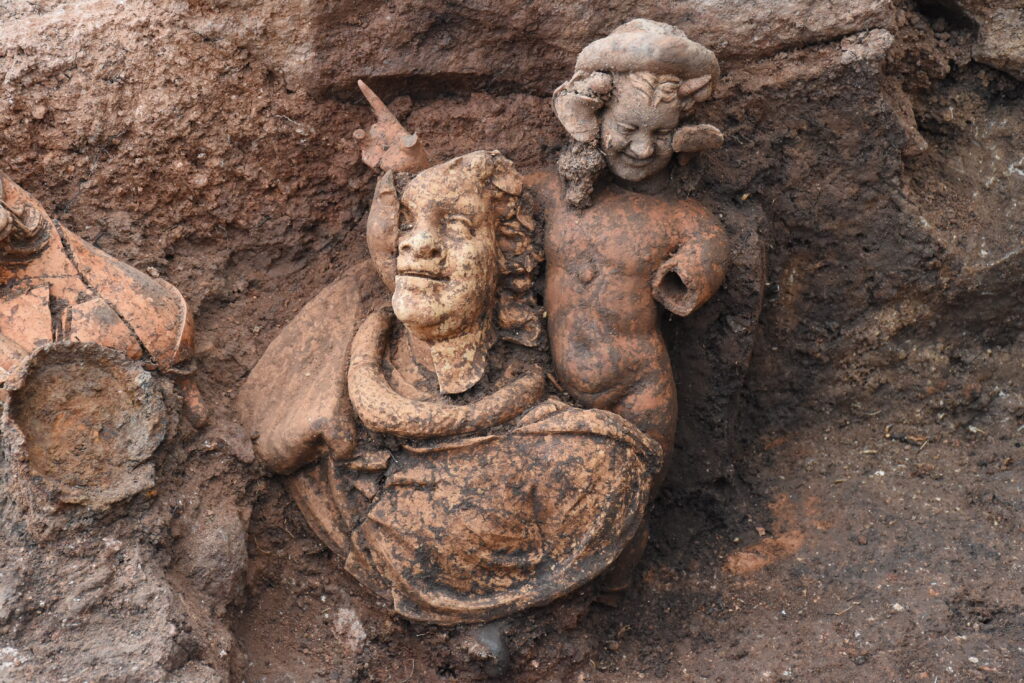
Figurines of young Dionysus, Pan, and goat-shaped vessels linked to Dionysian rituals. Credit: Ordu Provincial Directorate of Culture and Tourism

A Dionysian Cult in the Mountains of Pontus

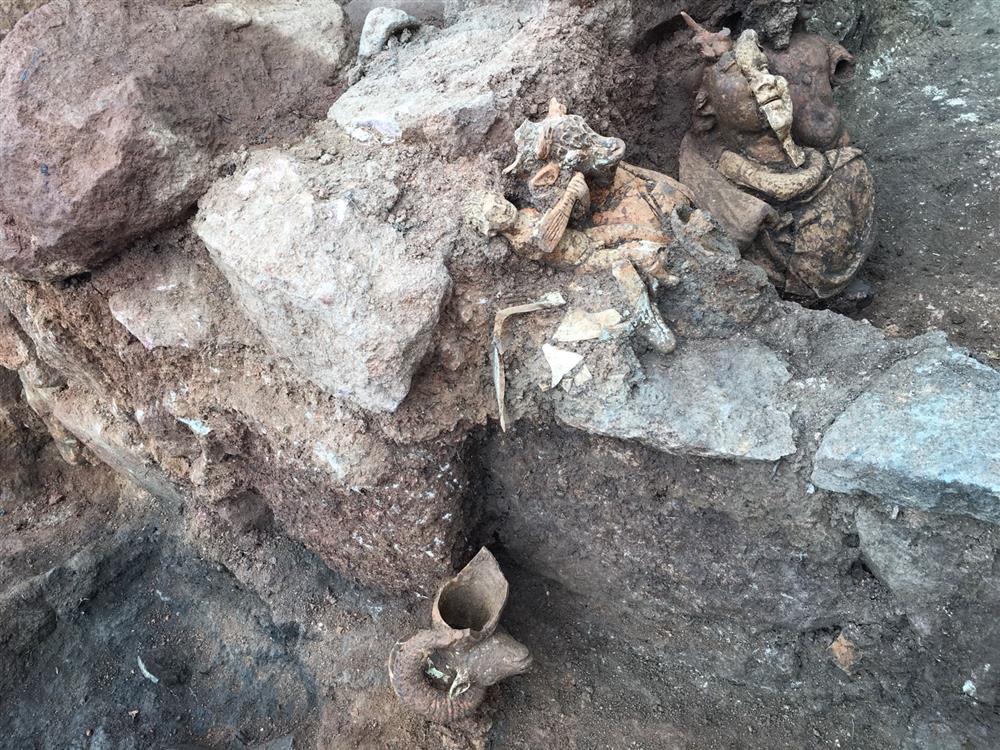
In previous years, archaeologists uncovered a group of terracotta figurines in what is believed to be a ritual or temple space. The set includes a young Dionysus, the pastoral god Pan, and goat-shaped ceremonial vessels—all indicative of Dionysian cult practices. These figures, likely used in sacred ceremonies, reflect the deep-rooted spiritual culture that once thrived in the region.


📣 Our WhatsApp channel is now LIVE! Stay up-to-date with the latest news and updates, just click here to follow us on WhatsApp and never miss a thing!!


What makes the discovery especially significant is its likely connection to King Mithridates VI Eupator, the famed ruler of the Kingdom of Pontus (r. 120–63 BCE), who deliberately identified himself with the god Dionysus—a political and religious maneuver that positioned him as both mortal king and divine agent of rebirth, transformation, and power.

One of the most striking historical pieces of evidence supporting this identity comes from an inscription at Delos, dated to 94/93 BCE, in which Dicaeus, a priest of Sarapis, made a dedication on behalf of the Athenians, Romans, and explicitly, “King Mithridates Eupator Dionysus.” The fusion of king and god was not metaphorical—it was public, official, and strategic. Mithridates styled himself as a liberator of the East from Roman dominance, using Dionysus’s symbolic role as a boundary-crossing, world-reversing deity to legitimize his authority.

“To find not only Cybele, the ancient Anatolian mother goddess, but also ritual objects tied to Dionysus and Pan, gives this site a mythological richness rarely encountered in northern Anatolia,” explained excavation head Prof. Dr. Süleyman Yücel Şenyurt of Gazi University.
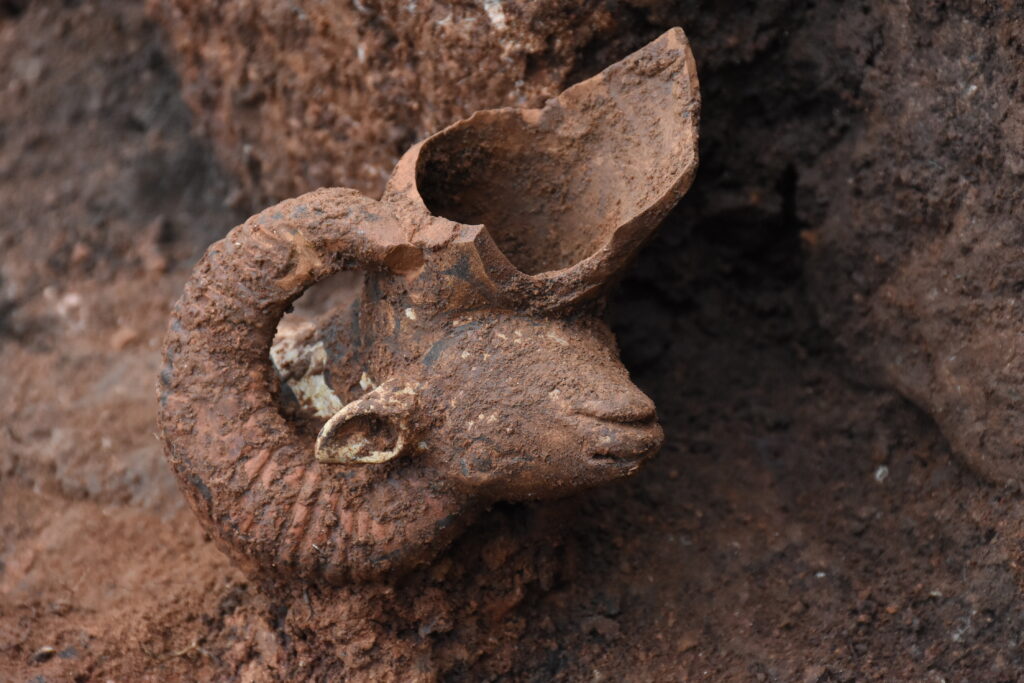
Goat-shaped vessel. Credit: Ordu Provincial Directorate of Culture and Tourism

Kurul Castle: Bridging Nature, History, and Mythology

Dating back approximately 2,300 years, Kurul Castle overlooks the Black Sea from a dramatic mountain ridge near Ordu’s Altınordu district. Built during the reign of Mithridates VI, the castle served not only military functions but appears to have housed significant religious activity tied to the Dionysian mysteries.

“Preparations for this year’s excavation are complete. Once preservation and site development efforts are finalized, we aim to open Kurul Castle to tourism,” said Toparlak. “Ordu has long been known for its natural beauty—but now, it will also shine through its ancient cultural heritage.”

With archaeological findings of regional and international importance, Kurul Castle is poised to become a major destination for those seeking to explore the fascinating intersection of myth, monarchy, and sacred space.

Cover Image Credit: Ordu Provincial Directorate of Culture and Tourism

Related Articles

New evidence suggests Indonesia’s Gunung Padang could be world’s oldest known pyramid

21 November 2023

21 November 2023

Gunung Padang, a  colossal megalithic structure nestled in the lush landscapes of West Java, Indonesia, could be the world’s oldest...

Archaeologists unearthed the exact place of the tomb of Saint Nicholas, also known as “Santa Claus,” and the floor on which he walked

17 October 2022

17 October 2022

An excavation team has discovered the exact location of Saint Nicholas’ tomb, also known as “Santa Claus,” as well as...

Rare Arabic inscription discovered during Malta housing project works

3 May 2023

3 May 2023

A rare Arabic inscription, possibly dating back to medieval times, was discovered at the site of a social housing project...

Scientists reveal new discovery inside the Pyramid of Khufu

20 March 2023

20 March 2023

An Egyptian pyramid for 4,500 years is still spilling secrets. After a years-long project using modern technology to reveal the...

Czech experimental archaeologists successfully completed their 1-month voyage in the Aegean Sea using a replica of a prehistoric vessel

17 July 2023

17 July 2023

Radomír Tichý, an archeology professor at the University of Hradec Králové who is also the director of the Všestary Archeopark,...

People may have been cooking curries in South-East Asia for at least 2000 years

22 July 2023

22 July 2023

Archaeologists have found remnants of eight spices on a sandstone slab from an archaeological site in Vietnam, showing the early...

Ancient Celtic Bone Pen Found in Southern Germany

14 December 2024

14 December 2024

From August to October this year, the State Office for the Preservation of Monuments (LAD) in the Stuttgart Regional Council...

The new type of Silla tombs discovered in Gyeongju, South Korea

27 June 2024

27 June 2024

Archaeologists have made a groundbreaking discovery in the ancient capital of the Silla Kingdom (57 BC-AD 935) in the ancient...

The Mysterious Origins of the Cerne Abbas Giant Finally Revealed

3 January 2024

3 January 2024

There’s a huge chalk image of a man with a powerful erection and no clothes on his butt located in...

Colossae Ancient City Excavation Works Begin

8 September 2021

8 September 2021

Excavations of the ancient city of Colossae, located in the Honaz district of Denizli province in western Turkey, are starting...

Pictish ring believed to be more than 1,000-years-old found during Burghead fort dig in Scotland

5 September 2024

5 September 2024

A “remarkable” Pictish ring thought to be more than 1,000 years old has been unearthed by an amateur archaeologist on...

4,000 Years of Wisdom: Women’s Rights and Inheritance in the Kültepe Tablets

8 March 2025

8 March 2025

The Kültepe Tablets, discovered in the ancient site of Kültepe (ancient Kanesh) in central Anatolia, are approximately 4,000 years old...

The 6,000-year-old settlement found in island of Corsica

2 May 2023

2 May 2023

Archaeologists in a French municipality recently excavated the slopes of Punta Campana (island of Corsica) in preparation for a construction...

300-Year-Old Sacred Mummified Mermaid From Japan’s Mystery Solved

20 February 2023

20 February 2023

A mummified mermaid has been worshiped in Japan for centuries because locals believe it has healing powers. However, upon closer...

Ancient Graffiti Unearthed at Artezian in Crimea: A Hidden Message on Temple Plaster

6 October 2025

6 October 2025

Archaeologists exploring the ancient settlement of Artezian in Crimea have uncovered a tantalizing piece of antiquity: a fragment of graffiti...