
15 February 2026 The Future is the Product of the Past

Rare Sealed Medieval Reliquary Cross Discovered at Lystra Ancient City in Central Türkiye

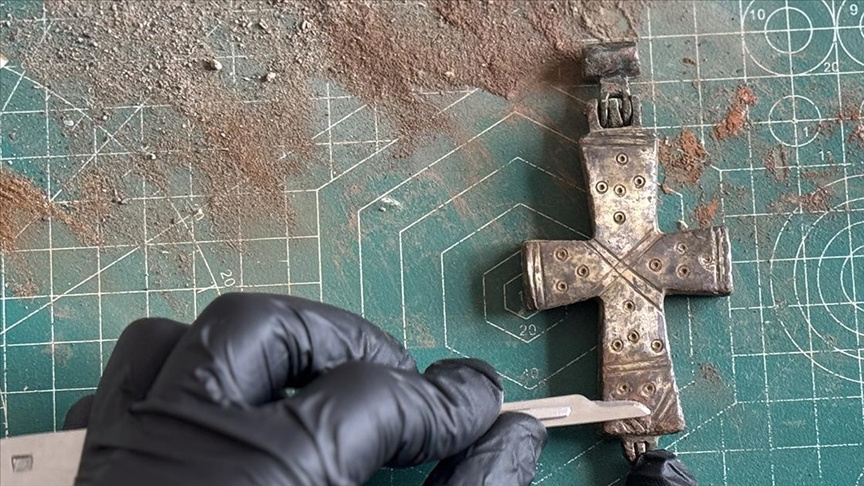
Archaeologists excavating the ancient city of Lystra in central Türkiye have restored a rare medieval bronze reliquary cross discovered intact and permanently sealed, offering valuable insight into early Christian devotional practices in Anatolia. The cross, dated to between the 9th and 11th centuries, was uncovered in a church-associated burial area and is considered exceptional due to its preserved condition.

The discovery was made at Lystra, located in the Meram district of Konya province, a site historically associated with the missionary journeys of Saint Paul. According to Christian tradition, St. Paul visited Lystra during his first journey in the 1st century CE, making the city an important early center for the spread of Christianity in Asia Minor.

The bronze cross consists of two fitted plates joined by a riveting technique, forming a permanently sealed reliquary. Unlike most known examples, which are often found broken or deliberately opened, this cross was discovered exactly as it was manufactured centuries ago. Archaeologists involved in the excavation say this makes the artifact particularly valuable for understanding medieval religious craftsmanship.

Excavation director İlker Mete Mimiroğlu of Necmettin Erbakan University stated that while multiple reliquary crosses have been recovered at Lystra, nearly all were damaged. “This example stood out because it was found completely sealed,” he noted, adding that the cross was carefully cleaned and stabilized rather than opened, to prevent irreversible damage.

Reliquary crosses were widely used in the Byzantine world and medieval Christian communities. Typically worn on the chest or placed in graves, they were designed to contain sacred items such as fragments of saints’ bones, pieces of cloth believed to have touched holy figures, or small portions of the True Cross. These objects were thought to provide spiritual protection, healing, and divine favor to the wearer or the deceased.


📣 Our WhatsApp channel is now LIVE! Stay up-to-date with the latest news and updates, just click here to follow us on WhatsApp and never miss a thing!!


In many cases, reliquary crosses were intentionally sealed during production and never meant to be reopened. The sealing itself symbolized the sanctity of the contents and the permanence of faith. Scholars believe that permanently sealed reliquaries like the Lystra example were often created for burial contexts, reinforcing beliefs about protection in the afterlife.
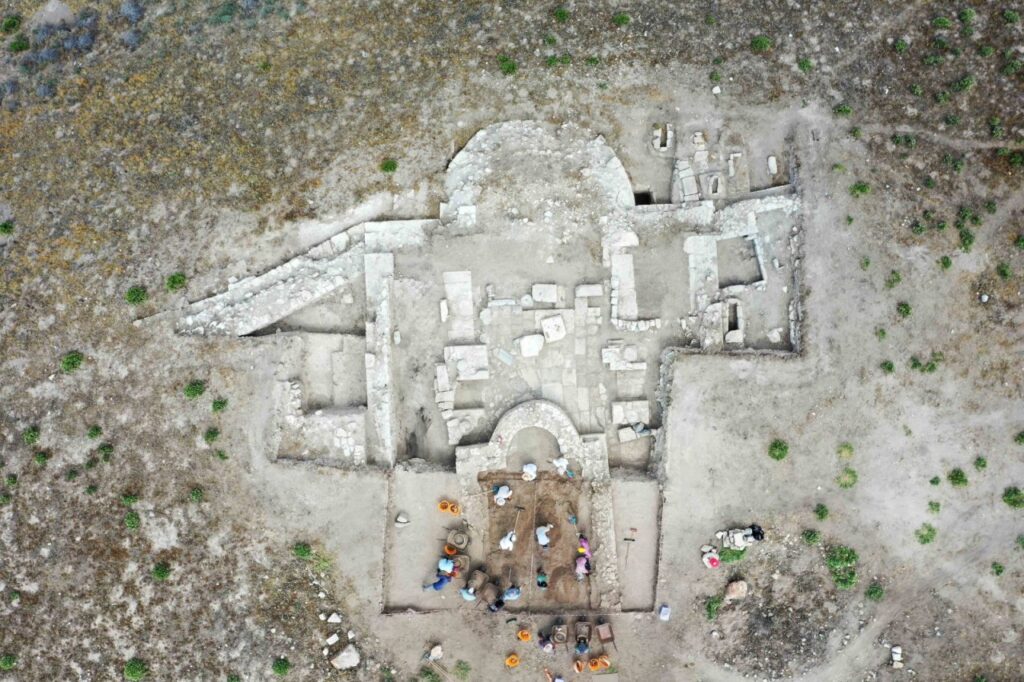
Founded as a Roman colony during the reign of Emperor Augustus, Lystra became one of the most prominent cities of the Lycaonia region. It gained everlasting fame when St. Paul and his companion Barnabas arrived here in the first century CE during their missionary journeys. Credit: İHA

Although a small gap in the cross allowed archaeologists to visually inspect its interior, no clearly identifiable relic was observed. A piece of fabric resembling a burial shroud was visible near the opening, suggesting the cross may once have held a sacred object wrapped in cloth, a common practice in medieval Christian ritual.

The cross is decorated with simple geometric motifs, consistent with regional Byzantine metalwork of the Middle Ages. Its modest design suggests it may have belonged to a cleric or a devout member of the local Christian community rather than an elite figure.

Lystra itself holds deep historical and religious significance. Founded as a Roman colony, the city flourished during the early imperial period and later became part of the Byzantine world. In Christian tradition, Lystra is remembered as the place where St. Paul healed a crippled man and was subsequently stoned by hostile crowds, surviving and continuing his mission. The city later became a bishopric, underscoring its long-standing religious role.

Archaeological excavations at Lystra have revealed churches, burials, inscriptions, and everyday objects that document the city’s transformation from a Roman settlement into a Christian center. The presence of multiple reliquary crosses at the site highlights the strength of Christian belief in the region during the medieval period.

Excavations at Lystra are being conducted under the supervision of Necmettin Erbakan University with the support of Türkiye’s Ministry of Culture and Tourism and local authorities. Researchers hope that continued work will further illuminate how faith, craftsmanship, and daily life intersected in central Anatolia during the Byzantine era.

The sealed reliquary cross now stands as a rare and powerful symbol of medieval Christian devotion—one that has survived untouched for nearly a thousand years beneath the soil of Lystra.

Cover Image Credit: AA

Related Articles

In the Black Sea, there is a “Ship Graveyard” with 2,500 years of wrecked ships

15 February 2022

15 February 2022

The Black Sea is the inland sea lying between Europe and Asia. Blacksea is located in Eurasia, surrounded by Europe,...

One of the Oldest Tin-Bronze Knife in the Eurasian Steppe Discovered in a Unique Bronze Age Cemetery in Uygur ­Autonomous Region

29 January 2025

29 January 2025

Chinese archaeologists have recently uncovered a large and uniquely structured cemetery dating back to 2800-2600 BC, located about two kilometers...

Genetic Analysis Reveals A Woman As The Highest-Ranking Individual In Copper Age Spain: ‘Ivory Lady’

6 July 2023

6 July 2023

According to a study published Thursday (July 6) in the journal Scientific Reports, the highest-status individual in ancient Copper Age...

Researchers Unearthed the First Known Neanderthal Footprints in Portugal

16 July 2025

16 July 2025

New tracksites reveal how Neanderthals navigated Portugal’s ancient dunes 80,000 years ago In a groundbreaking discovery, researchers have unearthed the...

2,200-Year-Old Satyr Mask Unearthed in Phanagoria Confirms Existence of Ancient Greek Theater

26 September 2025

26 September 2025

First tangible evidence of Greek theater in the Black Sea colony sheds light on the cultural life of the Bosporan...

Archaeologists Uncover Exceptional Roman Mausoleum Near Lyon, Modeled After Augustus’ Tomb

23 August 2025

23 August 2025

Archaeologists in France have unearthed a remarkably well-preserved Roman mausoleum in Saint-Romain-en-Gal, near Lyon, that was modeled on the famous...

2-Meter-Long Stone Block Found at 12,000-Year-Old Boncuklu Tarla Site in Southeastern Türkiye

18 December 2024

18 December 2024

A remarkable 2-meter by 20-centimeter processed stone block was discovered during the archaeological excavations at Boncuklu Tarla (Beaded Field), which...

Ancient Ruins of an Ancient Capital Found in Beijing

15 March 2021

15 March 2021

After two years of excavation, Chinese archaeologists recently exposed Zhongdu, the capital city of the Jin Dynasty (1115-1234) next to...

Unique Works of Anatolia “Kilia İdols”

15 May 2021

15 May 2021

The “Kilia İdols”, which are among the small artifacts belonging to the prehistoric periods of Anatolia, has been introduced to...

Archaeologists Discover Northernmost Hellenistic Elite Residence Featuring Ionic Architecture and Graffito in North Macedonia

2 July 2025

2 July 2025

In a groundbreaking archaeological campaign, the NL Museum of Kumanovo has unearthed a remarkable Hellenistic-era residence near the village of...

A 4000-Year-Old Trading Port was Discovered in Istanbul

4 May 2021

4 May 2021

Archaeological excavations carried out on a peninsula in the middle of Istanbul Küçükçekmece Lake unearthed a very important 4,000-year-old trade...

Are There Stone Age Megastructures on the Baltic Sea Floor?

11 June 2025

11 June 2025

The western Baltic Sea may conceal far more prehistoric cultural heritage than previously believed — including monumental underwater structures created...

Unique Ancient Pottery Found in Siberia Could Belong to a Previously Unknown Bronze Age Culture

22 October 2025

22 October 2025

Archaeologists in Western Siberia have unearthed unique Bronze Age ceramics that could belong either to the little-known Ust-Tartas culture or...

2,400-Year-Old Puppets with Dramatic Expressions Uncovered: May Have Played Key Roles in Rituals atop El Salvador’s Pyramid

5 March 2025

5 March 2025

A recent archaeological find in El Salvador has unveiled a captivating glimpse into the rituals of the region’s Indigenous people,...

Researchers believe mass immigration to Orkney during the Bronze Age was mostly led by women

8 February 2022

8 February 2022

Researchers believe mass immigration to Orkney during the Bronze Age was mostly led by women.  Mass migration to Orkney during...