
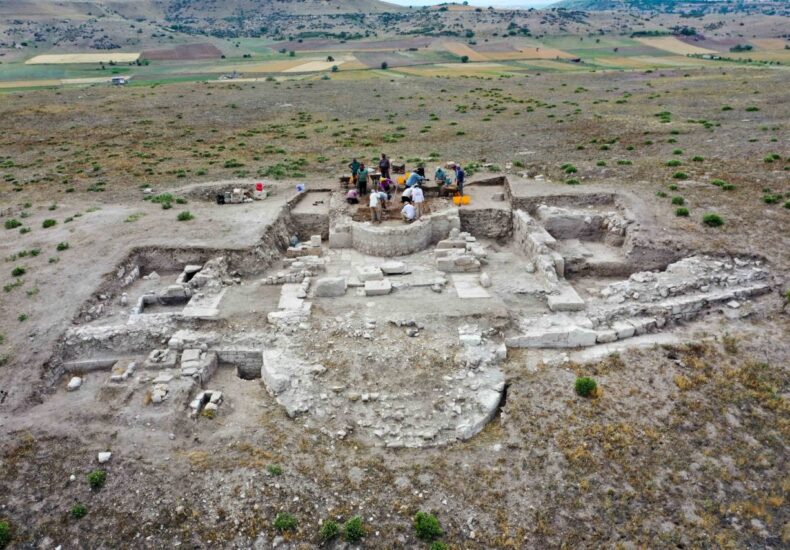
Hidden amid the rolling plains of central Anatolia, the ancient city of Lystra is once again stirring after centuries of silence. Situated near the modern-day Hatunsaray village in Meram, Konya, this site, long known from the Acts of the Apostles as one of the key places visited by St. Paul, is emerging as a cornerstone in understanding how Christianity took root in Asia Minor.
Today, ongoing excavations led by Assoc. Prof. İlker Mete Mimiroğlu of Necmettin Erbakan University are not only rewriting the story of early Christianity in Anatolia but also revealing how Turkish and Islamic cultures later intertwined with this sacred ground.
A Biblical City Rediscovered
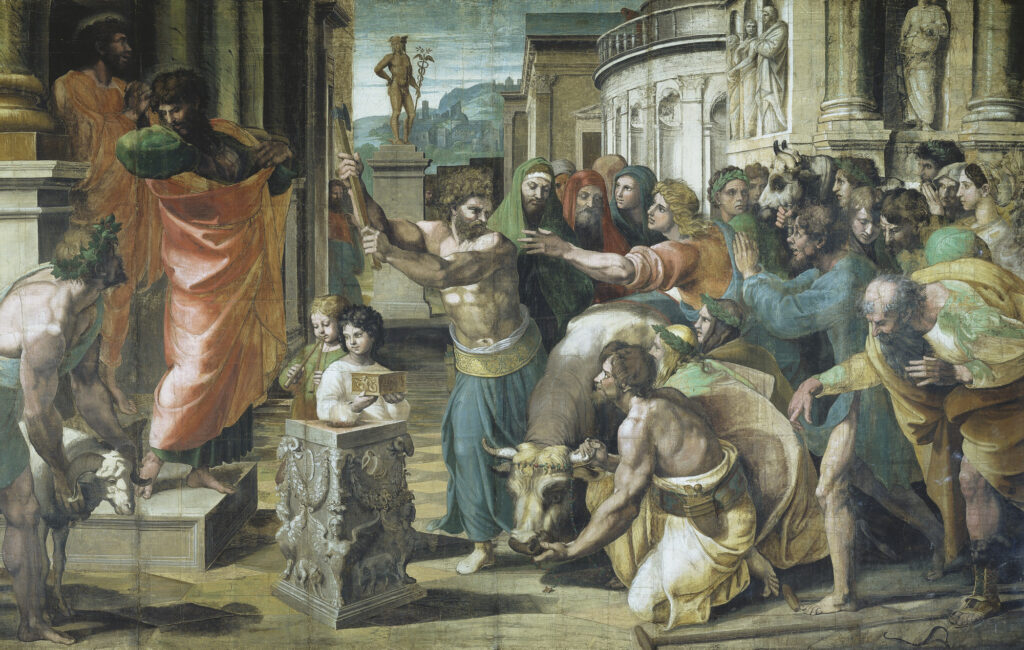
Founded as a Roman colony during the reign of Emperor Augustus, Lystra became one of the most prominent cities of the Lycaonia region. It gained everlasting fame when St. Paul and his companion Barnabas arrived here in the first century CE during their missionary journeys. According to the New Testament, Paul healed a crippled man in Lystra, prompting locals to mistake him and Barnabas for the gods Hermes and Zeus. The misunderstanding led to dramatic events that, as Mimiroğlu notes, “became one of the foundational miracles of Christianity and a symbol of faith’s early trials.”
In Christian tradition, this episode marks one of the earliest and most tangible moments of Christianity’s encounter with the pagan world. For centuries thereafter, Lystra was remembered as a sacred site — a place where divine power was first recognized beyond the Jewish communities of the Eastern Mediterranean. “Lystra was visited by St. Paul on three of his four journeys,” explains Mimiroğlu. “It became one of the earliest Christian centers in Anatolia, and later a bishopric in the Byzantine period.”
The Birth of a Church — and a Discovery Beneath the Soil
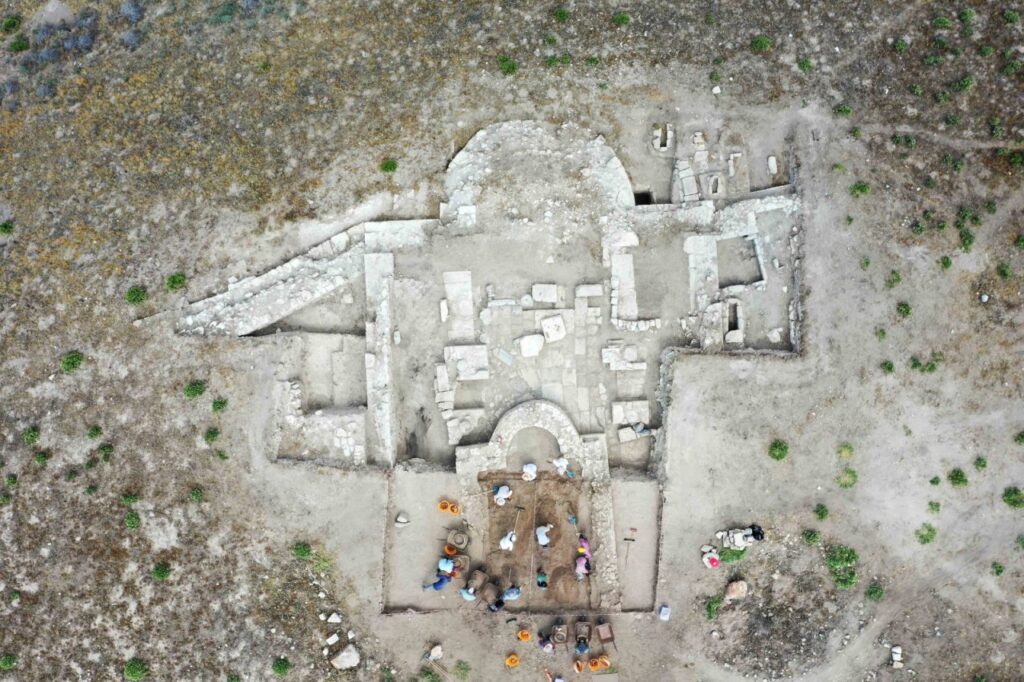
After decades of speculation, archaeological work at Lystra began under the supervision of Turkey’s Ministry of Culture and Tourism, supported by Konya Metropolitan and Meram Municipalities. Within just a month of excavation, the team uncovered what appears to be a 30-meter-long basilica, believed to be the main church of the ancient city.
The structure’s grandeur is striking. Preliminary analysis reveals gold-gilded mosaics on the ceilings and richly ornamented walls — hallmarks of late antique craftsmanship. “We can already say this was a central church,” says Mimiroğlu. “Built in the late antiquity, it underwent several phases of restoration and was used continuously until the early medieval period.”
This discovery provides new material evidence for early Christian communities in central Anatolia. While textual sources have long confirmed Lystra’s spiritual significance — the city is mentioned eight times in the Bible — this physical basilica lends substance to the faith’s expansion across the region. The church likely served as both a spiritual and administrative center, reflecting the time when Christian ecclesiastical organization took form in Anatolia, particularly around Konya, once known as Iconium.
From Paul to Timothy: The First Anatolian Church Network
Among those connected to Lystra was Timothy, a young disciple regarded by St. Paul as his “spiritual son.” Early Christian writings suggest that Timothy was appointed as one of the first bishops of the region, symbolizing the formal establishment of church hierarchy in Anatolia. Mimiroğlu explains that “the ecclesiastical structure of Christianity — its first local church networks — was effectively born in cities like Lystra and Iconium during the mid-first century.”
By the 7th century, Lystra had become a bishopric, maintaining its importance until the arrival of Islamic forces in the 8th century. Yet even after political and religious shifts, traces of Christian presence lingered — a continuity now made tangible through recent discoveries.
Turkish Footprints Beneath the Cross
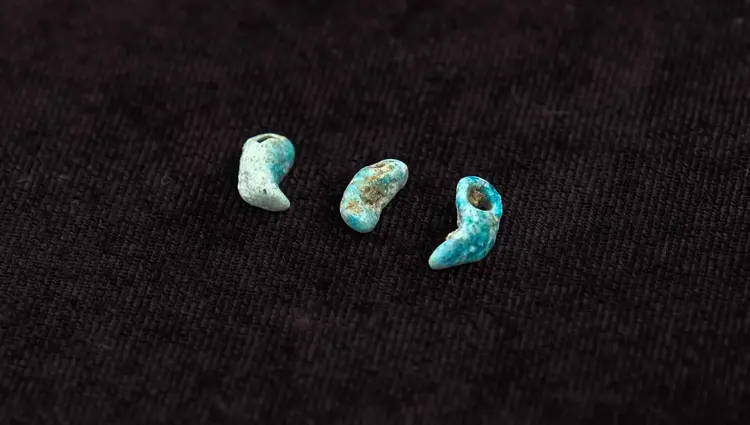
One of the most remarkable aspects of the Lystra excavation is the emergence of Seljuk-era artifacts within the layers of Christian ruins. These findings — including two Seljuk coins and turquoise-colored beads found in children’s graves — suggest that the site retained spiritual or communal relevance well into the 12th–13th centuries.
“The turquoise beads are a distinctly Turkish finding,” notes Mimiroğlu. “Their color and form indicate the early use of what would later evolve into the nazar boncuğu, or evil-eye bead, a symbol deeply rooted in Turkish belief.”
The discovery of these artifacts within Christian burial contexts points to a remarkable cultural coexistence during the Seljuk period. “It shows that when the Seljuks came, the local Christian population did not disappear,” Mimiroğlu adds. “They continued their lives under Seljuk rule, within an atmosphere of tolerance.”
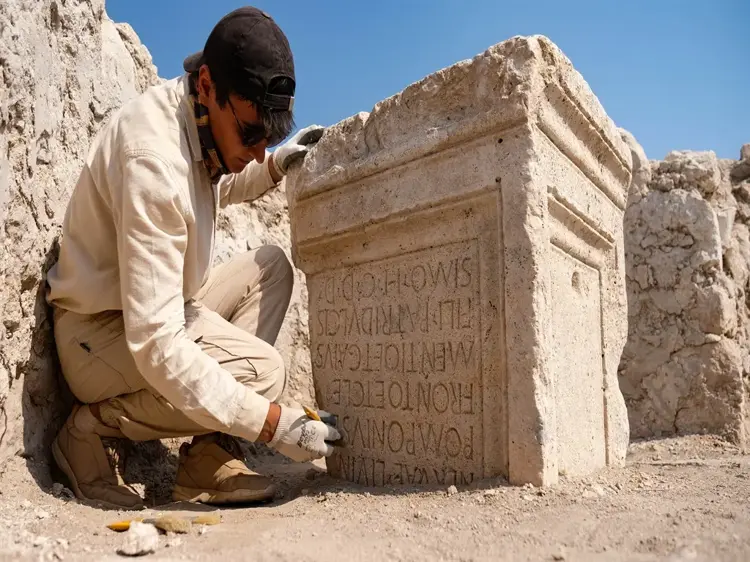
Archaeologists also observed that parts of the basilica were repurposed into smaller chapels during this era, one of which reused a Roman funerary stele as an altar — a compelling symbol of how successive civilizations adapted the same sacred space for new meanings.
Continuity of Faith, Continuity of Civilization
The findings in Lystra illuminate not only the early Christian history of Anatolia but also the region’s enduring cultural syncretism. From the golden mosaics of St. Paul’s basilica to the Seljuk turquoise beads, the site embodies an unbroken chain of belief, artistry, and community across millennia.
For archaeologists and historians alike, Lystra represents a living archive — one that bridges the Roman, Byzantine, and Seljuk worlds, and offers a vivid reminder that Anatolia has always been a crossroads of civilizations.
As Mimiroğlu summarizes, “Lystra allows us to trace the chronological and cultural evolution of a central Anatolian city — from its Roman foundation to its Christian zenith and finally its Seljuk continuity. It is a microcosm of Anatolia itself.”
With ongoing excavations promising further revelations, the silent stones of Lystra are once again speaking — telling a story of faith that transcends time, empire, and religion.
Note: Kilistra, often confused with Lystra, was a central hub of faith during the period and served as a refuge for those who embraced Christianity in the Roman era. It is believed that St. Paul, one of the earliest Christian missionaries, visited the site. To this day, locals refer to the area around the Sümbül Church in Kilistra as ‘Paulönü’ in his honor.
Cover Image Credit: İHA
