
6 December 2025 The Future is the Product of the Past

Archaeologists Find One of the Long-Lost Holy Cities in Jordan

A remarkable archaeological discovery in Jordan has brought one of the Holy Land’s long-lost cities back to light.

Researchers now believe they have uncovered the ancient Byzantine-era city of Tharais, a site once marked on the famed Madaba Mosaic Map, but lost for centuries. This breakthrough offers a new lens into the region’s Christian past and its socio-economic importance in late antiquity.

The findings were published in May 2025 in the academic journal Gephyra by Dr. Musallam R. Al-Rawahneh, Associate Professor of Archaeology at Mu’tah University in Jordan. The discovery is the result of a three-year fieldwork project that began in 2021 and focused on the southeastern region of the Dead Sea, near the village of El-ʿIrāq, in an area known as Ain Al-Qala’a.

A Discovery Rooted in Ancient Maps

Central to this discovery was the Madaba Mosaic Map, a sixth-century Byzantine floor mosaic located in the Church of Saint George in Madaba, Jordan. The map is considered the oldest surviving geographic depiction of the Holy Land, marking over 150 ancient locations. One of those sites, Tharais, has intrigued historians for decades—until now.

Guided by this map and supplemented by satellite imagery and ground surveys, Al-Rawahneh’s team uncovered architectural ruins, pottery shards, glassware, and stone tools. The most significant feature was the remains of a basilica-style Christian church, complete with fragments of mosaic floors and an entranceway consistent with Byzantine ecclesiastical design.


📣 Our WhatsApp channel is now LIVE! Stay up-to-date with the latest news and updates, just click here to follow us on WhatsApp and never miss a thing!!


“These architectural elements strongly suggest that Tharais was not just a settlement, but a religious and commercial hub during the Byzantine period,” said Al-Rawahneh.
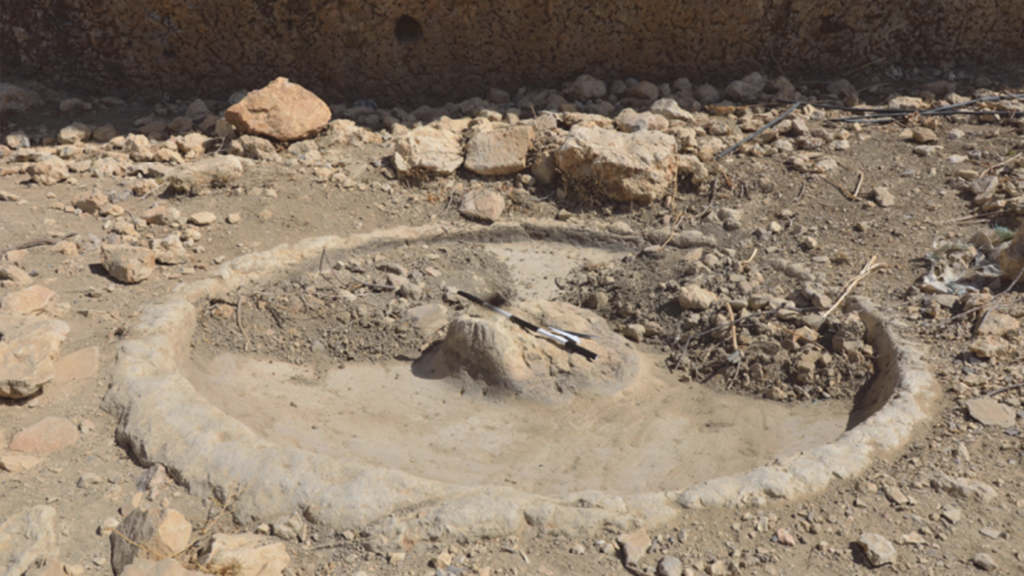
 The discovery of the olive oil press (pictured above) was among the most remarkable findings of the excavation. Credit: Musallam R. Al-Rawahneh
The discovery of the olive oil press (pictured above) was among the most remarkable findings of the excavation. Credit: Musallam R. Al-Rawahneh

Echoes of a Flourishing Christian Community

The site revealed more than just walls and mosaics. Researchers discovered olive oil presses, a grape press, and remains of a mill, indicating the city had a thriving economy in addition to its religious significance.

Most compelling were the funerary inscriptions in Greek and Latin, etched into tombstones scattered throughout the area. These inscriptions featured Christian symbols and phrases, painting a picture of a well-established Christian society deeply integrated into both the spiritual and economic fabric of the region.

“The inscriptions follow typical formulas of Byzantine Christian burials,” Al-Rawahneh noted, “and show that Tharais was home to an organized, practicing Christian community.”

Why Was Tharais Lost?

Although once strategically located along key trade routes to the southeastern Dead Sea region, Tharais was likely abandoned by the 7th century A.D. Several factors could have contributed to its decline, including earthquakes, shifts in trade routes, and the transition from Byzantine to Islamic rule. These historical changes disrupted many settlements in the region during that period.

Looking Ahead: Preserving Jordan’s Cultural Heritage

While the identification of Tharais marks a major success, Al-Rawahneh stresses that this is only the beginning. Additional excavations and regional surveys are planned to further understand the city’s role in Byzantine Jordan.
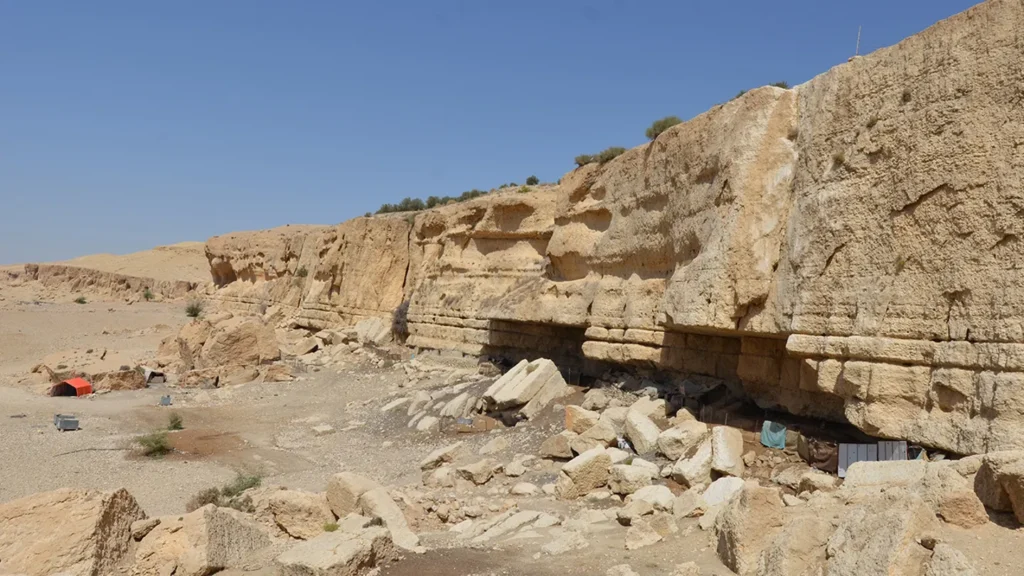
The site was likely abandoned by the 7th century A.D., possibly due to shifting trade routes, environmental changes, or political transitions. Credit: Musallam R. Al-Rawahneh

Moreover, researchers are calling for action to protect the site from encroaching urban development. “Our aim is not just to uncover Tharais,” said Al-Rawahneh, “but to advocate for the preservation of Jordan’s rich cultural heritage.”

A Window into the Past

The rediscovery of Tharais is more than an archaeological milestone. It provides a tangible link to the early Christian world and the complex historical layers of the Middle East. As researchers continue to explore the site, Tharais promises to shed further light on the intersection of faith, commerce, and daily life in the ancient Holy Land.

This finding confirms what historians long suspected but had never verified: Tharais was real, vibrant, and deeply woven into the religious and economic fabric of its time. Thanks to modern archaeology and ancient cartography, yet another piece of the Holy Land’s rich puzzle is finally falling into place.

Al-Rawahneh, M. R. (2025). Identification Tharais: Rediscovering a Byzantine archaeological site on the Madaba Mosaic Map. Gephyra, 29, 189–203. https://doi.org/10.37095/gephyra.1556742

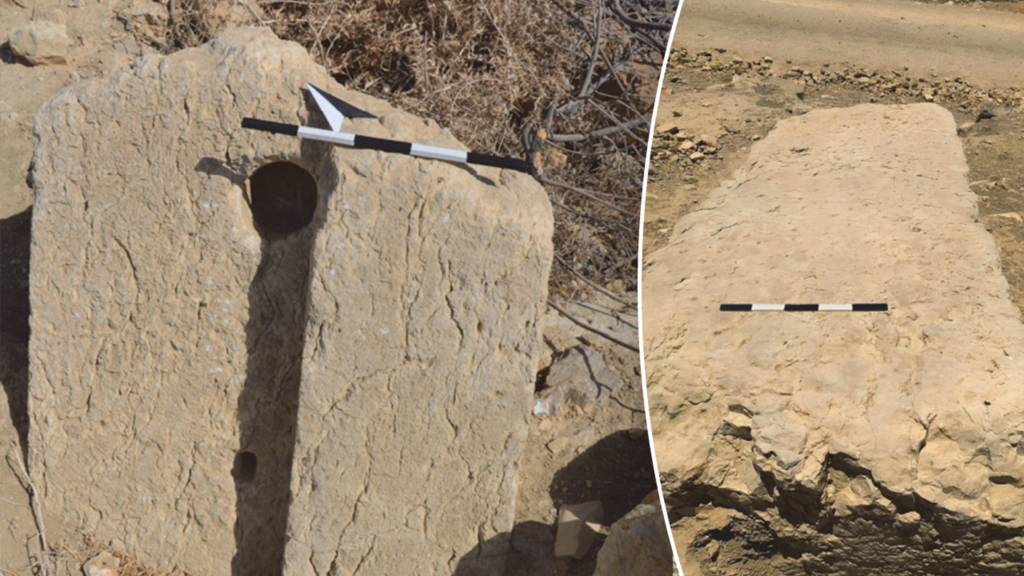
Cover Image Credit: Archaeologists uncovered a section of the church’s main entrance frame (left) along with a preserved portion of its front façade (right), providing key architectural clues to the site’s Byzantine origins. Credit: Musallam R. Al-Rawahneh

Related Articles

Bosphorus Was Frozen, People Crossed By Walking

14 February 2021

14 February 2021

The calendars showed the year 1954. Istanbul was experiencing an extremely freezing winter after many years. Heavy snowfall, hard enough...

Rare Indian Jital Coin Found in Elite Female “Princely” Grave Near Suzdal

3 September 2025

3 September 2025

Archaeologists working in the medieval necropolis of Gnezdilovo, near Suzdal — a historic town in today’s Vladimir Oblast, Russia —...

Neanderthals too may have Developed a System of Numerical Notation

2 June 2021

2 June 2021

People developed numbers tens of thousands of years ago, according to archeological findings. Scholars are now investigating the first comprehensive...

Japan Researchers Uncover Lost Villa Believed to Belong to First Roman Emperor

19 April 2024

19 April 2024

Researchers from the University of Tokyo have discovered a nearly 2,000-year-old building at a site with ancient Roman ruins buried...

40.000-Year-Old Mammoth Bones Discovered in a Wine Cellar in Austria

25 May 2024

25 May 2024

A winemaker has discovered mammoth bones up to 30,000 to 40,000 years old in a wine cellar in Lower Austria. ...

High school student discovered a 1500-year-old ancient Magical Mirror

9 August 2023

9 August 2023

 A High school student discovered an ancient “magical mirror” meant to ward off the evil eye in an archaeological excavation...

Ancient Tomb of Korean Hostage Prince Found in China

21 July 2025

21 July 2025

Chinese archaeologists have uncovered the tomb of Kim Young, a hostage prince from the ancient Korean kingdom of Silla, in...

Ancient Hittite Archives Unearthed at Kayalıpınar: 56 Cuneiform Tablets and 22 Seal Impressions Found

18 September 2025

18 September 2025

Archaeologists excavating the ancient Hittite city of Kayalıpınar (ancient Šamuḫa) in Sivas province have uncovered a remarkable collection of 56...

Archaeologists discover three extraordinary 1,800-year-old residential-style tombs featuring rooms and windows, Filled with Han Dynasty Treasures

19 May 2024

19 May 2024

Archaeologists discovered three remarkable 1,800-year-old, residential-style tombs featuring rooms and windows, where a wealthy family was laid to rest alongside...

Vase for holy oil used by ‘hidden Christians’ in Japan

24 May 2023

24 May 2023

After the family that had passed it down through the generations permitted the artifact to be examined, a relic from...

Archaeologists uncovered a 3,500-year-old Egyptian Royal Retreat in the Sinai Desert

5 May 2024

5 May 2024

An Egyptian mission uncovered the ruins of a 3,500-year-old “royal fortified rest area” at the Tel Habwa archaeological site in...

Neolithic Age Adults and Children Buried Under Family Homes were not Relative

3 May 2021

3 May 2021

An international team of scientists found that Children and adults buried next to each other in one of the oldest...

3,000-year-old Drill Bit Workshop Unearthed in Vietnam’s

13 May 2021

13 May 2021

According to the provincial museum, an ancient drill bit workshop dating back more than 3,000 years has been discovered at...

International Sand Sculpture Festival Opens with the Theme “The Lost City of Atlantis”

6 May 2021

6 May 2021

The 16th edition of the International Sand Sculpture Festival (SANDLAND) has begun in Turkey’s Mediterranean resort city of Antalya. Every...

Neolithic Shell Trumpets Reveal Iberia’s Oldest Long-Distance Communication System

3 December 2025

3 December 2025

New research reveals that Neolithic shell trumpets from Catalonia served as the earliest long-distance communication system in the Iberian Peninsula....