
A small bone object from a lakeside palace has opened a rare window into the weapons of the medieval Seljuk world
A fragment of bone from the ruins of Kubadabad Palace in central Türkiye has turned out to be far more than a broken object. According to a new study published in Höyük by Muharrem Çeken, Alptekin Yavaş, and Gökhan Meriç, the artefact is the first known crossbow nut ever identified in a Medieval Anatolian excavation.
The discovery matters because crossbow bolts have been found at several medieval sites in Anatolia, but the mechanical parts of the weapon itself had remained almost invisible in the archaeological record. This small, cylindrical piece of bone changes that picture. It offers physical evidence that the Seljuk military world did not merely know the crossbow, known in Persian and Turkish contexts as the charkh, but used complex trigger mechanisms associated with it.
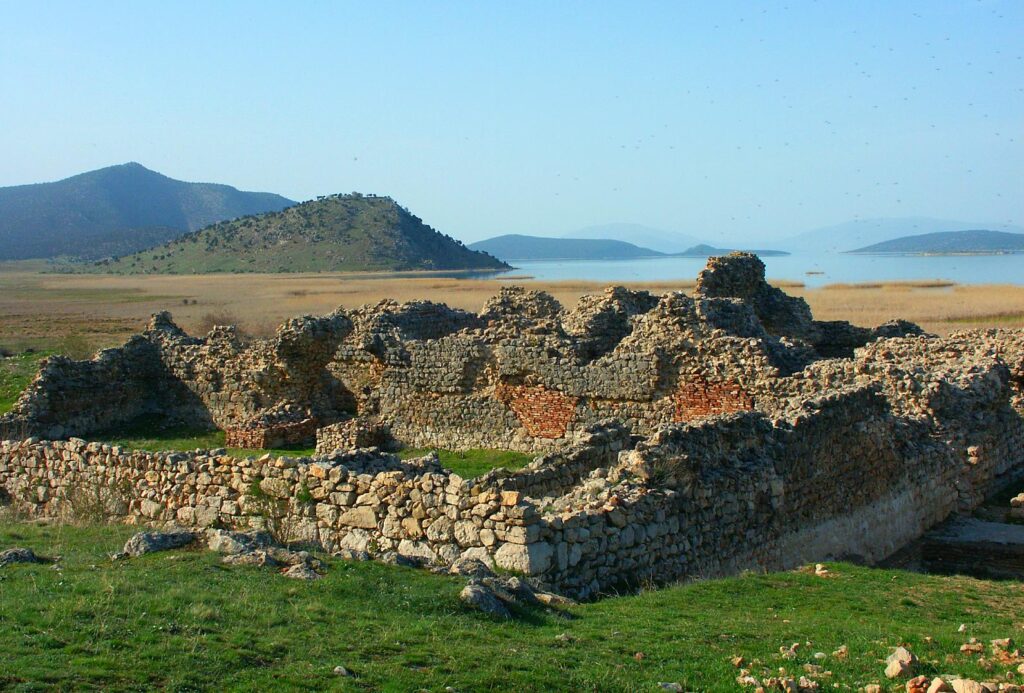
Kubadabad Palace stands on the western shore of Lake Beyşehir in Konya province. Built during the reign of the Anatolian Seljuk Sultan Alaeddin Keykubad I in the 13th century, it is one of the most important surviving palace complexes of the Seljuk period. For more than four decades, excavations there have produced tiles, ceramics, glassware, architectural remains, and other finds that illuminate elite life in medieval Anatolia. Now, a weapon component adds a sharper military dimension to that story.
A forgotten mechanism inside a deadly weapon
The object was found during the 1988 excavations at Kubadabad, in the rocky area of the palace complex described as the Inner Fortress. It came from near the western side of the wall that bordered the Small Palace, close to a furnace interpreted as a tile kiln. The researchers note that stratigraphic evidence suggests the object was not originally from the exact layer where it was recovered, but had likely been moved from another part of the complex.
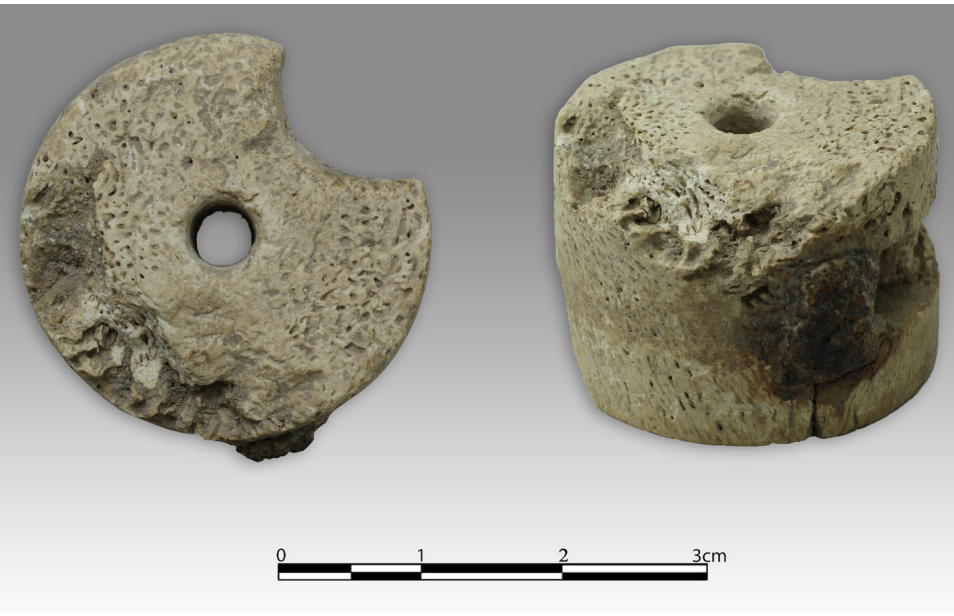
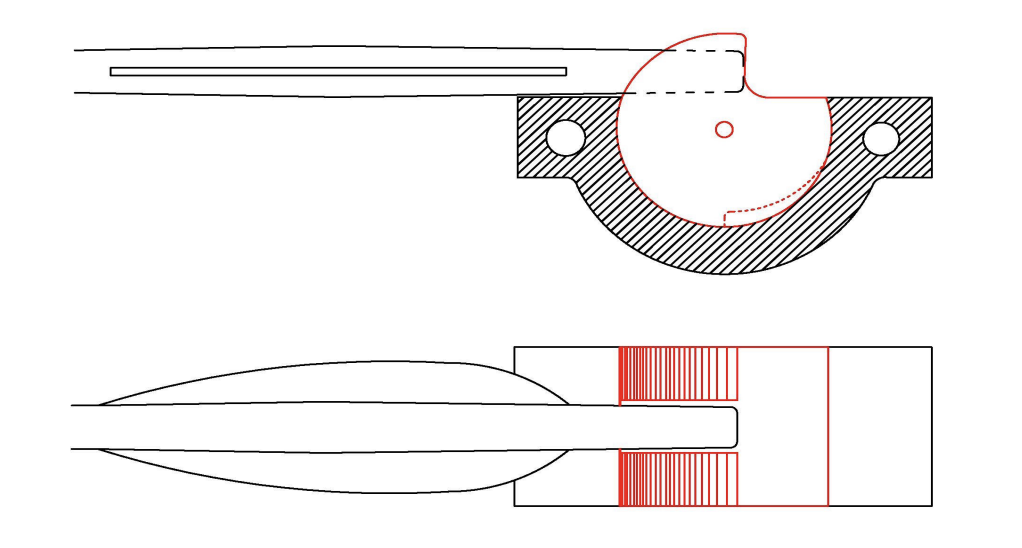
The bone piece is beige, cylindrical, and partly broken. It measures about 2.8 centimeters in diameter and 2.1 centimeters thick. A central hole, about 0.5 centimeters wide, would have held a pin connecting it to the stock of the weapon. Two grooves reveal its function: one transverse slot held the bowstring, while another longitudinal groove guided the bolt. Iron traces on its lower part likely belonged to the trigger mechanism.
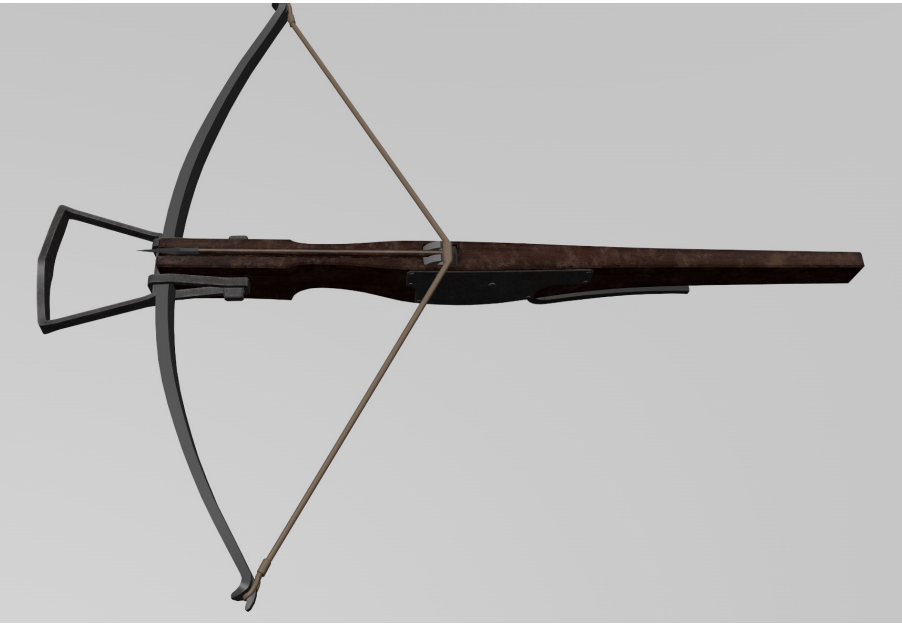
In Western terminology, this part is known as a revolving nut. In medieval Arabic technical vocabulary, the study connects it with the term gauzah. When the crossbow was cocked, the nut held the tensioned string in place. When the trigger was pulled, the nut rotated, released the string, and launched the bolt. It was a small part, but without it the weapon could not function as a controlled mechanical bow.
Kubadabad’s heavy bolt points to real battlefield use
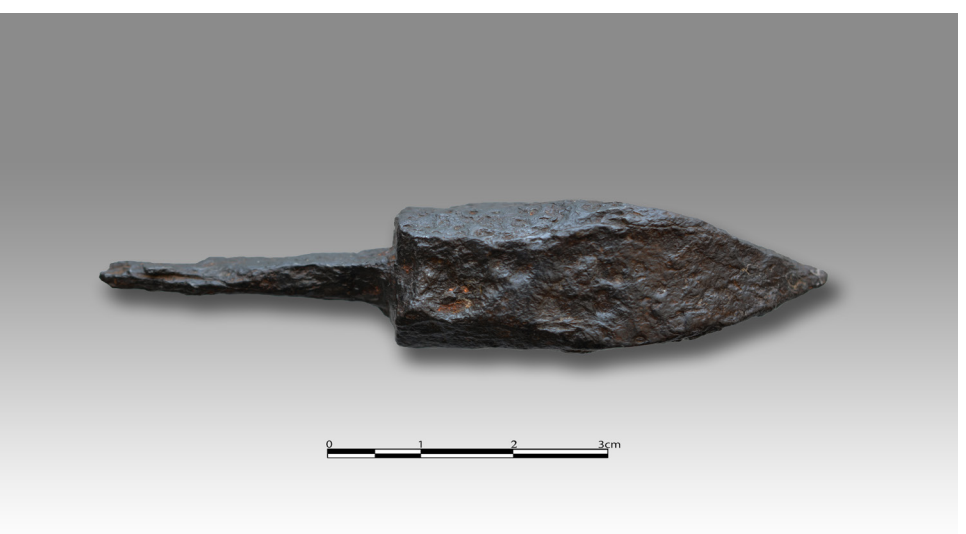
The study also discusses a heavy iron bolt head found at Kubadabad. Weighing 66 grams, it is far too heavy to have been fired from an ordinary hand bow. Its form, with a square-sectioned body and sharply converging edges, points instead to a crossbow or possibly a larger winch-operated weapon.
This detail is important. Medieval Anatolian excavations have produced several heavy bolt heads, including examples from Perre Höyük and Horis Kale in Adıyaman. Until now, however, researchers lacked a mechanical component from the weapon itself. The Kubadabad bone nut, therefore, links the projectile evidence to the working technology that launched such bolts.
For readers, the key point is simple: this is not only a weapons find. It is proof of a mechanism.
The crossbow was not a late arrival in the Islamic world
The discovery also challenges a long-standing assumption in some Western scholarship. Crossbows are often treated as weapons that reached or became visible in the Islamic world relatively late, especially after the 14th century. Çeken, Yavaş, and Meriç argue that this picture is incomplete.
The article reviews medieval military texts that mention the charkh and related stock bows much earlier. Islamic and Persian sources used terms such as qaws al-yad, qaws al-rijl, charkh, and kaman-i charkh. The 12th-century military treatise prepared for Saladin by Mardī ibn Ali al-Tarsusi is among the key sources showing that such weapons were known in the medieval Islamic military tradition. Other texts from the Mamluk and Persianate worlds also refer to different forms of foot bows, hand bows, and more complex mechanical launchers.
This textual evidence does not make the Kubadabad find less important. It makes it more valuable. Written sources show that the technology was known; the palace find gives archaeologists a physical piece of that technology in Anatolia.
A Seljuk palace with a military shadow
Kubadabad is usually remembered for its palace architecture and famous Seljuk tiles. The complex was reportedly ordered by Sultan Alaeddin Keykubad I after he admired the area near Lake Beyşehir. According to medieval accounts, the palace was planned and completed by Sa’d al-Din Köpek, one of the most powerful figures of the Seljuk court.
The palace was later abandoned and forgotten until its rediscovery in 1949 by Konya Museum Director Zeki Oral. Scientific excavations began in the 1960s under Katharina Otto-Dorn. Rüçhan Arık then continued long-term investigations between 1980 and 2016. Today, excavations continue under the direction of Muharrem Çeken.
The new interpretation of the crossbow nut places Kubadabad in a broader world of military innovation. The palace was not only a place of luxury, courtly display, and artistic production. It also belonged to a political environment shaped by sieges, frontier warfare, mobile armies, and technological borrowing across Eurasia.
The study notes that historical sources mention charkh-type weapons in Seljuk military contexts. One striking reference describes preparations for the Battle of Yassıçemen, where machines throwing arrows and naphtha were placed behind defensive shields. Another account states that the Armenian king Leon promised Sultan Alaeddin Keykubad 500 crossbowmen each year after accepting Seljuk overlordship. Such references suggest that these weapons had strategic value in the 13th-century Seljuk military system.
A small object with a wider story
The Kubadabad crossbow nut is modest in size, but its significance is unusually large. It connects archaeological material, medieval military texts, and the technological history of warfare in Anatolia. It also reminds us that major discoveries do not always arrive as gold, inscriptions, or monumental ruins. Sometimes they appear as a damaged piece of bone, overlooked until its shape is understood.
For Çeken, Yavaş, and Meriç, the object represents the first published example of a charkh nut from Medieval Anatolian excavations. Combined with the heavy bolt head from the same palace complex, it provides rare evidence for the use of mechanically triggered crossbows in the Seljuk period.
At Kubadabad, beside the quiet waters of Lake Beyşehir, the remains of palace life have long spoken of power, art, and refinement. This small bone mechanism adds another voice: the sharp, engineered sound of medieval warfare.
Çeken, M., Yavaş, A., & Meriç, G. (2026). Çarhın (Arbalet) Tarihsel Gelişim Süreci ve Kubadabad Sarayı Kazısında Bulunan Bir Çarh Somunu ve Ucu Üzerine. Höyük, 17, 215-228. https://izlik.org/JA59XM47ZL
Cover Image Credit: Site of the Kubadabad Palace. Public Domain
