
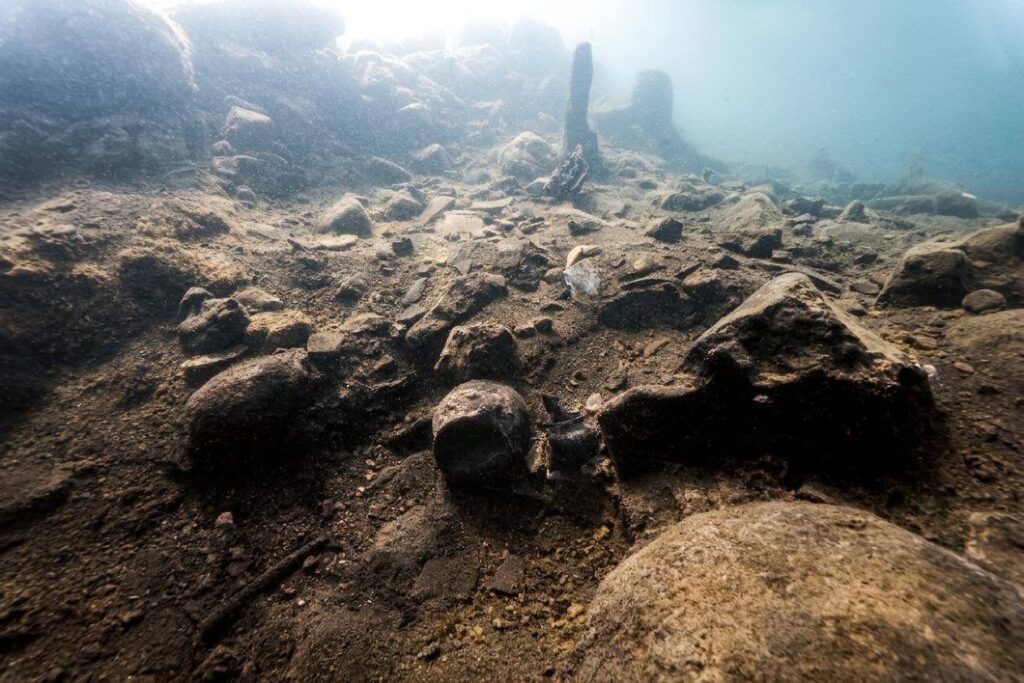
The submerged prehistoric settlement of Gran Carro, resting on the bed of Lake Bolsena in Italy’s Viterbo province, has given up another round of remarkable finds. Just months after divers recovered the first known Iron Age textile fragment from the site, the 2026 research season has closed with a new set of discoveries that is reshaping how archaeologists understand the settlement’s long history.
According to an announcement shared on Facebook by the Soprintendenza Archeologia Belle Arti e Paesaggio per la provincia di Viterbo e per l’Etruria Meridionale, this year’s underwater research and conservation campaign at Gran Carro has now concluded. The work was carried out by the Servizio di Archeologia Subacquea of the Soprintendenza, part of the Italian Ministry of Culture’s ordinary three-year funding program, with specialist underwater archaeologists from L’Anfora Srl Archeologia Mare Ambiente and underwater conservators from CSR Restauro Beni Culturali carrying out fieldwork and preservation on site.
New Evidence of a Bronze Age Phase
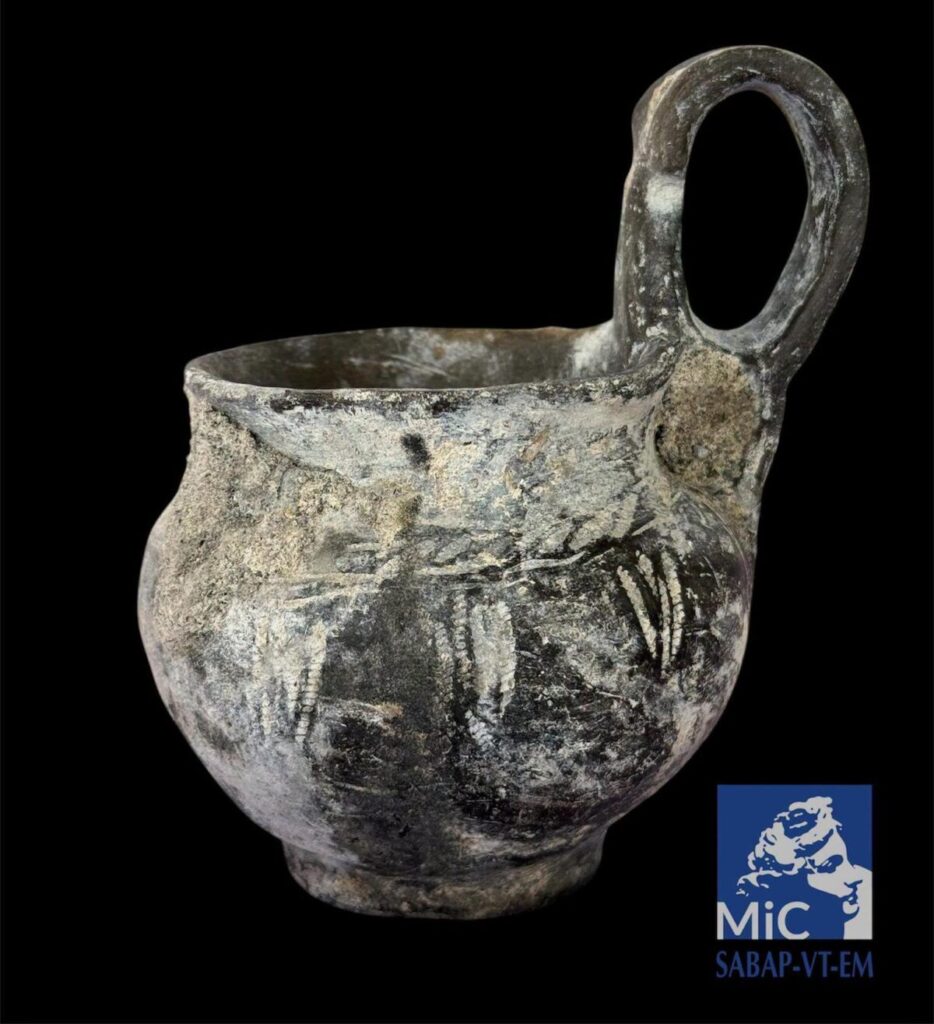
Among the pottery recovered this season are vessels that can be clearly attributed to the Final Bronze Age. That detail matters: it confirms, for the first time in a definitive way, a proto-Villanovan phase in the settlement area, adding an important piece to the site’s chronological sequence. Gran Carro, in other words, was not a community tied to a single moment in prehistory, but one whose occupation stretched across a longer and more layered span of time than previously documented in this much detail.
The finding builds on what researchers already knew: Gran Carro was first established in the Middle Bronze Age, around the 15th century BC, before its most substantial remains took shape during the Early Iron Age, between the late 10th and early 9th centuries BC, in a period associated with the Villanovan culture of central Italy.
The settlement was originally identified in 1959 by mining engineer Alessandro Fioravanti and has since become one of the best-preserved protohistoric sites in Italy, thanks largely to the way the lake’s waters have sealed and protected organic material that would have decayed on a typical dry-land excavation.
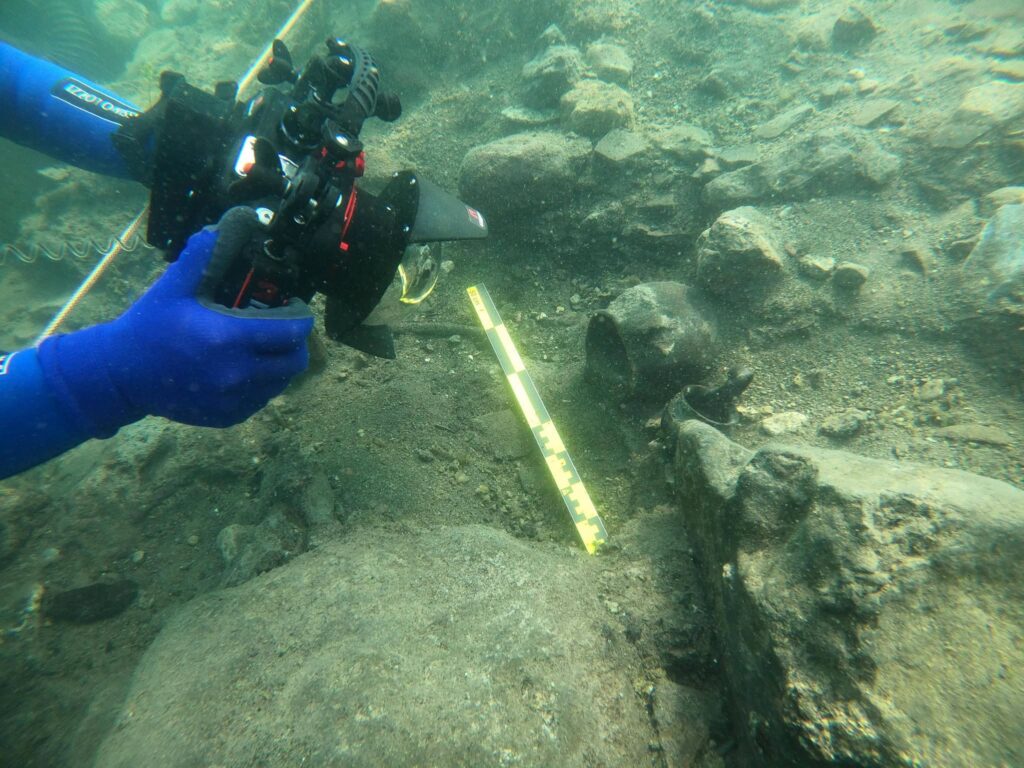
Credit: Soprintendenza Archeologia, Belle Arti e Paesaggio per la provincia di Viterbo e per l’Etruria Meridionale via Facebook
Preserved Emmer Wheat and Iron Age Grave Goods
Once again, the most striking discoveries came from the Aiola, one of the most enigmatic sectors of the submerged complex. New investigations there uncovered further plant remains, including intact ears of emmer wheat deposited inside pottery vessels. Alongside these botanical offerings, excavators found grave-good-type objects closely resembling those typically documented in Villanovan tombs of the early Iron Age.
The exceptional underwater conditions at Gran Carro mean that these organic remains survived in a state rarely seen at terrestrial sites, opening a new line of research into the community’s food practices, ritual deposits, and the meaning attached to particular offerings.
Large Timber Structures Beneath the Sacred Mound
Excavators also identified large wooden elements emerging from the lower part of the site’s so-called sacred mound, in part positioned beneath stone slabs.
Their exact function has not yet been established, and further study will be needed to interpret them. Their preservation alone, however, is significant: timber that would almost certainly have disappeared at a dry-land site has instead survived intact beneath the lake, giving archaeologists a rare chance to study construction techniques directly.
A Site Still Revealing Its Secrets
The Soprintendenza noted that a Rai television crew visited the site twice this season to document the work, including an underwater interview conducted with the help of a full-face diving mask provided by the Nucleo Carabinieri Subacquei di Roma, allowing real-time communication and video transmission from the lakebed with the support of an ROV.
The end of this year’s campaign does not mean the end of the research. The newly recovered material, from Bronze Age pottery to preserved cereal remains and timber structures, will now need to be studied, conserved, and set alongside what is already known about the settlement.
Following the discovery of the site’s first Iron Age textile fragment earlier this year, this latest campaign confirms that Gran Carro continues to function as a kind of underwater archive of Italian prehistory, one where each new research season can still change what is known about the community that once lived on the shores of Lake Bolsena.
