
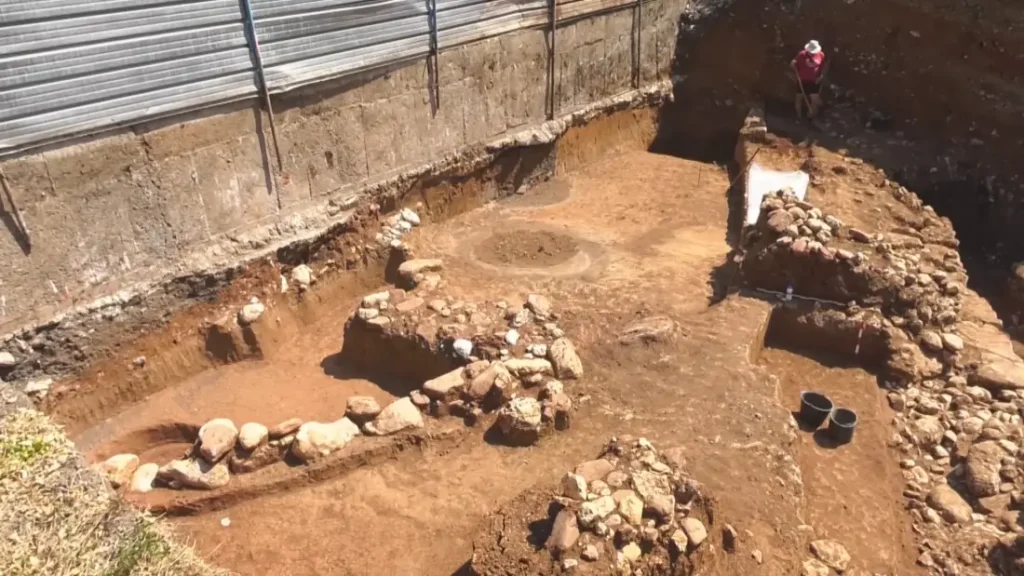
Archaeologists have unearthed what may be one of the most significant Thracian discoveries of the 21st century: the remains of a royal palace belonging to the powerful Triballi tribe, one of the most enigmatic and dominant Thracian groups in ancient Southeastern Europe. The discovery was made in the heart of Vratsa, Northwestern Bulgaria, near the Mogilanska Mound, a site already known for rich tombs and golden artifacts dating back to the 4th–5th century BCE.
“We excavated a total of five graves above the krepis. We already had indications from our registry that there was a necropolis from the late Bulgarian Middle Ages (12th–14th century) in this area,” said Georgi Ganetsovski, archaeologist and Director of the Vratsa Regional History Museum.
In an interview with BNT, Ganetsovski emphasized that while the medieval necropolis had long been documented, the discovery of the underlying stone structure was entirely unexpected and may significantly change current interpretations of the site’s historical layers.
The newly uncovered structure features precision-cut stone blocks, a hallmark of elite Thracian architecture. According to Georgi Ganetsovski, “The stonework is so precisely executed that the massive blocks fit together without mortar. This is dry masonry at its most refined—indicative of royal or aristocratic Thracian centers.”
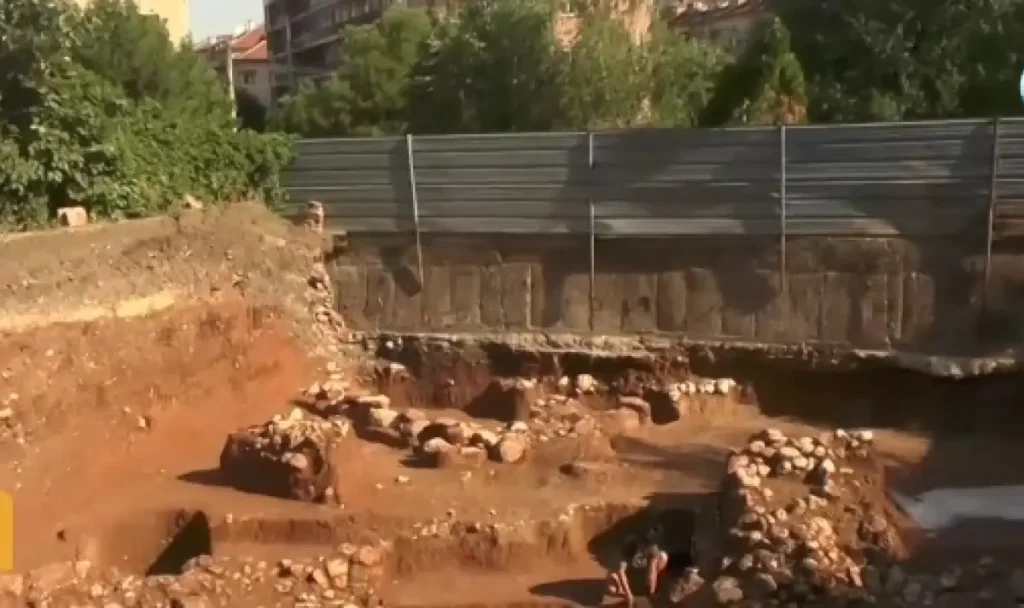
A Lost Palace of the Triballi
The Triballi were a fierce and influential Thracian tribal confederation that controlled territories across modern-day northwestern Bulgaria and eastern Serbia. Despite their prominence in ancient records—including mentions by Herodotus and later Roman sources—archaeological evidence of their dynastic centers has remained elusive for decades.
That may now have changed. The discovery came unexpectedly when a private investor began excavation for a residential building, prompting a mandated archaeological inspection.
Beneath the krepis, archaeologists uncovered what they now believe to be one of two long-sought Triballi royal residences. “This structure wasn’t just monumental in size—it was built with a symbolic purpose,” said Ganetsovski. “After the death of the Triballi king, the palace appears to have been transformed into a mausoleum, following the ritual of heroon—a process of turning the ruler into an eternal, semi-divine figure.”
This interpretation is supported by the presence of three tombs, previously excavated in the 1960s, containing luxurious grave goods such as a golden wreath, gold earrings, and a silver-gilded kneeguard engraved with the image of the Great Mother Goddess—a central deity in Thracian spirituality.
A Center of Power and Ritual
The architectural style of the newly discovered palace shares characteristics with other Thracian elite sites like Seuthopolis and Provadia, known for their use of monumental dry-stone construction and symbolic spatial layouts. However, this Vratsa site could be unique as a direct seat of a Triballi ruler.
The combination of elite architecture, high-value funerary items, and strategic location in the city’s historic core strongly suggests that this was not a provincial estate—but rather a central political and ceremonial hub.
“This is more than just archaeology,” Ganetsovski added. “Vratsa may now hold the only example of ancient stone-built architecture preserved in situ within a modern Bulgarian city center.”
What Happens Next?
As of now, the fate of the structure is uncertain. The site is under review by Bulgaria’s Ministry of Culture and the National Institute for Cultural Heritage, which must decide whether to preserve the palace in situ or attempt relocation—a risky and expensive endeavor.
Local historians and cultural advocates are urging the government to act swiftly to secure the site before construction resumes. “We are racing against time,” Ganetsovski noted. “But we also have an opportunity to transform Vratsa into a major archaeological and cultural destination.”
Rediscovering the Triballi
While the Triballi were often described in ancient texts as warlike and resistant to outside domination—including by the Persians, Macedonians, and Romans—this discovery provides a different perspective: a sophisticated society with advanced architectural skills and complex funerary traditions.
This find not only fills a long-standing gap in Thracian archaeology but also revives interest in the legacy of a tribe whose power once rivaled that of their more well-known neighbors.
With careful preservation and continued research, Vratsa’s royal palace may soon become a landmark of ancient Thracian civilization—and a long-overdue tribute to the legacy of the Triballi.
Cover Image Credit: BNT
