
19 January 2026 The Future is the Product of the Past

UK’s Oldest Hospice Discovered: Anglo-Saxon Monastery Unearthed in Cookham Reveals Early Medical Care

An extraordinary archaeological discovery in Cookham, Berkshire, is rewriting our understanding of healthcare in early medieval England. Unearthed behind the village’s Holy Trinity Church, the remains of an 8th-century Anglo-Saxon monastery—once overseen by Queen Cynethryth and King Offa—may represent the oldest hospice ever found in the UK.

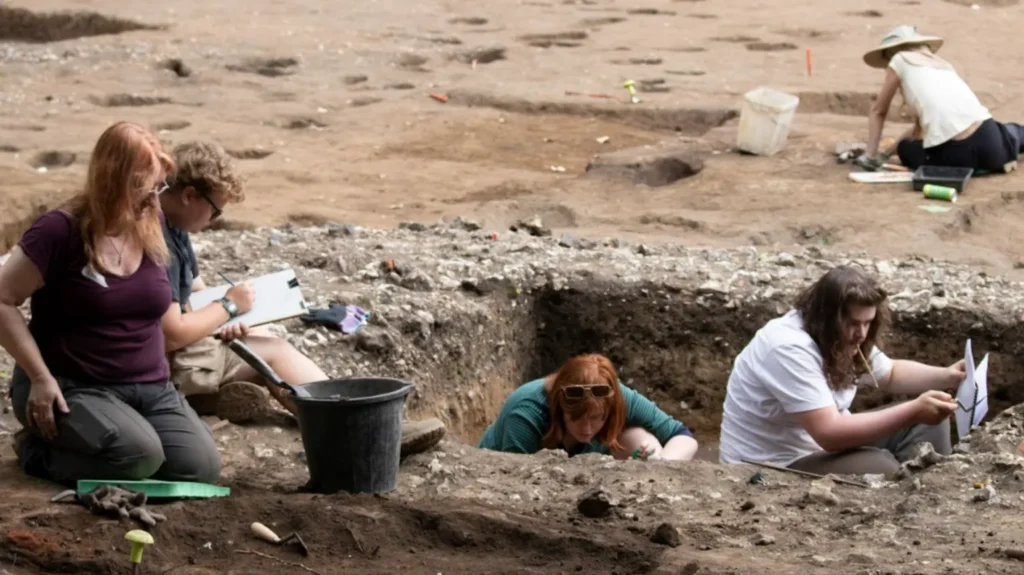
Since 2021, archaeologists from the University of Reading have been meticulously excavating this historic site. Their work has uncovered a large wooden structure, an ancient water mill, and, most notably, a cemetery revealing a remarkable concentration of individuals who suffered from serious illnesses and injuries. This rare assemblage of skeletal remains is shedding new light on how Anglo-Saxon communities cared for the sick and dying.

A Hospice Ahead of Its Time

Professor Gabor Thomas, who leads the excavation project, explains: “Initial analysis of the remains shows a high prevalence of individuals with severe pathological conditions. Nearly every person buried here experienced some form of health challenge, whether trauma, infections, or tumours.” The diversity and severity of these ailments suggest that the monastery functioned as a medical centre, attracting patients not just from Cookham but from beyond.

Dr Ceri Falys, a human osteoarchaeology specialist at the University of Reading, analyzed 23 skeletons from the site. Her findings reveal a community marked by frailty and disease: many adults were smaller than expected for their age, and several showed signs of skeletal trauma consistent with accidents or injuries. One individual bore evidence of skull surgery, while others had bone deformities caused by tumours. Some skeletons showed signs of pressure sores—clear indications of long-term immobility and care.

“These signs of extended treatment point to a form of hospice care,” Dr Falys notes. “People were brought here to be cared for, treated, and comforted in their final days.”


📣 Our WhatsApp channel is now LIVE! Stay up-to-date with the latest news and updates, just click here to follow us on WhatsApp and never miss a thing!!


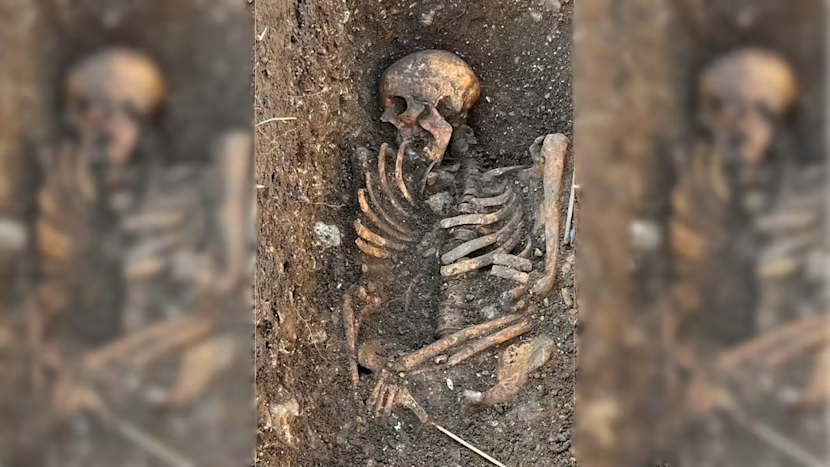
The unusual position of the ribs suggest a tumour on the chest.
Credit: University of Reading
The unusual position of the ribs suggest a tumour on the chest. Credit: University of Reading

Tumours, Trauma, and Treatments

Professor Mary Lewis, a bioarchaeologist, highlights a startling discovery: among the remains, 11% displayed signs of cancer—significantly higher than previously recorded rates for the Anglo-Saxon period, which were around 0.8%. This unusual frequency suggests the site was a place where those suffering from serious illnesses sought healing.

“The conditions found here are so varied and severe that these individuals couldn’t all have come from the local population,” says Professor Lewis. “It’s likely that the monastery had someone akin to a medic—perhaps a person skilled in herbal remedies or prayers aimed at treating tumours and swellings.”

Chemical and isotopic analysis of dental calculus (plaque) is planned to uncover what herbal medicines or incenses might have been used in treatment. Such tests could also reveal the geographical origins of the patients, showing how far people travelled for care.

Historical and Religious Context

Operating during a period of great religious transformation in England, the monastery played a vital role in the spread of Christianity in the Thames Valley. Professor Gabor Thomas emphasizes, “Christianity was still relatively new at this time, and monasteries like this helped Christianize local communities while also serving social and medical functions.”

Queen Cynethryth, the site’s historical ruler alongside King Offa, was a unique figure in Anglo-Saxon history. Her royal patronage of the monastery adds political and cultural significance to the discovery.
The site has been excavated by staff and students every summer since 2021 as part of a research project of the Anglo-Saxon monastery site in the vicinity of Holy Trinity church. Credit: University of Reading

Community and Continuing Research

Fr Stephen Mills, Vicar of the Benefice of The Cookhams, remarks on the monastery’s enduring legacy: “Over twelve centuries later, Holy Trinity Church continues to offer comfort and hope. It’s remarkable that this excavation is unfolding the story of a place that may have been one of the earliest hospices in our land.”

This ongoing research will illuminate how early medieval people cared for their community’s most vulnerable, highlighting a blend of faith, medicine, and compassion rarely seen in the historical record.

University of Reading

Cover Image Credit: University of Reading

Related Articles

Altar site for Greek goddess Demeter unearthed in Turkey’s ancient city of Blaundus

21 December 2021

21 December 2021

An altar site for the Greek goddess Demeter was unearthed during the ongoing excavations in the ancient city of Blaundus,...

The Bronze Sacred Sanxingdui Tree Number 3 is Being Restored

9 April 2021

9 April 2021

According to the announcement of the Sanxingdui Museum, archaeologists have begun to assemble and restore the No. 3 bronze sacred...

Mystery in Speyer: 1,000-Year-Old Human Remains and Ancient Cloth Found in Abandoned Glass Case

23 October 2025

23 October 2025

A strange discovery in the German city of Speyer has left archaeologists and police puzzled. A glass display case containing...

Sacred Seduction: Kamasutra Feminism and the Legacy of Ancient Erotic Temples

8 April 2025

8 April 2025

For many, the Kamasutra is merely a name linked to condom brands and erotic chocolates, often dismissed as just a...

A 2000-year-old wooden figure was unearthed in a Buckinghamshire ditch

13 January 2022

13 January 2022

An extremely rare, carved wooden figure from the early Roman era has been discovered in a waterlogged ditch during work...

A Christian monastery, possibly pre-dating Islam, found in UAE

6 November 2022

6 November 2022

A Christian monastery has been discovered on the island of Siniyah off the coast of the United Arab Emirates (UAE),...

Excavations of Aççana Mound, the Capital of the Mukish Kingdom, Continue

16 July 2021

16 July 2021

2021 excavations have started at Aççana Höyük, the old city of Alalah, in Hatay’s Reyhanlı district. The ancient city of...

Irish archaeologists discover a rare 1,600-year-old idol in the Roscommon bog

13 August 2021

13 August 2021

A 1,600-year-old wooden pagan idol has been discovered in a bog in Co Roscommon by Irish archaeologists. This rare artifact...

An Urartian female executive grave was found at the Çavuştepe Mound

9 September 2021

9 September 2021

The grave of an Urartian, who was buried with his horse, cattle, and dog, had been found recently. Today, another...

5,200-year-old stone carving silkworm chrysalis discovered in north China

19 July 2022

19 July 2022

According to the provincial archaeological research institute, archaeologists discovered a stone-carved silkworm chrysalis dating back at least 5,200 years in...

Mass graves of Crusaders killed in the 13th century have been discovered in Lebanon

17 September 2021

17 September 2021

From 1096 to 1291, waves of Europeans took up arms and marched into the Middle East. They hope to “take...

Medieval Mummy Seized in Niğde, Türkiye, Amidst Smuggling Crackdown

12 March 2025

12 March 2025

Authorities in Türkiye have detained six individuals in the Bor district of Niğde, who were allegedly attempting to sell an...

Archaeologists uncover 850-year-old 170 silver medieval coins in an ancient grave, in Sweden

27 April 2024

27 April 2024

During archaeological excavations in a medieval graveyard in Brahekyrkan on the Swedish island of Visingsö, archaeologists uncovered about 170 silver...

Well-Preserved A Dog, a Bone Dagger: Inside a 5,000-Year-Old Burial Beneath a Swedish Lake

16 December 2025

16 December 2025

By the edge of a vanished lake in southern Sweden, archaeologists have uncovered a burial so rare it reshapes what...

8,000-year-old Female Figurine Discovered in Ulucak Höyük in Western Türkiye

15 August 2024

15 August 2024

One of the most prominent and oldest Neolithic sites found in what is now Turkey has yielded yet another interesting...