
8 November 2025 The Future is the Product of the Past

Kerkenes Excavations Reveal Possible Proto-Turkic Kurgans Dating Back 2,600 Years

Archaeological excavations at the ancient city of Kerkenes (Pteria) in central Anatolia have revealed burial features that may be linked to Proto-Turkic or steppe-related traditions, according to early reports from the research team. The discovery could provide new insight into cultural interactions in Anatolia during the late Iron Age, around 2,600 years ago.

The discovery was made during excavations led by Prof. Dr. Şevket Dönmez, one of Türkiye’s leading Iron Age experts and the head of the Department of Turkish-Islamic Archaeology at Istanbul University. The project is conducted under the “Heritage for the Future” initiative by the Turkish Ministry of Culture and Tourism, with the participation of scholars from Istanbul University, Bozok University, Muğla Sıtkı Koçman University, and Amasya University.

Excavations at the Heart of Ancient Pteria

Kerkenes, located near Şahmuratlı Village in Yozgat’s Sorgun district, is one of the largest Iron Age sites in Anatolia. Identified with the ancient city of Pteria—mentioned by the Greek historian Herodotus as a major stronghold destroyed by the Persians in the 6th century BCE—the site covers an area of about 2.5 square kilometers on the Kerkenes Plateau.

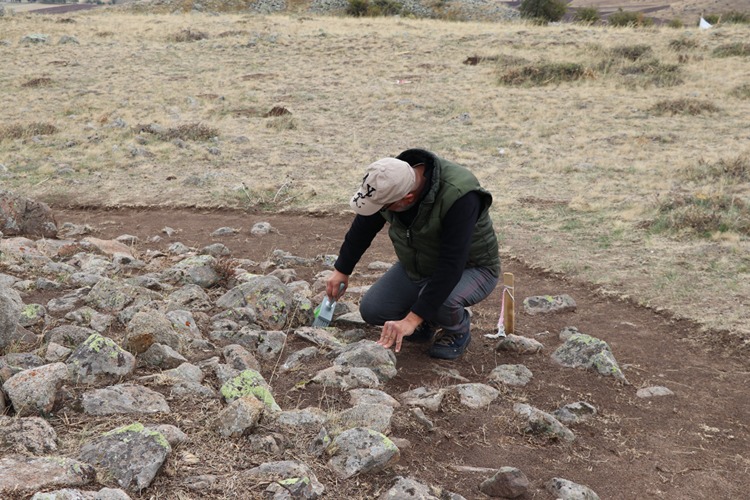
The current excavations focus on two main areas: Keykavus Fortress and a nearby zone locally known as the “Türkmen Cemetery” or “Şehitlik Mevkii.” The latter has drawn particular attention after the discovery of disturbed burial mounds and open-air sacred spaces associated with ancient funerary practices.
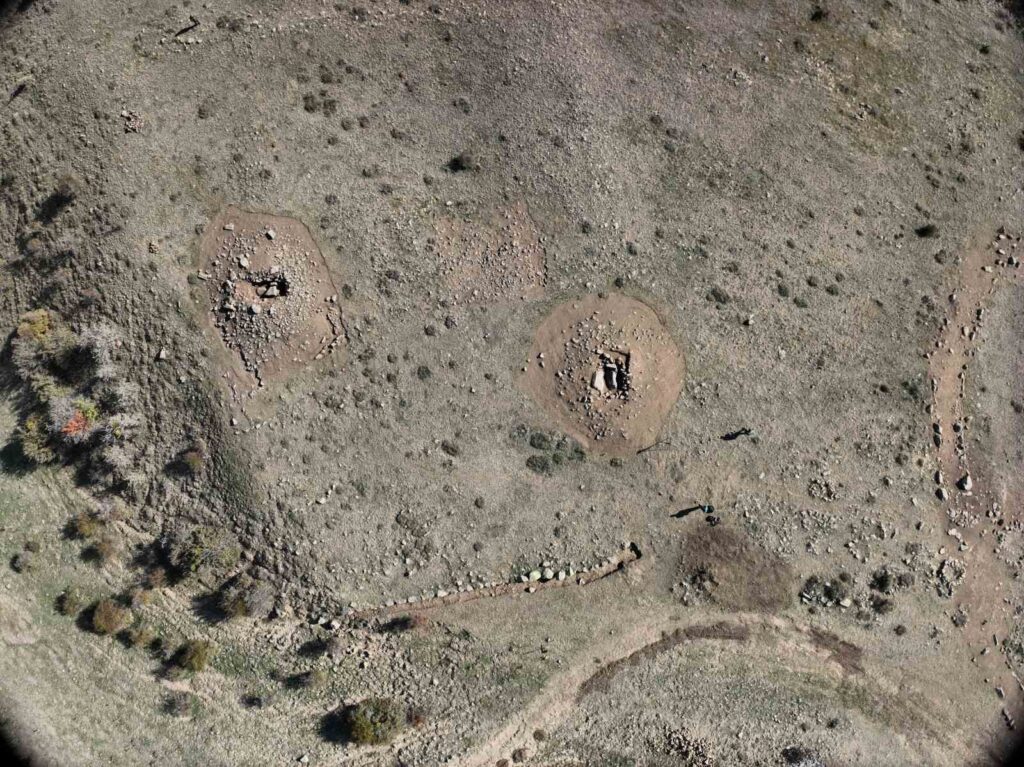
Archaeological excavations at the ancient city of Kerkenes (Pteria) in central Turkey have uncovered graves that may possibly be associated with Proto-Turkic groups, suggesting a potential early Turkic presence in Anatolia as far back as 2,600 years ago.
Archaeological excavations at the ancient city of Kerkenes (Pteria) in central Turkey have uncovered graves that may possibly be associated with Proto-Turkic groups, suggesting a potential early Turkic presence in Anatolia as far back as 2,600 years ago. Credit: İHA

Possible Link to Proto-Turkic Kurgan Traditions

According to Prof. Dönmez, initial findings suggest that some of the burial structures may be connected to kurgan-type tombs—earthen or stone mounds commonly associated with Scythian and early Turkic (Proto-Turkic) cultures of the Eurasian steppe.


📣 Our WhatsApp channel is now LIVE! Stay up-to-date with the latest news and updates, just click here to follow us on WhatsApp and never miss a thing!!


“We have identified a large circular structure about 60 meters in diameter, which we describe as a geoglyph—a monumental design made with stones visible from above,” said Dönmez.
“This combination of a kurgan and a sacred ‘kut’ area resembles examples found in Central Asia, particularly from the Scythian and Göktürk periods. Such a pattern appearing in Anatolia around 550 BCE suggests that Proto-Turkic groups may have been active in this region much earlier than previously thought.”

Although the graves were heavily damaged by looters in earlier years, ongoing analysis aims to clarify their chronology and cultural context through scientific dating methods and comparative architectural studies.

Rewriting Early Turkish Presence in Anatolia

If confirmed, the findings could significantly reshape the understanding of Turkish cultural origins in Anatolia, extending their architectural and ritual traditions back to the late Iron Age—long before the Seljuk and Byzantine periods typically associated with Turkish settlement.

“Our current evidence points to a Proto-Turkic presence in central Anatolia dating back 2,600 years,” Dönmez noted. “However, a definitive conclusion will depend on the results of radiocarbon dating and further archaeological data.”
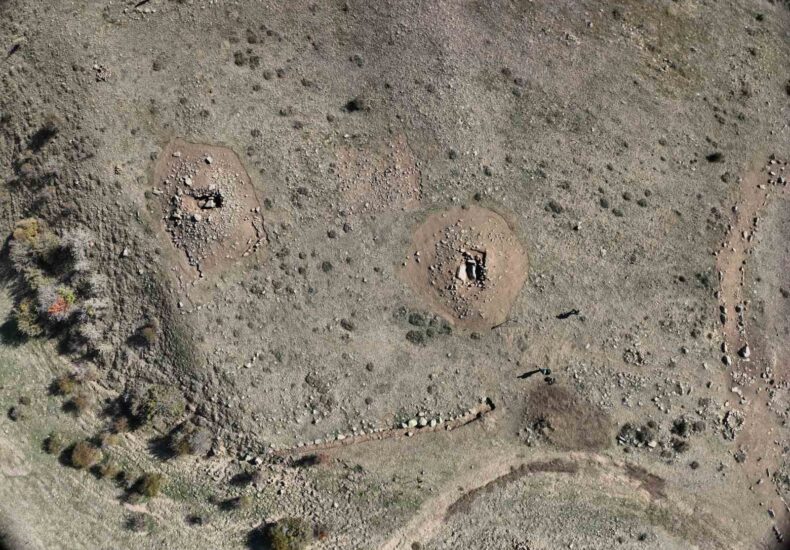
Archaeological excavations at the ancient city of Kerkenes (Pteria) in central Turkey have uncovered graves that may possibly be associated with Proto-Turkic groups.
Archaeological excavations at the ancient city of Kerkenes (Pteria) in central Turkey have uncovered graves that may possibly be associated with Proto-Turkic groups. Credit: İHA

Kerkenes: A Site of National and Global Significance

The Kerkenes excavations have long been recognized as one of Türkiye’s most important archaeological projects. Beyond its historical ties to the Phrygians, Lydians, and Persians, the site now appears to offer a unique window into Eurasian steppe cultures and their interactions with Anatolia during the Iron Age.

Local authorities, including the Yozgat Museum Directorate and Sorgun Municipality, have expressed strong support for the project, emphasizing its potential to transform the region into a significant archaeological and cultural tourism hub.

As research continues, Kerkenes stands not only as a key to Anatolia’s multi-layered past but also as a focal point in the ongoing exploration of Proto-Turkic history and its far-reaching influence across continents.

Cover Image Credit: Sait Çelik/AA

Related Articles

An archaeological dig at Govan Old Churchyard revealed a remarkable new find: an early medieval ‘Govan Warrior’ stone

19 September 2023

19 September 2023

An archaeological excavation in the churchyard at Govan Old Parish Church in Glasgow, a port city on the River Clyde...

Japan-Persia Ancient Ties

20 June 2021

20 June 2021

Japanese and Persian ancient ties go back to the 7th century. Silk Road connected Japan with countries and regions far...

An important discovery in Haltern: Mini temples and sacrificial pit discovered in Roman military encampment

16 November 2023

16 November 2023

Archaeologists from the Westphalia-Lippe Regional Association (LWL) have found remains of the foundations of two mini Roman temples and a...

Homo Bodoensis may be the ancestor of modern humans

28 October 2021

28 October 2021

Although modern humans are the only surviving human lineages, their kinship with other human species that roamed the world is...

Turkey’s second ancient lighthouse found in the Bathonea

28 July 2023

28 July 2023

The excavations in the ancient Greek city of Bathonea, located in the Küçükçekmece Lake basin in the Avcılar district of...

3000 Years Old Bronze Age Settlement Unveiled Ahead of New Stadium Construction

27 July 2025

27 July 2025

Archaeologists have uncovered an expansive Late Bronze Age settlement in Wolmirstedt, Saxony-Anhalt, ahead of the construction of a new multimillion-euro...

3,500-Year-Old Human-Bodied, Eagle-Headed Seal Discovered in Central Türkiye

9 September 2025

9 September 2025

Archaeological excavations at Karahöyük in central Türkiye have led to a remarkable discovery: a 3,500-year-old human-headed, eagle-bodied seal. According to...

Poland’s largest megalithic cemetery discovered

3 March 2021

3 March 2021

Archaeologists excavated in Poland discovered a large megalithic complex, including dozens of tombs dating back 5,500 years. The site was...

3,000-Year-Old Cave Paintings Discovered in Itatiaia National Park in Rio de Janeiro, Brazil

13 April 2025

13 April 2025

In a stunning revelation, a dedicated team of researchers from the National Museum, in collaboration with the Federal University of...

A Temple Guardian From The 13th Century Found At Cambodia’s Angkor Wat

17 September 2024

17 September 2024

While clearing rubble from a collapsed gate at the Banteay Prei Temple within Cambodia’s Angkor Wat Archaeological Park, workers stumbled...

Human Presence in Malta Earlier Than Previously Thought: Hunter-Gatherers Navigated 100 km by Sea 1,000 Years Before Farmers

14 April 2025

14 April 2025

Recent archaeological findings have dramatically reshaped our understanding of human history in the Mediterranean, revealing that hunter-gatherers were capable of...

Who really fought in the Battle of Himera? Researchers found the answer to the question

14 May 2021

14 May 2021

According to the Ancient Greek Historians, victory over the Carthaginians in the Battle of Himera was won by the alliance...

1700 years ago the Korean peninsula had more genetic diversity than in our time, “Facial reconstruction possible through DNA analyses”

22 June 2022

22 June 2022

An international team led by The University of Vienna and the Ulsan National Institute of Science and Technology in collaboration...

A gilded silver Anglo-Saxon object “made by someone with a real eye for loveliness” has the experts baffled

2 January 2024

2 January 2024

An enigmatic Anglo-Saxon object has been unearthed in a captivating discovery near Langham, Norfolk, East of England. This gilded silver...

Neo-Assyrian Writing Boards: The Role of Beeswax, Orpiment, and Carbon Black in 7th Century BC Writing Techniques

13 April 2025

13 April 2025

Recent scientific investigations into the writing boards excavated from the ancient Assyrian city of Nimrud have shed new light on...