
8 February 2026 The Future is the Product of the Past

Lost Kingdom of Purušhanda? Archaeologists Unearth Ancient Ovens and Hearths in Üçhöyük, Türkiye

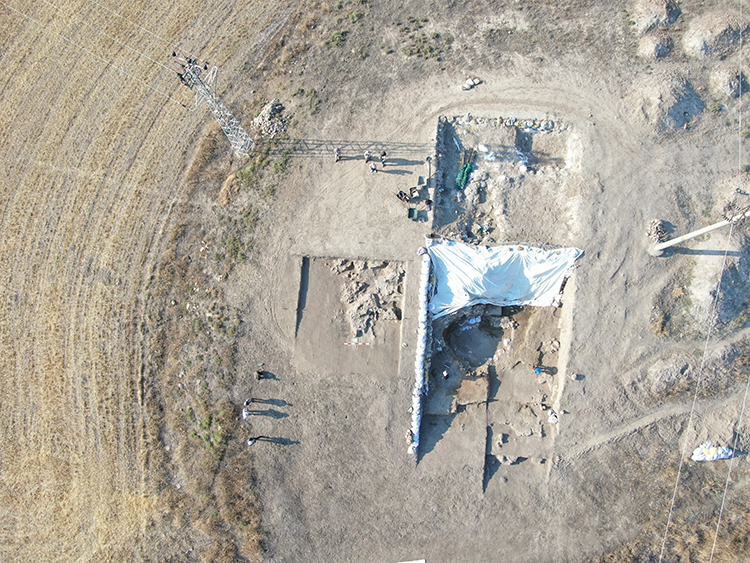
Archaeologists excavating at Üçhöyük in Bolvadin, Afyonkarahisar (western Türkiye) have uncovered remarkable new evidence that may help identify the long-lost capital of the kingdom of Purušhanda, a powerful Anatolian city-state from the early second millennium BC.

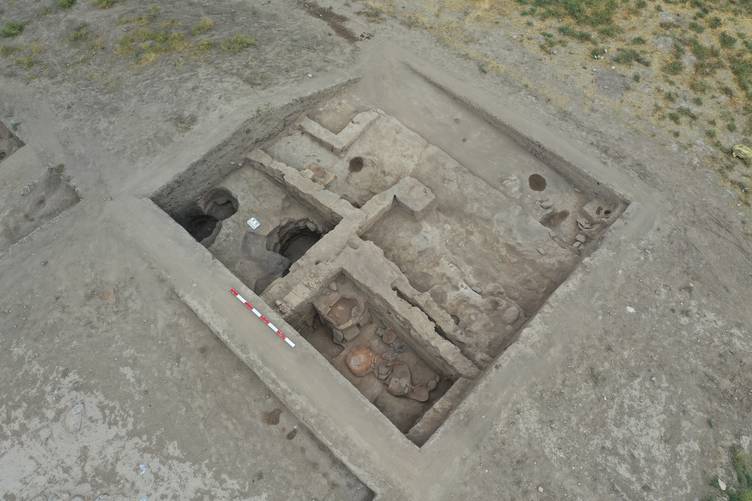
During the latest season of excavations, the team discovered three mudbrick-built ovens and two hearths, pointing to large-scale, organized production activities rather than ordinary domestic use. Experts believe these facilities may have been linked to palace or elite-controlled workshops.

Organized Production in Bronze Age Anatolia

Excavations at Üçhöyük began in 2020 and have continued under a presidential decree since 2024, directed by Prof. Dr. Özdemir Koçak of Selçuk University. The project, supported by the Governorship of Afyonkarahisar, Bolvadin Municipality, and Japanese scholars, has already produced important finds such as seals, spindle whorls, copper and lead pins, figurines, and storage jars.

Prof. Koçak emphasized the importance of the ovens and hearths:

“These were not simple domestic structures. They reflect a form of organized, large-scale production. Üçhöyük seems to have functioned as a ‘cargo center,’ producing goods for distribution across the region.”


📣 Our WhatsApp channel is now LIVE! Stay up-to-date with the latest news and updates, just click here to follow us on WhatsApp and never miss a thing!!


Excavations at Üçhöyük (Bolvadin, Afyonkarahisar) uncovered three mudbrick-built ovens and two hearths dating to the second millennium BC. Archaeologists suggest these installations indicate organized large-scale production activities, strengthening the theory that Üçhöyük may have been the capital of the lost kingdom of Purušhanda. Credit: AA

Purušhanda: A Forgotten Anatolian Power

The name Purušhanda (also spelled Purushanda) appears frequently in Old Assyrian merchant tablets from Kültepe (Kanesh), one of the largest trade hubs in Bronze Age Anatolia. Around 2000–1700 BC, Purušhanda was described as a major commercial and political power controlling trade routes across central Anatolia.

According to cuneiform sources, Assyrian traders paid special attention to Purušhanda because of its strategic role in long-distance trade. Even Sargon of Akkad (24th century BC) claimed to have campaigned against its ruler, underscoring the city’s prominence.

By the 17th century BC, however, the Hittite kingdom expanded its power over central Anatolia, absorbing Purušhanda and other independent city-states into its growing empire. This transition marks a crucial moment in Anatolia’s early history—when local kingdoms gave way to Hittite imperial dominance.

Üçhöyük: A Candidate for the Lost Capital

The exact location of Purušhanda has long remained uncertain, with several competing theories among scholars. Yet the discoveries at Üçhöyük, located in today’s Afyonkarahisar province, strengthen the argument that it may indeed be the lost capital.

Finds such as seals, industrial installations, and storage facilities suggest that Üçhöyük was not a rural settlement but a major production and trade center in the 1600s BC. If future excavations uncover written tablets or royal inscriptions, Üçhöyük could be conclusively identified as the seat of Purušhanda’s rulers.

Afyonkarahisar’s Provincial Director of Culture and Tourism, Yusuf Altın, highlighted the significance of the excavations:

“The evidence strongly suggests Üçhöyük could be the heart of the lost kingdom of Purušhanda. A discovery of inscriptions would allow us to confirm this beyond doubt.”
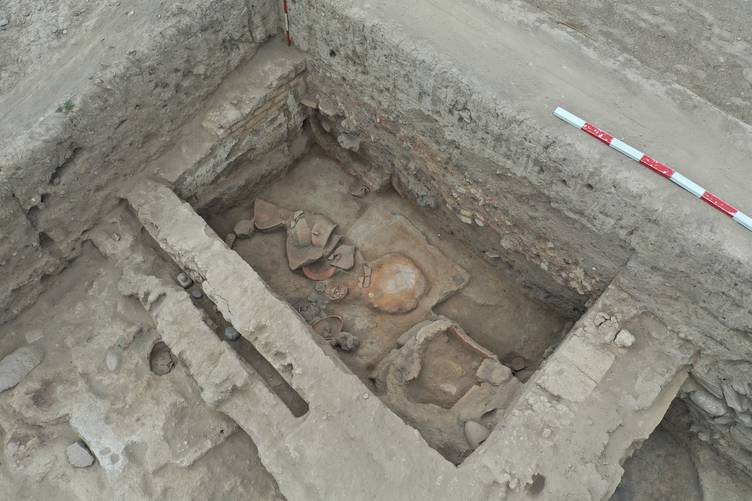
Remains of a mudbrick oven and fragmented pottery unearthed at Üçhöyük (Afyonkarahisar, Türkiye) reveal evidence of organized production in the early second millennium BC, offering new clues about the lost kingdom of Purušhanda. Credit: AA

Future Prospects: Heritage and Tourism

The excavation team plans to restore the mudbrick ovens and hearths for preservation and eventual public display. If Üçhöyük is confirmed as Purušhanda, it would not only solve one of Anatolia’s enduring archaeological mysteries but also transform the site into a major cultural heritage attraction for Türkiye.

With each season of discoveries, Üçhöyük is moving closer to rewriting the history of Bronze Age Anatolia and possibly revealing the long-lost kingdom of Purušhanda.

Cover Image Credit: AA

Related Articles

Mass graves of Crusaders killed in the 13th century have been discovered in Lebanon

17 September 2021

17 September 2021

From 1096 to 1291, waves of Europeans took up arms and marched into the Middle East. They hope to “take...

Remains of a Submerged Roman Harbor Discovered in Slovenia

7 March 2024

7 March 2024

Archaeologists from the Institute of Underwater Archaeology (ZAPA) have uncovered the remains of a submerged Roman harbor, off the coast...

A Dancing Muses statue 2175 years old was found in the ancient city of Stratonikeia, known as the city of eternal loves

7 December 2023

7 December 2023

The latest discovery in the ongoing excavations in the Ancient City of Stratonikeia, known as the city of eternal loves...

‘4,200-year-old Zombie grave’ discovered in Germany

22 April 2024

22 April 2024

Archaeologists excavating in East Germany have found a 4,200-year-old grave near Oppin in Saxony-Anhalt containing the skeleton of a man...

The First Ancient Celtic Languages Dictionary Reconstructs Britain and Ireland’s Early Linguistic Past

15 December 2025

15 December 2025

Aberystwyth scholars unite fragments of language to reveal the forgotten linguistic landscape of the Celtic world For centuries, the ancient...

Unusual construction material may be linked to the Tower of Babel

5 November 2021

5 November 2021

Archaeologists have recently discovered bitumen and mortar plastered onto a brick dating back to the Babylonian King Nebuchadnezzar II. This...

200,000-year-old hand axe discovered in the northern part of Saudi Arabia

5 November 2023

5 November 2023

The Royal Commission for AlUla (RCU) of Saudi Arabia has announced that archeological excavation teams at the Qurh site in...

World’s Oldest Pants was Made through Three Weaving Techniques

26 February 2022

26 February 2022

Back in 2014, a group of archaeologists discovered in China a pair of wool pants dating back to around 3,300...

Secrets of the Ancient Walls: 1,700-Year-Old Roman Altar Unearthed at Vuçak Castle in Kosovo

19 April 2025

19 April 2025

Excavations at Vuçak Castle in the Kosovo countryside have led to a remarkable discovery: a Roman altar dating back to...

1600-Year-Old Rare Roman Glass Diatreta with Gladiator Scene Unearthed in Doclea, Montenegro

13 June 2025

13 June 2025

An extraordinary archaeological discovery has been made in the ancient Roman city of Doclea, located near Podgorica, Montenegro. During recent...

Unique Iron & Viking-Age Mortuary Houses Found in Norway

28 August 2024

28 August 2024

While building a road in the village of Vinjeøra in central Norway, three ancient mortuary houses dating back to the...

Nine Ancient Patolli Games Found in Mexico

10 September 2024

10 September 2024

In recent rescue excavations in Mexico by archaeologists from the National Institute of Anthropology and History (INAH) nine patolli engravings...

10,000-year-old Sculptures and Figurines holding Phallus of the Taş Tepeler in the southeast Turkey

17 June 2022

17 June 2022

One of the common features of male depictions with similar features found in the region called Taş Tepeler (Stone Hills),...

1,400-Year-Old Ice Storage Unearthed at Baekje Fortress Reveals Ancient Korean Engineering

16 October 2025

16 October 2025

Archaeologists in South Korea have unearthed the first-ever Baekje-era ice storage facility at Busosanseong Fortress, a UNESCO World Heritage site...

Evidence of Brain Surgery performed 3,000 years ago discovered in the ancient city of Tel Megiddo

27 February 2023

27 February 2023

Researchers have discovered a rare instance of delicate cranial surgery, possibly the earliest of its kind in the Middle East,...