
7 June 2026 The Future is the Product of the Past

When the waters receded, the mounds of Pulur Sakyol and Yeniköy, bearing the traces of Kura-Aras Culture, came to light

The important cultural areas of Pulur Sakyol and Yeniköy mounds, which bear the traces of Kura-Aras Culture, represented by kurgans in the area between the Kura River and Aras River, came to light once the waters of the Keban Dam Lake receded.

The Kura and Aras rivers are the largest rivers of the Caucasus rising from Turkey flowing through Georgia, Armenia, Azerbaijan, and Iran, draining to the Caspian Sea. It is a culture named by the same name as it developed around these rivers.

The spreading area of Karaz Culture/ Kura-Aras Culture extends to Northern Black Sea Mountains – Transcaucasia line in the north, Urmiye Lake in Iran in the east, Divriği – Kangal, Malatya – Elazığ line in the west, and Kahramanmaraş – Amik Plain Palestine line in the south.

With the filling of the dam, many settlements in the region and the mounds of Pulur Sakyol and Yeniköy in Çemişgezek were submerged (1965).
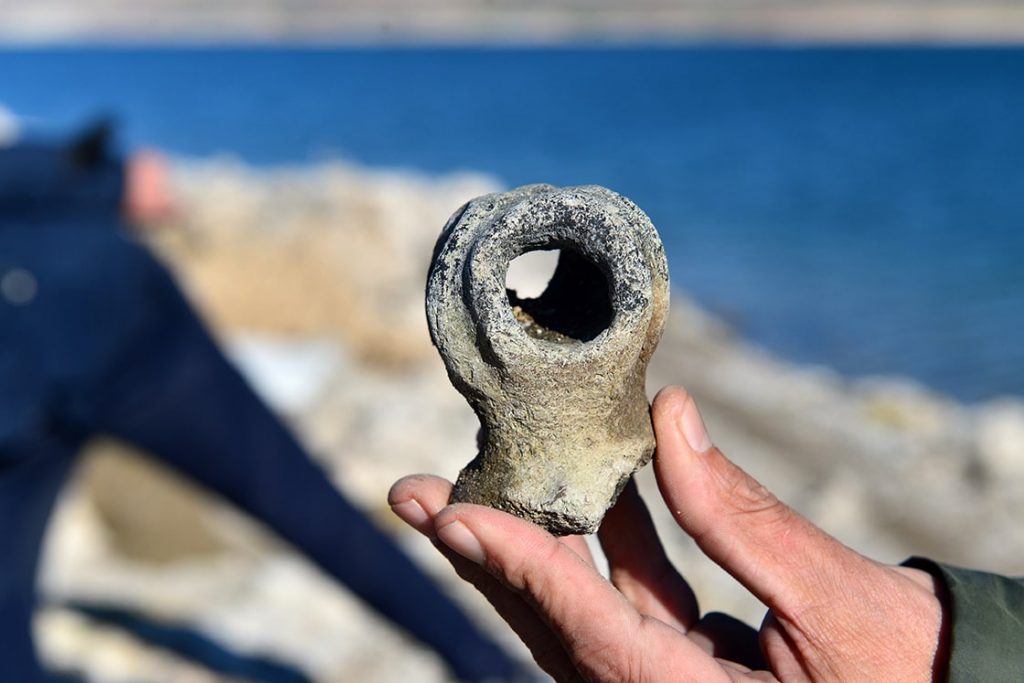
Sidar Can Eren – Anadolu Agency

These two mounds, which shed light on thousands of years of history, have come to light in the region where the dam’s water was withdrawn due to the drought and excessive evaporation experienced throughout the country this year.


📣 Our WhatsApp channel is now LIVE! Stay up-to-date with the latest news and updates, just click here to follow us on WhatsApp and never miss a thing!!


Atatürk University Archeology Department Research Assistant Dr. Umut Parlıtı, archaeologists Özgür Şahin and Ali Haydar İmre conducted a survey in the area after the receding waters.

Regarding the results of the survey, Atatürk University Archeology Department Research Assistant Dr. Umut Parlıtı told AA correspondent:

Stating that they obtained important archaeological findings in terms of Kura-Aras Culture as a result of the examinations carried out in the mounds, Parlıtı said, “The most important of these was the intra-settlement cemetery located in the northwest of Pulur Sakyol. We know that the Kura-Aras culture is an important culture that started from the Caucasus between 3200 and 2200 BC and spread to our geography from here to Syria. It is also very important for Anatolia. These inner-settlement graves are important in terms of being elite tombs. The closest similar example is found in Arslantepe.”
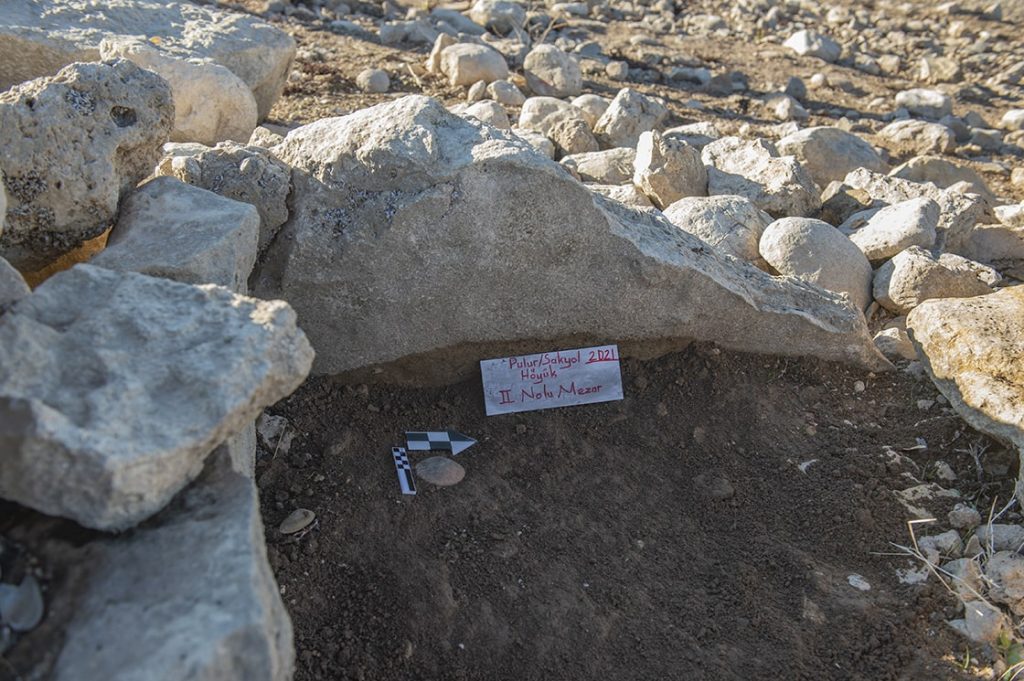
Pulur-Sakyol-ve-Yenikoymound found grave
Sidar Can Eren – Anadolu Agency

Parlıtı stated that the tombs in the mounds provide extremely important archaeological data and that excavations should be carried out in order to bring these tombs to the world of archeology as soon as possible.

“There are at least three chests tombs here right now”

Expressing that the area was forgotten after the Keban Dam rescue excavations in 1970, Parlıtı said:

“The fact that the Pulur Sakyol and Yeniköy mounds form one of the most extreme points in the northern spread of the Kura-Aras Culture is very important and is one of the centers that play a key role in this respect. It was excavated, but unfortunately, one-third of it was submerged without being excavated. The tombs, which are now revealed by the tides of the waters, are very important in this respect. In other words, we knew that there was a grave in the settlement, but having a cemetery in the settlement is a different situation. There are at least three chests tombs and one circumscribed tomb here at the moment.”

Related Articles

Roman Bone Box with No Known Parallels Discovered in Broadway Grave

11 January 2026

11 January 2026

Archaeologists in England have uncovered an extraordinary artefact that is reshaping our understanding of daily life and burial practices in...

Red lipstick dating back 3,600 years was discovered in Iran -the oldest ever found-

14 February 2024

14 February 2024

Archaeologists have discovered a small chlorite vial containing a deep red cosmetic preparation believed to be an ancient type of...

Japan’s Oldest Multiplication Table Discovered in Nara, Dating Back 1,300 Years

7 September 2024

7 September 2024

A strip of wood discovered in the ruins of Fujiwara Palace in Nara Prefecture turned out to be part of...

Three New Domus de Janas Unearthed in Sardinia: 5,000-Year-Old “Fairy Houses” Discovered

29 July 2025

29 July 2025

Hidden beneath the rugged landscapes of Sardinia lie the silent dwellings of an ancient world — the Domus de Janas,...

Researchers identified, for the first time, the composition of a Roman perfume more than 2,000 years old

25 May 2023

25 May 2023

A research team at the University of Cordoba has identified, for the first time, the composition of a Roman perfume...

Malaysian rock art found to depict Ruling class and Indigenous tribes conflict

23 August 2023

23 August 2023

Researchers discovered that two anthropomorphic figures of indigenous warriors were created amid geopolitical tensions with the ruling class and other...

6th-Century Fire in Phanagoria Reveals Lost Wallets Filled with Ancient Coins—Including Counterfeits

20 April 2026

20 April 2026

A dramatic discovery from southern Russia is shedding new light on everyday life in Late Antiquity. Archaeologists working at Phanagoria...

Collapsed 18th-Century Tomb Uncovers Hidden Crypt Beneath Historic Churchyard

12 November 2025

12 November 2025

A mysterious underground crypt has been revealed after the sudden collapse of an 18th-century tomb in a centuries-old English churchyard....

73 intact Wari mummy bundles and Carved Masks Placed On False Heads Discovered In Peru

1 December 2023

1 December 2023

At Pachacámac, an archaeological site southeast of Lima in Peru, archaeologists unearthed bundles of 73 intact mummy bundles, some containing...

134 ancient settlements discovered north of Hadrian’s Wall

26 May 2022

26 May 2022

134 ancient settlements have been found during a survey of the region north of Hadrian’s Wall in the United Kingdom....

Archaeologists may have found the lost 2,000-year-old ancient city of Bassania in Albania

19 June 2022

19 June 2022

Polish archaeologists may have discovered the 2,000-year-old lost city of Bassania in Albania. The remains of two large ancient stone...

A Rare Roman-Era Bronze Filter Discovered in Hadrianopolis, Türkiye

11 February 2025

11 February 2025

Archaeologists excavating at Hadrianopolis in Karabük, Türkiye, have unearthed a 5th-century AD bronze filter used in Roman and Byzantine times...

Earliest evidence of forest management discovered at the La Draga Neolithic site in Spain

19 July 2023

19 July 2023

Archaeologists have discovered the earliest evidence of forest management at the La Draga Neolithic site in northeastern Spain. A scientific...

3000 years old wooden wishing well discovered in Germany

7 January 2023

7 January 2023

In the town of Germering, in the Germany state of Bavaria, archaeologists have unearthed the remains of a well-preserved Bronze...

“Scythian golds” will be returned to Ukraine

15 November 2021

15 November 2021

The fate of the Scythian Golds, which were sent to be exhibited in the Allard Pierson Museum before the Russian...