
9 December 2025 The Future is the Product of the Past

2,700-Year-Old Rare Bronze Knives from the Early Saka Period Unearthed in Kazakhstan

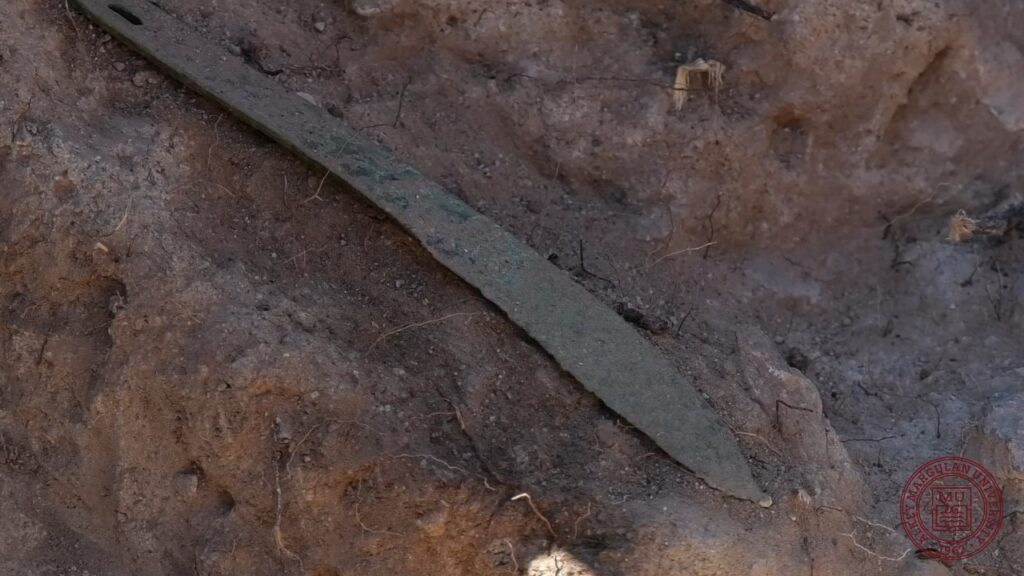
In a remarkable archaeological breakthrough, researchers and students from Margulan University have unearthed two rare bronze knives dating back over 2,700 years, believed to originate from the early Saka period. The discovery was made in the Bayanaul district of Kazakhstan’s Pavlodar region, at the newly identified Toraygyr-7 burial site, located near the scenic Lake Toraygyr within Bayan-Aul National Park.

These finely crafted blades are believed to date back to the early Saka period, offering significant insight into the metallurgical skills and cultural practices of the ancient nomadic peoples who once roamed the Eurasian steppe.

Early Iron Age Craftsmanship from Local Bronze

According to Elena Tusheva, chief curator of Margulan University’s archaeological collection, the knives were cast using ancient metallurgical techniques from locally sourced bronze. “Stylistically, the blades reflect characteristics of the early Iron Age, revealing that the region had already developed advanced metalworking technologies and maintained stable cultural connections during that era,” Tusheva explained.

This discovery is considered one of the oldest bronze artifacts ever found in the Pavlodar region, and it contributes to the growing understanding of technological evolution on the Kazakh steppe.
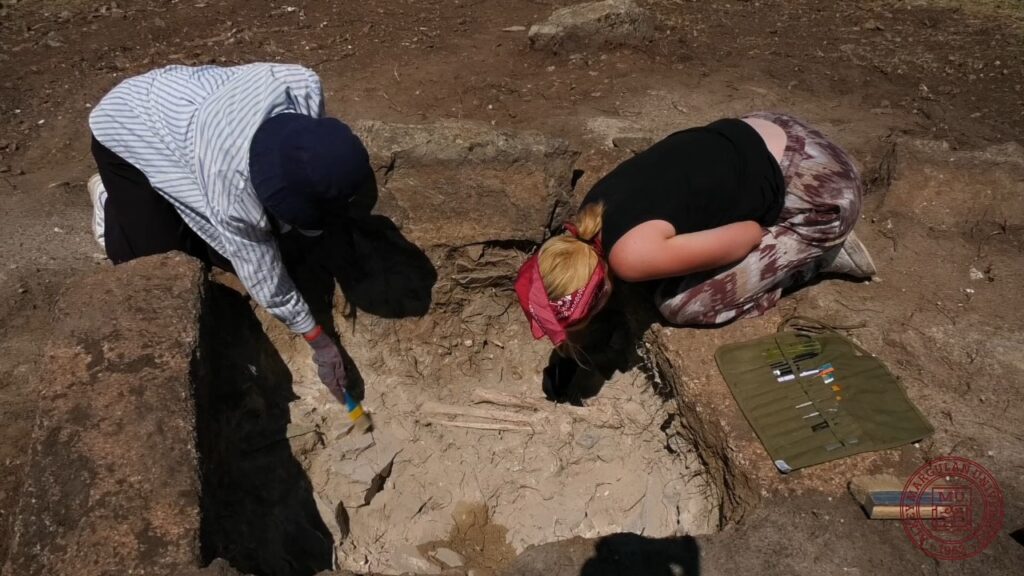
2,700-Year-Old Unique Bronze Blades and Burial Sites Uncovered in Kazakhstan’s Bayanaul Region. Credit: Margulan University

Burial Grounds of the Tasmola Culture

The site yielded more than just artifacts. Excavations also revealed human remains from the Tasmola culture — a prominent nomadic civilization of Central Kazakhstan, flourishing between the 7th and 3rd centuries BCE. The Tasmola people are best known for their “mustached kurgans”—distinctive burial mounds featuring stone outliers and celestial alignments.


📣 Our WhatsApp channel is now LIVE! Stay up-to-date with the latest news and updates, just click here to follow us on WhatsApp and never miss a thing!!


Angelina Grishchenko, a student involved in the dig, noted that the skeletal remains were well preserved, allowing researchers to determine sex, age, and anthropological traits. In a deeper layer, archaeologists uncovered an even older Andronovo culture burial, indicating cultural continuity between Bronze Age and Iron Age populations.

Who Were the Saka and Tasmola Peoples?

The Saka were an Iranian-speaking nomadic group who dominated parts of Central Asia during the early Iron Age, around the 8th to 3rd centuries BCE. Known for their warrior aristocracy, horsemanship, and elaborate burials, the Saka played a crucial role in shaping the region’s culture and trade. Kazakhstan’s famed “Golden Man,” adorned in thousands of gold pieces, is attributed to this powerful group.

The Tasmola culture, often linked to early Saka groups, is unique to Kazakhstan and is characterized by its complex funerary architecture, stone stelae, and astronomical knowledge embedded in burial layouts. Discoveries like those at Toraygyr-7 help bridge gaps in our understanding of how early nomadic cultures interacted, evolved, and preserved tradition over centuries.
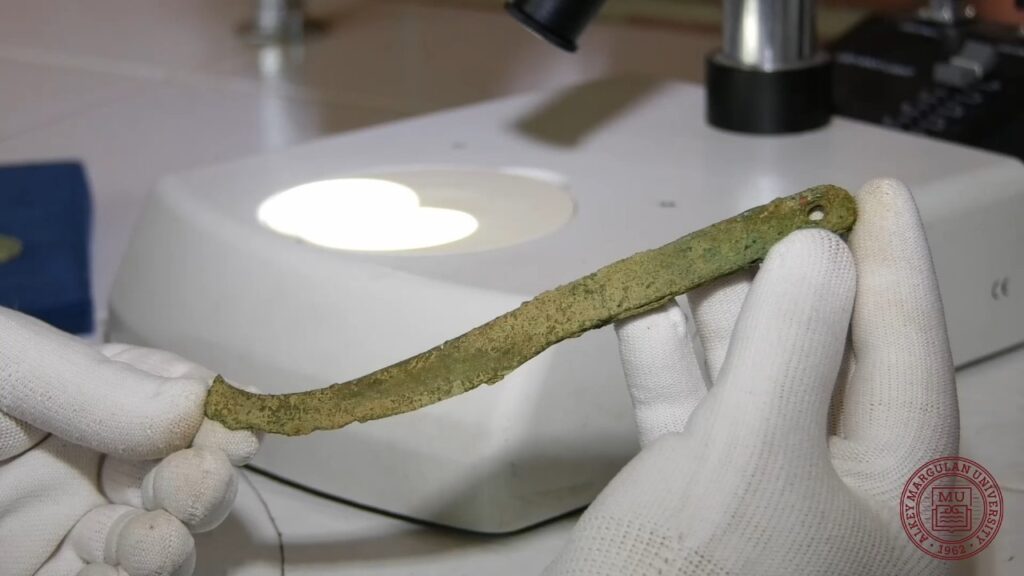
2,700-Year-Old Unique Bronze Blades from the Early Saka Period Unearthed in Kazakhstan. Credit: Margulan University

Preserving Kazakhstan’s Archaeological Heritage

Margulan University has conducted archaeological research in the Bayanaul region for over a decade, continuing the legacy of scholars such as Alkey Margulan and M. Kadyrbayev. Their work supports the preservation of Kazakhstan’s most important archaeological sites and contributes to a deeper appreciation of the country’s Iron Age history.

The recent findings of bronze knives and Tasmola burials not only enrich Kazakhstan’s historical narrative but also highlight its potential as a hub for archaeological discovery, scientific exploration, and cultural tourism.

Margulan University

Cover Image Credit: Margulan University

Related Articles

Archaeologists discovered the secret ingredient that made Mayan plaster durable

20 April 2023

20 April 2023

Ancient Mayan masons had their own secrets for making lime plasters, mortars, and plasters, which they used to build their...

400-year historical document confirms the martyrdom of Japanese Christians

27 February 2021

27 February 2021

In Japan, the suppression of Christianity increased from the end of the 16th century to the beginning of the 17th...

China’s ancient water pipes show people mastered complex engineering 4,000 years ago without the need for a centralized state authority

16 August 2023

16 August 2023

A system of ancient ceramic water pipes, the oldest ever unearthed in China, shows that neolithic people were capable of...

Two monumental sculpted Roman heads unearthed in Carlisle, northern England

25 May 2023

25 May 2023

Two monumental statue heads believed to be dated to the early 3rd century have been unearthed during excavations at a...

Archaeologists say they have found the lost city of Natounia, belonging to the Parthian Empire

20 July 2022

20 July 2022

Researchers suggest they may have identified the lost Parthian city of Natounia in the Zagros Mountains of Iraqi Kurdistan. Although...

Hundreds of silver coins have been found near the castle of Lukov in Moravia

4 September 2021

4 September 2021

In the forest near the Southern Moravian Fortress Lukov, two members of the Society of Friends of the Lukov Fortress...

Lost Children’s Circle: Seven Infant Remains Unearthed in Mysterious Hittite Ritual Structure at Uşaklı Höyük

8 August 2025

8 August 2025

At the heart of Uşaklı Höyük (Uşaklı Mound), archaeologists have uncovered the “Lost Children’s Circle” — a mysterious Hittite-era ritual...

Discovery Shedding Light on the Mysteries of Anatolia: 3500-year-old Double-Headed Eagle Seal

21 October 2024

21 October 2024

A grain silo and two different seal impressions, one of which is a double-headed eagle, were found during the excavation...

The 1000-year Curse of the Croatian King Zvonimir

26 September 2023

26 September 2023

Croatia is a fascinating country that continually rises up people’s must-visit lists thanks to its sparkling Adriatic coastline, 1,244 islands,...

Archaeological Complex from the Bulgar-Golden Horde Period Discovered in Tatarstan

22 March 2025

22 March 2025

Recent archaeological research conducted in the Alekseevski municipal district, located in the Republic of Tatarstan, has uncovered an archaeological complex...

2nd-Century BC Thracian Warrior with Ceremonial Wreath Discovered

3 August 2025

3 August 2025

Archaeologists Uncover Richly Furnished Grave of Thracian Warrior with Horse, Weapons, and Gold-Gilded Ornaments in Southern Bulgaria A new archaeological...

World treasure that cannot be displayed in the Local Museum in Pljevlja, Montenegro

30 July 2023

30 July 2023

Despite representing one of the most valuable portable cultural assets of Montenegro, the Pljevlja Diatreta is not accessible to visitors. The...

Habib-i Neccar Mosque, one of the first mosques in Anatolia, was destroyed in the earthquake

12 February 2023

12 February 2023

Antakya Habib-i Neccar Mosque, one of the first mosques built in Anatolia, was destroyed in the earthquake that killed tens...

1,000-Year-Old Mass Grave in Peru Shows Victims Bludgeoned with Star-Headed Maces

26 May 2025

26 May 2025

Archaeologists from the University of Wrocław have uncovered a 1,000-year-old mass grave at the El Curaca site in southern Peru,...

Archaeologists found a 2,000-year-old Roman road in Cluj-Napoca in northwest Romania

23 January 2023

23 January 2023

Archaeologists from the National Museum of the History of Transylvania have discovered a well-preserved 2,000-year-old Roman road in the city...