
16 January 2026 The Future is the Product of the Past

Archaeologists Unearth Rare Artifacts from the First Turkic Khaganate in the Altai Mountains

Archaeologists from Altai State University and their international colleagues have made a groundbreaking discovery in Russia’s Altai Republic, unearthing artifacts that date back to the First Turkic Khaganate (6th–7th centuries CE).

The findings, excavated at the Katanda-I archaeological site in the Ust-Koksa district, provide fresh evidence of the Altai region’s pivotal role in early medieval Eurasian history.

International Expedition Reveals Ancient Nomadic Heritage

The excavations were conducted as part of the “Katanda-2025” international archaeological expedition, held from July 25 to August 12, 2025. The project brought together experts from the Altai State University’s Research and Education Center for Altaic and Turkic Studies “Greater Altai,” Kazakhstan’s Margulan Institute of Archaeology, and Al-Farabi Kazakh National University.

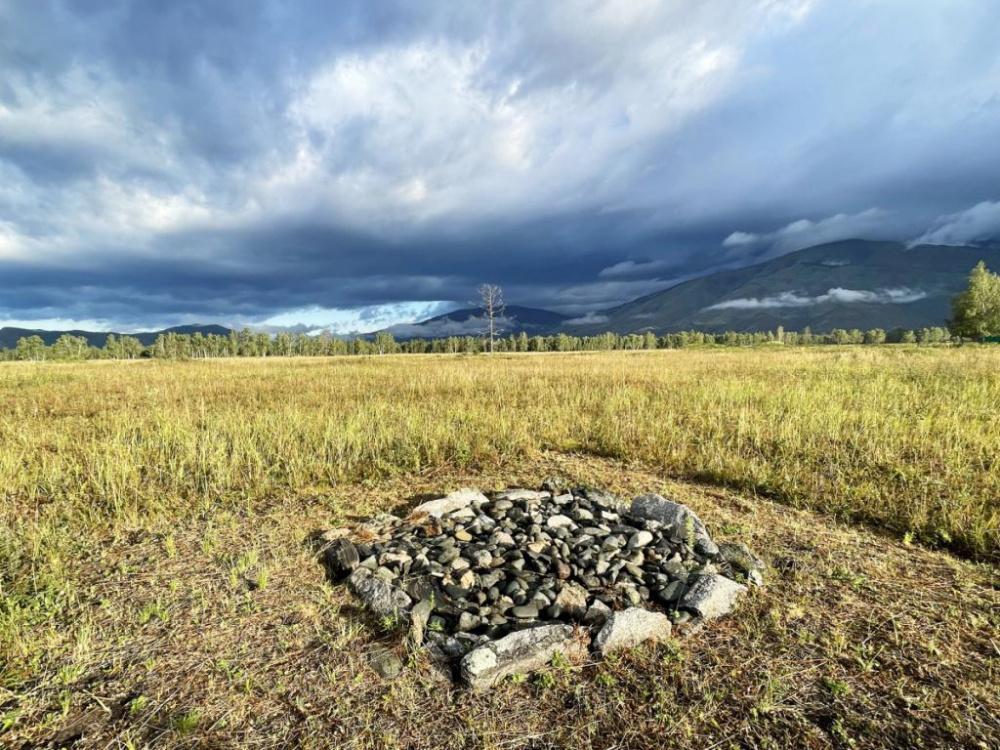
According to the head of the expedition, Professor Nikolai Seregin, the team uncovered ritual stone enclosures associated with Turkic funerary traditions. While such structures typically yield little material evidence, one enclosure revealed exceptionally rare items, including a miniature iron spearhead, a bronze belt buckle, an iron chisel, and fragments of a belt.

“These discoveries are unique,” said Professor Seregin. “The miniature spearhead and other items are not just rare artifacts but important cultural markers that help us better understand the rituals and material culture of early Turkic nomads.”


📣 Our WhatsApp channel is now LIVE! Stay up-to-date with the latest news and updates, just click here to follow us on WhatsApp and never miss a thing!!


Evidence of the First Turkic Khaganate

Radiocarbon analysis of wooden remains from similar enclosures suggests the artifacts date to the period of the First Turkic Khaganate, one of Eurasia’s most influential nomadic empires. Established in the mid-6th century CE, the khaganate extended its influence across vast territories, shaping the destinies of many peoples in Central Asia.

Although the empire lasted only about 50 years, scholars consider it a defining force in the region’s political and cultural development. The recent finds strengthen the argument that the Altai Mountains remained a key center of nomadic civilization even after the khaganate’s political core shifted to Mongolia.
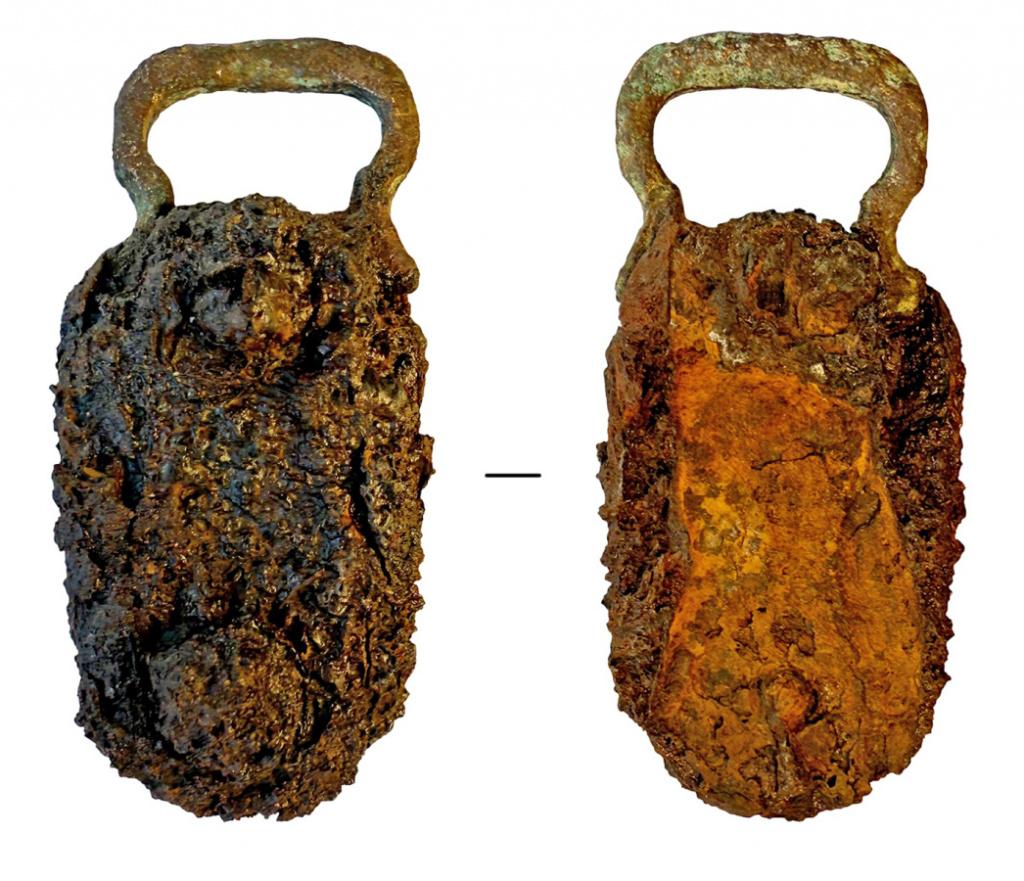
Bronze buckle. Credit: Press Service of Altai State University

Rare Finds Near Mount Belukha

The Katanda-I site, situated within sight of Mount Belukha, yielded a remarkable collection of artifacts. The bronze buckle and belt fragments represent high craftsmanship, while the iron chisel highlights the utilitarian tools of nomadic life. The most intriguing item, however, is the miniature spearhead—a symbolic object possibly linked to ritual or commemorative practices.

Such discoveries are invaluable, as archaeological sources for the study of this period remain scarce. The new evidence underscores the importance of Altai as a cultural and spiritual hub for early medieval Turkic peoples.

A Window into Eurasia’s Nomadic Past

The findings from Katanda-I provide rare insights into the material culture and ritual practices of nomadic societies. They also highlight the collaborative nature of modern archaeology, with Russian and Kazakh scientists working side by side to unravel the mysteries of Central Eurasia’s past.

As Professor Seregin noted, each new discovery brings us closer to understanding how the Turkic Khaganate shaped the historical trajectories of neighboring states and cultures.

Looking Ahead

The “Katanda-2025” expedition is expected to continue in the coming years, with scholars hoping to uncover further artifacts that illuminate the role of the Altai Mountains in Eurasian history. For now, the miniature spearhead, bronze buckle, and other items stand as tangible links to a powerful nomadic empire that once dominated the heart of the steppe.

Altai State University

Cover Image Credit: Press Service of Altai State University

Related Articles

Forged 5,000 Years Ago: The World’s Oldest Swords Discovered at Arslantepe Mound, Türkiye

10 June 2025

10 June 2025

In the arid plains of Eastern Anatolia, nestled along the western bank of the Euphrates River near Malatya, Turkey, lies...

3,000-Year-Old Cave Paintings Discovered in Itatiaia National Park in Rio de Janeiro, Brazil

13 April 2025

13 April 2025

In a stunning revelation, a dedicated team of researchers from the National Museum, in collaboration with the Federal University of...

Roman-era Mixers and Millstones Made with Geology in Mind

22 September 2021

22 September 2021

A study on stone tools from an outpost of the Roman Empire has found that for ancient bakers and millers,...

Vikings arrived in Newfoundland 1,000 years ago: Scientists

20 October 2021

20 October 2021

Vikings’ first permanent settlement in North America – the coastal outpost in Newfoundland known as L’Anse aux Meadows now has...

Unique Roman-Era Association Building Unearthed in Ancient City of Sagalassos

1 October 2025

1 October 2025

Archaeologists uncover a unique Roman-era Association Building in Sagalassos, Türkiye, revealing ancient social life, guilds, and family gatherings. Archaeologists in...

Archaeologists Discover Kazakhstan’s Earliest Human Burial — A 7,000-Year-Old Neolithic Grave at Koken

24 October 2025

24 October 2025

Archaeologists in eastern Kazakhstan have uncovered the country’s oldest known human burial, dating back around 7,000 years. Found beneath Bronze...

An unexpected discovery in Pompeii: A Roman Tomb Reveals the Existence of an Unknown Imperial Position in Hispania

17 July 2024

17 July 2024

Work to create a functional air chamber to evacuate moisture from the underground spaces of the San Paolino building, the...

Archaeologists 3D map Red Lily Lagoon, the hidden Northern Territory landscape where first Australians lived more than 60,000 years ago

10 May 2023

10 May 2023

Archaeologists map Red Lily Lagoon, a hidden landscape in the Northern Territory where the first Australians lived more than 60,000...

2,700-Year-Old Rare Bronze Knives from the Early Saka Period Unearthed in Kazakhstan

17 July 2025

17 July 2025

In a remarkable archaeological breakthrough, researchers and students from Margulan University have unearthed two rare bronze knives dating back over...

The Spoon of Diocles: Ancient Arrowhead Remover or Misunderstood Mystery?

20 July 2025

20 July 2025

In the annals of ancient surgical history, few instruments are as mysterious and debated as the Spoon of Diocles. This...

1300-year-old baby footprints found in excavations at the ancient city of Assos in western Turkey

3 September 2021

3 September 2021

1300 years ago, a baby stepped on baked bricks prepared to make a bread baking oven. The baby was probably...

A Rare Design in Roman Military Architecture: Triangular Stone Tower Discovered Near Sofia

22 July 2025

22 July 2025

Bulgarian archaeologists have uncovered a triangular stone tower — a rare architectural form in Roman military design — at the...

Stone Age Farmers Settled Near Dortmund Airport 7,000 Years Ago

24 August 2025

24 August 2025

Archaeological discoveries at Dortmund Airport reveal that early Neolithic farmers lived and built houses in the region nearly 7,000 years...

Archaeologists found a medieval skeleton with a prosthetic hand in Freising, Germany

28 October 2023

28 October 2023

Archaeologists in the city of Freising in Bavaria, Germany, unearthed containing a skeleton with a prosthetic hand. The metal part...

The Legacy of the Double-Headed Eagle: From Hittite Kings to Modern Icons

25 June 2025

25 June 2025

The double-headed eagle is one of the most enduring symbols in human history. Recognized today as an emblem of imperial...