
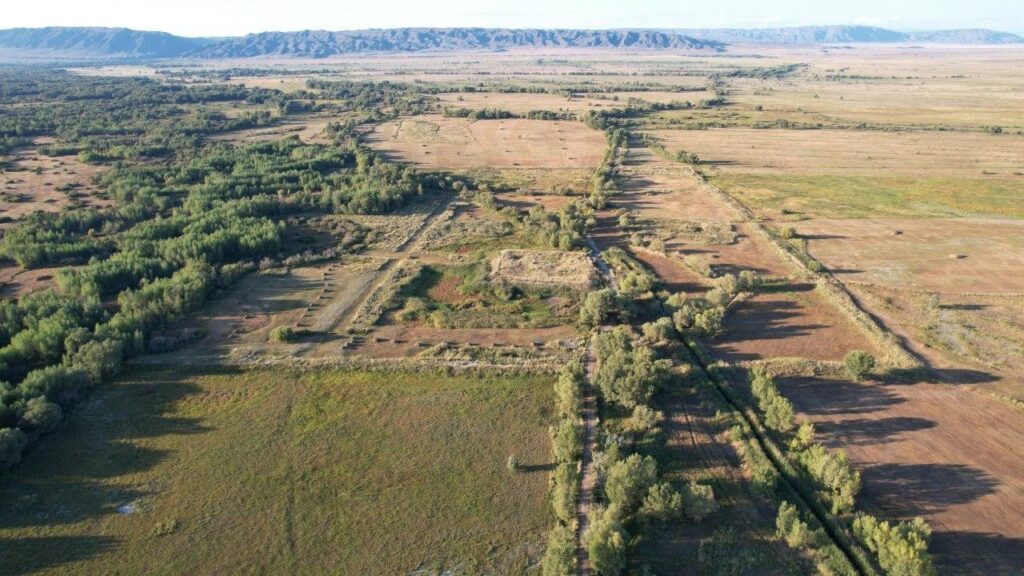
Archaeologists have discovered a fortified settlement dating back approximately 1,400 years in eastern Kazakhstan, offering new evidence of life during the rise of the First Turkic Khaganate. Archaeological finds and radiocarbon analysis date the settlement to the sixth and seventh centuries CE, while preliminary findings suggest that its construction began during the Khaganate’s early period.
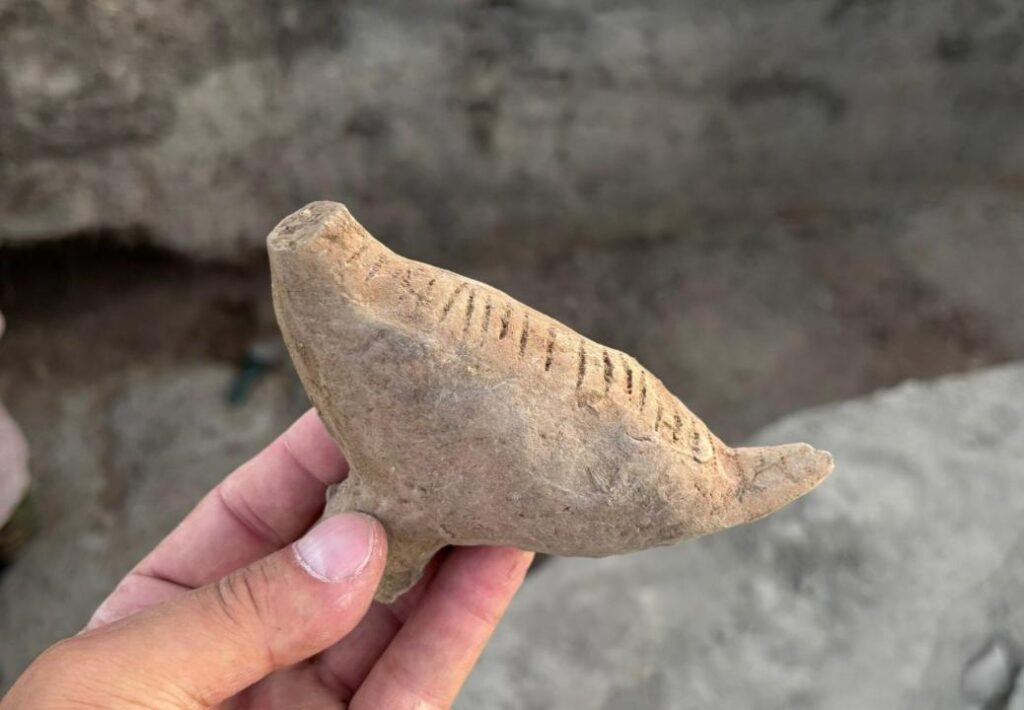
Among the discoveries—which include the remains of ancient structures, pottery used as household items, and charred food remains—is an unusual ceramic bird figurine that stands out for containing a rattle inside its body.
The settlement, known as Kalzhyr, lies between the villages of Kalzhyr and Boran in the Zaysan Basin. A team from Al-Farabi Kazakh National University excavated the site with support from Kazakhstan’s Ministry of Science and Higher Education. Covering more than 25 hectares, the fortified settlement has already revealed substantial defensive walls and traces of buildings that lay buried for centuries.
A Settlement Destroyed by Fire
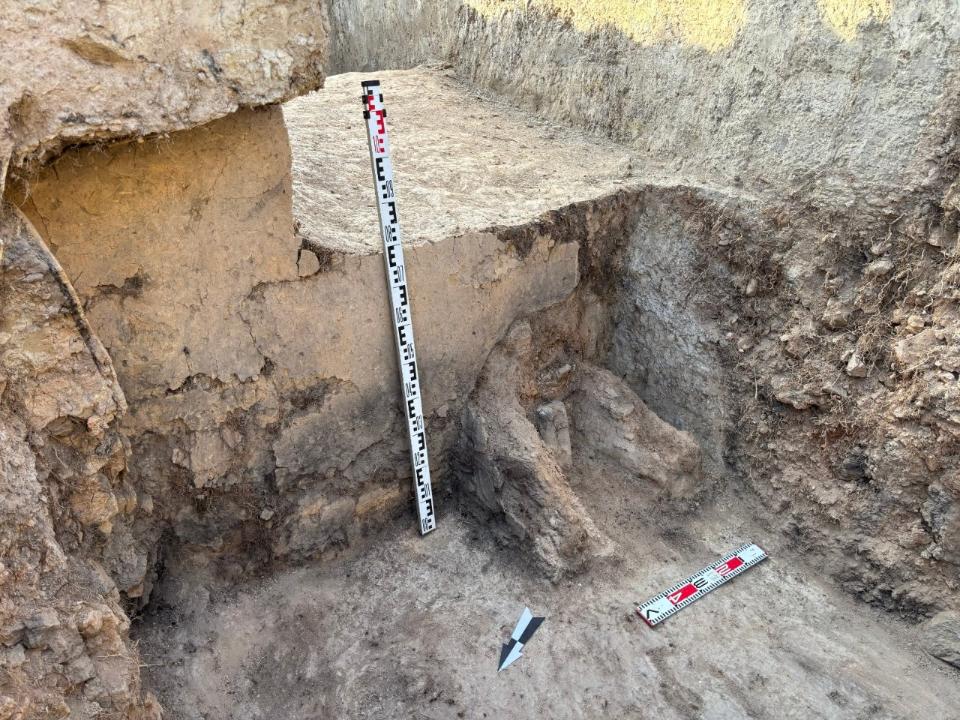
The excavations focused on the southern part of Kalzhyr, where researchers uncovered the remains of the settlement’s main fortifications. A major fire had destroyed much of these defenses, although archaeologists have not yet determined what caused the destruction or whether it marked the end of the community.
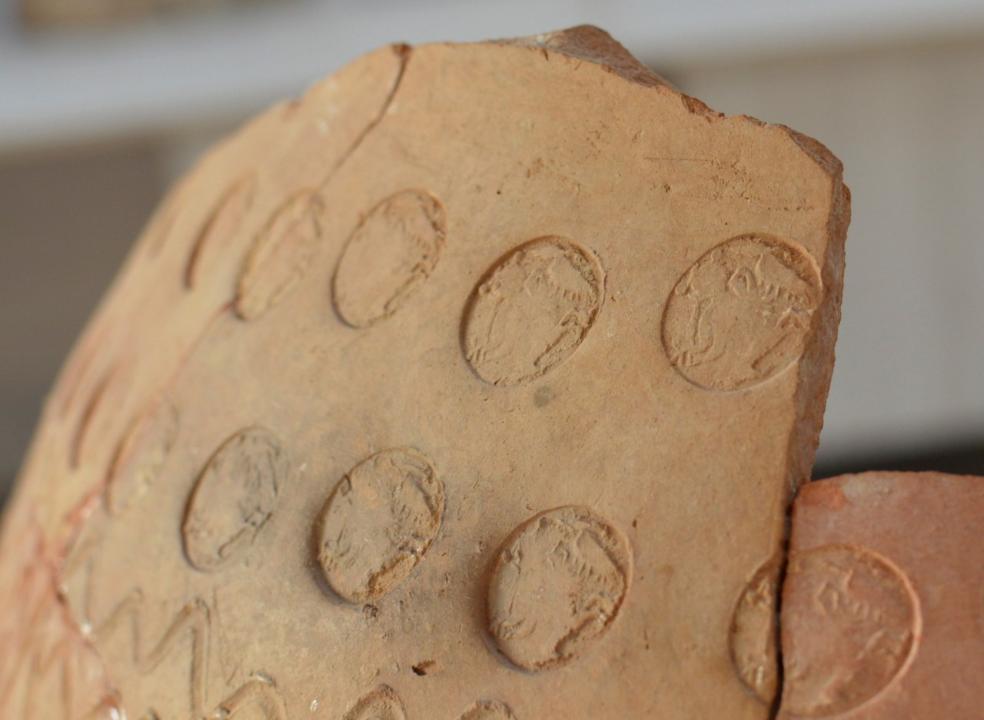
Beyond the damaged walls, the team found earthen floors, fragments of reed-and-clay structures, and plaster that still carried traces of decorative patterns. The decorated plaster suggests that the inhabitants also paid attention to the appearance of their buildings, rather than focusing solely on practical construction needs. These details point to a solid, permanent settlement rather than a temporary camp.
The digs also produced charred wheat grains, legumes, and ceramic vessels. The finds show that food storage and preparation were part of daily life at Kalzhyr, though more work is needed to determine whether the inhabitants grew crops themselves or obtained them through trade.
Taken together, the finds show a substantial settlement with permanent buildings, defensive walls and access to agricultural products. They also open a window onto a less familiar side of early Turkic history — one often overshadowed by accounts of powerful rulers and mounted armies.
Kalzhyr During the Rise of the First Turkic Khaganate
The sixth century marked a turning point in Central Asian history. In 552 CE, Bumin Qaghan defeated the Rouran rulers and founded the First Turkic Khaganate, establishing a political power that would rapidly expand across much of Inner Asia.
Under his successors and his brother Istemi, Turkic influence spread westward and brought the new empire into contact with the great commercial networks linking China, Persia and the Byzantine Empire. By 568, Turkic envoys had reached Constantinople, establishing diplomatic relations with the Byzantines and signalling the rising importance of the steppe power.
Although the Khaganate drew much of its military strength from mobile pastoral groups, the territories under its influence also contained settled communities, agricultural populations and trading centres. These different ways of life existed side by side across the vast landscapes of Central Asia.
Kalzhyr provides an opportunity to investigate this complex world. Its size, defensive structures, and evidence of food storage suggest an established community, although researchers have not yet determined whether it functioned as a military outpost, an administrative center, or a settlement serving other purposes.
A Small Bird With an Unknown Purpose
Birds held an important place in the beliefs and artistic traditions of early Turkic peoples. Eagles and falcons, in particular, were linked with power, the sky, and the spiritual world. Their images appeared on monuments and objects associated with the Turkic elite, sometimes carrying meanings that went beyond simple decoration.
Some researchers think the birds carved on ancient Turkic funerary monuments represented the souls of the dead rising to heaven. Others see them as guides accompanying the deceased into the afterlife. One of the best-known examples comes from the eighth-century monument of Kül Tigin, whose sculpted headdress bears a bird motif connected with royal authority.
Against this background, the small ceramic bird from Kalzhyr is especially interesting. Unlike the figures carved in stone, this object contains a rattling element that produces sound when shaken.
Its purpose remains unclear. It may have carried a meaning linked to the special place certain animals held in the Turkic world, and the sound could have played a role in ceremonies. Neither idea currently has firm archaeological support. The object might equally have belonged to everyday life and simply served as a toy.
Without more information about where the artifact lay and how its makers constructed it, researchers cannot determine which explanation is most likely. For now, the little ceramic bird offers a quiet glimpse into a world where ordinary objects may once have held meanings that are no longer easy to recover.
A Burial Monument From a Much Earlier Age
The same expedition also found evidence of human activity far older than the Turkic Khaganate. Researchers identified a kereksur, a distinctive type of stone burial monument associated with the Late Bronze Age and known across parts of Inner Asia.
These monuments generally consist of a central stone mound surrounded by carefully arranged stones, sometimes forming circles or rectangular enclosures. They are particularly characteristic of the prehistoric landscapes of Mongolia and Xinjiang, where ancient communities constructed them long before the emergence of the Turkic empires.
According to expedition leader Nikita Konstantinov, the discovery provides new evidence for the western extent of this burial tradition. Its presence in the Zaysan Basin broadens researchers’ understanding of the geographical distribution of these monuments and the prehistoric societies that constructed them.
The kereksur belongs to a much earlier period than the fortified settlement, and the two finds are not thought to represent the same culture. Instead, they show how different communities used this part of eastern Kazakhstan over thousands of years.
The investigation brings together researchers from Al-Farabi Kazakh National University, D. Serikbayev East Kazakhstan Technical University, and the A. Kh. Margulan Institute of Archaeology. Using archaeological surveys, aerial photography, and thermal imaging, the teams are gathering evidence to reconstruct the region’s changing settlement patterns.
The discoveries at Kalzhyr now provide researchers with an opportunity to explore both the early medieval Turkic world and the much older communities of the Zaysan Basin. As further studies examine the settlement’s buildings, food remains, and distinctive objects, they may reveal more about the people who lived behind its walls during one of Central Asia’s most important periods of political change.
Ministry of Science and Higher Education of the Republic of Kazakhstan
