
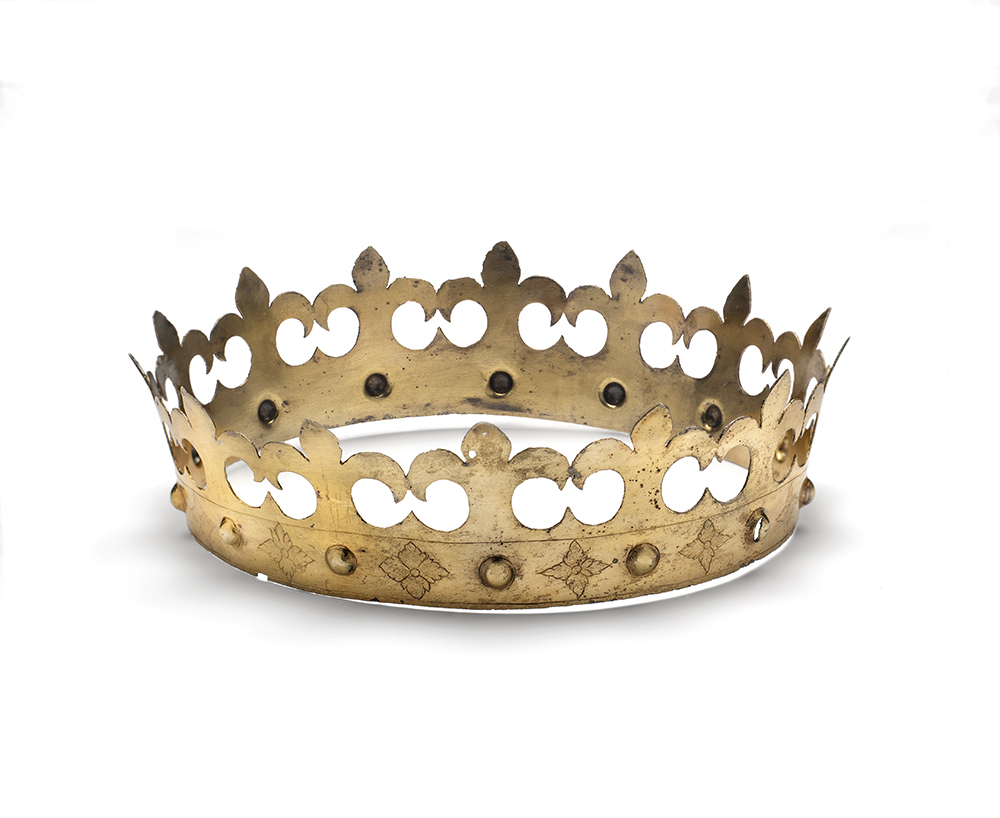
A sealed niche beneath a cathedral held three royal crowns, a sceptre, an orb, gold rings, chains and a medallion unlike any other known example.
The objects had been wrapped, placed inside a metal box and hidden as Europe entered World War II. Their location was then forgotten so completely that museum workers and visitors passed within metres of the treasure for decades.
Now, nearly 90 years after it disappeared, the royal collection has returned to public view in Vilnius.
A treasure revealed by a flood
The story began not with war, but with water.
In 1931, flooding damaged Vilnius Cathedral and forced emergency work beneath the building. During the repairs, workers uncovered royal burial chambers containing human remains and funerary objects associated with Alexander Jagiellon, King of Poland and Grand Duke of Lithuania, and the queens Elizabeth of Austria and Barbara Radziwiłł.
Among the finds were three crowns, royal insignia and personal jewellery dating largely to the 16th century.
These were not coronation crowns worn by the rulers during their lives. They were funerary objects created specifically for their burials—a distinction that makes their survival particularly unusual. Coronation regalia could pass from one monarch to another, but burial crowns were made for an individual and frequently disappeared through decay, looting or the reuse of precious metals.
For several years, the newly discovered objects were studied and displayed. Then, in 1939, the threat of war transformed the cathedral into a hiding place.
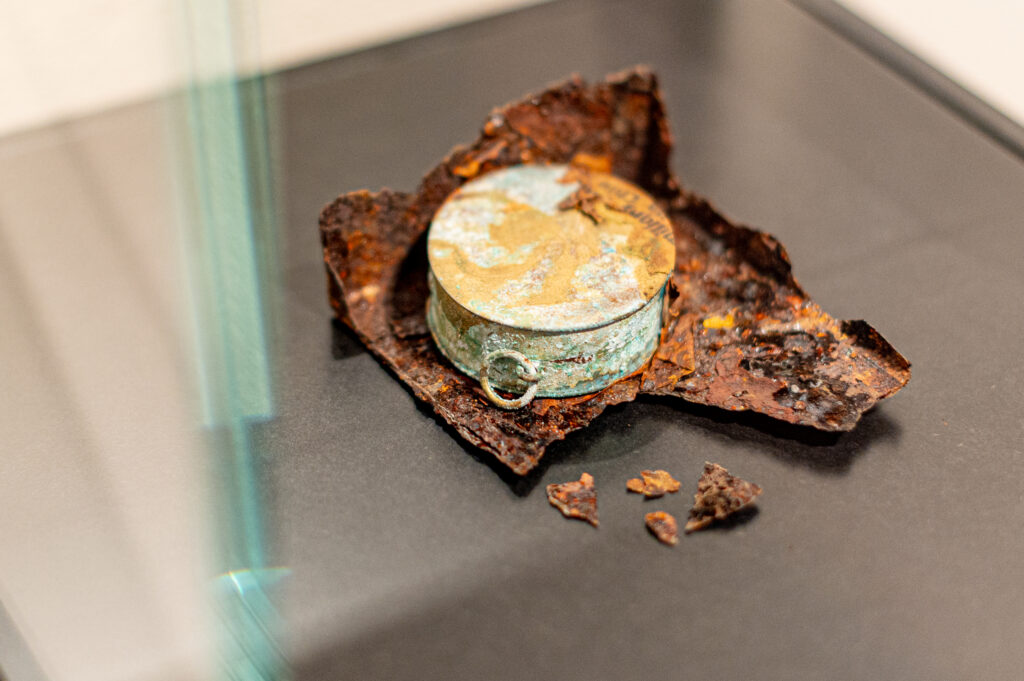
Reliquary with a fragment of the deteriorated box. Credit: E. Levin – Bažnytinio Paveldo Muziejus
Hidden as Europe moved toward war
Fearing destruction and looting, members of the Church concealed the cathedral’s most valuable objects in different parts of the building. The royal insignia were placed in an iron container, wrapped in newspapers and sealed inside a concealed space beneath the cathedral.
The people responsible appear to have intended to recover them once the danger had passed. Instead, successive occupations, political upheaval and institutional changes separated the treasure from the knowledge of its location.
Part of the cathedral treasury was accidentally rediscovered in 1985, when workers installing ventilation equipment opened another section of wall. But the royal crowns and burial objects were not there. Their absence produced decades of searches, rumours and theories about whether they had been removed, destroyed or stolen.
Even after Lithuania regained independence, attempts to locate the missing insignia repeatedly failed.
Alina Pavasarytė, a member of the museum administration, later estimated that she had walked past the hiding place thousands of times without suspecting what lay behind it. The niche was located beside a corridor used during visits to the cathedral crypts.
An endoscopic camera finds the forgotten chamber
The breakthrough came in 2024, when specialists compared surviving interwar plans with modern drawings and an eyewitness account concerning the wartime hiding operation.
An endoscopic camera was inserted into suspected cavities beneath the cathedral. After several attempts, investigators identified a blocked recess behind a former stair niche. The hiding place was formally opened on December 16, 2024.
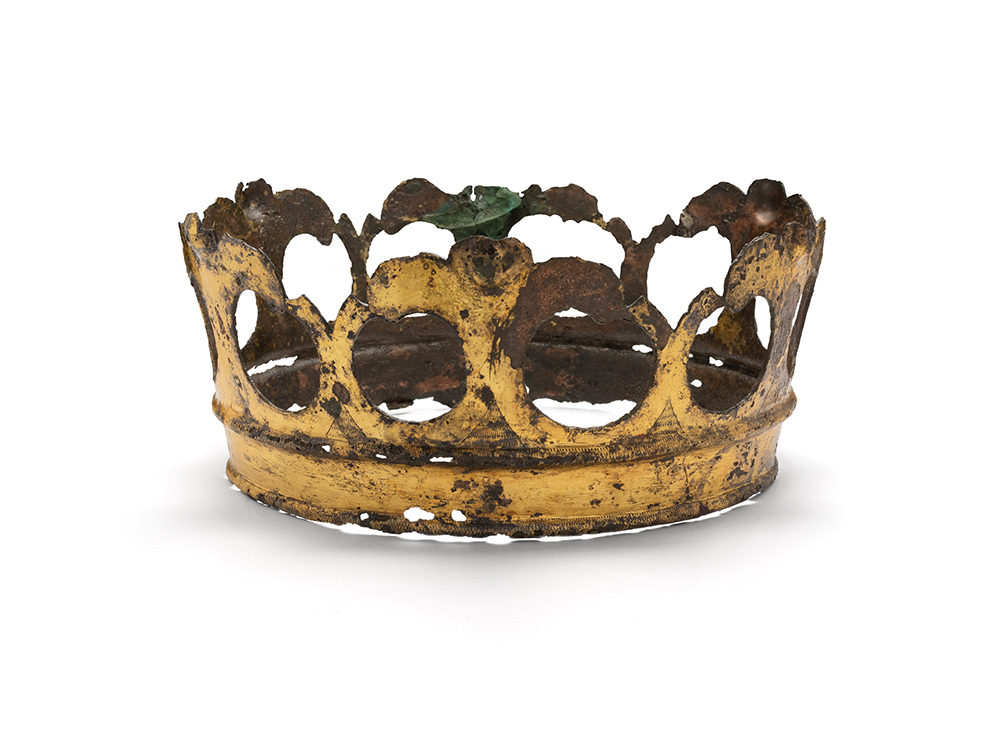
Inside were the burial crown of Alexander Jagiellon and a collection associated with Elizabeth of Austria, including her crown, chain, ring, coffin plaque and medallion.
Barbara Radziwiłł’s objects included a crown, sceptre, orb, three rings, a chain and two coffin plaques. Six silver plaques from the Chapel of St Casimir, episcopal insignia, earrings, small crosses and votive offerings were also recovered from the concealed area.
The objects had remained inside a damp, microbially active environment for more than eight decades. Rust from the iron box and decomposing newspaper had adhered to their surfaces, causing corrosion, staining, cracks and deformation. Precious-metal objects survived best, but even these required careful stabilisation before they could be handled or displayed.
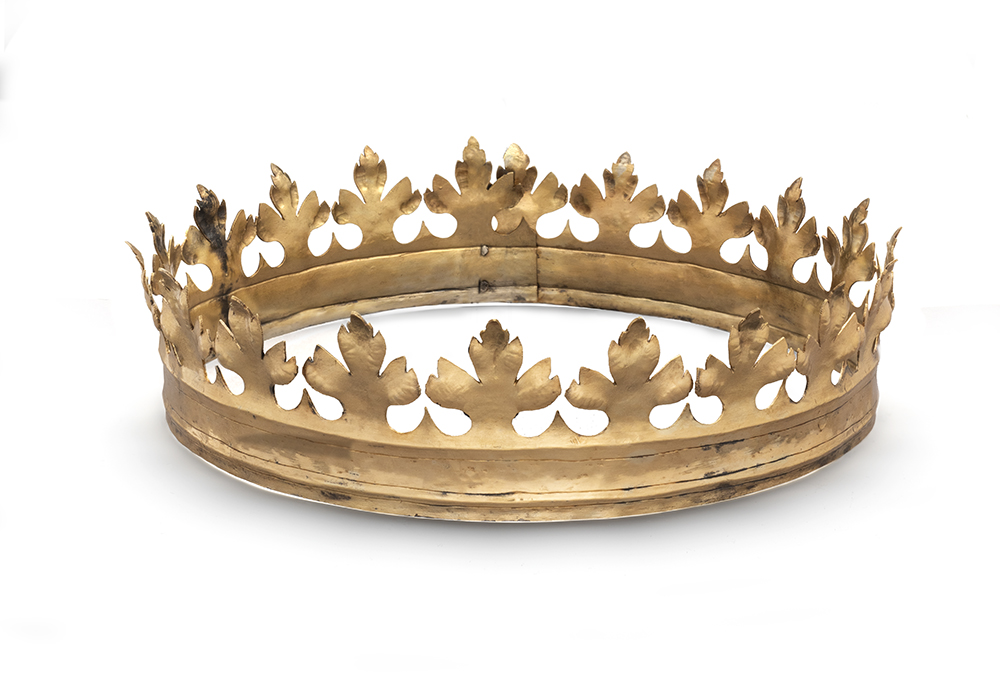
The funerary crown of Elizabeth of Habsburg, Queen of Poland and Grand Duchess of Lithuania. Credit: G. Čiuželis – Bažnytinio Paveldo Muziejus
Renaissance jewellery preserved behind a wall
Beyond the crowns, several smaller objects reveal the skill—and occasional illusion—of Renaissance goldsmiths.
Four gold rings associated with the queens contain diamonds, emeralds and stones intended to resemble expensive rubies. Craftsmen sometimes hollowed garnets to intensify their colour or combined rock crystal with red backing to create the appearance of a larger, richer gemstone.
One of the most remarkable pieces is Elizabeth of Austria’s medallion. It was created from a gold ten-ducat coin minted in 1533, bearing portraits of Sigismund I the Old and Sigismund II Augustus. According to the exhibition organisers, no other medallion of this type is known.
The collection also preserves the personal dimension of European dynastic politics. Elizabeth, a Habsburg archduchess, became the first wife of Sigismund II Augustus. After her death in Vilnius in 1545, the king married Barbara Radziwiłł, whose contested royal marriage became one of the best-known episodes in Polish-Lithuanian history.
Together with Alexander Jagiellon, their burials represent the network of Jagiellonian and Habsburg alliances that shaped Central and Eastern Europe during the late medieval and Renaissance periods.
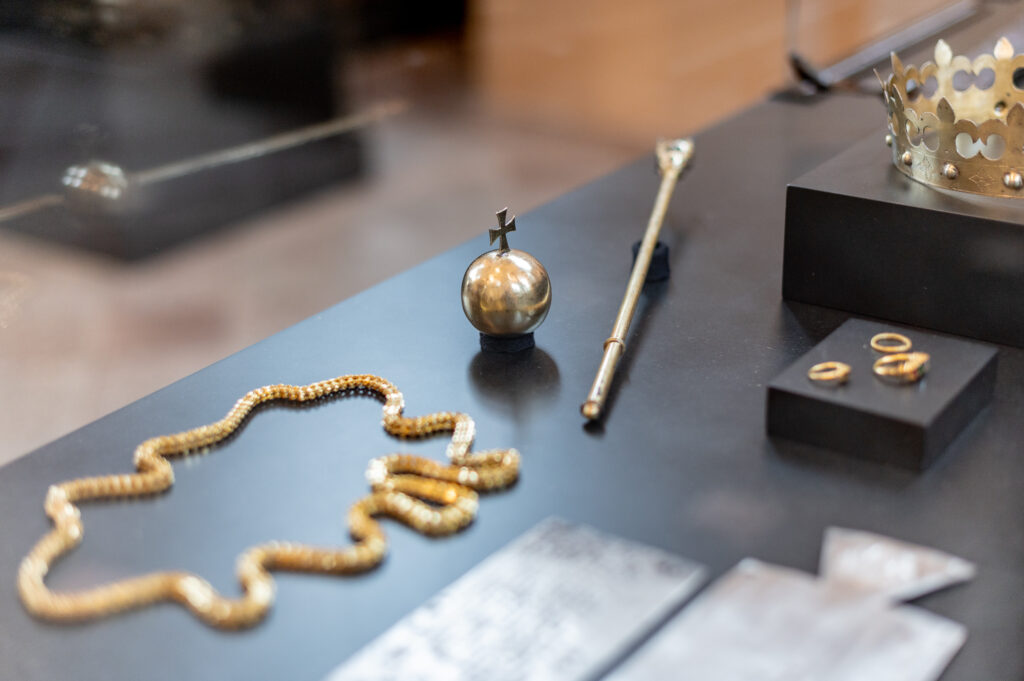
Displayed much as they were found
The recovered objects are now being presented together in “Hidden Within: Rediscovered Treasury of Vilnius Cathedral” at the Church Heritage Museum.
Rather than restoring every object to a polished appearance, conservators have left some pieces close to the condition in which they emerged from the hiding place. Only active deterioration was stopped, allowing visitors to see traces of the corroded box, damaged wrapping and decades spent beneath the cathedral.
The exhibition connects the discoveries of 1931, 1985 and 2024, turning the collection into more than a display of crowns and jewellery. It documents how cultural objects were repeatedly concealed during periods of invasion, occupation and political uncertainty.
The exhibition opened on July 9, 2026, and will remain on view until January 30, 2027.
For decades, the missing crowns were treated as one of the unresolved mysteries of the cathedral. In the end, they had never left the building. They remained behind a wall beside a frequently used corridor, protected by a hiding place that worked far longer than its creators could have imagined.
Cover Image Credit: G. Čiuželis – Bažnytinio Paveldo Muziejus
