
13 January 2026 The Future is the Product of the Past

Mystical Tombs and Lights: 150 Unique Burial Mounds Discovered in Kazakhstan

Archaeologists in the West Kazakhstan Region (WKO) have announced a remarkable discovery that could reshape our understanding of early civilizations in Central Asia. Around 150 burial mounds, or kurgans, of unusual shapes were found clustered in one area.

These ancient sites, believed to date back to the Early Iron Age, may be linked to an unknown civilization or possibly the Sarmatians, nomadic tribes known to inhabit the steppes.

One of the burial sites has particularly drawn the attention of researchers. It features a moat nearly 140 meters wide, suggesting it may have been the resting place of a person of high social status. The sheer scale of the site distinguishes it from typical Iron Age burials and highlights its potential importance for Kazakhstan’s historical record.

Unique Shapes and Rare Structures

Unlike most burial sites of the period, the kurgans in this region are not uniform. Researchers identified rectangular, circular, and even double-ring formations, which are rarely seen in Eurasian steppe archaeology. Such diversity in form suggests sophisticated cultural practices and possibly distinct social or ritual meanings.

Experts emphasize that further excavation is needed. Before detailed archaeological digs can begin, authorities must secure documentation, funding, and hold a tender among licensed excavation organizations. Once studied in depth, the site could be officially recognized and added to the list of protected cultural monuments of Kazakhstan.


📣 Our WhatsApp channel is now LIVE! Stay up-to-date with the latest news and updates, just click here to follow us on WhatsApp and never miss a thing!!


Mystical Tales Surrounding the Mounds

The discovery has captured not only academic interest but also the imagination of local residents. Villagers near the site have long regarded the mounds as sacred or mysterious places. Some claim to have seen glowing lights over the area, while others report strange events, such as cars stalling without explanation when passing nearby.

For some, the mounds hold spiritual significance, serving as silent witnesses of ancient civilizations. For others, they are a source of legend and mystery, blending folklore with archaeology. While scientists approach these claims with caution, such stories highlight how ancient landscapes remain deeply woven into local culture.
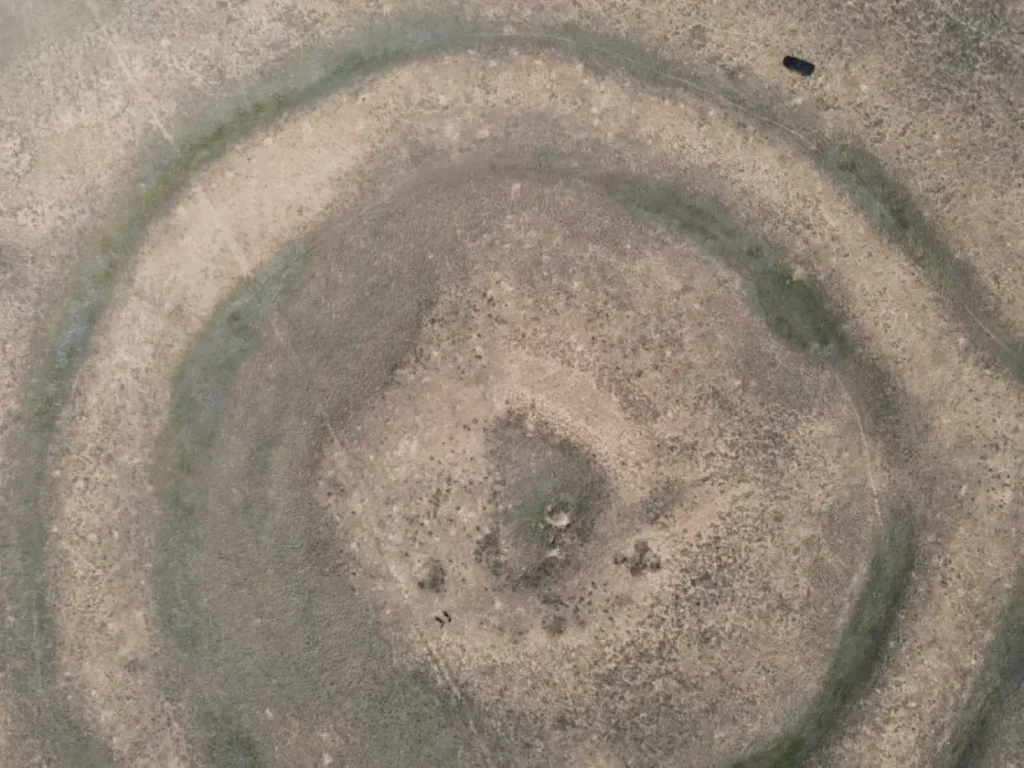
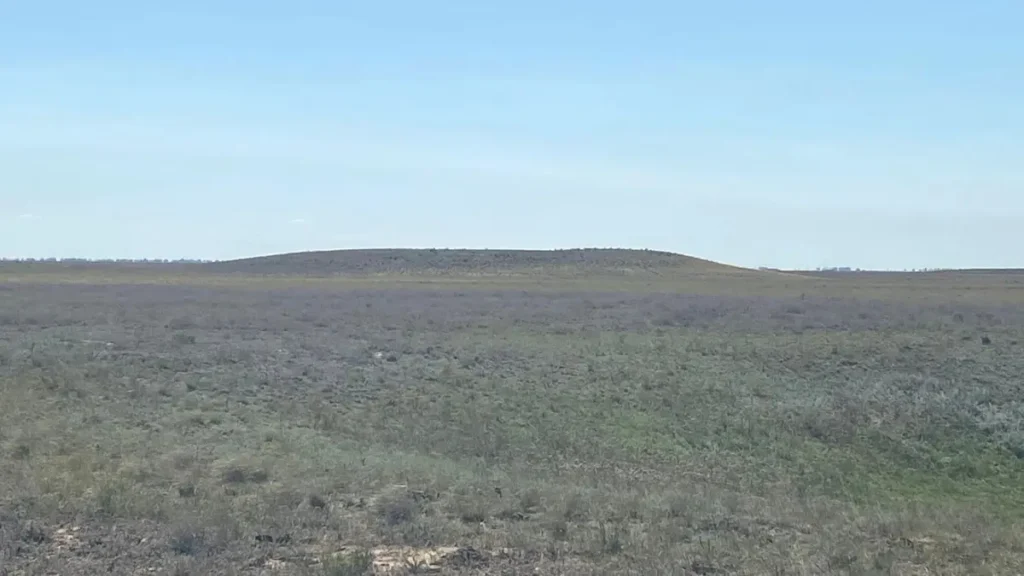
A unique archaeological site has been discovered in Kazakhstan's West Kazakhstan region, featuring approximately 150 burial mounds. Credit: West Kazakhstan Region Inspectorate for the Protection of Monuments
A unique archaeological site has been discovered in Kazakhstan’s West Kazakhstan region, featuring approximately 150 burial mounds. Credit: West Kazakhstan Region Inspectorate for the Protection of Monuments

Part of a Wider Pattern of Discoveries

Kazakhstan has recently witnessed several groundbreaking archaeological finds. In the Atyrau Region, archaeologists discovered a cache of 13th-century Golden Horde coins, along with remains of an ancient settlement. Meanwhile, in the Ulytau Region, the burial of a Saka warrior from the Iron Age was unearthed, offering new insights into nomadic life.

These discoveries, together with the newly found kurgans in West Kazakhstan, underscore the country’s rich archaeological heritage. They also reflect Kazakhstan’s role as a crossroads of civilizations, where tribes and cultures shaped the steppe over thousands of years.

What Comes Next?

Experts believe that with careful excavation and study, the West Kazakhstan burial complex may reveal crucial details about the region’s early inhabitants. Whether the site is linked to the Sarmatians, a powerful nomadic people, or to an unknown group, its findings will contribute greatly to our understanding of the Iron Age in Central Asia.

Beyond academic significance, the site could also emerge as a cultural tourism destination, attracting those fascinated by history, archaeology, and the mysteries of the steppe.

As archaeologists prepare for future exploration, one thing is clear: the 150 burial mounds of West Kazakhstan are not just silent hills on the steppe—they are echoes of an ancient civilization, waiting to tell their story.

Cover Image Credit: West Kazakhstan Region Inspectorate for the Protection of Monuments

Related Articles

Roman boat that sank in Mediterranean 1,700 years ago is giving up its archaeological, historical, and gastronomic secrets

8 March 2022

8 March 2022

The merchant vessel, probably at anchor in the Bay of Palma while en route from south-west Spain to Italy, One...

A unique 2,800-year-old ivory-decorated piece was discovered in the Ancient City of Hattusa

13 November 2023

13 November 2023

An ivory-decorated piece, estimated to be approximately 2,800 years old, was found during the archaeological excavation in the Hattusa Ancient...

New Neolithic structure unearthed at Tas-Silġ in Malta

8 October 2021

8 October 2021

Archaeologists excavating at Tas-Silġ in Marsaxlokk have discovered the remains of another Neolithic structure, Heritage Malta said. The discovery substantially...

Prehistoric Cave Art Handprints With Missing Fingertips Point to Ritual Amputation

3 January 2024

3 January 2024

Researchers who examined prehistoric cave art in France and Spain, a new interpretation of Paleolithic cave art proposes that prehistoric...

Archaeologists Discover Rare 3,800-Year-Old Clay Figurine of Frogs at Peru’s Vichama Site

31 August 2025

31 August 2025

Archaeologists in Peru have announced a remarkable discovery: a 3,800-year-old Clay figurine depicting two frogs, unearthed at the Vichama archaeological...

Ancient Egyptian cult drank a trippy mix of drugs, human blood, and bodily fluids

7 June 2023

7 June 2023

Researchers have identified some of the components of found in an ancient Bes vase dating back to Ptolemaic era Egypt....

2,200-year-old Greek sling bullet may have been used against Jews

9 December 2022

9 December 2022

A 2,200-year-old lead sling bullet was discovered by the Israel Antiquities Authority (IAA) in the central Israeli city of Yavne,...

12,000-year-old ‘public building’ unearthed in southeastern Turkey’s Mardin

27 September 2022

27 September 2022

Archaeologists have discovered the remains of a “public building” thought to be 12,000 years old at Boncuklu Tarla in the...

After 150 years, Schliemann’s destruction in Troy was repaired

8 August 2021

8 August 2021

Heinrich Schliemann, a German businessman, excavated the ancient city of Troy in northwest Canakkale province 150 years ago. Archaeologists are...

Ancient Dog Figurines Mini Tea Utensils on Display in Nara

21 February 2021

21 February 2021

Nara was the capital of Japan from 710 to 794, also known as the Nara period, before moving to the...

First Human Figurine of the Mesolithic Era (Circa 9000 Years Old) Discovered in Azerbaijan’s Damjili Cave

19 April 2025

19 April 2025

A groundbreaking discovery has been made in the Damjili Cave in Azerbaijan’s Gazakh district: the first human figurine from the...

Archaeologists Unearth 3,000-Year-Old Urartian Murals Hidden in a Mysterious Underground Structure Beneath Garibin Tepe

6 November 2025

6 November 2025

Archaeologists uncover one of the best-preserved Urartian mural complexes deep under Van, Türkiye In the rugged highlands of eastern Türkiye,...

The Ancient City of Miletos’s “Sacred Cave” Opened to Visitors

2 October 2021

2 October 2021

In the ancient city of Miletos, which had an important place in the advancement of philosophy, art, and science in...

Possible Location of Medieval Knight Zbylut’s Manor Identified Alongside Discovery of Unknown Burial Crypts

26 April 2025

26 April 2025

In a remarkable archaeological find, researchers have uncovered previously unknown burial crypts within the Gothic Church of St. James the...

A Monumental 3,800-Year-Old Warrior Kurgan Discovered in Azerbaijan

16 July 2025

16 July 2025

A monumental discovery has emerged from the windswept plains of Ceyranchol in western Azerbaijan: a 3,800-year-old Middle Bronze Age kurgan,...