
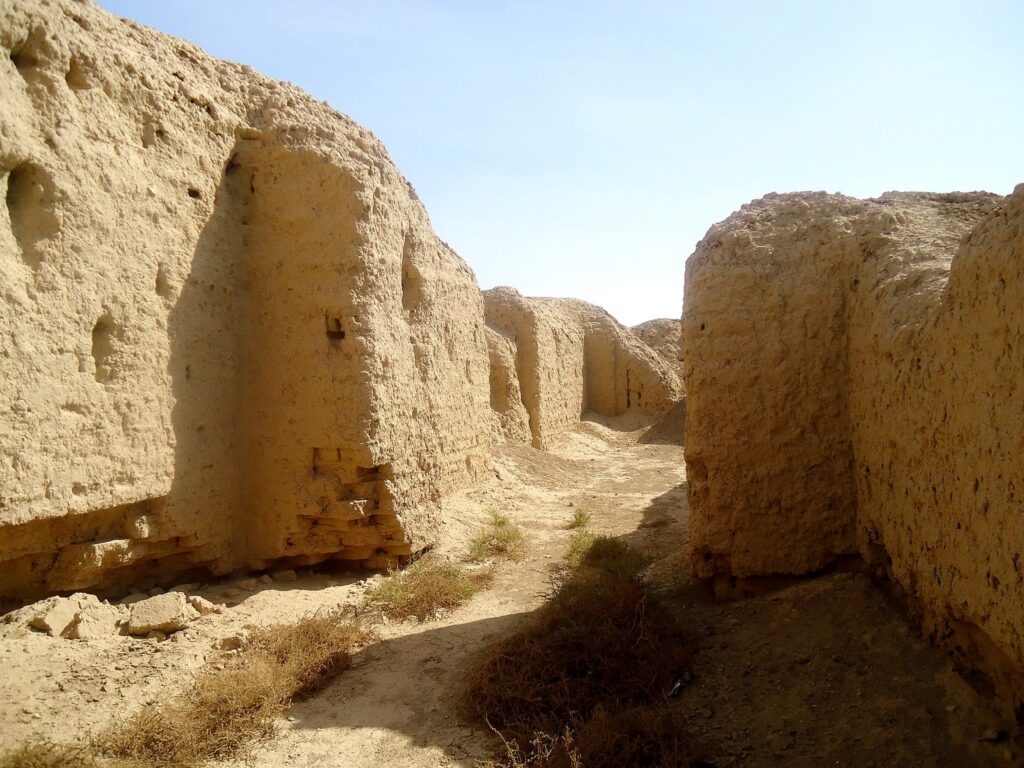
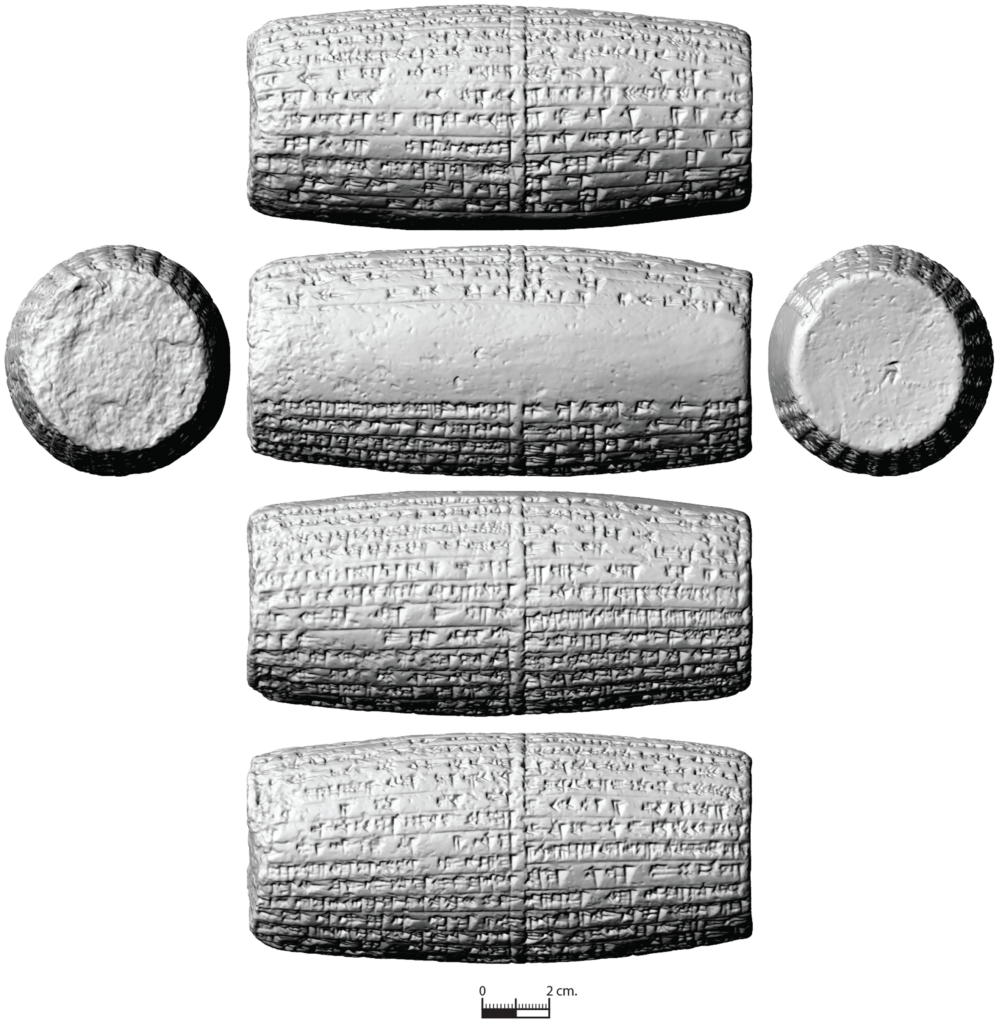
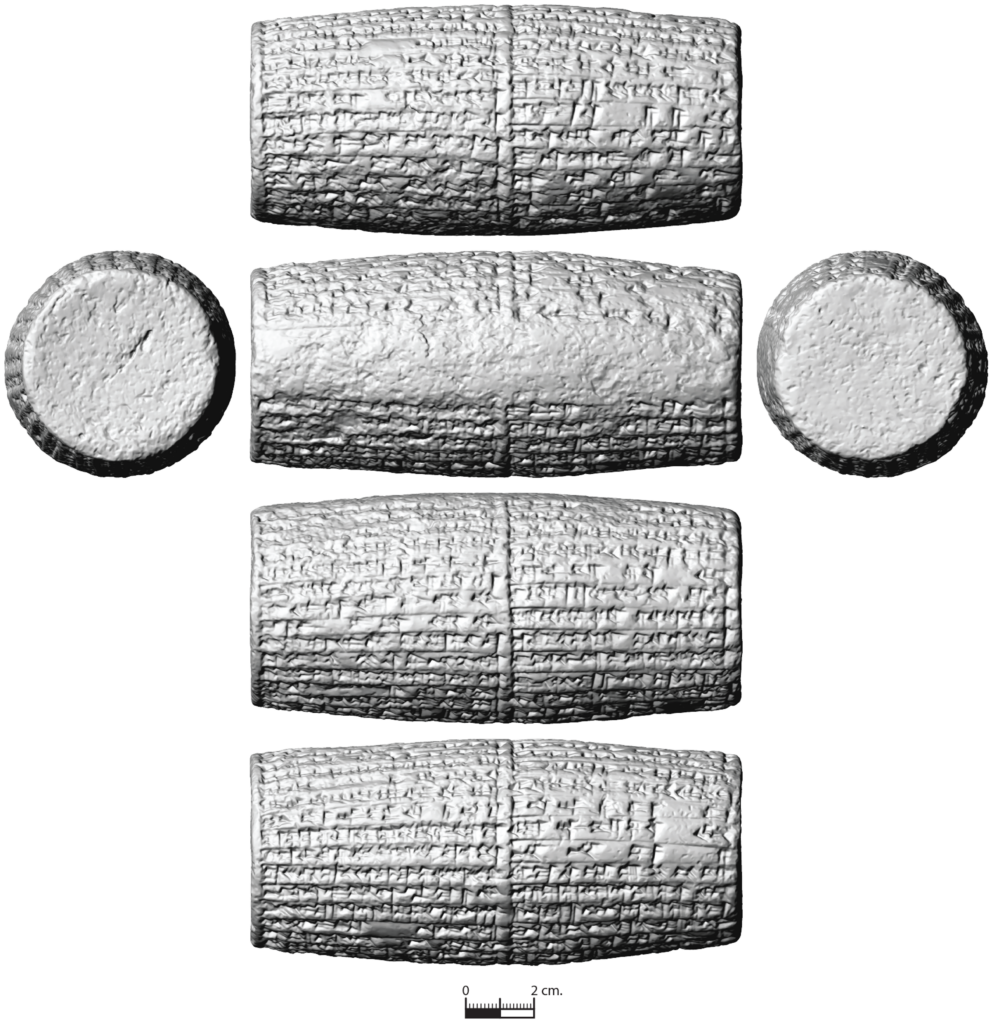
Two inscribed clay cylinders discovered at the ancient city of Kish in Iraq have shed new light on the architectural ambitions of King Nebuchadnezzar II — one of the most influential rulers of the Neo-Babylonian Empire. Handed over to the State Board of Antiquities and Heritage in 2013 and later translated by researchers, the artifacts provide the first confirmed foundation text documenting the king’s restoration of the city’s monumental ziggurat.
The find is historically significant. Until now, Nebuchadnezzar II’s involvement at Kish had only been inferred from stamped bricks recovered during excavations. The newly translated inscriptions transform inference into evidence — offering a rare, firsthand royal account of sacred architecture, divine patronage, and kingship in ancient Mesopotamia.
Tell Al-Uhaimir: The Ziggurat That Time Tried to Erase
The cylinders were found at Tell Al-Uhaimir, the mound that preserves the ruins of Kish — once a powerful political and religious centre. The ziggurat there was dedicated to the war-god Zababa and the goddess Ishtar, figures deeply associated with power, protection, and royal legitimacy.
Archaeological research shows that the structure underwent several major phases of construction and rebuilding. Originally attributed to the age of Hammurabi in the early second millennium BC, it was later restored by successive rulers before falling again into decay. The cylinders reveal that Nebuchadnezzar II returned to the monument after centuries of erosion and collapse, determined to restore its sacred presence.
In the inscription, the king describes how the walls had weakened and rain had washed away the brickwork — a familiar fate for mudbrick architecture across Mesopotamia. Feeling divinely inspired, he rebuilt the damaged sections, strengthened the structure, and “embellished its outward appearance to shine like daylight” for the gods Zababa and Ishtar.
Nebuchadnezzar II: Builder-King of the Neo-Babylonian World
Nebuchadnezzar II (604–562 BC) is widely remembered as the ruler who transformed Babylon into a global metropolis of antiquity. His reign produced monumental architecture, grand temples, towering fortifications, and vast urban renewal projects. Ancient tradition also associates him with the legendary Hanging Gardens, symbolizing splendour, sophistication, and royal might.
But the Kish cylinders reveal another layer of his legacy — one rooted not in conquest, but in preservation. For Mesopotamian rulers, restoring ancient temples and ziggurats was not only a political act, but a sacred responsibility. Kings were expected to maintain cosmic order, honour the gods, and protect the continuity of worship. By rebuilding venerable monuments, they connected themselves to earlier rulers and reinforced their legitimacy.
These themes echo across the inscription, where Nebuchadnezzar presents himself as a pious caretaker chosen by the gods Marduk and Nabû to safeguard holy places. Restoration was devotion — and power — written in brick.
What Ziggurats Meant to Ancient Mesopotamia
Ziggurats were among the most iconic structures of the ancient Near East. Towering above city skylines, their tiered, stepped platforms symbolized a bridge between earth and the heavens. Unlike temples, which housed cult rooms, ziggurats functioned as monumental foundations for sacred space, expressing cosmic order, territorial identity, and divine presence.
To rebuild a ziggurat was to renew the world.
The Kish monument belonged to a broader sacred landscape that included multiple temples and additional ziggurats in neighbouring districts. The city served as a symbolic centre of kingship from early Mesopotamian history onward — making Nebuchadnezzar’s intervention both religious and politically meaningful.
Foundation Inscriptions: Messages for the Gods and the Future
The two cylinders are nearly identical, reflecting a standard Neo-Babylonian tradition. Foundation texts were often placed within temple walls or buried beneath structures during construction ceremonies. They commemorated the builder, invoked divine favour, and preserved a message for future generations — or future kings.
The Kish inscriptions follow this pattern closely. After recounting the restoration, Nebuchadnezzar closes with a prayer: he asks the gods to grant him a long life, military success, and victory over his enemies. The words link sacred architecture with royal destiny — a recurring theme in Mesopotamian state ideology.
Their survival today allows that royal voice to speak again across 2,600 years.
Rewriting the Story of Kish — and Nebuchadnezzar’s Legacy
Beyond confirming a single restoration project, the cylinders deepen our understanding of how Nebuchadnezzar shaped religious landscapes beyond Babylon itself. They demonstrate the geographic reach of his architectural program and reinforce his identity as a ruler deeply engaged in preserving ancient cult centres.
For archaeologists and historians, the discovery also strengthens the timeline of Kish’s ziggurat — aligning textual sources, excavation data, and religious history into a more complete narrative.
In a region still rich with undiscovered heritage, finds like these remind us how much of Mesopotamia’s story remains buried beneath the soil — waiting, like these cylinders, to re-emerge and reshape the past.
Jawad AA, Al-Ammari HF. TWO INSCRIBED CYLINDERS OF NEBUCHADNEZZAR II FROM THE ZIGGURAT OF KISH. Iraq. Published online 2025:1-11. doi:10.1017/irq.2025.10023
Cover Image Credit: Ruins near the ziggurat of Kish at Tell al-Uhaymir, Mesopotamia, Babel Governorate, Iraq. Public Domain
