
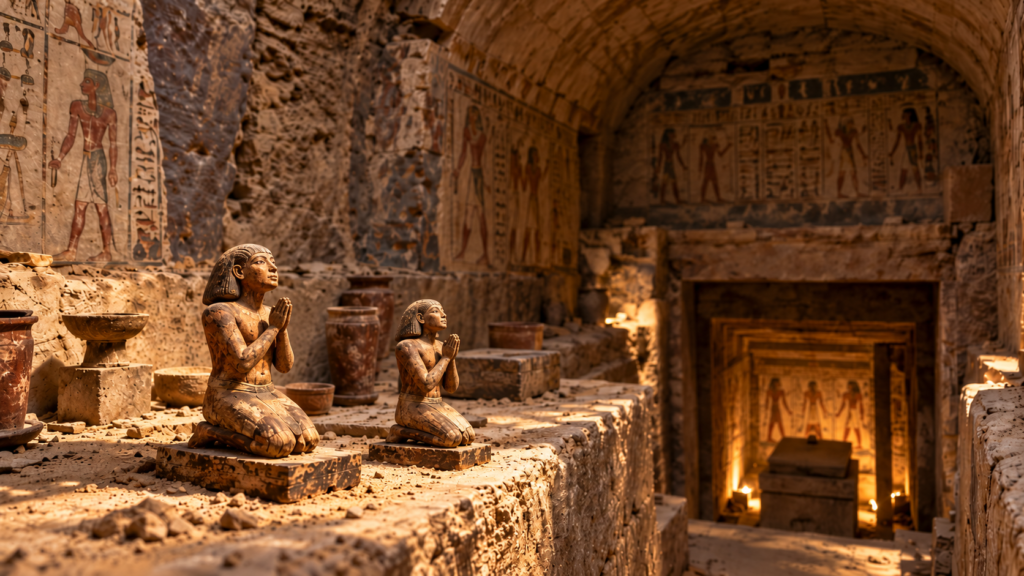
Archaeologists at Saqqara have discovered two small wooden figures in an unusual devotional pose inside a chamber above the tomb of a high-ranking Old Kingdom official. Their purpose remains uncertain, while bronze instruments found nearby present another puzzle about the burial and its owner.
Two small wooden figures discovered in an ancient Egyptian tomb at Saqqara have raised intriguing questions about Old Kingdom burial rituals. Archaeologists found the figures in a vaulted chamber above the resting place of Weni, a senior royal official. Their unusual devotional posture and separation from the main burial room make them among the most remarkable discoveries from the excavation.
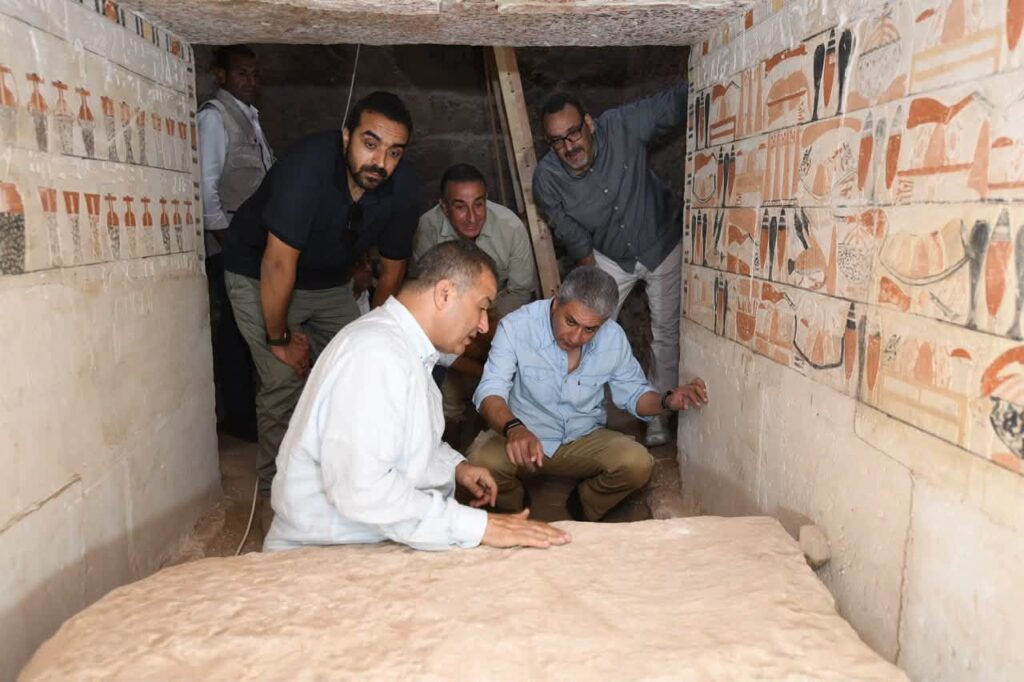
The Egyptian archaeological mission made the discovery northwest of the pyramid of King Merenre, where excavations revealed a mudbrick mastaba containing several burial shafts. Alongside the figures, the team recovered bronze instruments that may have served medical purposes, despite the absence of any evidence that Weni practiced medicine.
Two Wooden Figures in an Unusual Setting
The archaeological mission, led by Dr. Amr El-Tayeb, discovered the figures while investigating the mastaba’s internal chambers. Egypt’s Ministry of Tourism and Antiquities described them as small wooden statues represented in a rare posture of worship or reverence.
Their placement is particularly noteworthy. Ancient Egyptian tombs often contained objects intended to support the deceased in the afterlife, but the architectural context of such objects could influence their religious meaning. The figures’ presence in a separate room suggests that the chamber may have played a particular role in the funerary arrangements.
Mohamed Abdel Badie, head of the Egyptian Antiquities Sector at the Supreme Council of Antiquities, said the discovery would help researchers investigate how different spaces within Old Kingdom mastabas functioned. Although the ministry has yet to release photographs of the wooden figures, their unusual posture and location have already raised questions about their role in funerary rituals.
Bronze Instruments in the Tomb of a Royal Official
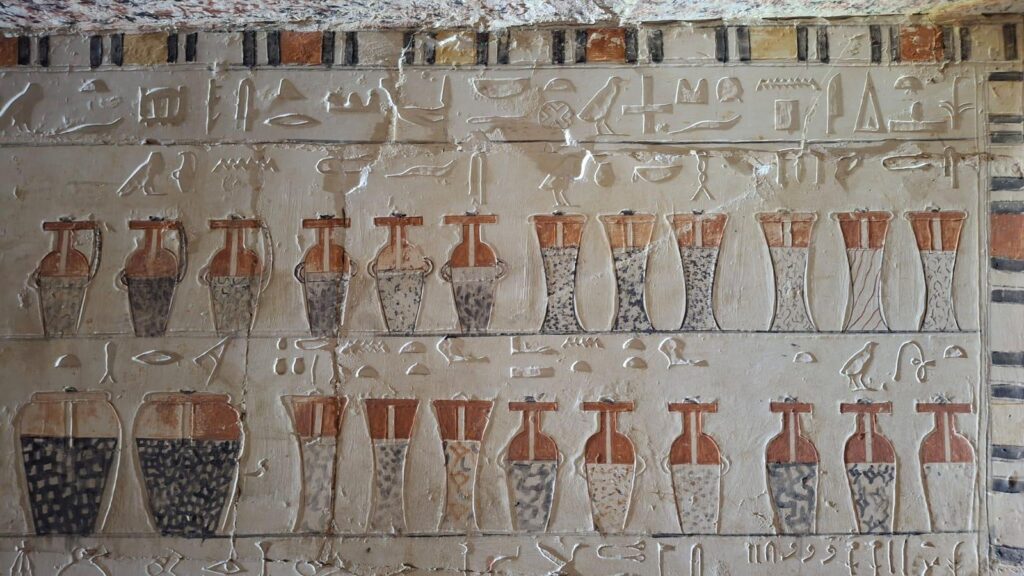
Inscriptions inside the decorated burial chamber identify Weni as a man who held several important positions within the royal administration. His titles included mayor, sem priest, overseer of royal expeditions, treasurer of the House of the North, sole companion, and lord of Elkab.
These titles suggest that Weni occupied a prominent place in the political and religious institutions of the Old Kingdom. They also provide an unusually detailed account of his official standing, allowing researchers to connect the objects recovered from the tomb with a named member of Egypt’s administrative elite.
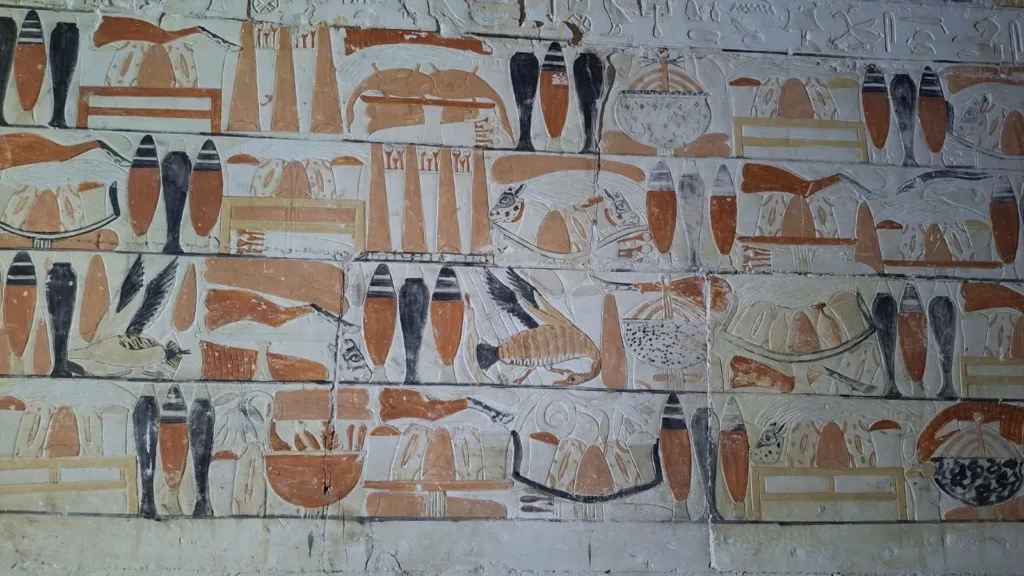
Yet one group of objects does not fit neatly into that picture. Inside the burial shaft, the excavation team recovered several bronze instruments that Egyptian authorities believe may have had medical applications.
None of Weni’s surviving titles identify him as a physician, leaving the relationship between the instruments and their owner unclear. Further examination may establish whether the objects served a medical function or belonged to another category of tools placed in the tomb.
A Priestess of Hathor and Evidence of Weni’s Health
Another discovery from the excavation was a false door bearing the name of Sekhet Nebti, a woman whose religious titles included priestess of Hathor. False doors formed an important feature of Egyptian funerary architecture, symbolically linking the world of the living with that of the deceased.
The inscription provides additional evidence of women’s participation in religious institutions during the Old Kingdom. However, archaeologists have not established whether Sekhet Nebti had a personal or family connection with Weni.
Examination of Weni’s skeletal remains has also revealed details about his health and the conditions he experienced during his lifetime. Researchers estimate that he died after the age of 50 and suffered from advanced dental disease affecting his teeth and surrounding tissues.
His bones also displayed changes consistent with repeated physical stress. These findings add a personal dimension to the inscriptions, revealing aspects of his life that the prestigious titles on the tomb walls do not describe.
A New Perspective on Old Kingdom Funerary Practices
Saqqara served as one of ancient Egypt’s most important cemeteries, particularly for the officials and elite families associated with Memphis. The newly discovered mastaba lies within the funerary landscape surrounding the pyramid of Merenre, a ruler of the Sixth Dynasty.
Hisham El-Leithy, secretary-general of the Supreme Council of Antiquities, said the discovery provides new information about mastaba architecture, religious practices, and the social position of their occupants. The relatively well-preserved inscriptions allow researchers to examine these questions through the burial of an identified official rather than an anonymous tomb.
The excavation team is continuing its investigation of the complex, including the architectural relationship between its chambers, the inscriptions, and the objects recovered during the dig. These studies could clarify how the burial spaces functioned and whether different parts of the mastaba served distinct ceremonial purposes.
