
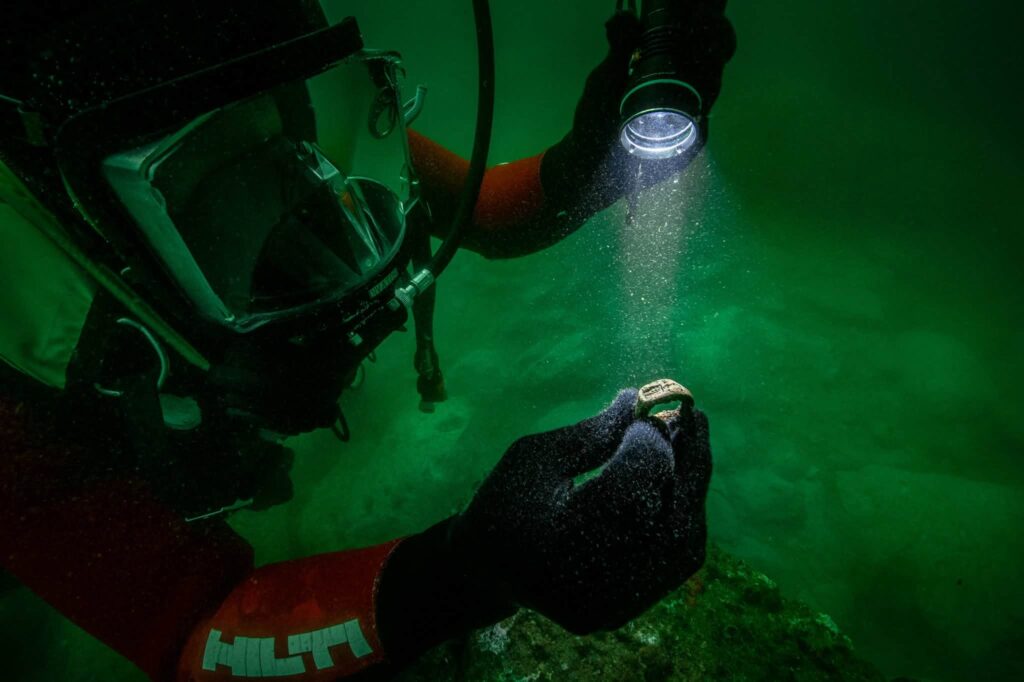
Underwater archaeologists working in Alexandria’s ancient Eastern Harbour have discovered a bronze seal ring engraved with an image of the Lighthouse of Alexandria, one of the Seven Wonders of the Ancient World. Egyptian authorities say it is the first known representation of the famous Pharos ever found on a seal ring.
The discovery came from the submerged royal island of Antirhodos, once part of Alexandria’s monumental harbour district known as Portus Magnus. The unusual object may offer more than another image of the lost lighthouse: its location and function raise the possibility that the ring belonged to an administrative environment connected with Alexandria’s harbour and perhaps with the lighthouse itself.
A lighthouse engraved on a seal ring
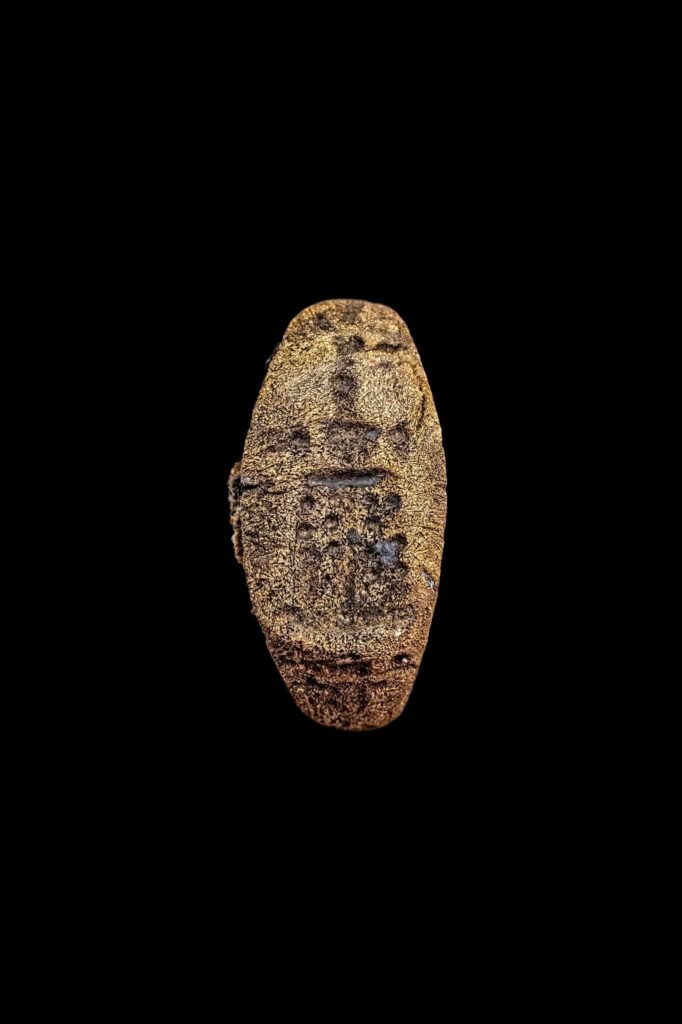
According to Egypt’s Ministry of Tourism and Antiquities, the bronze ring carries an engraved representation of the ancient Lighthouse of Alexandria. The image closely resembles depictions of the monument known from coins dating to the second century AD, although the ministry has not assigned the ring itself a definitive second-century date.
The find came from the site of the royal island of Antirhodos, where the European Institute for Underwater Archaeology (IEASM), working with Egypt’s General Department of Underwater Antiquities, is conducting excavations. Much of this once-important part of ancient Alexandria now lies beneath the Mediterranean.
Hisham El-Leithy, Secretary-General of Egypt’s Supreme Council of Antiquities, described the discovery as exceptional because archaeologists had never previously identified an image of the lighthouse on a seal ring. The location adds another layer of interest because Antirhodos formed part of Alexandria’s royal quarter and contained a palace described by the ancient geographer Strabo after his visit to Egypt between 29 and 25 BC.
Could the ring have had an administrative role?
The fact that the image appears on a seal ring makes the discovery particularly intriguing. Such rings could do more than decorate the hand: seals could identify an individual or authority, authenticate communications and leave recognizable impressions on materials used to secure documents or containers.
StileArte has raised the possibility that the Pharos image may therefore have represented an institutional function connected with the lighthouse, harbour administration or maritime communications. The idea remains hypothetical, since archaeologists have not found an associated sealed document or inscription identifying a specific lighthouse office.
Egyptian authorities have made a related but cautious suggestion. They argue that the ring could indicate that the palace on Antirhodos continued to serve administrative purposes into the second century AD, possibly including activities connected with management of the lighthouse. The discovery does not prove such a connection, but it gives archaeologists a new line of evidence to investigate.
What was the Lighthouse of Alexandria?
The Lighthouse of Alexandria, also known as the Pharos of Alexandria, rose on the island of Pharos near the entrance to the city’s great harbour. Built during the Ptolemaic period in the third century BC, it became one of antiquity’s most recognizable monuments and eventually joined the traditional list of the Seven Wonders of the Ancient World.
Its practical purpose was just as important as its monumental appearance. The tower helped sailors identify and approach one of the Mediterranean’s busiest ports, while its image gradually became a symbol of Alexandria itself. Roman-period coins continued to depict the lighthouse centuries after its construction, showing how strongly the monument remained associated with the city.
That long visual tradition makes the newly discovered ring especially significant. Instead of appearing on a public monument or coin, the lighthouse had been reduced to an image small enough to carry on a person’s hand and potentially use as a seal.
A royal quarter beneath the sea
Antirhodos occupied a prominent position within Portus Magnus, the great harbour beside ancient Alexandria. Palaces, sanctuaries and other monumental structures once occupied the area, which formed part of the political heart of the Ptolemaic capital before Alexandria came under Roman rule.
The current excavation season covers four areas of the Eastern Harbour: the Temple of Isis, the palace and western mound of Antirhodos, the remains of an obelisk and the Timonium, traditionally associated with Mark Antony. Franck Goddio, director of IEASM and head of the excavation mission, said the work has produced a range of archaeological material from different periods of Alexandria’s history.
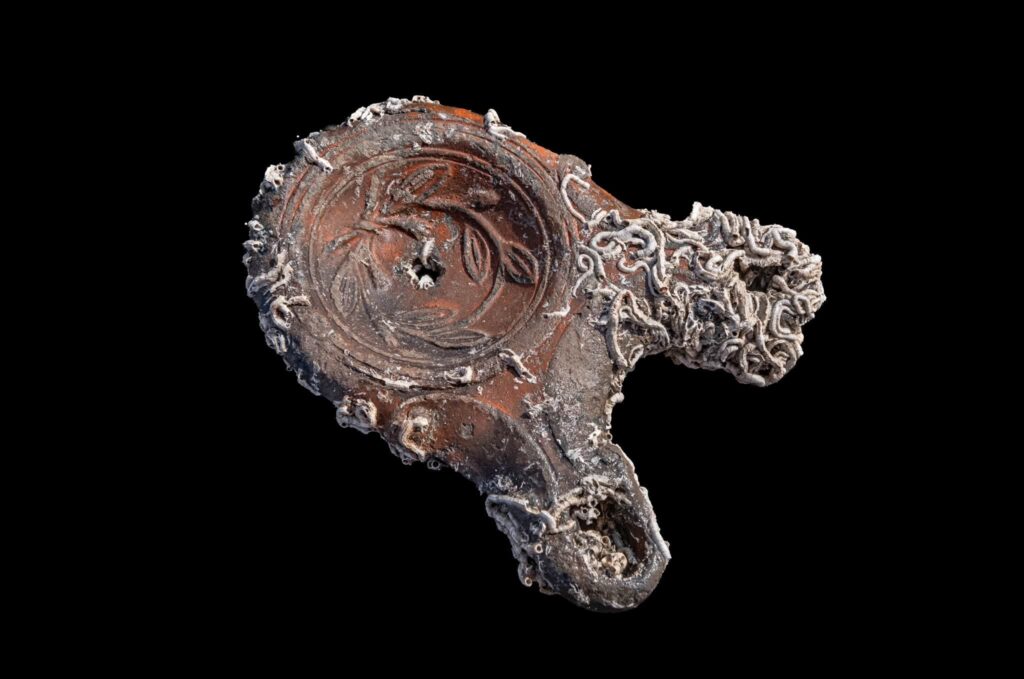
Alongside the ring, archaeologists recovered pottery and glass remains dating from the fourth century BC to the fourth century AD. These include everyday utensils, tableware, amphoras, vessels, bottles and lamps, providing evidence for centuries of activity in a district that changed considerably between the Ptolemaic and Roman periods.
A small object with a much larger story
What makes the bronze ring unusual is the contrast between the object and the monument it represents. The Lighthouse of Alexandria was designed to dominate the coastline and guide ships from a distance, yet its image appears here on an object small enough to serve as a personal or official seal.
Whether that image simply expressed an association with Alexandria or identified someone connected with the harbour administration remains unanswered. Further study of the ring, its archaeological context and its relationship to other finds from Antirhodos may help clarify its date and function.
For now, the discovery offers something archaeology rarely preserves: a possible connection between one of the ancient world’s greatest monuments and the people who may have dealt with the everyday administration surrounding it. Instead of revealing another piece of the lighthouse itself, the ring may eventually tell archaeologists more about how the world around the Pharos actually worked.
