
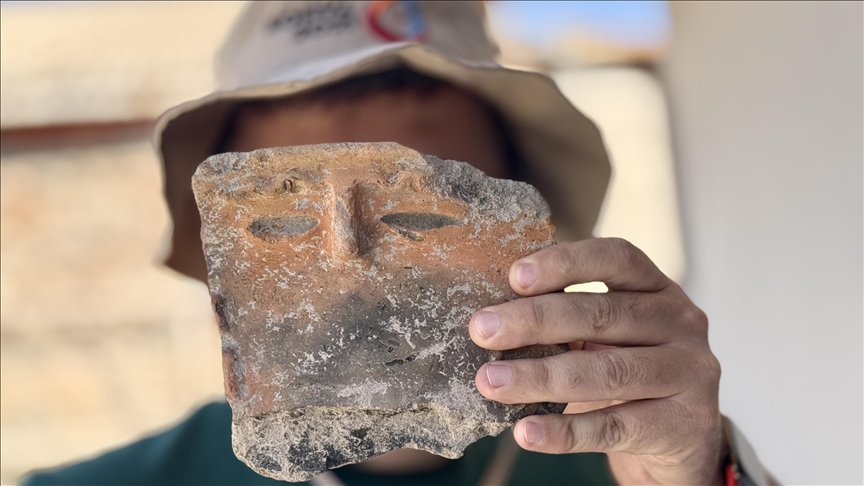
Archaeologists working in central Türkiye have unearthed a remarkable pottery fragment depicting a human face, dating back nearly 5,000 years. The discovery, made during ongoing excavations in Gökhöyük, a prehistoric mound in the Seydişehir district of Konya province, offers new insights into ritual practices and symbolic art in early Anatolian civilizations.
A Discovery Connecting Past and Present
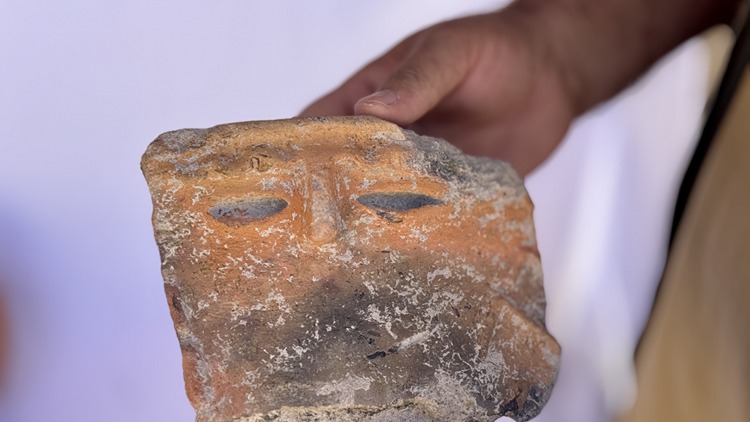
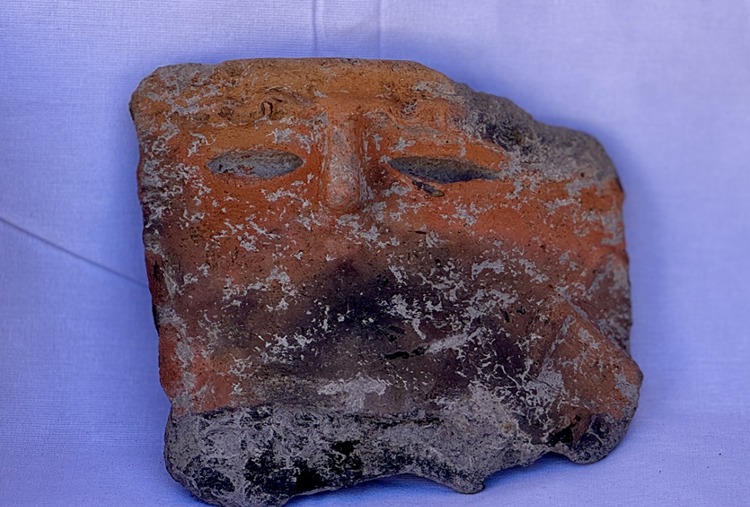
The fragment, carved with detailed human features including almond-shaped eyes, arched eyebrows, and a prominent nose, was found during the third year of renewed excavations led by Associate Professor Ramazan Gündüz of Selçuk University’s Department of Archaeology.
“This pottery piece is extraordinary because it reflects the symbolic importance of the human face in early societies,” said Dr. Gündüz. “It was most likely part of a ceremonial vessel, used not only for daily activities like cooking but also in rituals that carried deep spiritual meaning.”
According to initial assessments, the artifact likely dates back to the Early Bronze Age, though its precise age will be determined through radiocarbon analysis. Early observations suggest it may be around 5,000 years old.
Gökhöyük: A Window Into 7,000 Years of Human History
Gökhöyük is one of central Anatolia’s most significant archaeological sites. Spanning roughly 5 hectares and located just 8 kilometers from Seydişehir, the mound was first identified in the 1950s by renowned British archaeologist James Mellaart, best known for his pioneering research at Çatalhöyük.
Excavations in Gökhöyük were initially carried out between 2002 and 2005 after construction work in the area revealed buried artifacts. However, systematic archaeological work paused for nearly two decades until 2023, when efforts resumed under Türkiye’s Ministry of Culture and Tourism as part of the nationwide “Heritage for the Future” Project.
Today, with support from both Seydişehir Municipality and Konya Metropolitan Municipality, Gökhöyük has become a rapidly advancing excavation site, shedding light on millennia of human habitation in the Konya Plain.
Ritual Symbolism in Pottery
While human-faced vessels are known from other Early Bronze Age sites in western Anatolia, the Gökhöyük find stands out for its exceptional preservation. The facial features were carved into the clay before firing, indicating careful craftsmanship and symbolic intent.
“Gökhöyük’s people did not simply use ceramics for cooking,” explained Dr. Gündüz. “They infused meaning into these objects, turning them into ritual instruments. This human-faced vessel fragment is strong evidence of ritual symbolism within the community.”
The practice of decorating vessels with anthropomorphic motifs reflects a broader cultural pattern across prehistoric Anatolia. Such objects may have been used in ceremonies linked to fertility, ancestor worship, or seasonal rituals, though the exact purpose remains unknown.
Other Finds: Figurines, Seals, and Obsidian Tools
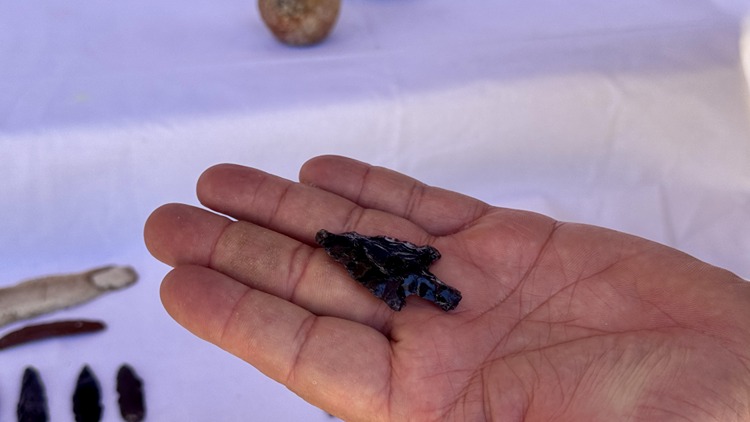
The human-faced fragment was not the only exciting discovery at Gökhöyük. Excavations have also revealed animal figurines, stamp seals, obsidian arrowheads, and polished stone axes.
The obsidian points, razor-sharp and durable, were likely used as spear or arrow tips in hunting. The small stone axes, dating as far back as the Neolithic and Chalcolithic periods, formed part of everyday toolkits for woodworking, food preparation, and construction.
“These finds tell us that Gökhöyük was not a temporary settlement but a thriving community with advanced craft production, symbolic traditions, and complex social practices,” Gündüz noted.
A Unique Settlement in Anatolia
Gökhöyük holds a special place in Anatolian archaeology. Unlike many sites that represent only one cultural phase, Gökhöyük preserves evidence of continuous habitation from the Neolithic period (7,000 BCE) through the Iron Age (1,000 BCE). This uninterrupted sequence makes it an invaluable site for understanding cultural evolution in central Anatolia.
Dr. Gündüz emphasized that Gökhöyük could soon emerge as a key research hub in prehistoric studies:
“It is the only settlement in the Konya Plain where we can trace such a long period of occupation. With continued excavations, Gökhöyük will play an increasingly important role in understanding Anatolia’s prehistory.”
Looking Ahead
As radiocarbon testing confirms the artifact’s precise age, archaeologists hope to uncover more ritual vessels and symbolic objects in the coming excavation seasons. Each discovery not only enriches our understanding of Gökhöyük’s ancient inhabitants but also strengthens Türkiye’s reputation as a cradle of civilization where some of humanity’s earliest communities flourished.
For now, the 5,000-year-old human-faced pottery fragment serves as a haunting reminder of the creativity, spirituality, and symbolic depth of Anatolia’s prehistoric cultures—bridging a gap of millennia and allowing modern observers a glimpse into the beliefs of a vanished world.
Cover Image Credit: Abdullah Doğan/AA
