
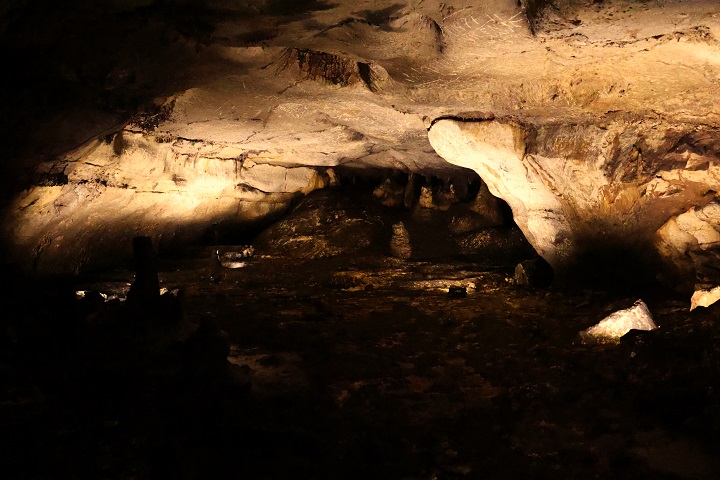
Archaeologists working in Cova Dones in eastern Spain have documented at least 120 Latin inscriptions dating mainly to the first and second centuries AD, transforming the cave into what may be the largest known inscribed Roman cave sanctuary anywhere in the former empire.
The discoveries, made during the May and June 2026 excavation campaign near Millares in Valencia, also provide rare evidence that women actively participated in rituals devoted to an otherwise unknown goddess addressed reverentially as Domina, meaning “the Lady.”
Until this year, researchers knew of only around 15 Latin inscriptions inside the cave. The dramatic increase has revealed that the underground sanctuary was not visited casually or occasionally. Instead, the concentration of texts, offerings and ritual features points to an organized cult focused on a specific female deity.
The research is led by Virginia Barciela of the University of Alicante’s Institute of Archaeology and Historical Heritage and Aitor Ruiz-Redondo of the University of Zaragoza’s Environmental Sciences Research Institute.
A Roman sanctuary more than 200 meters underground
The inscriptions cover the walls and ceiling of a chamber that researchers have named the “Roman Sanctuary.” Located more than 200 meters inside Cova Dones, the chamber was first identified in 2024.
Small natural pools known as gours collect water dripping and flowing through the underground galleries. Roman visitors placed objects inside and around these pools, suggesting that water may have played an important role in the ceremonies performed there.
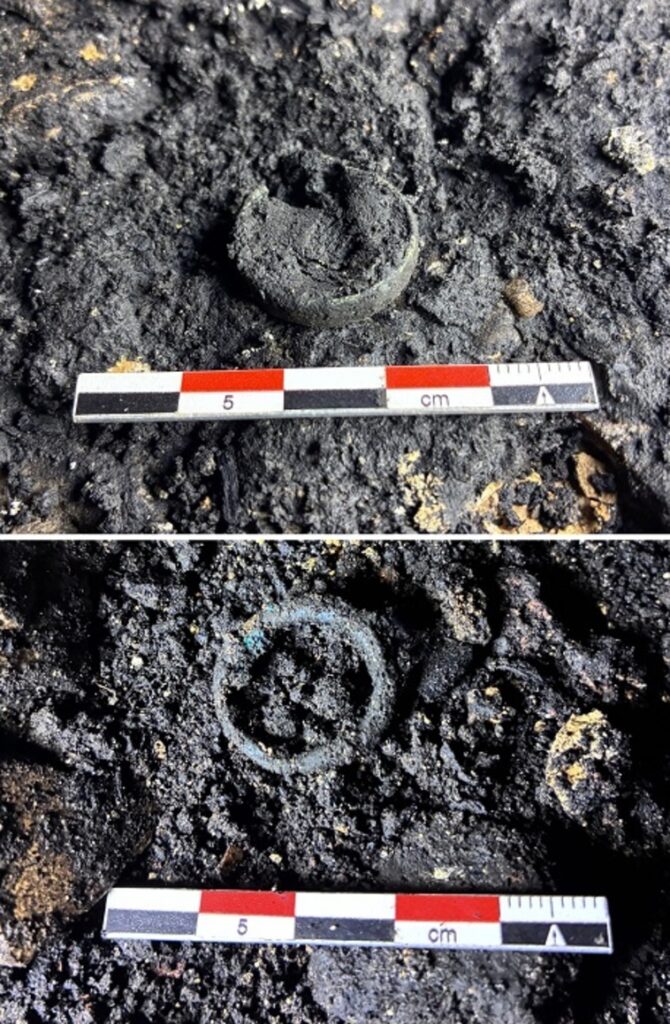
During the 2026 campaign, archaeologists recorded two rings, a bracelet, chalice-shaped vessels, spindle whorls, pottery fragments, animal remains and other materials lying on the surface. These objects join a Roman coin depicting Emperor Claudius that was found in the sanctuary in 2024 and appears to have been deposited as an offering.
Researchers describe the survival of both inscriptions and associated archaeological objects in their original underground setting as exceptional. Together, they may allow the rituals performed inside the cave to be reconstructed in far greater detail than is normally possible at Roman sacred sites.
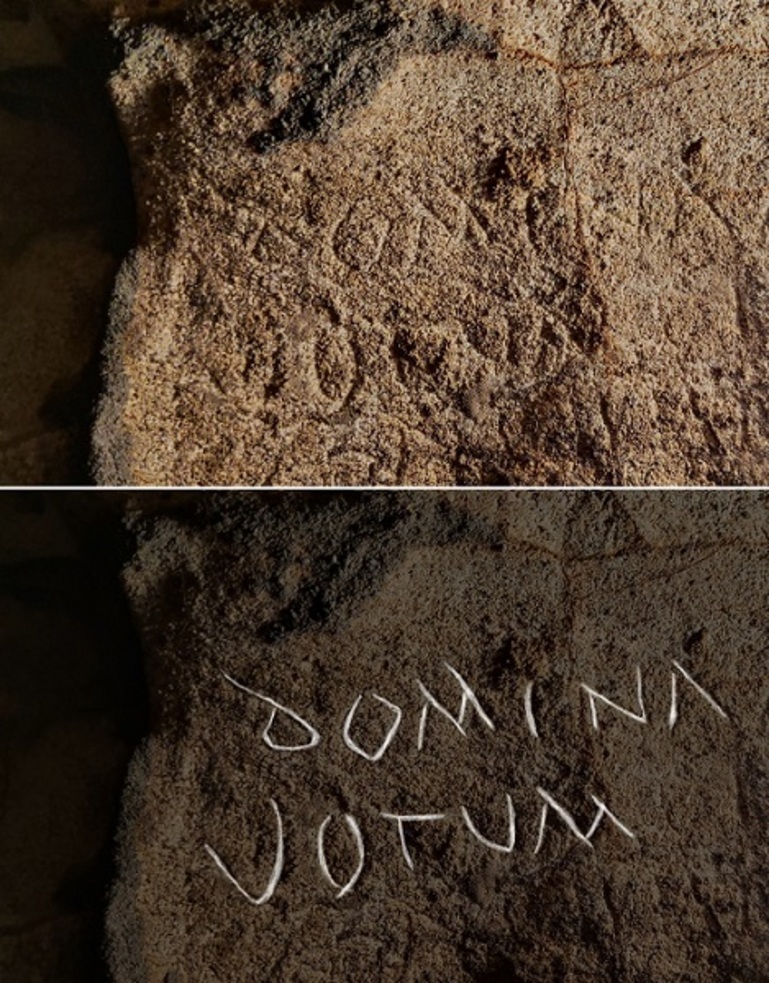
Worshippers called her “the Lady”
Epigraphers Silvia Alfayé of the University of Zaragoza and Sergio García-Dils of UNED-Seville have so far identified five votive inscriptions dedicated to the same goddess.
The texts refer to her as Domina, a respectful title meaning “the Lady.” Three inscriptions also contain the word MALACI, apparently an otherwise unknown divine epithet or local name associated with the goddess.
Its precise meaning remains under investigation. One possibility being considered is that the title was connected to water, which would fit the physical setting of the sanctuary and its natural pools. However, the researchers stress that a definitive reading has not yet been established.
The repetition of the same deity’s name across several inscriptions is particularly significant. It indicates that the chamber was dedicated to a recognizable cult rather than being a general sacred space used by unrelated visitors.
The location of the inscriptions supports this interpretation. They are concentrated within a clearly defined area far from the cave entrance, suggesting that worshippers deliberately travelled deep underground to reach a designated ritual zone.
Female names and textile offerings
Several of the newly documented inscriptions contain female names, providing direct evidence that women entered the subterranean sanctuary and participated in its religious life.
Numerous spindle whorls have also been recovered. These small objects were used to weight spindles during the production of thread and are frequently associated with textile work in the ancient Mediterranean.
The researchers believe that complete spindles may have been presented as offerings, although their wooden components have not survived. The relationship between the spindle whorls, the female names and the goddess strengthens the interpretation of Cova Dones as a sanctuary in which women had a particularly visible ritual role.
The cave’s traditional name may preserve a distant memory of that association. Cova de les Dones translates as “Cave of the Women.” Barciela suggests that the name could represent the survival of an older place-name referring either to women visiting the cave or to female supernatural beings believed to inhabit it.
This possibility remains speculative, but the archaeological and epigraphic discoveries have given the name an unexpected historical resonance.
A sacred landscape spanning more than 24,000 years
The Roman sanctuary is only one chapter in the unusually long history of Cova Dones.
Research conducted through the DONARQ project began in 2023. That year, a study published in Antiquity confirmed that the cave contained the largest known collection of Paleolithic rock art in the eastern Iberian Peninsula.
More than 100 paintings and engravings, some over 24,000 years old, made the cave one of the most important European rock art discoveries of recent decades.
The identification of the Roman chamber in 2024 demonstrated that people continued to attach ritual significance to the cave thousands of years after the Paleolithic artworks had been created.
Further discoveries followed in 2025, when researchers documented more than 100 “speleofacts”—stalagmitic formations that had been intentionally modified by prehistoric visitors. According to the project team, this makes Cova Dones the world’s second most important known site for such human-altered cave formations, behind Saint-Marcel Cave in France.
The new Latin inscriptions now extend the cave’s ritual history into the Roman period and suggest that its permanent water, underground formations and accessible entrance repeatedly attracted communities over many millennia.
Many inscriptions remain unread
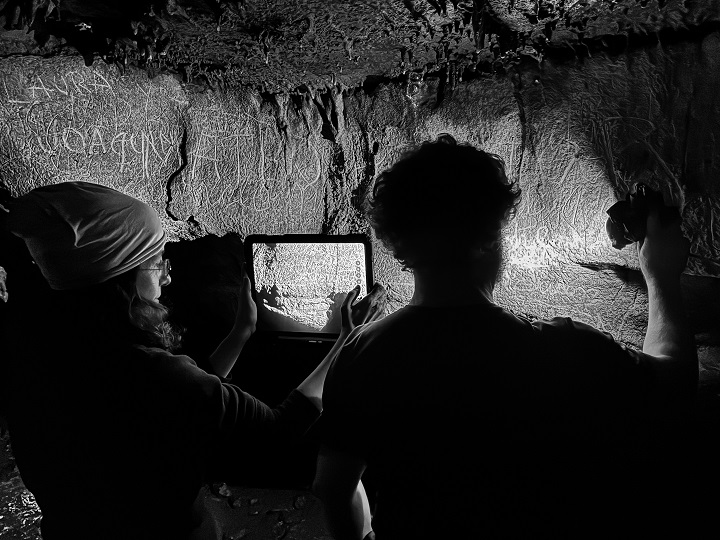
Large sections of Cova Dones have yet to be examined in detail, while numerous inscriptions are still being cleaned, documented and deciphered. The final total may therefore rise beyond the 120 examples currently known.
Future research will focus on identifying the people named in the texts, establishing the meaning of MALACI and determining how the inscriptions relate chronologically and spatially to the offerings found inside the chamber.
The project is also preparing conservation measures, safety improvements and a digital twin of the cave. A complete catalogue of its Paleolithic imagery is planned, together with virtual visits designed to make the site accessible without exposing its fragile archaeological remains to heavy foot traffic.
For the researchers, the significance of Cova Dones lies not only in the unprecedented number of Roman inscriptions but in the rare combination of texts, offerings, water features and evidence of female participation preserved deep underground.
What began as one of Spain’s most important Paleolithic art discoveries is now emerging as an equally remarkable source for understanding organized worship, women’s religious lives and the cult of a mysterious goddess in Roman Hispania.
