
A rare discovery from Crno Jezero Cave
A more than 2,000-year-old Greek theater mask has been discovered inside Crno Jezero Cave on Croatia’s Pelješac peninsula, adding a striking new clue to a cave already known for its long and complex archaeological history.
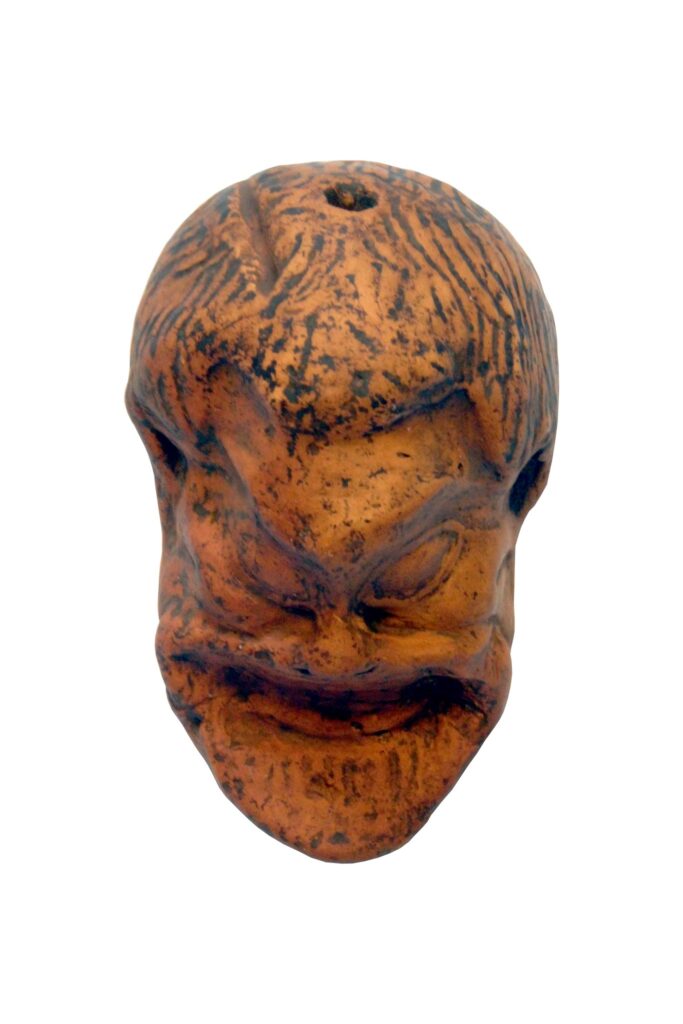
The find was made during excavations carried out between April 23 and May 4, 2026, by the Archaeological Museum of Dubrovnik Museums. Archaeologists uncovered a complete terracotta head depicting a Greek theatrical mask, dated to the 4th or 3rd century BC.
The object is hollow inside and has a small hole at the top, suggesting it was probably suspended, perhaps once hanging on a wall. For archaeologists, this detail is important. The mask was not an ordinary domestic object. In the Greek world, theatrical masks were closely tied to performance, ritual, and the cult of Dionysus, the god associated with theater, wine, ecstasy, and transformation.
A mask preserved in a hidden part of the cave
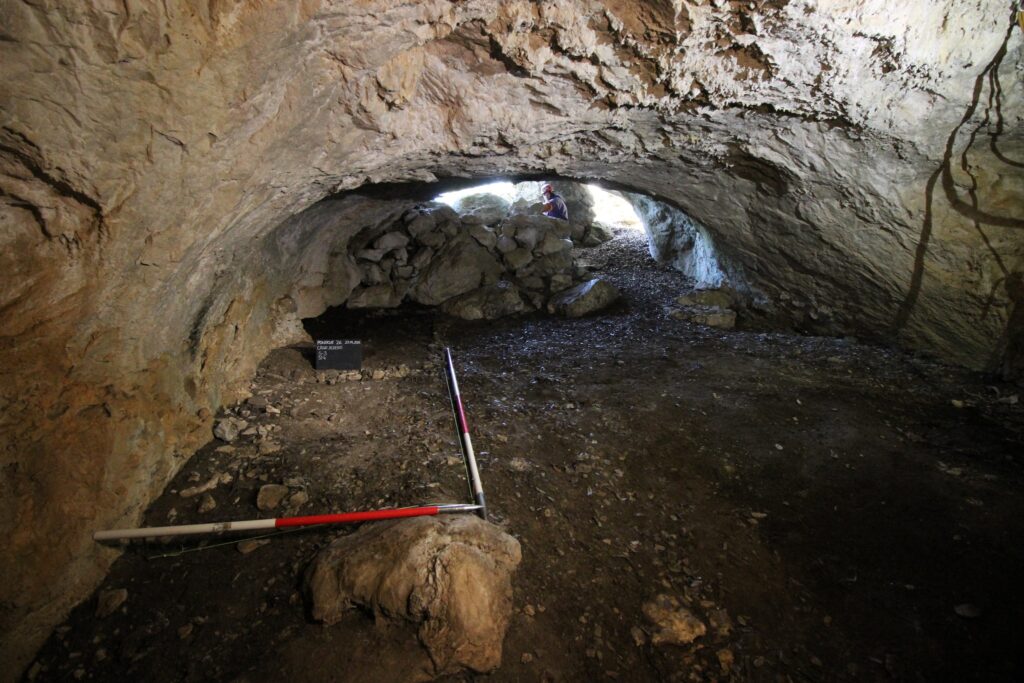
The location of the discovery makes the object even more compelling. According to Domagoj Perkić, head of the Archaeological Museum and leader of the research, many finds connected with the sanctuary were located near the entrance and in a side section of the cave that had remained almost hidden and blocked before excavation.
Because of this protected position, the objects survived in unusually good condition. Perkić described the deposit as resembling a scene frozen for more than two thousand years. The mask, still intact, appears to have remained where it was placed, shielded from later disturbance.
This gives the find a rare archaeological quality. It is not simply an isolated artifact. It belongs to a broader ritual setting, where Greek objects, local customs, and Illyrian religious practice seem to have met inside the cave.
From Bronze Age shelter to ancient burial place
Crno Jezero Cave was not used in only one period or for one purpose. Research carried out in 2025 showed that different parts of the cave were used from the Bronze Age to the end of the later Iron Age.
During the Bronze Age, especially in the 2nd millennium BC, the cave appears to have served as a temporary habitation or refuge. People may have used it during periods of conflict, harsh weather, or seasonal movement.
Later, from the Late Bronze Age into the early Iron Age, the cave became a burial place for a larger number of individuals. Radiocarbon analysis of human bones showed that this funerary phase lasted from about 1012 to 481 BC. In other words, Crno Jezero Cave served as a necropolis for more than five centuries.
An Illyrian sanctuary with Greek objects
After burials stopped, the cave took on a different role. Finds suggest that from the late 4th century to the middle of the 1st century BC, Crno Jezero was used as an Illyrian sanctuary.
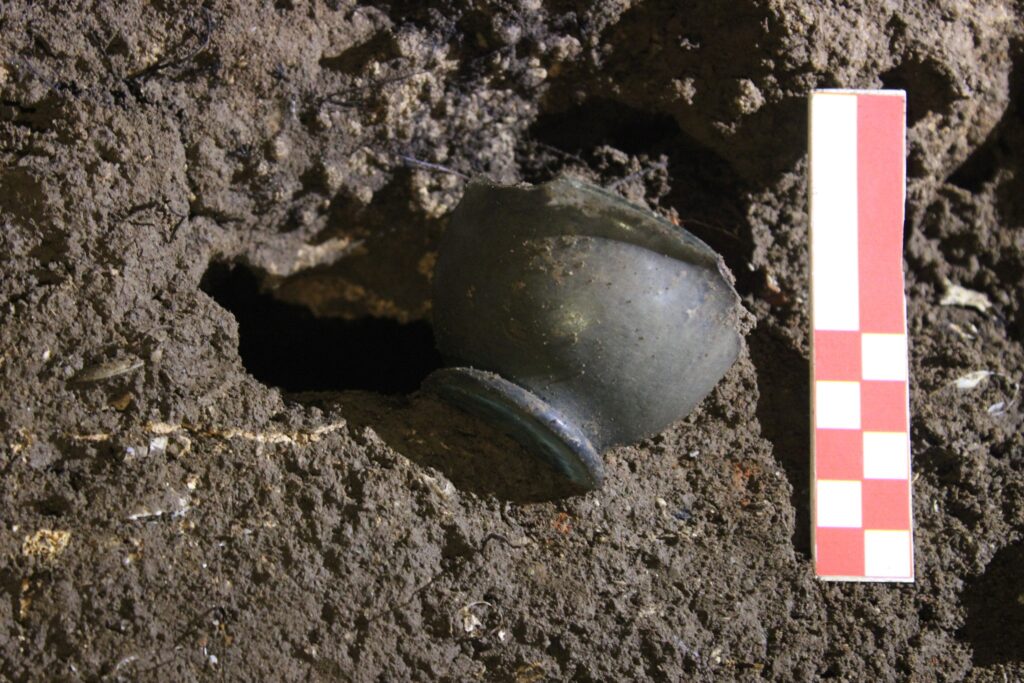
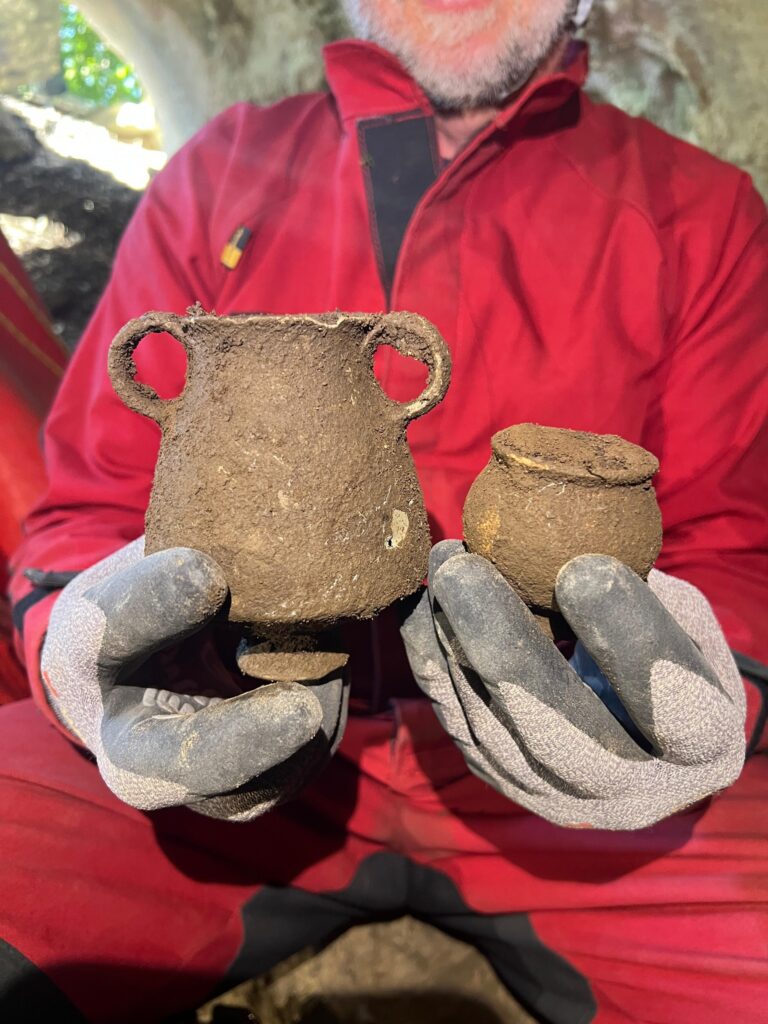
This phase is marked by numerous miniature vessels, including small amphorae, bowls, and kantharoi. Many were Greek, while others were local in origin. Such objects were often left in sanctuaries as votive offerings, gifts made during religious ceremonies.
Other fragments belonged to fine and costly Greek vessels used for storing or drinking wine. These were not ordinary household items in Illyrian daily life. They represented wealth, status, and contact with the Greek world. Their presence inside the cave suggests ritual activity, possibly involving wine drinking, offerings, and ceremonies whose exact form remains unknown.
Dionysus, wine, and local belief
The newly found theater mask naturally raises the question of Dionysus. In Greek religion, Dionysus was closely connected with theater and wine, both of which appear indirectly in the finds from Crno Jezero Cave.
Perkić has been careful not to state more than the evidence allows. It is possible that the sanctuary was connected with Dionysus, with an Illyrian counterpart of the god, or with a local deity whose worship absorbed Greek elements over time.
That uncertainty is part of the discovery’s value. The mask does not provide a simple answer. Instead, it reveals how religious life in the ancient Adriatic world may have been shaped by contact, exchange, and adaptation. Local Illyrian communities did not merely receive Greek culture passively. They seem to have selected certain symbols, objects, and practices and used them within their own ritual world.
Part of a wider sacred landscape near Dubrovnik
Crno Jezero is one of three known Illyrian sanctuaries in the wider Dubrovnik area. The others are Spila in Nakovana and Vilina Cave above the Ombla spring.
Nakovana existed at roughly the same time as the sanctuary in Crno Jezero, while Vilina Cave began earlier, in the late 5th century BC, and continued into the early 3rd century BC. Together, these sites offer a rare opportunity to study Illyrian religion and its interaction with Greek civilization along the eastern Adriatic.
The new mask also follows another important find from last year’s research, when archaeologists discovered ceramic fragments of a head with part of the bust and hair of a probable Greek deity from the Classical period.
A small object with a large story
The 2026 excavation team included archaeologists Domagoj Perkić and Krešimir Grbavac, conservator Sanja Pujo from Dubrovnik Museums, speleologists Hrvoje and Nataša Cvitanović from the Ursus Spelaeus speleological club in Karlovac, and archaeologist and speleologist Mirna Šandrić from the Speleological Section of HPD Željezničar in Zagreb.
The terracotta theater mask is small, but its archaeological meaning is wide. Found in a cave that was once a shelter, then a burial place, and later a sanctuary, it points to a moment when Greek ritual imagery entered an Illyrian sacred space.
More than two thousand years later, that suspended face from the ancient world still asks the same question archaeologists are now trying to answer: what kind of ceremony took place in the hidden chambers of Crno Jezero Cave?
Dubrovački muzeji / Dubrovnik Museums
Cover Image Credit: Dubrovački muzeji / Dubrovnik Museums
