
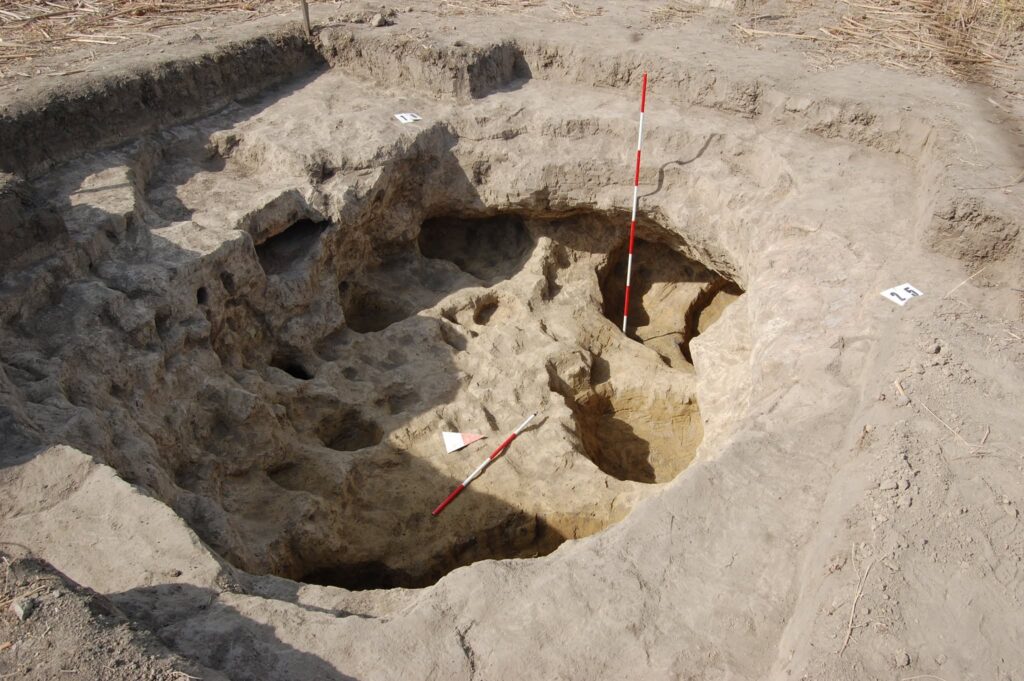
Archaeologists in northern Serbia have uncovered unusual early medieval houses with deep pits extending beneath their walls. The buildings reveal how Slavic communities adapted to the region’s harsh climate, while a mysterious burial and newly excavated structures raise further questions about life in the settlement.
More than 1,200 years ago, people living in what is now northern Serbia built their homes partly underground. They dug deep recesses beneath the walls, constructed ovens inside the houses, and developed an unusual building tradition that archaeologists believe helped them withstand the region’s powerful winds.
Three years of excavations at Bostanište, near the village of Banatsko Novo Selo, have revealed how early Slavic communities lived in this part of the Balkans between the late seventh and late tenth centuries. The latest excavations, conducted in September and October 2026, also uncovered a large structure containing approximately ten deep pits whose purpose remains unknown.
Houses Designed for the Harsh Banat Climate
Archaeologists Jelena Đorđević and Vojislav Đorđević, senior curators at the National Museum of Pančevo, lead the excavations with financial support from Serbia’s Ministry of Culture.
Their work has identified several phases of occupation spanning roughly 300 years. Rather than constructing all their houses above ground, the inhabitants used sunken and semi-sunken buildings that offered protection from the region’s cold winters and hot summers.
A key architectural feature was the deep pits dug beneath the walls of both living and working structures. These recessed spaces functioned like small alcoves or short tunnels, though archaeologists found no evidence linking them to a larger underground network.
The excavation team attributes the design to the košava, a fierce southeasterly wind that continues to impact the Banat region today. By embedding their homes into the ground and incorporating recessed areas, the inhabitants minimized wind exposure while leveraging the soil’s natural insulation.
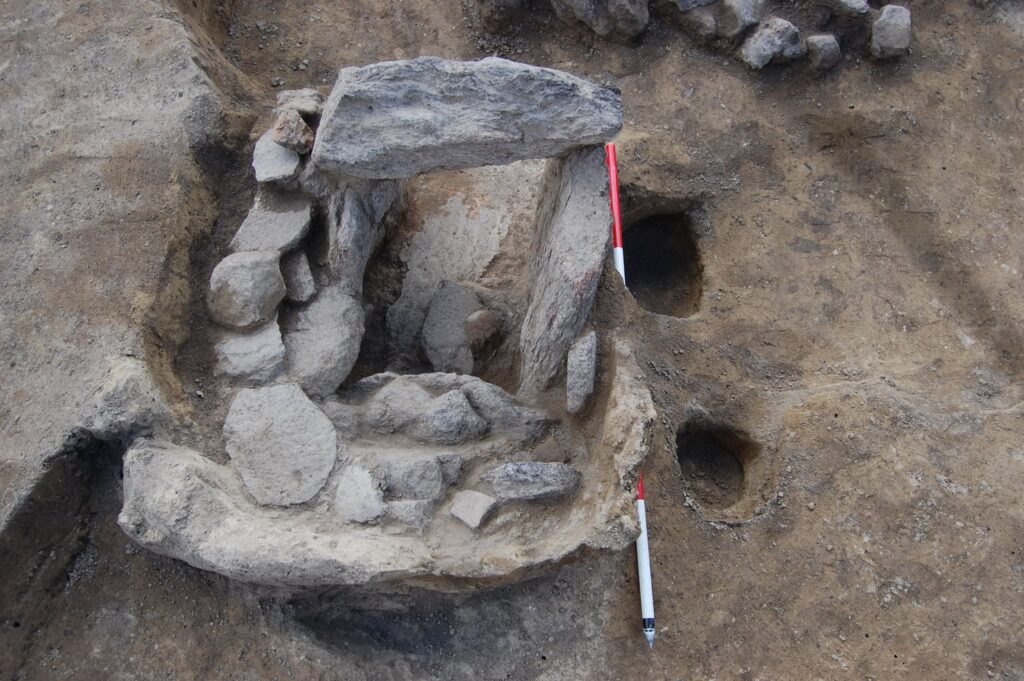
Inside the houses, two distinct heating methods were used: sturdy stone ovens and earthen ovens built directly into the loess soil. These heating systems served as vital sources of warmth and cooking space, playing a crucial role in daily life.
A Skeleton Beneath a Covering of Grinding Stones
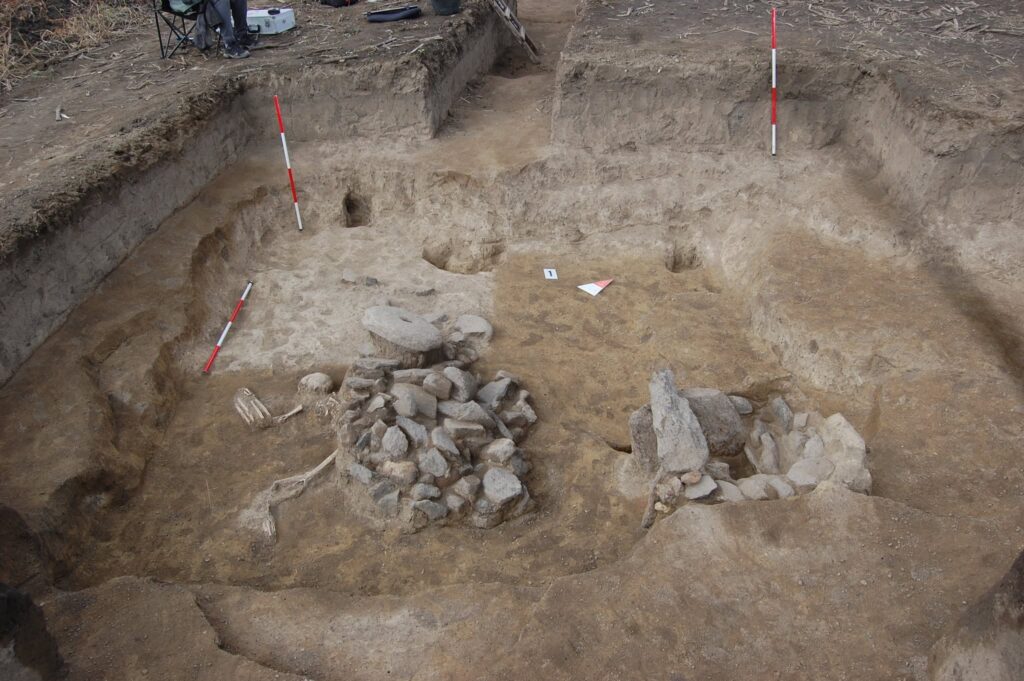
One of Bostanište’s most unusual discoveries came during an earlier excavation season, approximately two years ago. Archaeologists found a human skeleton lying on the floor of a semi-sunken house that also contained a stone oven.
Above the remains lay a carefully arranged covering of complete and broken stone querns, the heavy stones people used to grind grain. Their deliberate placement makes the discovery particularly unusual and raises questions about the circumstances of the burial.
The National Museum of Pančevo considers the find significant for understanding possible funerary practices and beliefs among the settlement’s inhabitants. However, archaeologists have not yet established why the person was buried inside the house or what the grinding stones meant.
The find provides a rare glimpse into the human side of the settlement, which otherwise consists of simple dwellings and ordinary household items. It suggests that these buildings may have served purposes beyond basic functions like cooking, shelter, and labor.
Ten Deep Pits Present a New Archaeological Puzzle
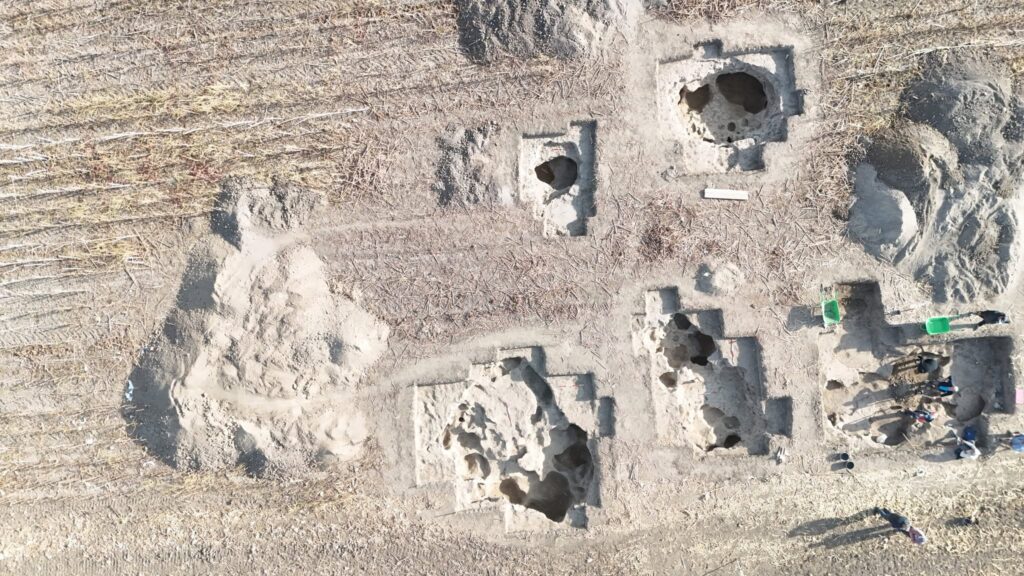
The 2026 excavation season introduced another unanswered question. Archaeologists investigated a substantially larger structure with approximately ten deep pits located both inside and around it.
The team is considering two possible explanations. The pits may have served as storage spaces for food and grain, or they may represent attempts to extract bog iron ore, a naturally occurring source of iron associated with wetland environments.
The researchers emphasize that both theories about the pits remain unconfirmed. They plan to analyze soil samples in the lab to determine which interpretation aligns with the archaeological evidence.
Meanwhile, other discoveries at Bostanište include fragments of handmade or slow-wheel pottery and basic tools. While no high-status items have been found, these artifacts offer valuable insights into daily life, craftsmanship, and the practical realities of rural medieval Slavic communities.
Bostanište and the Archaeological History of Banat
The discoveries at Bostanište add to decades of archaeological research into early medieval settlement in the Banat region. Earlier excavations at Donjovaroška Ciglana in Pančevo identified three Slavic houses dating to the ninth and tenth centuries, while investigations at nearby Livade revealed further evidence of settlement during the same period.
These findings provide a wider context for the houses at Bostanište, where archaeologists have traced rural occupation from the late seventh to the late tenth century. The site offers an opportunity to examine how building traditions developed across several generations and how communities adapted their homes to the local environment.
The National Museum of Pančevo has also conducted extensive archaeological surveys across the region, recording about 600 archaeological sites in the Pančevo municipality alone. Its wider research provides an important foundation for understanding the area’s settlement history, from prehistory through the Middle Ages.
At Bostanište, the next stage of research will focus partly on the newly discovered pits. Laboratory analysis of soil samples may help determine whether the inhabitants used them to store food or obtain iron ore, potentially revealing another aspect of the settlement’s economy.
