
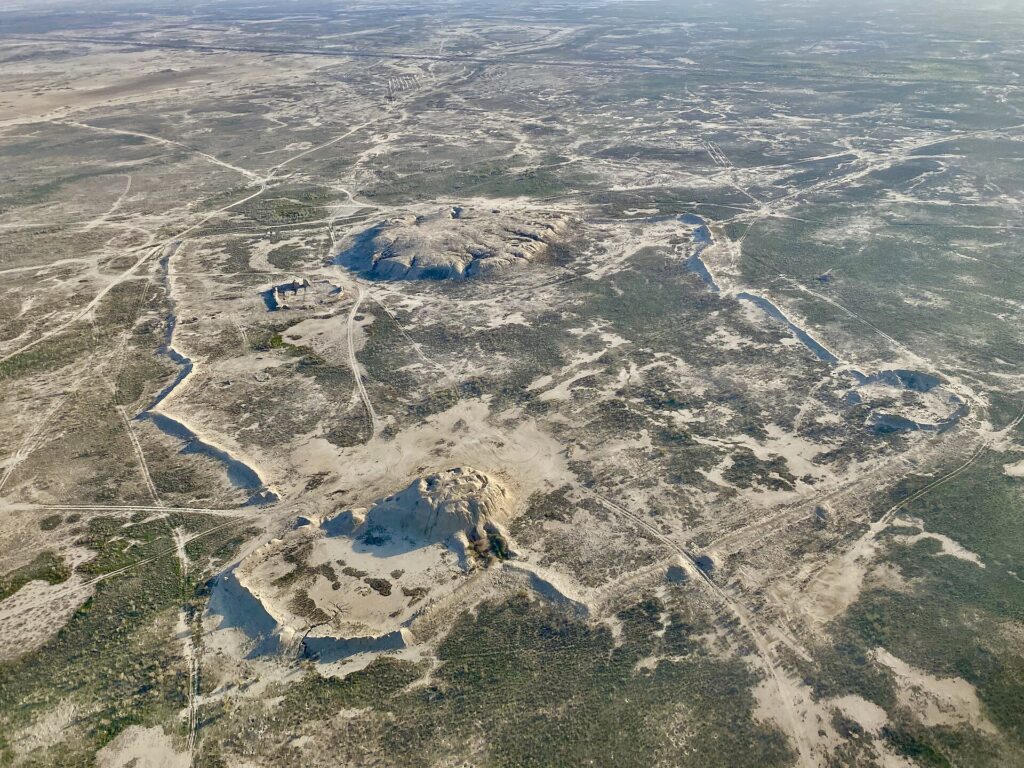
Two ancient women’s graves in Kazakhstan have yielded an unexpected discovery about personal care nearly 2,000 years ago. Chemical analysis of seemingly ordinary chalk fragments suggests that their owners may have used aromatic cosmetics containing ingredients associated with cinnamon, wormwood, and possibly mint.
Nearly 2,000 years ago, women living near the Aral Sea may have used beauty products made with cinnamon-scented oils, possibly imported from India. Scientists have uncovered evidence of these preparations in two small pieces of white chalk that archaeologists recovered from women’s graves in present-day Kazakhstan. Their analysis suggests that personal-care products in this remote region of Central Asia could contain ingredients obtained through extensive trade networks.
The study, published in npj Heritage Science in October 2026, focuses on the Jetyasar culture, whose communities occupied the lower Syr Darya River region during the first centuries AD. Although the white fragments initially appeared unremarkable, the researchers found a complex mixture of mineral and organic substances that offered an unexpected look at ancient cosmetics.
Two Women’s Graves and Their Personal Belongings
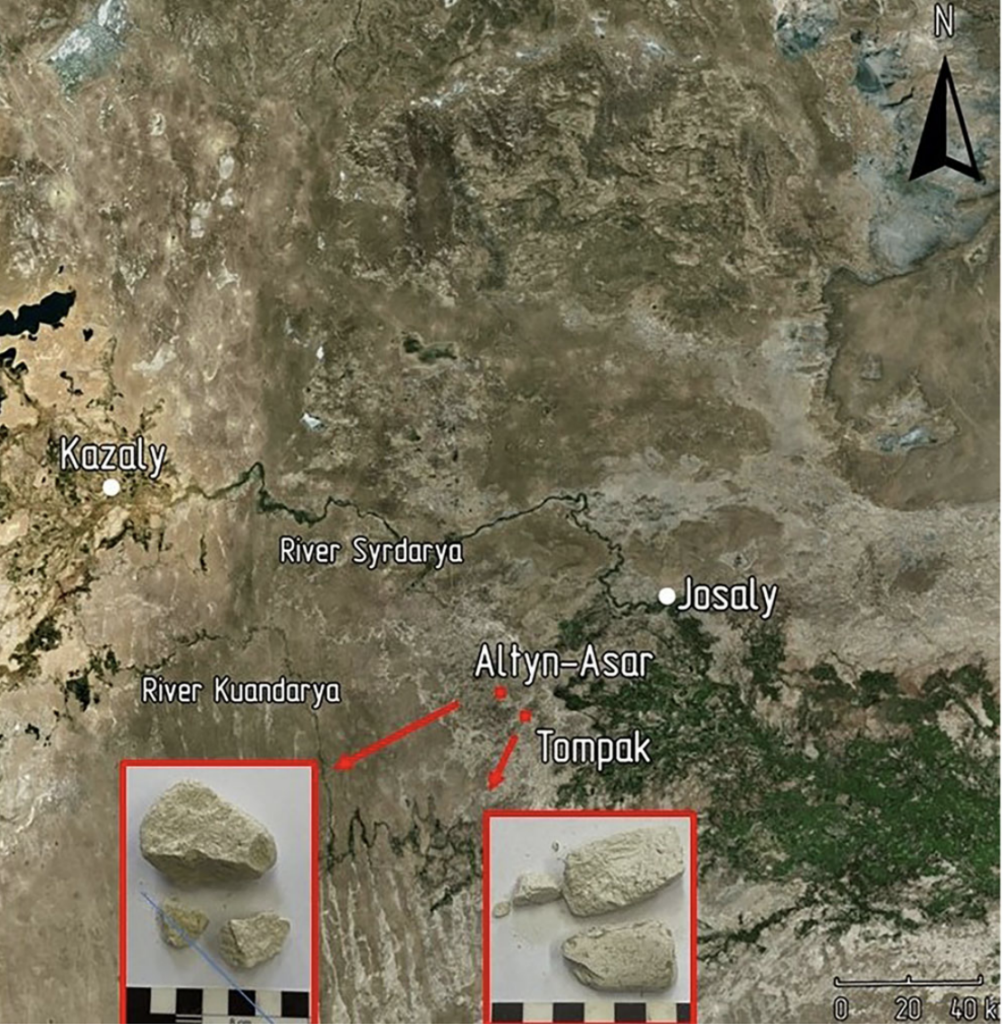
The story begins at two Jetyasar burial grounds, Tompakasar and Altyn-Asar, where archaeologists excavated the remains of women who died between the ages of 30 and 39. Both graves had suffered looting in antiquity, yet enough objects survived to provide a revealing picture of the belongings their owners took into the afterlife.
At Tompakasar, a grave dating to the third or fourth century AD contained a piece of chalk and a freshwater mollusk shell. The second burial, excavated at Altyn-Asar in 1987, yielded a similar white fragment alongside a small bronze mirror, coral and carnelian beads, and a spindle whorl.
The chalk pieces attracted scientific attention partly because archaeologists had encountered comparable objects in other Jetyasar women’s graves. These burials sometimes contained collections of personal-care accessories, including Chinese bronze mirrors, wooden combs, tweezers, small bottles and iron knives. Some collections had been stored in fabric or leather bags, while others rested inside wooden boxes.
Such discoveries suggest that grooming accessories held a place in the personal possessions of at least some Jetyasar women. But the purpose of the white fragments remained uncertain, and their composition offered researchers a way to investigate whether they belonged to the same tradition.
A Beauty Product Made with Aromatic Plants
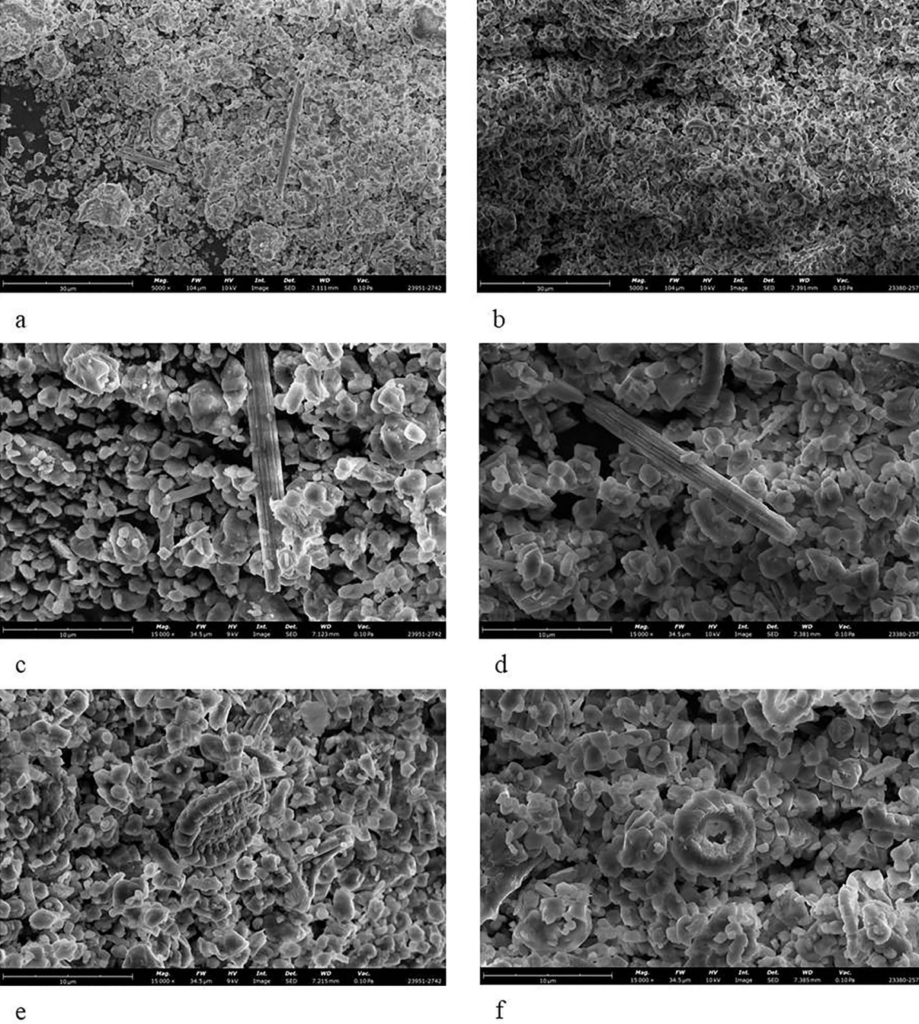
To examine the fragments, an international research team led by O. V. Polyakova used microscopy and several methods of chemical analysis. They first established that the white material consisted mainly of natural chalk, with microscopic structures formed from the calcium carbonate remains of ancient marine organisms.
This finding ruled out certain alternatives known from historical cosmetics, including powders made from crushed freshwater pearls. It also raised the possibility that the Jetyasar people obtained the mineral component locally, since chalk deposits occur in the wider region.
The most revealing results came when researchers examined the organic substances preserved within the samples. They detected hundreds of compounds, including a group of aromatic chemicals commonly produced by plants.
Several matched substances associated with cinnamon, making it a leading candidate for one of the ingredients. Other compounds pointed toward wormwood, while evidence for mint was less conclusive. The researchers believe these substances may represent the remnants of fragrant oils originally mixed with the chalk.
The identification is not absolute. Many plants share similar chemical compounds, and the samples also contained substances introduced through contamination or produced as the original materials deteriorated. Even so, the combination of mineral powder and aromatic residues supports the interpretation that people had deliberately prepared the fragments as cosmetic products.
Exactly how the women used them remains unknown. The preparations could have helped alter the appearance of the skin, provided fragrance, or served a purpose associated with traditional body care.
A Possible Connection to India
The aromatic ingredients raise a question that extends far beyond the two graves. If the Jetyasar people prepared cosmetics with cinnamon-related oils, where did those oils originate?
The eastern Aral Sea region has an arid climate, unsuitable for many of the aromatic plants associated with the chemical findings. Researchers therefore suggest that at least some ingredients may have arrived from distant regions, particularly southern India, although southern China also remains a possibility.
The Jetyasar culture occupied a strategically important area near the lower Syr Darya River, where routes connected Central Asia with China, India, Iran and lands farther west. Its communities combined agriculture, animal husbandry and fishing while participating in commercial networks that carried valuable materials across Eurasia.
Archaeological discoveries have already demonstrated these connections through imported mirrors, beads and other objects recovered from local burial grounds.
The new study suggests that aromatic oils may have travelled through the same networks. Local craftspeople could then have combined these valuable substances with readily available chalk, creating products that brought distant ingredients into everyday personal-care practices.
Researchers cannot identify the oils’ precise geographical source from the surviving chemical evidence. Nevertheless, their proposed manufacturing process offers a plausible explanation for the mixture of mineral and aromatic substances found in the two graves.
What the Finds Reveal About Jetyasar Women
The burials also raise questions about the women who owned these objects. Both died between the ages of 30 and 39, older than the average ages at death reported for women in the corresponding cemetery populations, and their graves contained possessions that researchers consider potentially valuable.
These details have led the study’s authors to suggest that the women may have occupied relatively privileged positions within their communities. However, the evidence remains limited because many Jetyasar graves were looted, and the surviving excavation records do not allow researchers to determine how widely people used similar cosmetics.
The significance of the discovery extends beyond the possible origins of cinnamon or other aromatic ingredients. Personal possessions, particularly objects made from perishable or easily overlooked materials, can reveal aspects of ancient life that monumental architecture and imported luxury goods rarely capture.
Polyakova, O.V., Kondratyeva, M.S., Garshev, A.V. et al. Cosmetic powder of 2000-year-old Jetyasar culture. A complex analytical study. npj Herit. Sci. (2026). https://doi.org/10.1038/s40494-026-02983-w
