
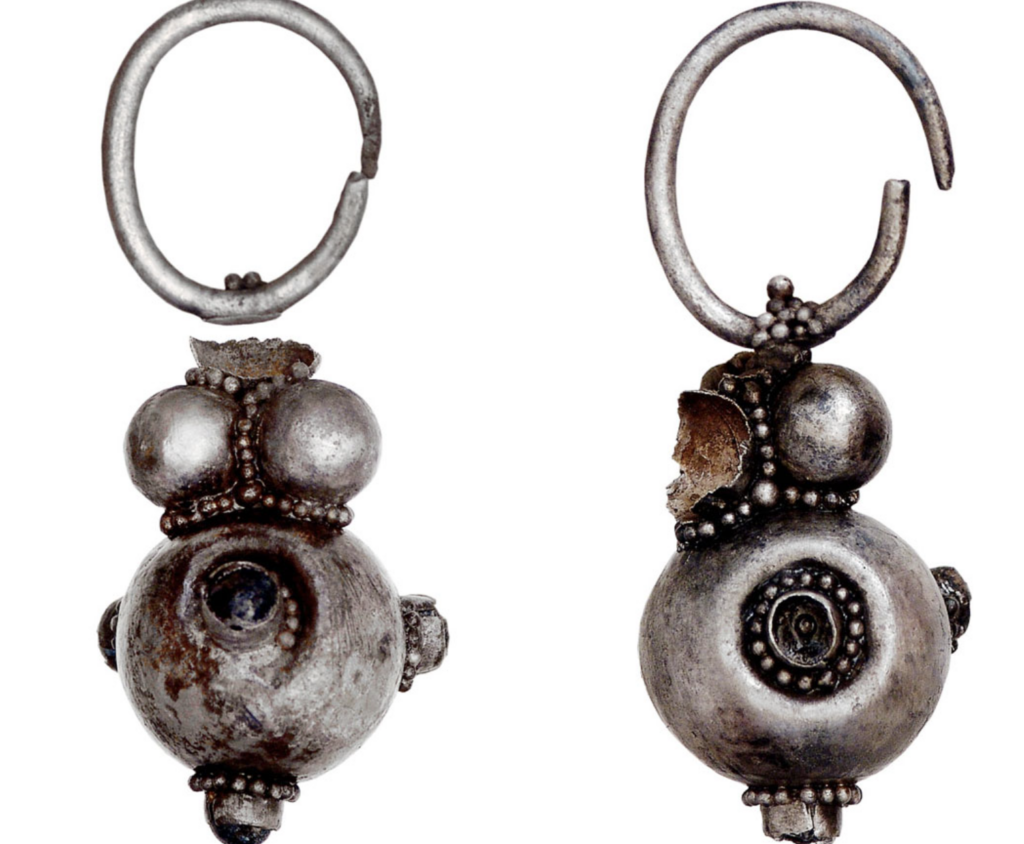
Archaeologists excavating a military airfield in Hungary have uncovered 1,400-year-old Avar graves containing an unusual collection of personal belongings, including Byzantine cosmetic tools, elaborate silver earrings, decorated bone boxes, and objects associated with textile production.
The nine graves, dating to the first half of the seventh century, came to light during construction-related groundworks at the Kecskemét military airfield. A team from the Katona József Museum, led by archaeologist Fazekas András Kristóf, excavated in early summer 2026. Five graves belonged to women, two to men, while disturbances prevented the researchers from determining the sex of the remaining two individuals.
Although Avar warrior burials are well known across Hungary, the women’s graves are particularly revealing. Their jewelry, personal care implements, and everyday tools provide valuable evidence of activities that rarely appear in written accounts of the period.
Byzantine Cosmetic Tools and Mysterious Bone Boxes
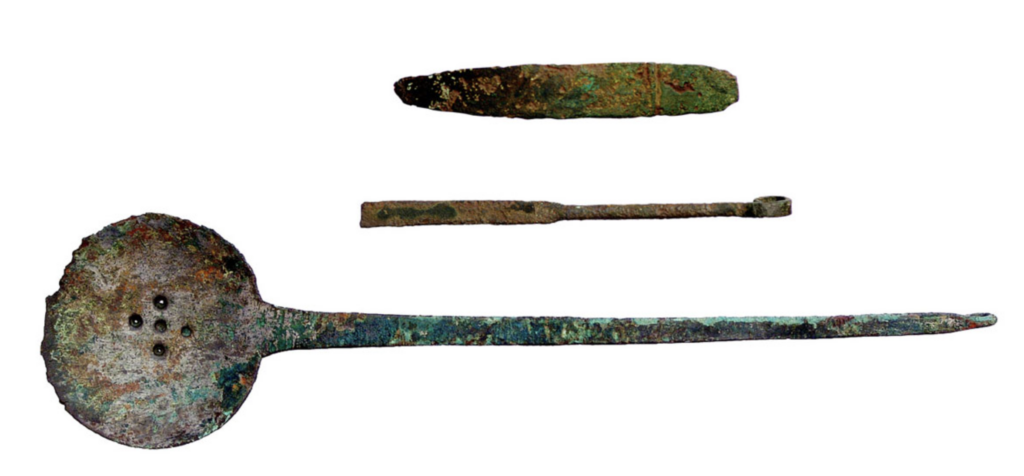
One of the most remarkable discoveries came from Grave 4, where archaeologists recovered a bronze strainer spoon and several spatulas identified by the museum as Byzantine-style cosmetic implements. The tools may have been used to prepare creams, powders, and other cosmetic mixtures, suggesting that personal grooming was part of everyday life among Avar women.
The same grave contained an elaborate pair of silver earrings decorated with blue glass inlays. Archaeologists also discovered colorful beads concentrated around the woman’s pelvis, suggesting that she may have carried them in a small pouch that has since decayed. Another woman’s grave preserved glass-paste beads near the neck, apparently belonging to a necklace.
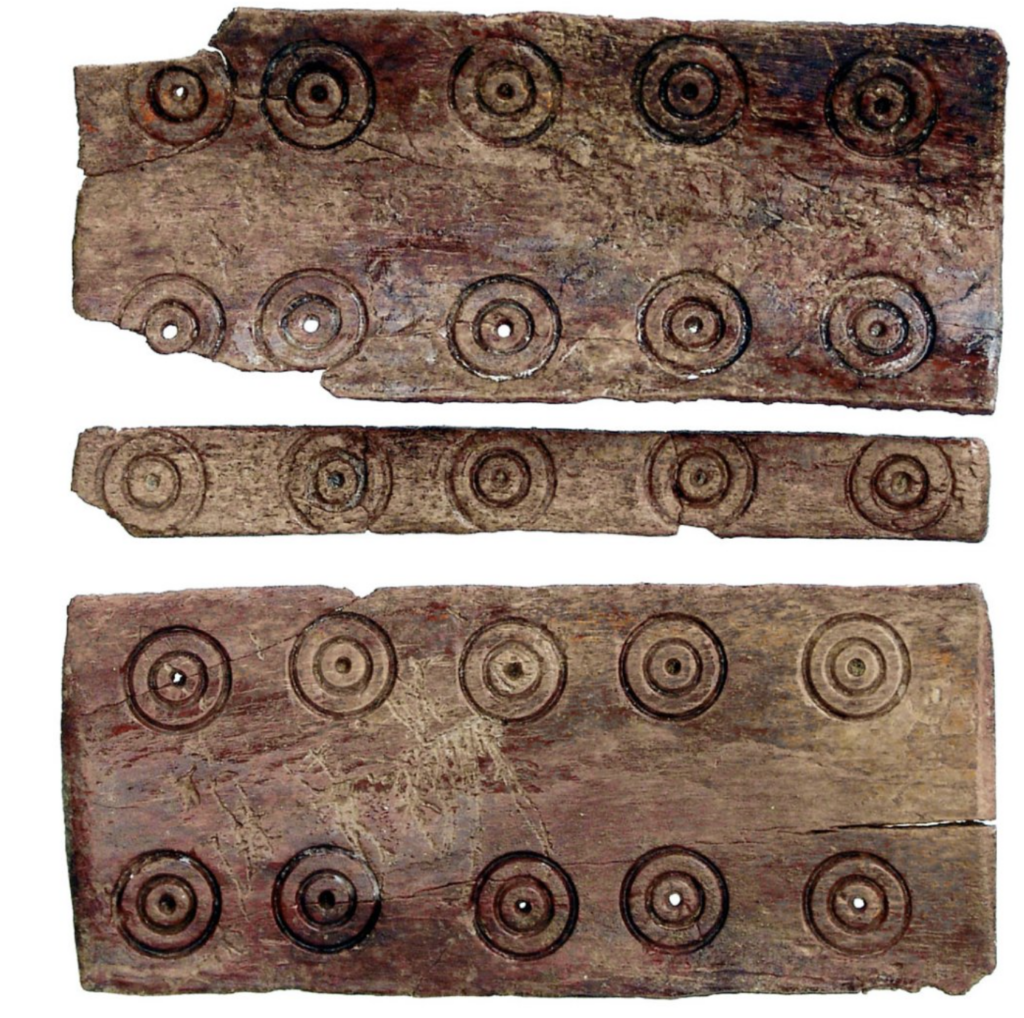
Graves 3 and 9 yielded equally intriguing objects: decorated bone boxes bearing distinctive circle-and-dot patterns. Such containers are particularly associated with the region between the Danube and Tisza rivers, but their exact purpose remains uncertain. The museum suggests that the boxes may have contained cosmetics, although their contents remain unknown and would require further scientific analysis to identify.
Together, the objects reveal a personal side of Avar life that contrasts with the weapons and horse equipment commonly associated with this early medieval society. They also suggest cultural connections extending beyond the immediate region, particularly through the presence of Byzantine-style implements.
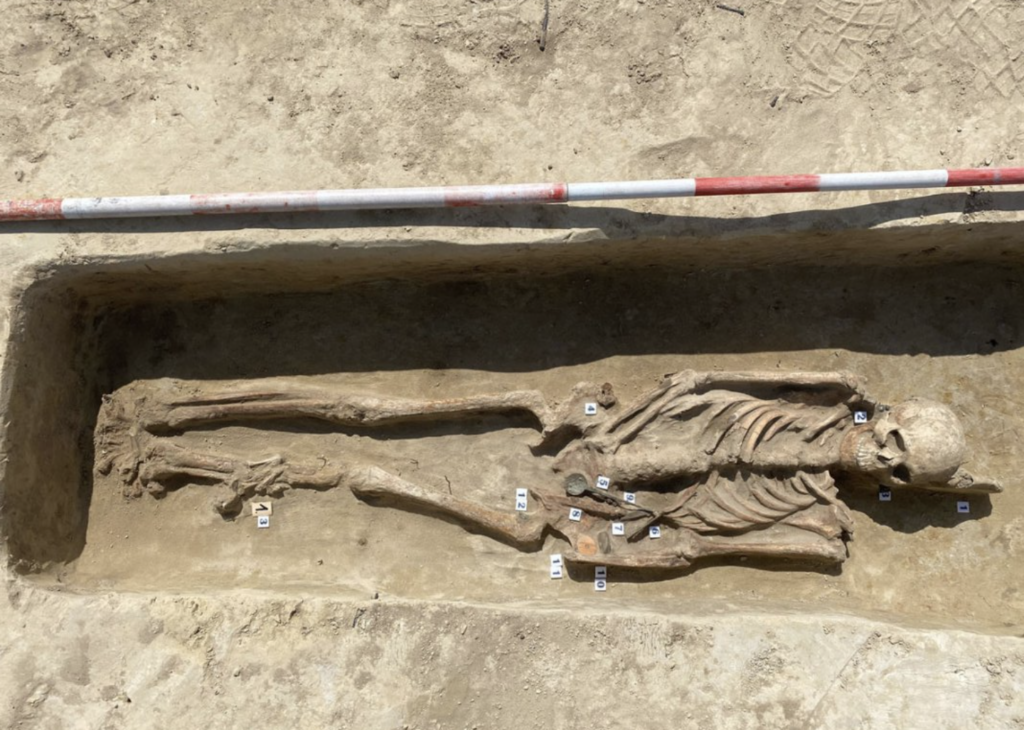
Excavation of a seventh-century Avar woman’s grave at the Kecskemét military airfield in Hungary, with some of her personal belongings, including possible cosmetic tools, still visible in their original positions. Credit: Fazekas András Kristóf / Katona József Museum.
Spindle Whorls and Women’s Everyday Activities
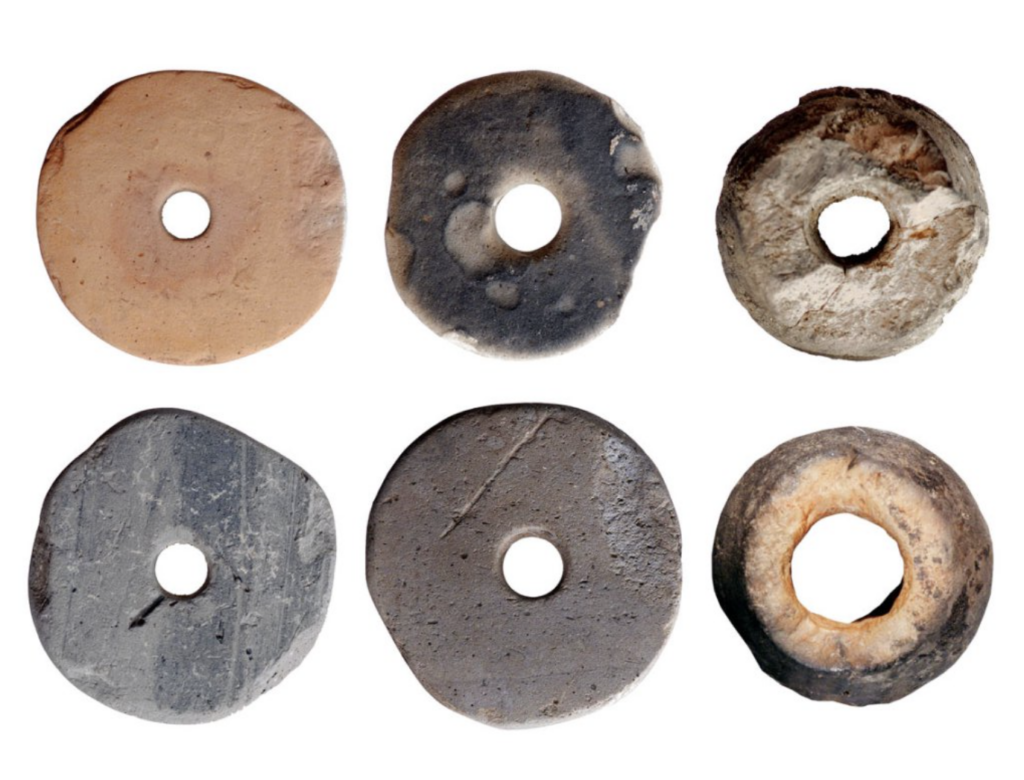
Every one of the five women’s graves contained clay spindle whorls, small weights used with spindles to turn wool or plant fibers into thread. Their consistent presence is noteworthy, especially alongside the more elaborate jewelry and personal belongings found in some burials.
Spinning was a common activity in Avar households, and spindle whorls have been found in many other cemeteries from the period. Finding them in all five women’s graves suggests how important textile production was to the community, although the objects may also have held symbolic meaning in burial traditions.
The museum also documented iron knives among the women’s belongings. Together with the spindle whorls, these relatively ordinary objects provide a useful counterpoint to the silver ornaments and possible cosmetic containers, illustrating how burial customs could bring together practical possessions and items of personal significance.
The Avars and Their Arrival in Hungary
The Avars entered the Carpathian Basin around AD 567–568, establishing a powerful khaganate that controlled much of the region for nearly 250 years. Their arrival reshaped the political landscape of Central Europe, bringing together communities with varied cultural backgrounds under Avar rule.
The Avar elite maintained connections with the Eurasian steppes, while their settlements and burial customs also reflected interactions with neighboring European populations and the Byzantine Empire. Relations with Byzantium alternated between warfare, diplomacy, and the movement of valuable goods, helping explain the diverse cultural influences visible in Avar archaeological finds.
By the early ninth century, the Avar Khaganate had lost its political dominance, following Frankish military campaigns and other regional changes. Cemeteries such as the one at Kecskemét preserve evidence of the communities that lived under its authority, including aspects of everyday life that contemporary historical sources rarely describe.
Warriors and Offerings for the Dead
The cemetery also contained two male burials with weapons and decorated belt fittings. Grave 7 held the remains of a warrior buried with components of a composite bow, two three-bladed iron arrowheads, quiver fittings, and additional iron weapons. Archaeologists recovered further arrowheads and knives from Grave 8, illustrating the military equipment used during the early Avar period.
Burial customs extended beyond weapons and personal possessions. In six graves, excavators identified animal remains that likely represented food offerings for the deceased. All five female burials contained bird bones, while one male grave held the remains of a mammal. These deposits provide clues to funerary traditions, although many aspects of Avar religious beliefs remain poorly understood.
The graves survived surprisingly close to the modern ground surface. According to the museum, construction of the airfield between 1935 and 1937 involved levelling the landscape, probably destroying other burials in the process. The surviving nine graves have now reached the Katona József Museum, where further scientific examination and artifact analysis will help researchers learn more about the individuals and their possessions.
