
Beneath the concrete and cranes rising over the Suffolk coast, archaeologists have quietly uncovered something no single dig has ever offered before: an unbroken, layer-by-layer diary of human life spanning six millennia in one place.
The excavation ahead of the Sizewell C nuclear power plant, near Leiston, has grown into what Sizewell C itself calls “the largest and most complex dig of a generation,” with roughly 200 archaeologists excavating around two million square metres across 70 sites.
From toilet pits to a prince’s grave
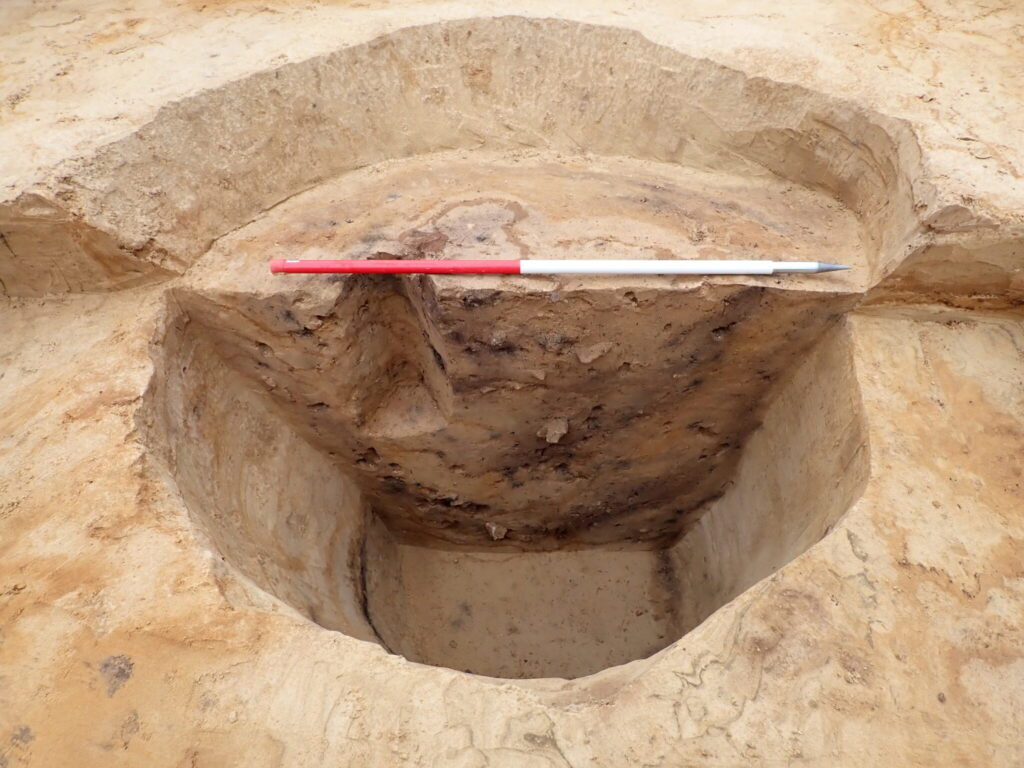
The story starts small — literally in the ground. Around 1,000 Neolithic pits, dated to between 3700 and 3500BC, have been traced back to Suffolk’s earliest farming families, newly arrived from continental Europe. Post-excavation project manager Richard Mortimer believes many of these pits were, in fact, ancient latrines dug deliberately away from where families slept — the earliest known sanitation planning in the region.
Centuries later, the landscape tells a different story: a rare early Bronze Age hut, one of only a handful ever found in eastern England, burned down and was ritually filled with scorched flints and broken pottery — a pattern eerily similar to a site 60 miles away in Cambridgeshire’s Bradley Fen.
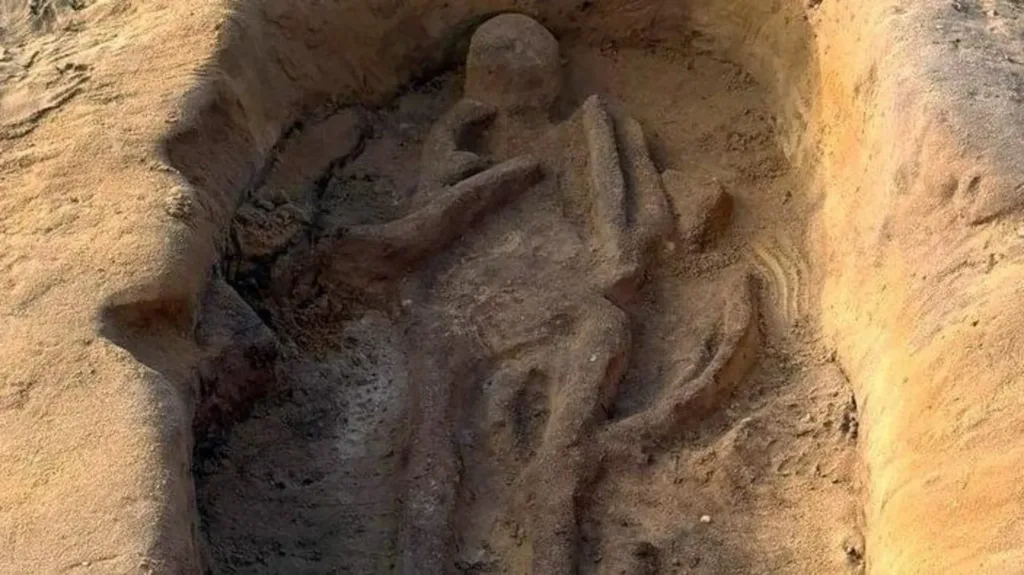
Then, around 4,000 years later, the same coastline produced Britain’s most dramatic recent archaeological headline: an Anglo-Saxon “princely” burial dating to the 6th or 7th century.
Oxford Cotswold Archaeology (OCA), leading the dig, identified at least 11 burial mounds positioned on a prominent point overlooking the Suffolk coast, with one barrow containing two individuals buried beside a fully harnessed horse, weapons and high-status grave goods.
Project officer Len Middleton has placed it firmly “in the same elite tradition seen at Sutton Hoo, Snape and Prittlewell” — sites just a few miles up the same coast.
A new theory: was Suffolk’s coast a “power corridor” for 6,000 years?
What makes Sizewell C different from a typical rescue dig isn’t any single find — it’s the scale. Because construction crews are stripping nearly 150 hectares in one continuous sweep rather than isolated trenches, archaeologists can, for the first time, watch how the same stretch of coastline was used, abandoned and reused across thousands of years.
That continuity suggests a theory Mortimer himself hints at but stops short of naming outright: that the Suffolk coast wasn’t simply settled repeatedly by coincidence, but functioned as a persistently attractive “power corridor” — a resource-rich strip of land that successive cultures, from Neolithic farmers to Anglo-Saxon elites, kept returning to and marking as significant.
The deliberate placement of the Anglo-Saxon barrows on a landscape high point, echoing the ritual siting choices seen in the Bronze Age hut nearly two millennia earlier, hints that later communities may have recognised — and deliberately built upon — the symbolic weight already carried by this ground.
Soil acidity destroyed almost all organic remains from the Anglo-Saxon burials, leaving only ghostly “sand bodies” — silhouettes where flesh once decayed inside the horse and its riders. Researchers noted the find lay just 12 miles from Sutton Hoo, Britain’s most famous Anglo-Saxon site, reinforcing the idea that this coastline held enduring status across the early medieval world, not a one-off royal outlier.
Why it matters beyond archaeology
Hundreds of medieval crop-drying ovens, likely used for flax and hemp rather than wheat, point to Leiston Abbey running a cash-crop economy centuries before industrial farming.
An Iron Age oak ladder, still intact in a waterlogged well, and a hoard of 321 11th-century silver coins add further texture to a site archaeologists increasingly describe as reshaping — not just adding to — Britain’s prehistoric and medieval record.
The findings will feature on BBC Two’s Digging for Britain, and the public can see artefacts firsthand at Sizewell C’s ongoing open days and the Big Archaeology Showcase at the Sizewell Visitor Centre, including VR reconstructions of the dig.
