
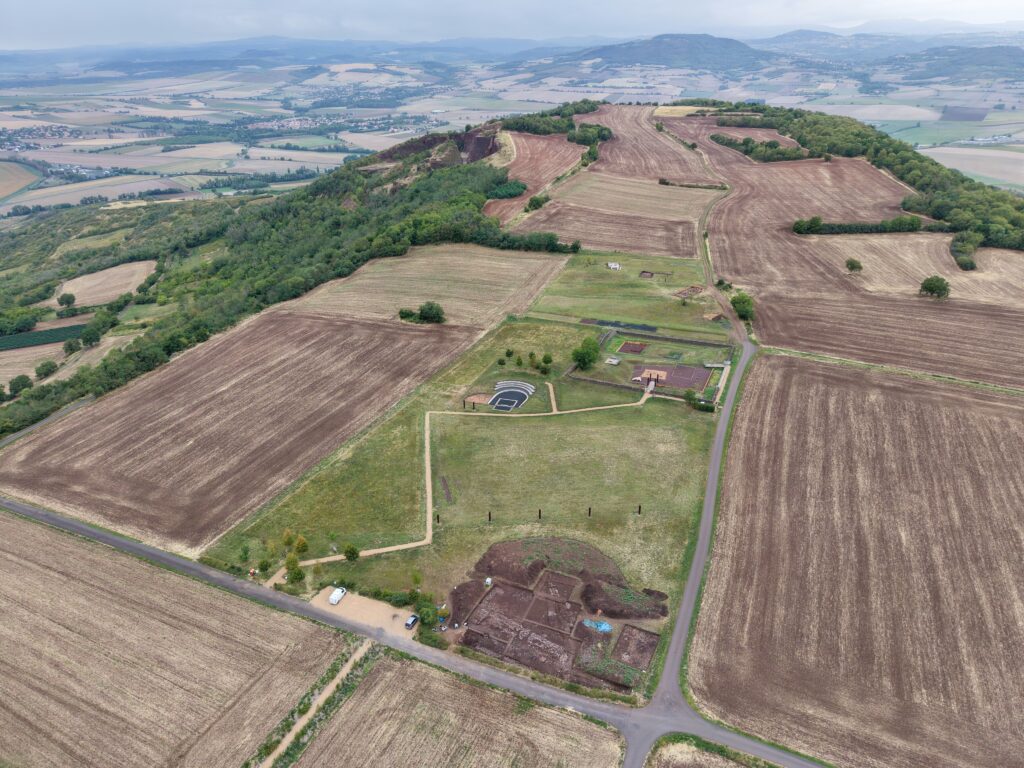
Archaeologists excavating the Gallic city of Corent in central France have uncovered an extraordinary coin-production complex covering roughly 500 square metres. The discovery adds a new dimension to a site already known for evidence of political, religious and economic activity before the Roman conquest of Gaul.
Excavation director Matthieu Poux says the scale of the newly uncovered complex is exceptional. He believes it may represent the largest minting workshop yet identified “not only in Celtic Europe, but in the entire ancient world,” although further study will be needed to confirm the full extent and function of the site.
The discovery goes far beyond the production of small local bronze coins. Evidence recovered during the 2026 excavation suggests that craftspeople may also have struck Arvernian staters in silver and gold before the Roman conquest of Gaul, raising new questions about the scale, organisation and political control of coin production among one of pre-Roman Gaul’s most powerful peoples.
Researchers uncovered the complex during this summer’s campaign at Corent in the Puy-de-Dôme, where archaeological work has gradually exposed a major urban centre of the Arverni. Excavations since the early 2000s have revealed a monumental sanctuary, an assembly building, market areas, craft workshops and residential quarters, creating a picture of a highly organised Gallic city rather than the loosely structured settlement once associated with pre-Roman Gaul.
A 40-metre complex built on an unexpected scale
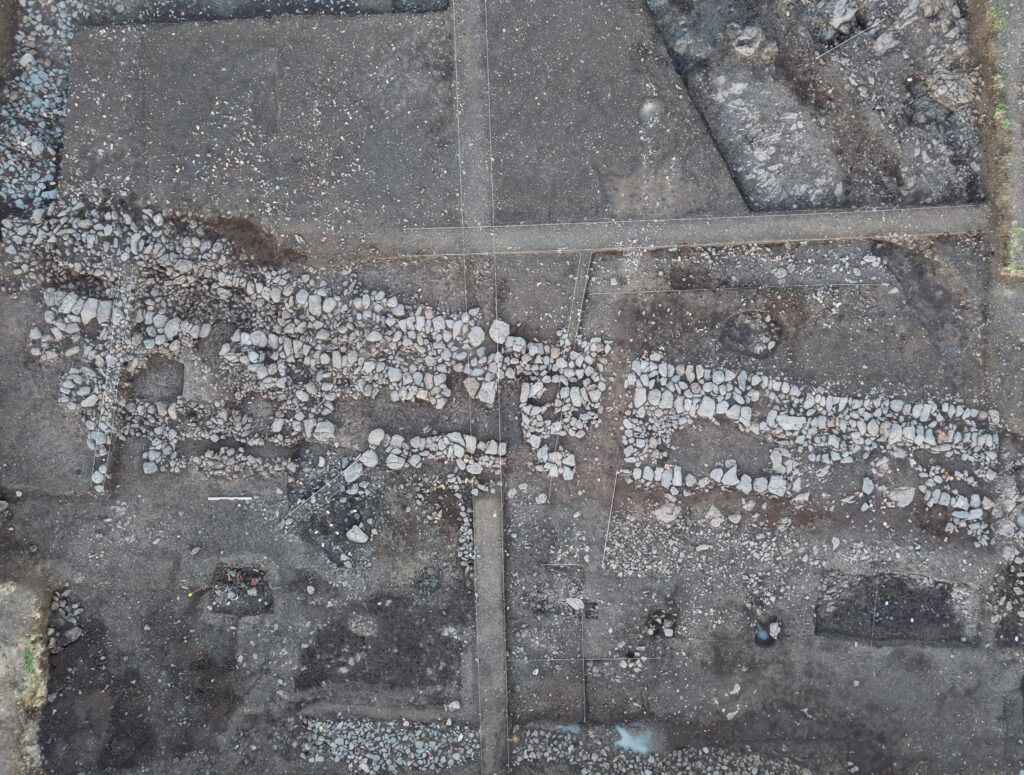
The newly excavated area extends across about 500 square metres. Archaeologists traced a substantial stone wall between one and two metres thick and at least 40 metres long, alongside a series of small working spaces equipped with hearths or furnaces and access to water.
Its architecture surprised the excavation team. The building relies heavily on stone construction that Poux says recalls Mediterranean architectural traditions, contrasting with the timber-framed Gallic workshop uncovered nearby in 2024.
That earlier discovery had already transformed understanding of Corent. Archaeologists found coin blanks, groups of blanks still attached after casting, punches, a fragment of a coin die, metallurgical waste and unsuccessful strikes, allowing them to reconstruct much of the bronze coin-production process. The Puy-de-Dôme Department later described the evidence as a major discovery that confirmed coin manufacture at the site.
The 2026 excavation, however, produced a very different archaeological signature.
Traces of gold and silver — but almost no waste
Unlike the bronze workshop, the larger complex contained almost none of the obvious metal waste that coin production normally leaves behind. Archaeologists instead detected tiny golden and silvery traces on tools made from stone, ceramic and iron, including small anvils, chisels and hammers.
Poux suggests that workers may have carefully recovered every fragment of precious metal rather than allowing valuable material to remain on the workshop floor. If researchers confirm that interpretation, the almost complete absence of waste could reveal unusually strict control over gold and silver production.
One small object provides stronger evidence.
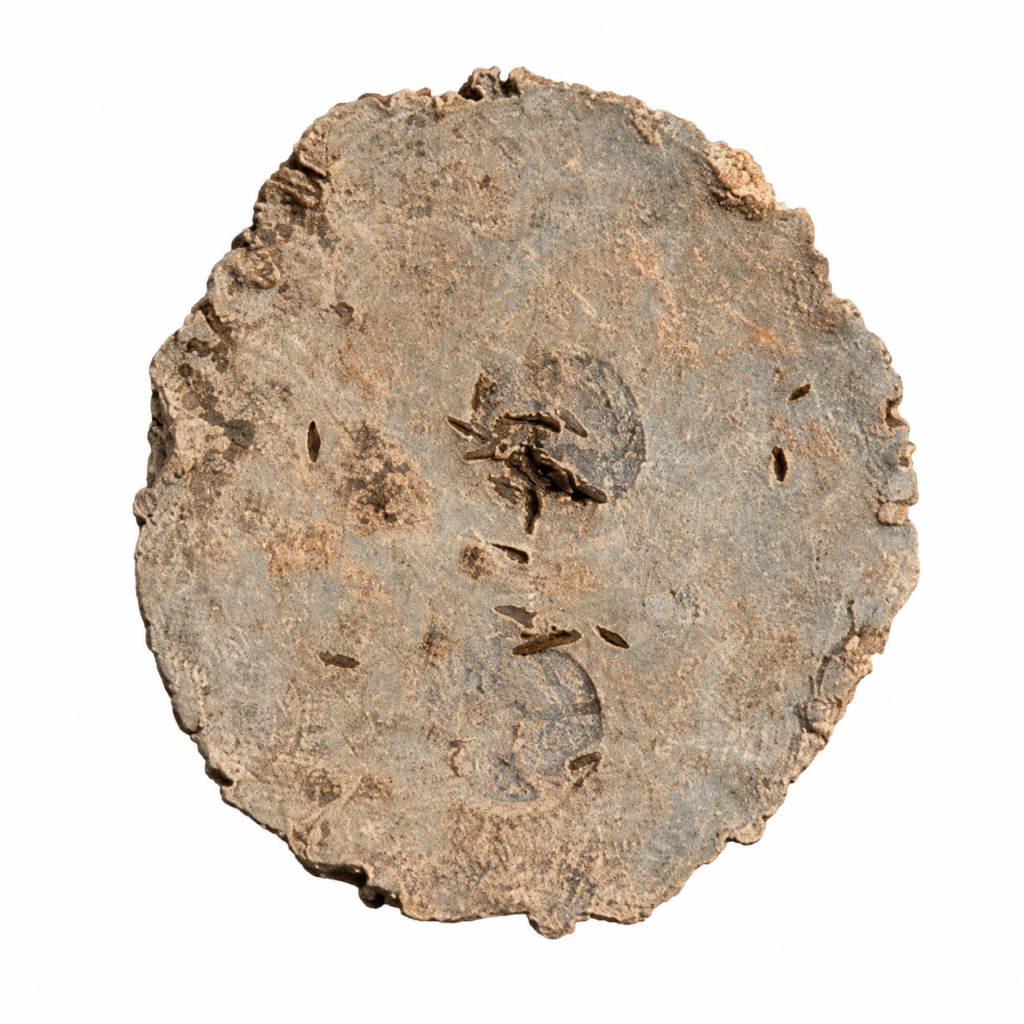
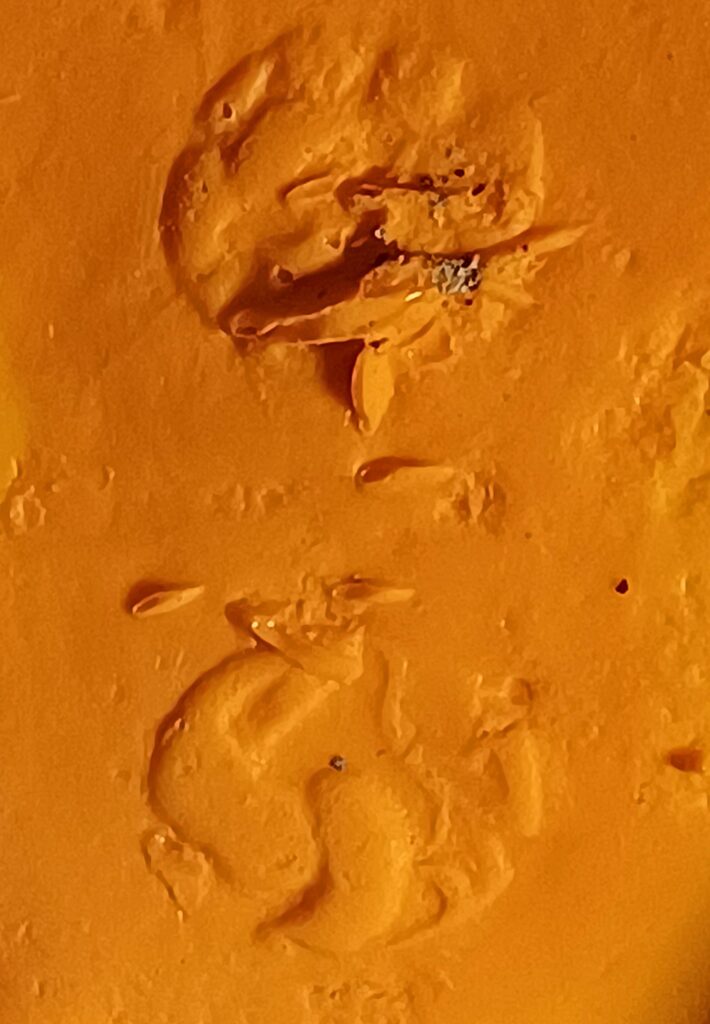
Archaeologists recovered a lead disc bearing impressions from coin punches associated with a known type of Arvernian stater. Under magnification, researchers can distinguish elements including a horse, rider, wheel and stylised head. Comparable designs occur on gold and silver coins issued in Arvernian territory during the same period.
The soft lead may have allowed mint workers to test or approve a design before striking it into precious metal. Such quality-control procedures would suggest that the workshop operated through a carefully organised production system rather than occasional small-scale minting.
Did Corent control the entire production process?
Another clue could push the interpretation even further. Excavators found numerous pieces of flint around the complex, a material that, together with salt, could play a role in processes used to separate gold and silver from electrum, a naturally occurring alloy of the two metals.
The team has not yet demonstrated that Corent’s workers performed this operation. Researchers now want to determine whether the mint simply received prepared metal or whether craftspeople carried out several stages of production on site, potentially processing raw material before weighing, shaping, and striking the final coins.
That distinction matters. A facility capable of controlling the entire chain—from precious metal preparation to finished currency—would point to an economic institution operating on a scale rarely documented archaeologically in Iron Age Europe.
A discovery that could strengthen Corent’s claim as an Arvernian capital
Corent occupied an important position before Julius Caesar’s conquest of Gaul. Archaeologists date the monumental Gallic city primarily between about 120 and 50 BC, while earlier settlement on the plateau reaches back through the Bronze Age to the Neolithic. Roman occupation continued after the Gallic city declined.
Researchers have long debated exactly where the political centre of the Arverni lay before the Gallic Wars. Gergovie remains famous because of Vercingetorix’s victory over Caesar there in 52 BC, but Corent has produced evidence for political assemblies, religious ceremonies, trade, craft production and now large-scale coin manufacture.
Poux therefore sees the new mint as another potential piece of evidence for Corent’s role as an Arvernian capital. He remains cautious, however: researchers still need specialist analyses to confirm the production of precious-metal coinage and understand exactly how the monumental complex functioned.
The excavation may have exposed only part of that story. Despite 25 years of investigation, researchers have excavated only a small fraction of the plateau, while the 2026 campaign itself began as an attempt to explore the surroundings of the much smaller mint discovered two years earlier. What emerged instead was a production complex whose scale could substantially change how archaeologists understand money, political authority and specialised craftsmanship in pre-Roman Gaul.
