
12 June 2026 The Future is the Product of the Past

One of Gaul’s Largest Roman Villas Discovered Near Auxerre, France, Spanning Over 4,000 m²

Archaeologists uncover a massive 4,000 m² Roman villa near Auxerre, revealing elite lifestyles in ancient Gaul.

A remarkable archaeological discovery just 3 kilometers south of Auxerre is shedding new light on the scale and luxury of Roman-era rural estates in ancient Gaul. In advance of infrastructure development on the city’s southern bypass, archaeologists have uncovered a vast Roman villa covering more than 4,000 square meters at a site known as Sainte-Nitasse, on the right bank of the Yonne River.

The villa, once thought to be a modest Roman outpost, has now been confirmed as one of the largest and most elaborate Gallo-Roman residences ever excavated in France. Initial clues to its existence date back to the 19th century, but systematic excavation only began in 1966 when gravel extraction operations exposed part of a rectangular building with ten rooms and decorative elements, including funerary steles and hypocaust systems.

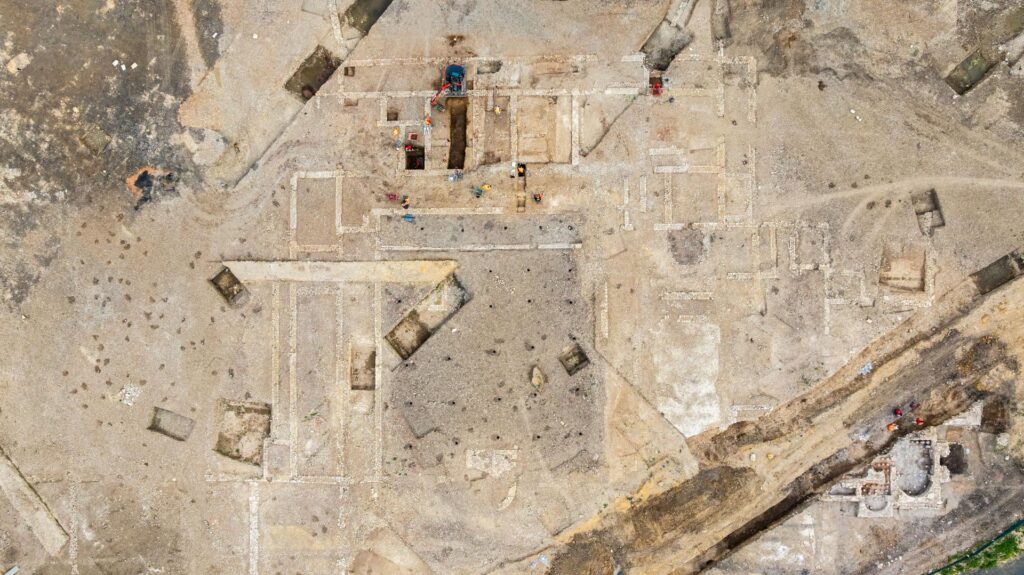
However, that early discovery turns out to have been merely a secondary wing. Current excavations, led by a team under the direction of the French Ministry of Culture and the DREAL Bourgogne-Franche-Comté, reveal that the site includes an expansive central garden, porticoed galleries, private bath complexes, ornamental fountains, and evidence of sophisticated architecture—indicating that this villa was far more than a countryside retreat.

A Glimpse into Roman Luxury

At the heart of the villa lies a square garden enclosed by galleries, stretching over 450 square meters per side. To the north, a large basin likely served both ornamental and hydraulic purposes, while a smaller fountain at the southern end may have marked a point of ritual or aesthetic significance.


📣 Our WhatsApp channel is now LIVE! Stay up-to-date with the latest news and updates, just click here to follow us on WhatsApp and never miss a thing!!


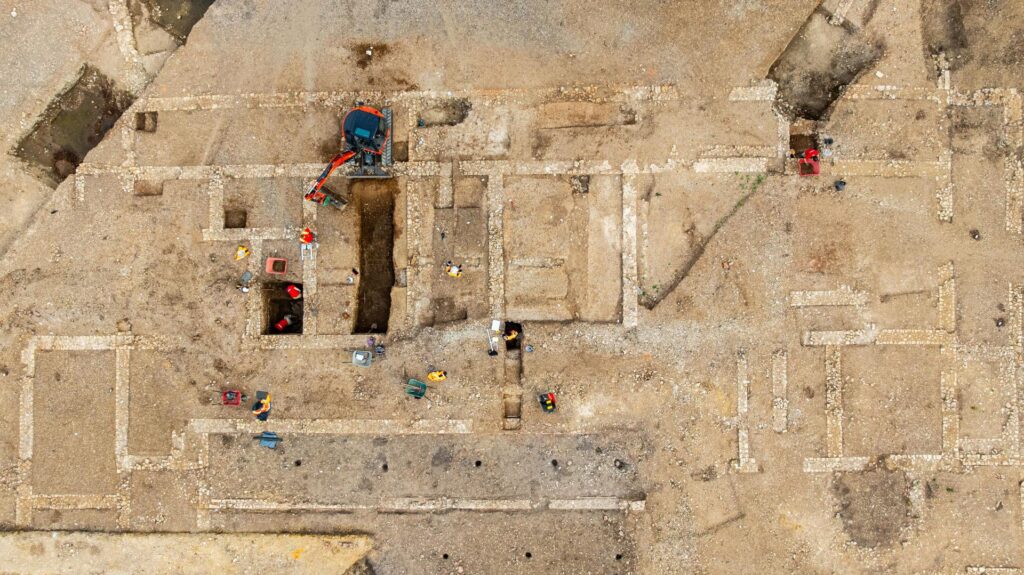
View of the north wing of the villa under excavation, seen from the northwest. Credit: Ch. Fouquin, Inrap

Adjoining these spaces are reception rooms, technical facilities, and a well-preserved bathhouse, complete with underfloor heating. These features confirm the site’s role not just as a farm estate (pars rustica) but as a luxurious home (pars urbana) belonging to a wealthy and likely aristocratic Roman family.

According to the excavation team, the architecture and spatial planning of the site parallel the urban development of Autessiodurum (modern-day Auxerre), which evolved from a minor settlement in the 1st century AD into a regional capital by the 4th century.

Public Access and Ongoing Research

In celebration of the European Archaeology Days (JEA), the excavation site will be open to the public on Sunday, June 15. Visitors can join guided tours led by the archaeologists themselves, with shuttles running every 15 minutes from the Arquebuse parking area. Entry is free and open to all.

While the full scope of the villa is still being revealed, researchers have already identified multiple phases of construction, suggesting the estate evolved significantly over time. Future analysis of ceramics, mosaics, and organic materials is expected to offer insights into the daily life of the villa’s ancient residents.
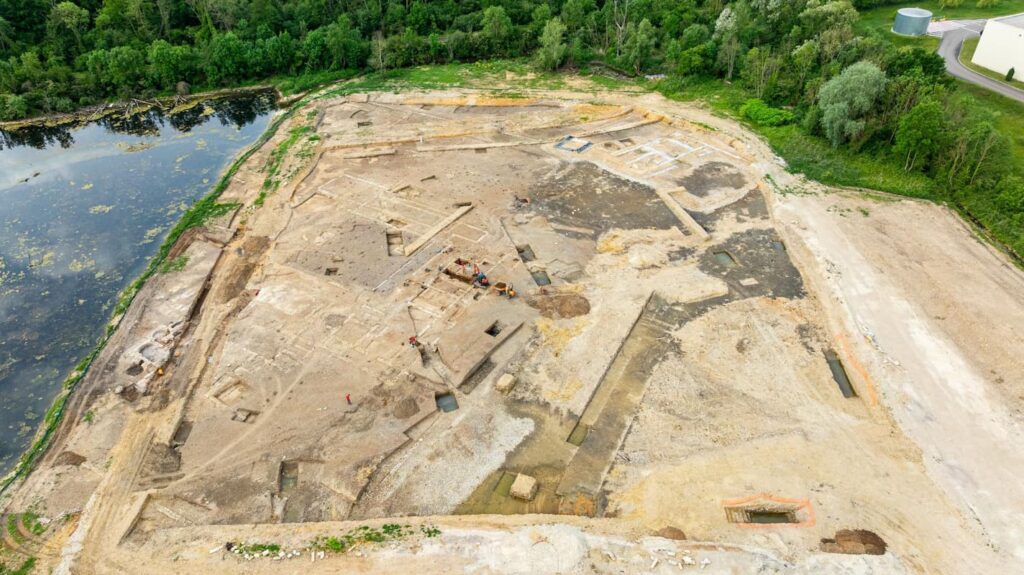
General view of the site from the north. Credit: Ch. Fouquin, Inrap

This exceptional discovery not only highlights the richness of Roman life in provincial Gaul but also raises new questions about economic power, land ownership, and cultural exchange in the late Roman Empire. As the dig continues, the Auxerre villa is poised to become a landmark case study in Roman archaeology.

INRAP

Cover Image Credit: Panoramic view of the Roman villa uncovered at Sainte-Nitasse. Credit: Ch. Fouquin, Inrap

Related Articles

Beehives of Saudi Arabia’s Thought to be Over 1,000 Years Old

20 July 2024

20 July 2024

Located in the majestic Sarawat Mountain range in western Saudi Arabia, the ancient beehives in the Maysan Governorate constitute a...

Archaeologists Uncovered a Roman-Era Clay Theater Ticket in Ancient City of Prusias ad Hypium

1 December 2024

1 December 2024

Excavations at the ancient city of Prusias Ad Hypium in the Konuralp region of Düzce in northwestern Türkiye have uncovered...

An important Gallo-Roman worship complex was discovered near Rennes, France

13 June 2022

13 June 2022

An essential Gallo-Roman worship complex was unearthed by Inrap  (National Institute for Preventive Archaeological Research) archaeologists at Chapelle-des-Fougeretz (Ille-et-Vilaine), near...

1,400-Year-Old Ice Storage Unearthed at Baekje Fortress Reveals Ancient Korean Engineering

16 October 2025

16 October 2025

Archaeologists in South Korea have unearthed the first-ever Baekje-era ice storage facility at Busosanseong Fortress, a UNESCO World Heritage site...

2,500-Year-Old Pre-Roman Iron Age Settlement Discovered in Hüllhorst, Germany During Fire Station Construction

3 March 2026

3 March 2026

A remarkable archaeological discovery has been made in Hüllhorst (Minden-Lübbecke district), where construction work for a new fire station has...

A rare 2,500-year-old shipwreck found off the Greek island of Kythera

5 November 2021

5 November 2021

A rare shipwreck from the ancient era was discovered during the maritime survey for the Crete-Peloponnese subsea link. The Independent...

76 Ancient Stone Traps Unearthed in Chile’s Andes Reveal Ingenious Prehistoric Hunting System

14 October 2025

14 October 2025

High in Chile’s northern Andes, where icy winds sweep across the desert ridges of the Camarones River Basin, archaeologist Dr....

In Turkey’s western Uşak province, 2,000-year-old statues have been unearthed

19 December 2021

19 December 2021

During the excavations in the ancient city of Blaundos in the Ulubey district of Uşak, two statues of 2000 years...

War and Exodus in the Mysterious Kingdom: New Clues to Sanxingdui’s Bronze Age Collapse

30 September 2025

30 September 2025

A bold new theory is reshaping how scholars view one of China’s most enigmatic archaeological sites. According to Professor Sun...

England May Hold the Lost Grave of a Legendary Viking Warlord

3 February 2026

3 February 2026

Medieval sources blur the line between history and legend — but new archaeological evidence suggests that one of the Viking...

Greek Inscription Found in Great Mosque of Homs Reveals Lost Temple of the Sun of Emperor Elagabalus

23 February 2026

23 February 2026

A newly analyzed Greek inscription discovered inside the Great Mosque of Homs in Homs, Syria, is reshaping scholarly debate over...

No Mortar, No Cement, No Metal – How Sardinia’s Nuragic Towers Have Defied Gravity for 3,500 Years?

20 December 2025

20 December 2025

No mortar, cement, or metal—yet Sardinia’s Nuragic towers have stood for 3,500 years. New scientific research reveals the ancient engineering...

A Hidden Cause of Neanderthal Extinction? Scientists Point to Pregnancy Risks

24 February 2026

24 February 2026

For decades, scientists have debated why Neanderthals vanished from the Earth roughly 40,000 years ago. Climate instability, competition with early...

Archaeologists discover Stargazer idol fragment in Turkey’s In the ancient city of Beçin

15 December 2021

15 December 2021

During archaeological excavations in the ancient city of Beçin in the Milas district of southern Turkey’s Muğla, the head of...

Neanderthals too may have Developed a System of Numerical Notation

2 June 2021

2 June 2021

People developed numbers tens of thousands of years ago, according to archeological findings. Scholars are now investigating the first comprehensive...