
More than 2,000 years ago, according to Julius Caesar, the Gauls set fire to Lutetia as Roman legions closed in on the settlement. Now, deep beneath the heart of modern Paris, archaeologists have uncovered a burned fortification that may provide the first physical evidence of the city described in his account.
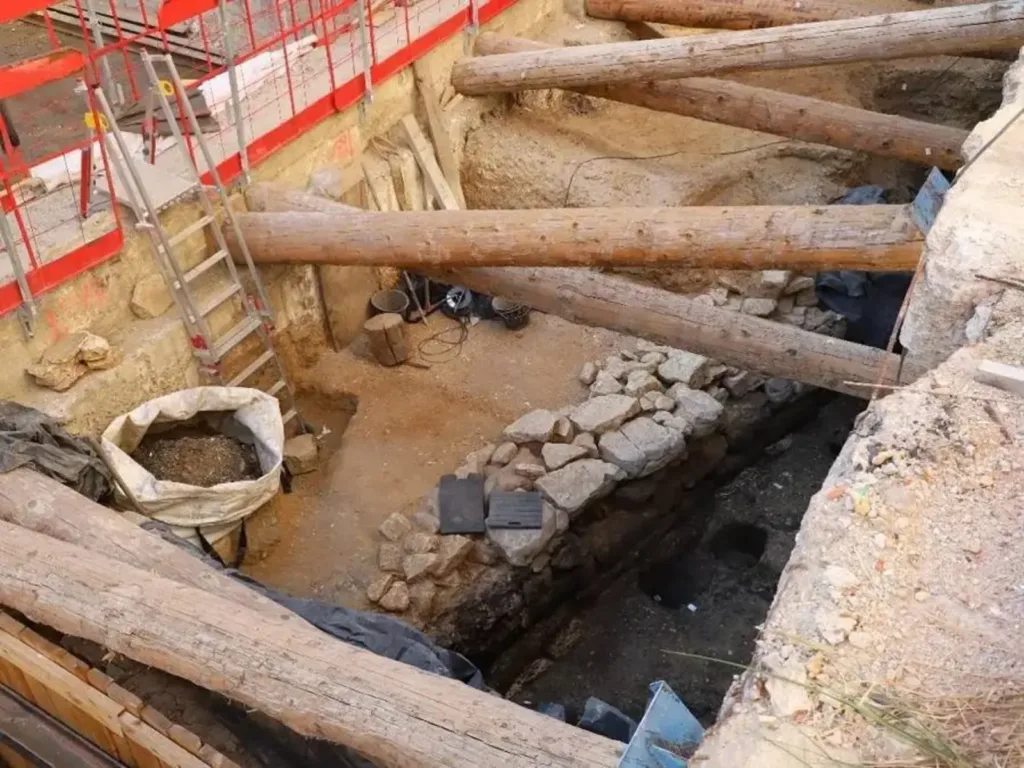
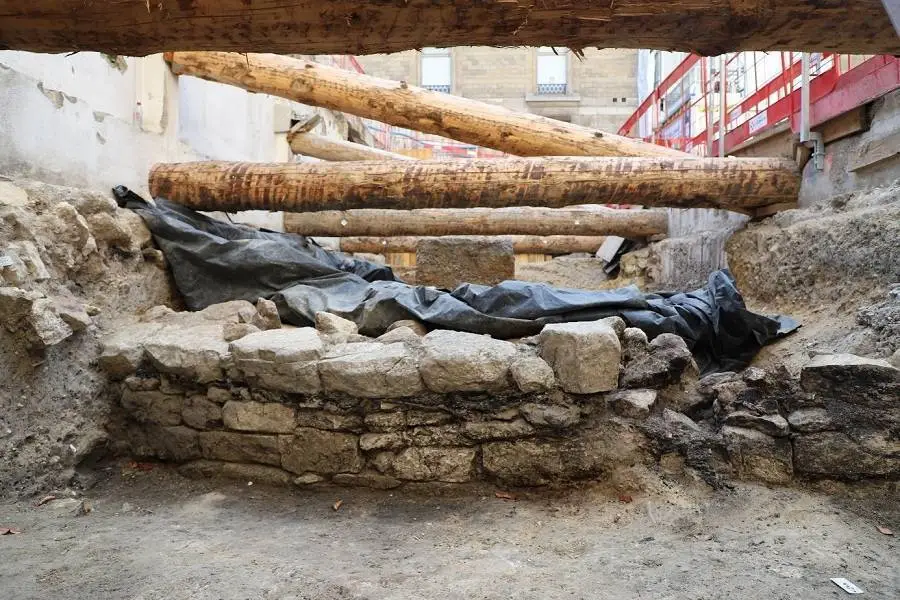
The massive stone-and-timber structure was found about four meters below the courtyard of the Hôtel-Dieu hospital on the Île de la Cité. Stretching for roughly 20 meters, the wall bears traces of an intense fire. Burned wooden remains and carbonized seeds were also discovered nearby, creating a destruction layer that archaeologists say is strikingly consistent with events recorded during the Roman conquest of Gaul.
The discovery does not yet prove that the wall burned in 52 BC. But if further investigation confirms the connection, it could resolve one of the oldest questions surrounding the origins of Paris: where exactly was the Gallic town of Lutetia?
A fire described by Caesar
In Book VII of Commentaries on the Gallic War, Caesar describes his lieutenant Titus Labienus advancing toward Lutetia with four Roman legions during the Gallic revolt of 52 BC. Caesar identified Lutetia as a town of the Parisii situated on an island in the Seine.
When Labienus changed his route and began moving back toward the town, the Gallic forces responded dramatically. According to Caesar, they ordered Lutetia to be set on fire and its bridges destroyed before taking up positions on the opposite bank of the Seine.
Until now, that episode survived primarily as a written account. Archaeologists had never found convincing physical evidence on the Île de la Cité for the fortified Gallic settlement Caesar described.
The newly uncovered wall changes that picture.
Its stone facing shows clear evidence of intense burning. Immediately in front of the structure, excavators found the remains of a burned wooden building as well as numerous carbonized seeds. A Gallic spearhead was recovered at the foot of the wall. Together, these discoveries have raised the possibility that archaeologists are looking at the aftermath of the destruction recorded more than two millennia ago.
Was Lutetia really on the Île de la Cité?
The question matters because the location of pre-Roman Lutetia has long been surprisingly uncertain.
Caesar’s description appears straightforward: Lutetia belonged to the Parisii and stood on an island in the Seine. The Île de la Cité, the historic center from which medieval Paris later expanded, therefore seemed an obvious candidate.
Archaeology, however, complicated the story. Evidence for a substantial Gallic settlement on the island remained extremely limited. Meanwhile, excavations at Nanterre, several kilometers west of central Paris, revealed an important late Iron Age settlement, strengthening arguments that the main center of the Parisii may have been located there rather than beneath modern Paris.
The Hôtel-Dieu discovery now brings the Île de la Cité back to the center of that debate. France’s Ministry of Culture says the wall may represent part of the rampart of the Parisii oppidum and could provide the first direct material connection between modern Paris, Roman Lutetia and the Gallic settlement described by Caesar.
A Gallic fortification beneath modern Paris
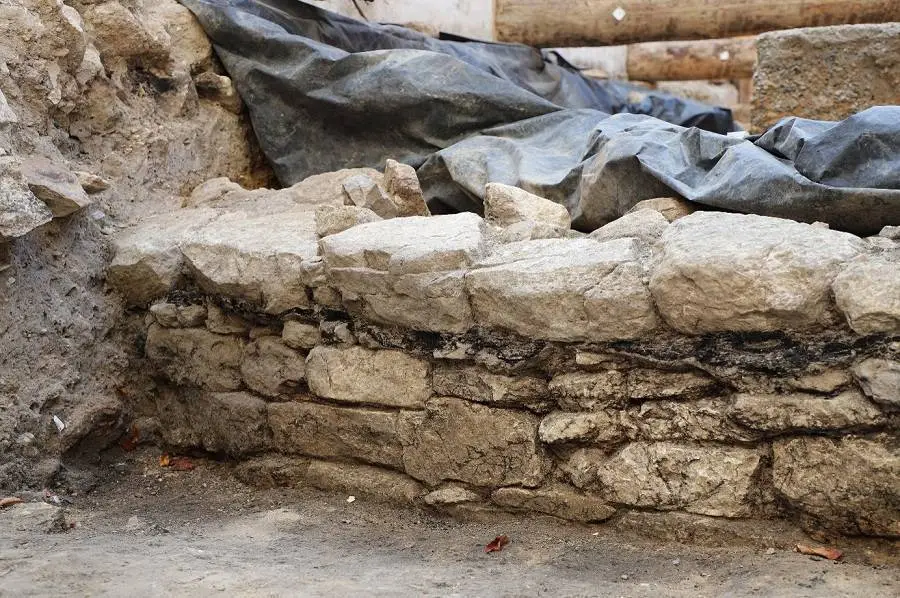
The construction itself strengthens the interpretation, because its combination of massive stonework and timber framing closely matches techniques used in Gallic fortifications during the late Iron Age.
The wall combines large stone elements with horizontal timbers, a building method characteristic of Gallic fortifications during the late Iron Age. Behind it, archaeologists identified a substantial artificial platform of imported sand and gravel, preserved to a thickness of almost two meters.
Radiocarbon analysis of wooden elements places the structure broadly between 200 and 10 BC. That range includes the events of 52 BC, although it is far too wide on its own to associate the destruction directly with Labienus’ campaign.
Researchers must still establish whether the structure served purely as a defensive rampart, also acted as a retaining wall, or formed part of a more complex system along the Seine. Further excavation will examine possible features on the river side of the structure and determine whether earlier occupation levels survive beneath it.
The French Ministry of Culture has consequently stressed that both the wall’s precise function and the date of its destruction still require confirmation. Even so, officials describe the convergence of archaeological evidence as particularly significant.
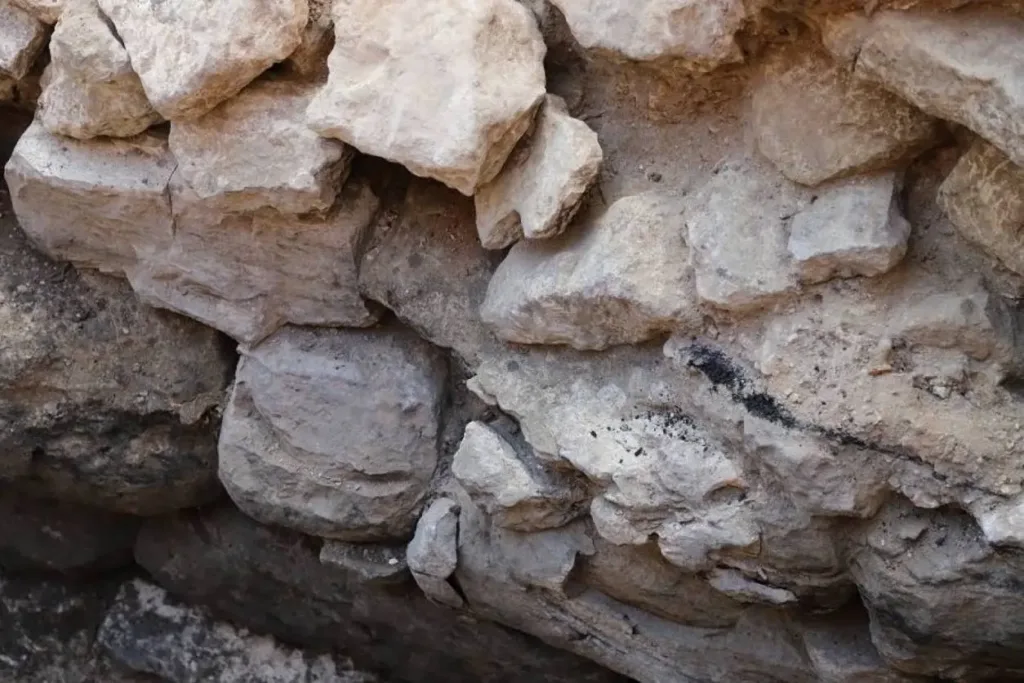
Darkened and fire-altered areas visible on the stonework of the possible Gallic fortification. Archaeologists are investigating whether the burning could be connected with the destruction of Lutetia described during Caesar’s Gallic campaign. Credit: © Anastasia Choquet – DRAC Île-de-France
Preserving a wall transformed by fire
Ironically, the fire that may make the wall historically important has also left it extremely fragile.
The limestone blocks were heavily altered by heat, while much of the timber survives only in a carbonized state. Preserving the entire structure in place is therefore not planned as part of the Hôtel-Dieu redevelopment.
Instead, archaeologists will create exhaustive digital documentation using photogrammetry and 3D reconstruction before the remains are dismantled. A cast of part of the fortification will also be produced, incorporating original facing stones where possible, with the reconstructed section eventually intended for public display in a Paris museum.
For now, the burned wall stops just short of proving Caesar’s account. But beneath one of the oldest institutions in the center of Paris, archaeologists have found something that had been missing for centuries: a Gallic fortification, an intense ancient fire, and a landscape that begins to resemble the Lutetia described on the eve of Rome’s conquest.
