
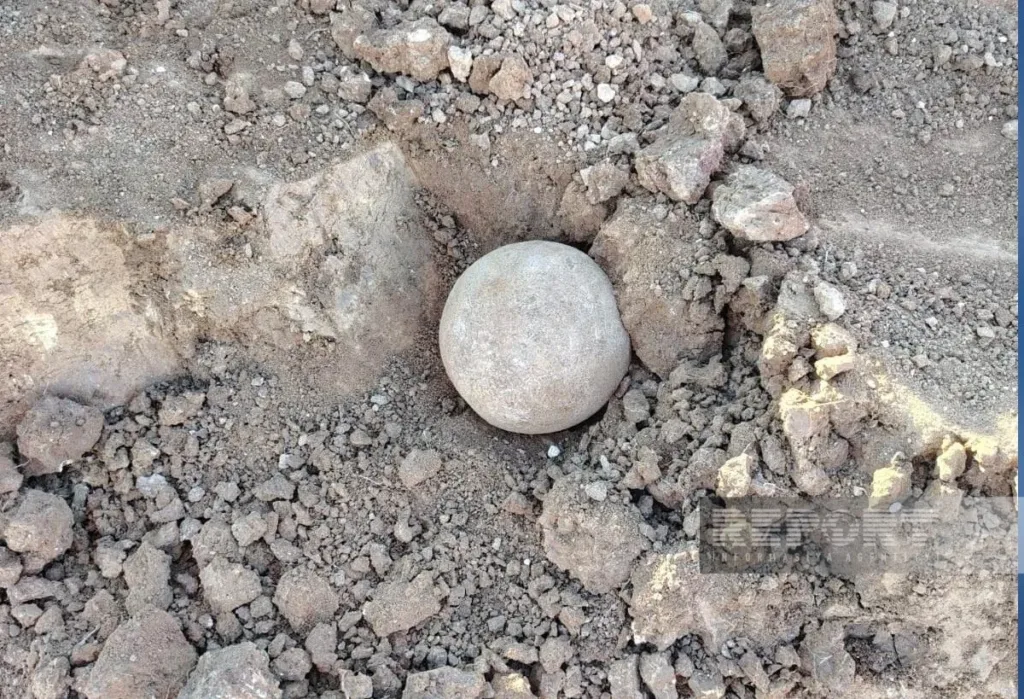
Archaeologists working at the Neolithic settlement of Pashatepe in Azerbaijan have uncovered a polished stone sphere unlike any other known example from the South Caucasus.
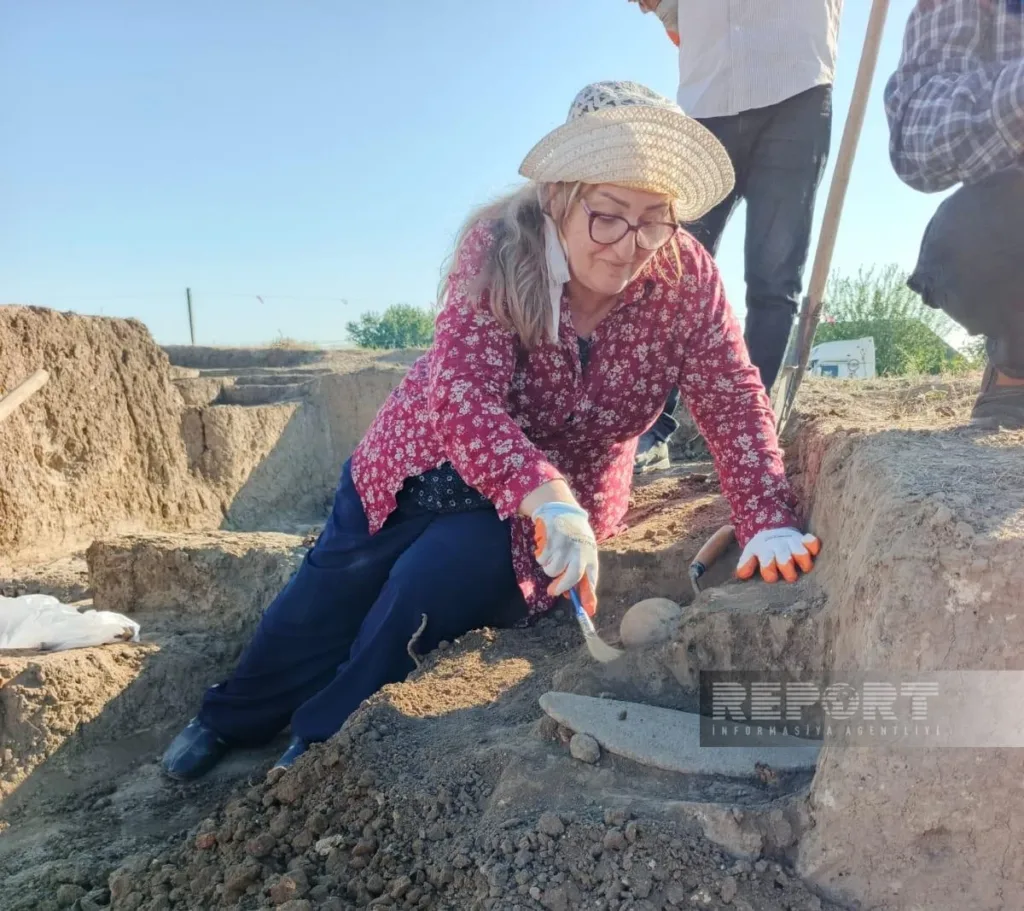
The object was found during excavations at Pashatepe, a prehistoric mound in the Jalilabad district of southeastern Azerbaijan. Vafa Mahmudova, a senior researcher at the Institute of Archaeology and Anthropology of the Azerbaijan National Academy of Sciences, is leading the work.
At first glance, the artifact looks deceptively simple: a rounded stone ball, about 10 centimeters in diameter and weighing 1.87 kilograms. But its surface is what has drawn the attention of archaeologists. The sphere has no visible holes, no clear impact scars, and no obvious traces that would allow it to be easily identified as a weapon, hammerstone, grinding tool, or part of a known technical device.
For now, its function remains open. Mahmudova has suggested that the object may have had a ritual purpose, or that it may have served as a weight. Neither interpretation has yet been confirmed. Specialists will need to study the surface, material, and archaeological context more closely before the stone sphere can be understood with confidence.
A rare object from an early farming village
The discovery is especially intriguing because Pashatepe is not just another isolated prehistoric site. It belongs to the Neolithic world of the Mughan region, a landscape that is becoming increasingly important for understanding the spread of early farming communities across the South Caucasus.
The settlement is dated to the first half of the 6th millennium BC, a period when communities in this part of Azerbaijan were building mudbrick houses, producing pottery, keeping animals, cultivating crops, and developing new forms of social and ritual life.
Excavations at Pashatepe began in 2022. Since then, archaeologists have identified the remains of a large Neolithic village, including mudbrick structures, domestic spaces, graves, pottery kilns, hearths, and an area interpreted as a possible place of ritual activity. The site has produced evidence for several construction phases, suggesting that people returned to, rebuilt, and reorganized the settlement over time.
That context gives the stone sphere more weight than its size might suggest. It was not found in a random landscape, but in a settled community where daily work, craft production, burial practices, and symbolic behavior appear to have existed side by side.
Why the stone sphere is difficult to explain
Neolithic sites often produce stone tools. Grinding stones, hand stones, pounders, axes, blades, and polishers are familiar parts of early farming life. They were used to process grain, prepare pigments, shape materials, and perform household or craft activities.
The Pashatepe sphere does not easily fit into that ordinary toolkit.
Its regular form and polished surface suggest careful shaping. Yet the absence of impact marks makes it difficult to explain as a pounding tool. The lack of perforation also rules out some other possible uses, such as suspension or attachment. If it was a weight, researchers will need to understand what kind of measuring system it belonged to. If it was ritual, its meaning may be harder to recover unless related objects or architectural contexts are identified.
This is what makes the find valuable. It does not offer an immediate answer. Instead, it adds a new question to the archaeology of the South Caucasus: what kinds of symbolic or technical objects were being made by Neolithic communities in the Mughan Plain, and how far did their ideas travel?
Pashatepe and the wider Neolithic of Azerbaijan
The Neolithic period in Azerbaijan is usually discussed within the broader story of the South Caucasus, Anatolia, northern Mesopotamia, and the Iranian plateau. By the 6th millennium BC, farming and herding communities were already reshaping the region. Their settlements were not all identical. Local traditions developed in different valleys and plains, while ideas, raw materials, technologies, and perhaps people moved across long distances.
Pashatepe appears to belong to that world of contact and local invention. Recent research on stone objects from the site has argued that the Mughan Plain was one of the areas where a local Neolithic culture formed in the South Caucasus during the 6th millennium BC. The same research connects the region with wider networks reaching toward the Middle East, Anatolia, and other parts of the Caucasus.
This does not mean that every unusual object found at Pashatepe came from outside the region. On the contrary, the site may show how local communities absorbed, transformed, and reworked ideas within their own cultural setting.
The stone sphere fits neatly into that problem. Its form has no direct published parallel in the South Caucasus, according to the researchers, but its meaning is still unknown. It may eventually prove to be a local innovation, a ritual object, a measuring device, or something else entirely.
More than one period at the site
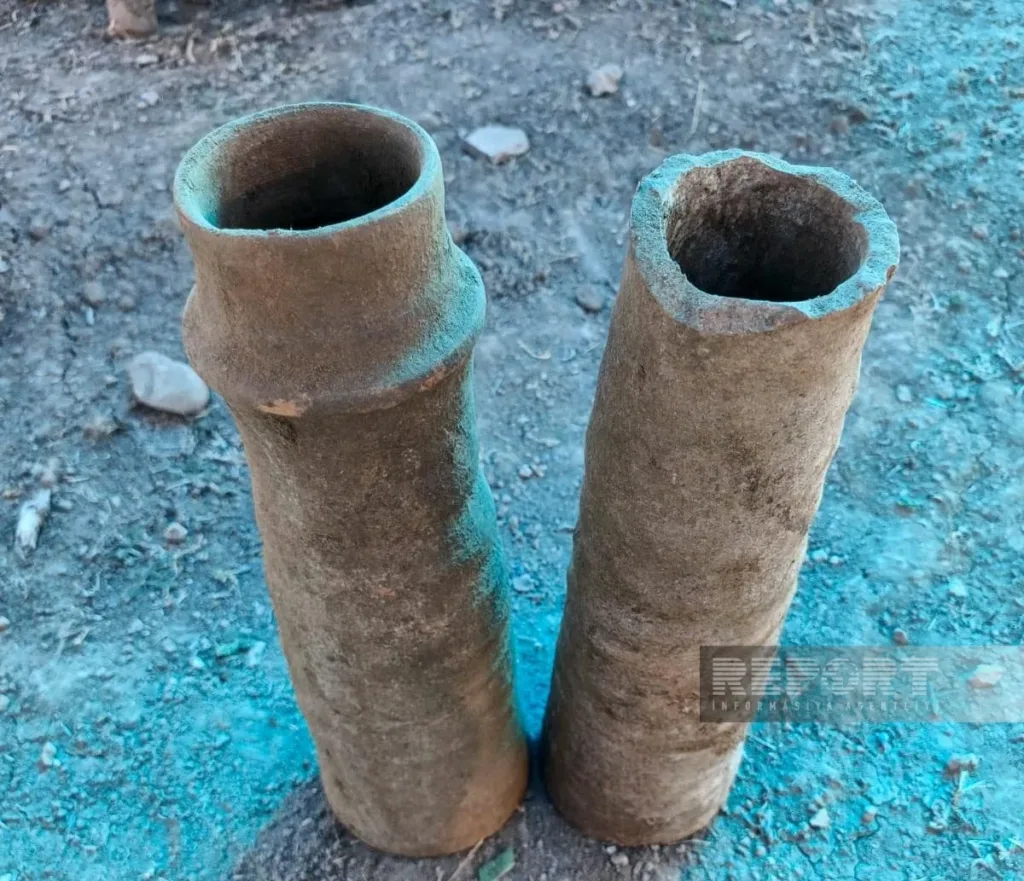
The latest work at Pashatepe has also produced finds from later periods. Archaeologists expanded the excavation area and continued work at a depth of about 45–50 centimeters. In the newly investigated area, they recorded ceramic pipe-like elements believed to belong to a drainage or water system, possibly from the medieval period.
These pipes are not directly connected to the Neolithic stone sphere. They show instead that the area remained significant, or was reused, long after the prehistoric settlement. Their exact date will be determined through further study.
Researchers also inspected the nearby Alikomektepe monument, another important site in the Jalilabad region. Working with heritage officials, they clarified the older coordinates and protection-zone boundaries of the site and identified land now being used illegally.
A small object with large questions
The Pashatepe stone sphere is not important because it solves a problem. It is important because it resists easy explanation.
At 10 centimeters wide, it is a compact object. But it comes from a period when communities in the South Caucasus were experimenting with new forms of settlement, production, belief, and exchange. Its polished surface suggests intention. Its lack of wear raises doubt. Its weight may point to practical use, while its unusual form leaves room for a symbolic one.
For archaeologists, that uncertainty is not a weakness. It is the beginning of the investigation.
Further analysis may show whether the stone was locally sourced, how it was shaped, whether microscopic traces survive on its surface, and whether similar objects exist outside the South Caucasus. Until then, the sphere from Pashatepe remains one of the most unusual Neolithic stone artifacts yet reported from Azerbaijan.
