
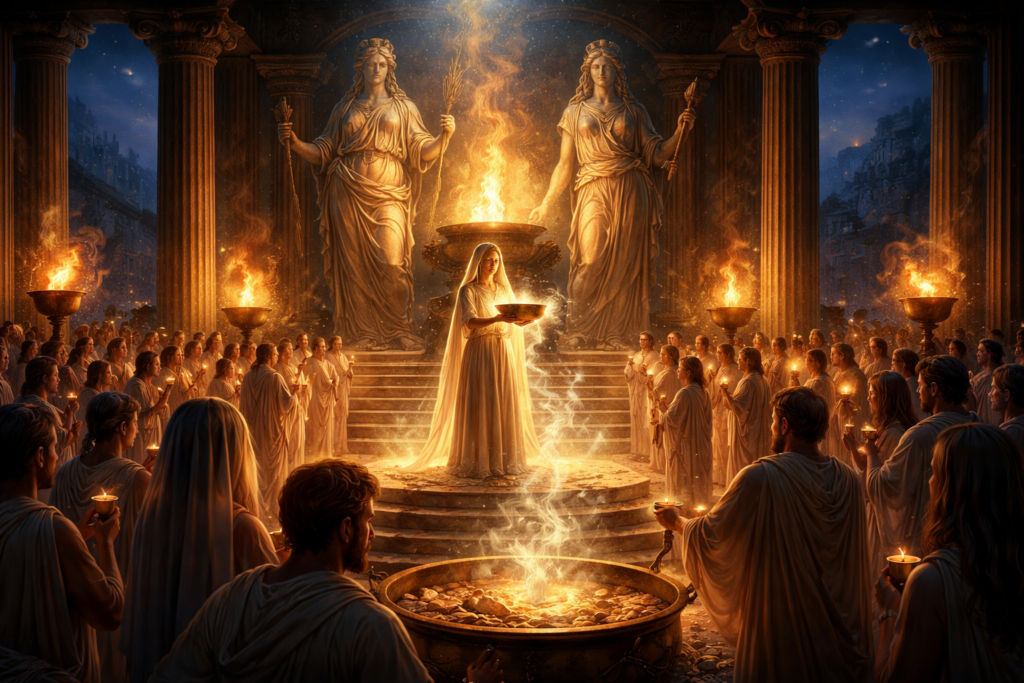
A new Scientific Reports study suggests that the secret drink of the Eleusinian Mysteries may have contained a detoxified psychedelic derived from ergot fungus, potentially explaining the transformative rituals of ancient Greece.
For more than a thousand years, something extraordinary happened in a vast, torch-lit hall at Eleusis, just west of Athens.
Men and women—citizens, slaves, generals, poets—walked the Sacred Way in silence. They fasted. They prepared. They entered the Telesterion. And when they emerged, many claimed they no longer feared death.
What occurred inside that chamber was so secret that revealing it carried a death sentence. Yet today, modern chemistry may have brought us closer than ever to understanding the hidden engine of the Eleusinian Mysteries.
A new study published in Scientific Reports suggests that the initiates may have consumed a carefully detoxified psychedelic derived from a deadly fungus.
A Ritual Built on Death and Rebirth
The Mysteries were rooted in the Homeric Hymn to Demeter, composed around the 7th century BCE. The poem recounts Demeter’s desperate search for her daughter Persephone, abducted by Hades into the underworld. Her grief withered the earth; her reunion restored life. The myth mirrored agriculture’s seasonal cycle—death followed by rebirth.
Each autumn, initiates reenacted this cosmic drama. After days of fasting and ritual purification, they drank kykeon—a sacred beverage described as a mixture of barley, water, and mint. What happened afterward remains unknown. Ancient sources speak only in hints: overwhelming light, a vision, an experience of transformation, a sense of immortality.
For centuries, scholars debated whether the kykeon was merely symbolic—or pharmacological.
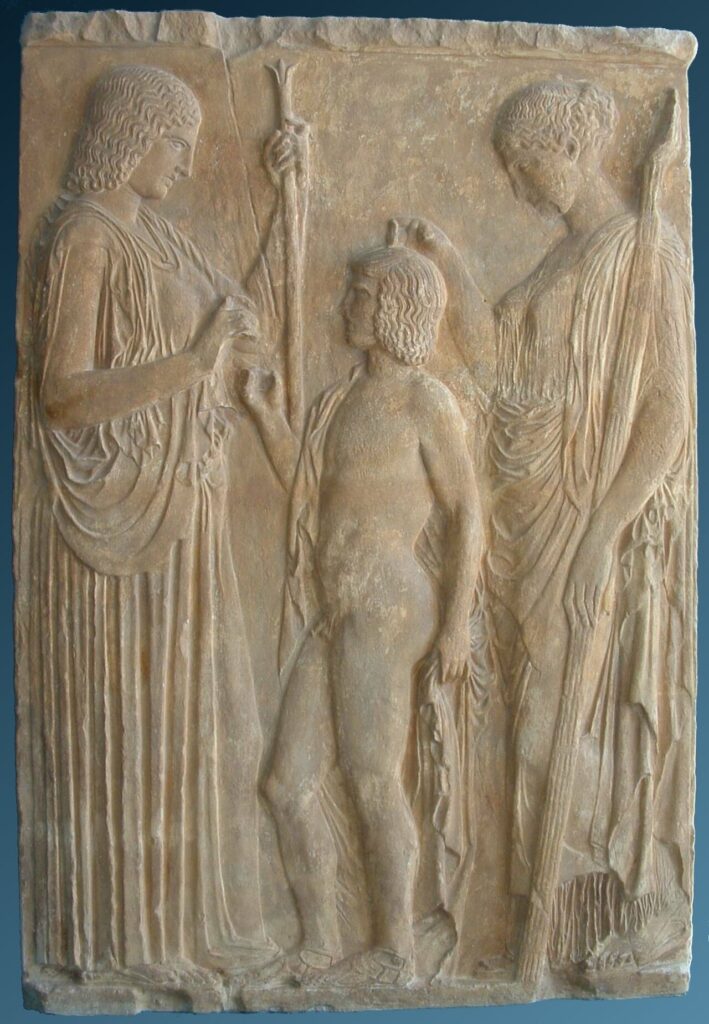
The Psychedelic Hypothesis
In 1978, R. Gordon Wasson, Albert Hofmann (the chemist who synthesized LSD), and Carl Ruck proposed that the kykeon contained ergot—a fungus (Claviceps purpurea) that infects barley and produces ergot alkaloids. These compounds are chemically related to LSD.
The theory was bold but problematic. Ergot is notorious for causing ergotism—also known as Saint Anthony’s Fire—a horrific condition that produces seizures, gangrene, and mass death. Medieval outbreaks killed tens of thousands.
How could the Greeks have administered ergot safely to thousands of initiates without catastrophe?
That question lingered unanswered—until now.
Turning Poison into Vision
The new study, led by researchers from the National and Kapodistrian University of Athens and international collaborators, experimentally tested whether toxic ergot compounds could be transformed into psychoactive but safer molecules using ancient technology.
Their focus was on the conversion of toxic ergopeptides into lysergic acid amide (LSA) and iso-LSA—psychoactive compounds structurally related to LSD but significantly less potent.
The researchers prepared a traditional lye solution using wood ash and water—precisely the kind of alkaline mixture available in antiquity. They then refluxed powdered ergot sclerotia in this lye under controlled conditions.
The results were striking.
At an initial pH of 12.5, with a 5% ergot concentration and 120 minutes of heating, toxic ergopeptides were completely hydrolyzed. In their place, measurable quantities of LSA and iso-LSA were produced—approximately 0.54 mg and 0.48 mg per gram of ergot respectively.
Analytical confirmation came through both ¹H NMR spectroscopy and UHPLC/Q-TOF-HRMS analysis. The disappearance of amide signals associated with toxic ergopeptides—and the emergence of characteristic LSA peaks—demonstrated complete chemical transformation.
In short: the deadly components could be neutralized, while the psychoactive core remained.
Could It Have Worked at Eleusis?
One major objection to the ergot hypothesis has always been dosage and safety. The study directly addresses this.
LSA is psychoactive at doses around 0.5 mg. Under optimal conditions, one gram of treated ergot could yield approximately that amount of active compound. Even if thousands of initiates participated, only a few kilograms of ergot would have been required—an achievable quantity within the agricultural economy of ancient Greece.
Moreover, the alkaline lye could have been partially neutralized before consumption—either through exposure to air (CO₂ reduces pH) or by mixing with the barley-mint base of kykeon. The final beverage need not have been caustic.
The researchers also argue that ergot infection in Mediterranean climates would have been localized, not epidemic. Eleusis’ fertile Thriasian plain could have supplied infected barley in small, controlled amounts—sufficient for ritual, but not mass poisoning.
Experience Beyond Chemistry
Importantly, the authors emphasize that the Mysteries were not merely pharmacological events. Set and setting—fasting, expectation, collective ritual, mythic framing—would have amplified any psychoactive effect.
LSA is less potent thanLSD but demonstrably active at serotonin receptors. Iso-LSA also shows central nervous system activity. Together, the mixture could have induced altered perception, ego dissolution, and profound emotional states.
Ancient testimonies describe exactly that: a confrontation with mortality followed by spiritual rebirth.
Not Proof—But Plausibility
The study does not claim definitive proof that ergot was used at Eleusis. No residue from the Telesterion has yet been chemically analyzed. However, archaeological evidence from Mas Castellar de Pontós in Spain has already shown ergot fragments in a sanctuary linked to Demeter.
What this new research accomplishes is something different: it demonstrates feasibility.
The “psychedelic Eleusis” hypothesis is no longer merely speculative mythology. It now rests on experimentally verified chemistry using materials and techniques accessible in antiquity.
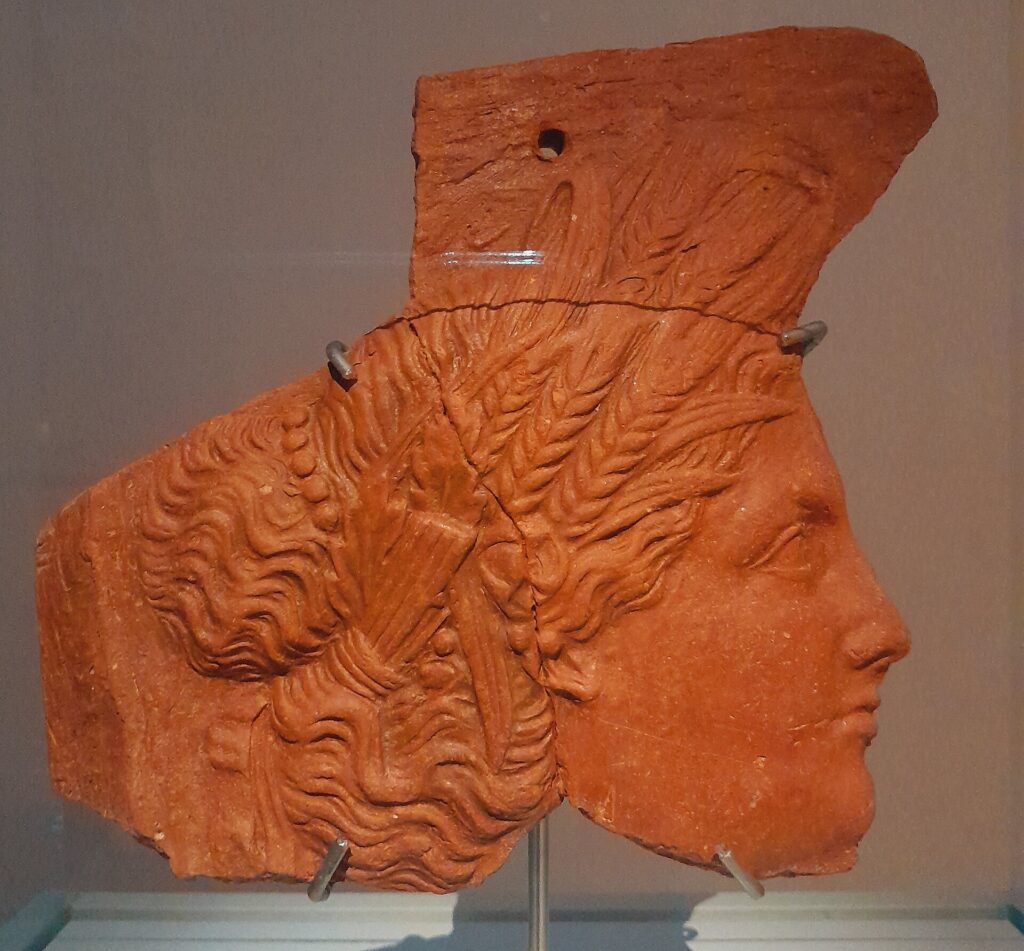
The Secret That Refused to Die
The Mysteries ended in the 4th century CE when the temple complex was destroyed amid the Christianization of the Roman Empire. For centuries, the secret remained intact—not because it was unknowable, but because it was unspoken.
Today, spectroscopy and mass spectrometry have reopened the question.
If the priestesses of Eleusis truly mastered the transformation of poison into vision—of fungus into revelation—then the most fiercely guarded secret of ancient Greece may not have been mystical at all.
It may have been chemical.
And we may finally be close to understanding it.
Antonopoulos, R.K., Dadiotis, E., Ioannidis, K. et al. Investigating the psychedelic hypothesis of kykeon, the sacred elixir of the Eleusinian Mysteries. Sci Rep (2026). https://doi.org/10.1038/s41598-026-39568-3
Cover Image Credit: Artistic reconstruction of the Eleusinian Mysteries. Image created by the author using AI for illustrative purposes.
