
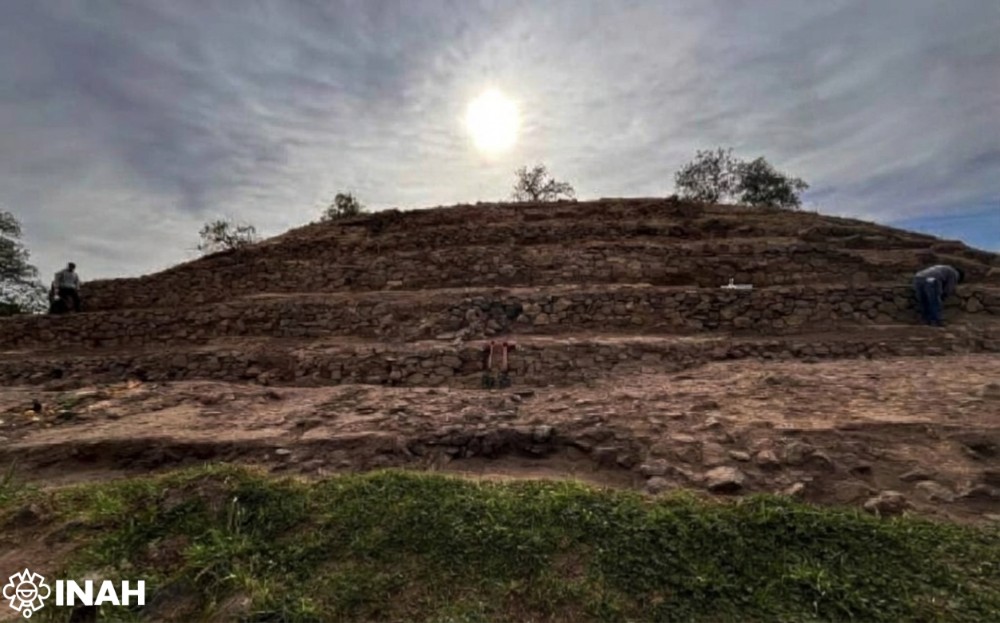
Archaeologists in Mexico have confirmed that a monumental complex built more than 2,500 years ago functioned as a solar observatory. Located in Puebla, the structure is the first of its kind documented outside the Maya region, according to Mexico’s National Institute of Anthropology and History (INAH), offering new evidence that sophisticated astronomical knowledge extended beyond the civilizations traditionally associated with such monuments.
An ancient ceremonial complex in the mountains of central Mexico has emerged as an important example of early Mesoamerican astronomy. Researchers studying Teteles de Ávila Castillo in Puebla have established that the arrangement of its monumental buildings was designed to track the movement of the Sun across the horizon.
The observatory belongs to an architectural tradition closely associated with ancient Maya cities, particularly Uaxactún in Guatemala. Its identification outside the traditional Maya region raises new questions about the geographical distribution of astronomical knowledge and the cultural connections linking early Mesoamerican societies.
A Monumental Complex Built to Follow the Sun
The solar observatory forms part of Tetelihtic, an ancient ceremonial settlement in the Sierra Norte de Puebla. Researchers identified its astronomical function by examining the original layout of the site, the orientation of its pyramidal structures, and their relationship with the rising Sun.
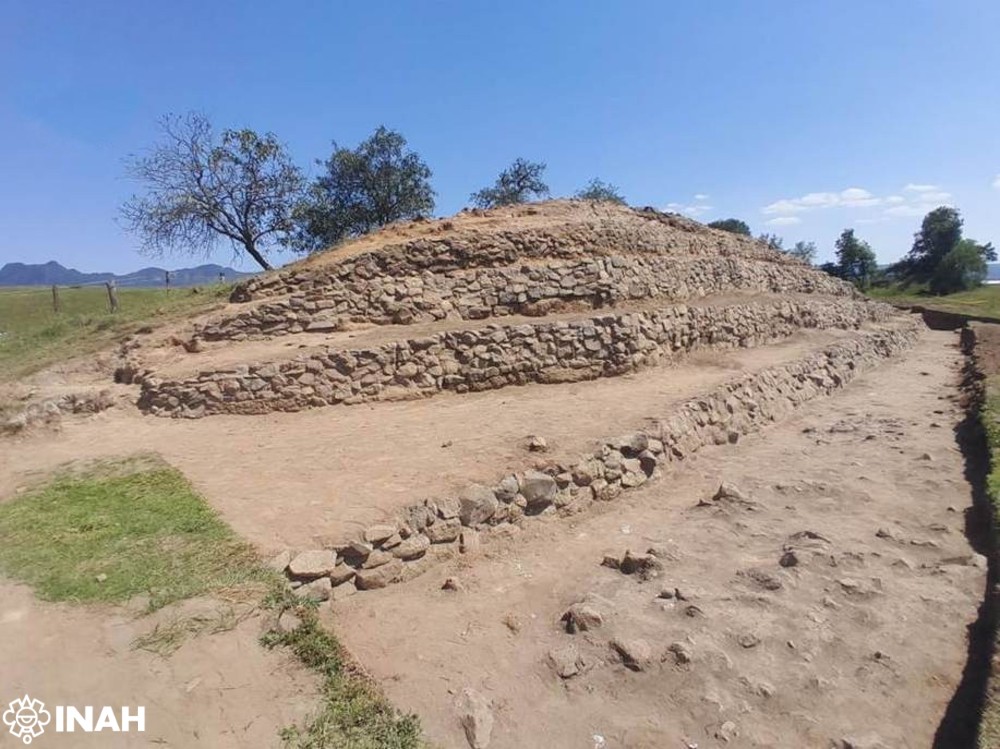
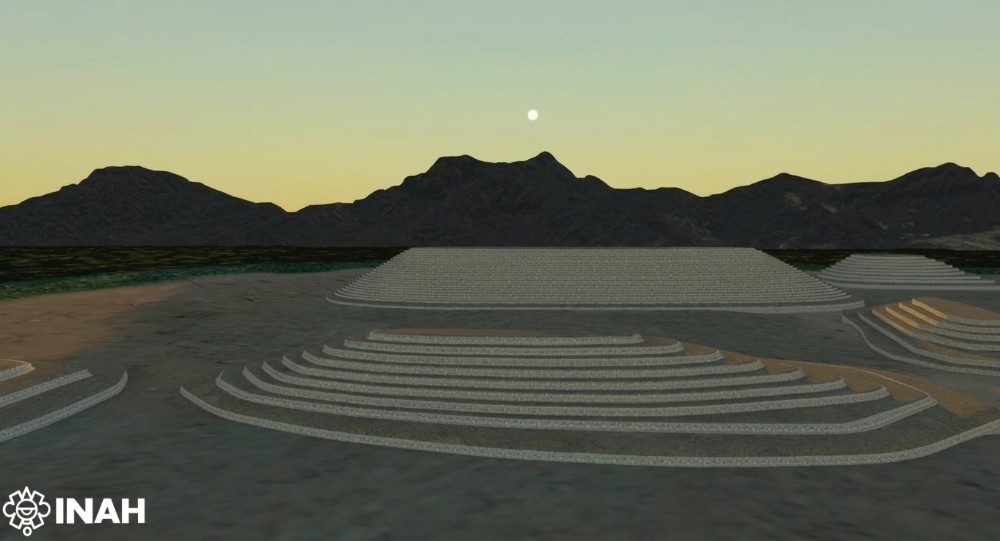
The complex consists of a quadrangular courtyard positioned between two monumental structures. The eastern platform measures approximately 90 meters from north to south and 40 meters from east to west, while the smaller western structure measures 46 by 27 meters and served as an observation point.
Together, these buildings created an architectural arrangement that allowed observers to follow the changing position of sunrise throughout the year. Their alignment indicates that astronomical observations influenced the planning of the ceremonial center more than 2,500 years ago.
According to INAH, the complex dates to the Middle Preclassic period, approximately 1000–600 BCE. Its layout closely resembles the E-Group architectural tradition known from Maya archaeological sites, although the Puebla complex incorporates distinctive features associated with its own geographical setting.
A Solar Observatory Beyond the Maya Heartland
The discovery is particularly significant because the best-known examples of E-Group astronomical architecture are concentrated in the Maya region of present-day Guatemala, Belize, and southeastern Mexico.
One of the most famous examples is Uaxactún, in northern Guatemala. Archaeologists began investigating its astronomical complex during the early twentieth century, identifying a western pyramid facing a series of structures on an eastern platform. The arrangement became a reference point for understanding the relationship between monumental architecture and solar observation in Maya civilization.
Other early examples occur at Ceibal (Seibal), where an E-Group complex was constructed around 1000 BCE, and at Tikal, where ceremonial architecture also incorporated astronomical orientations. Related complexes have been identified at Caracol and Xunantunich in present-day Belize, illustrating the geographical extent of this architectural tradition.
The Puebla discovery adds an important comparison beyond that traditional concentration. INAH describes Teteles de Ávila Castillo as the first recorded solar observatory of its kind outside the Maya region, comparable to Uaxactún but approximately twice its size.
Earlier research has identified E-Group architectural forms in other parts of Mesoamerica, including regions associated with La Venta and Chiapas. However, the astronomical function of individual complexes cannot be assumed solely from their architectural resemblance. Studies have shown that such buildings could combine ritual, political, and astronomical purposes, making their precise orientations essential to interpretation.
A Calendar Marking Agricultural Seasons
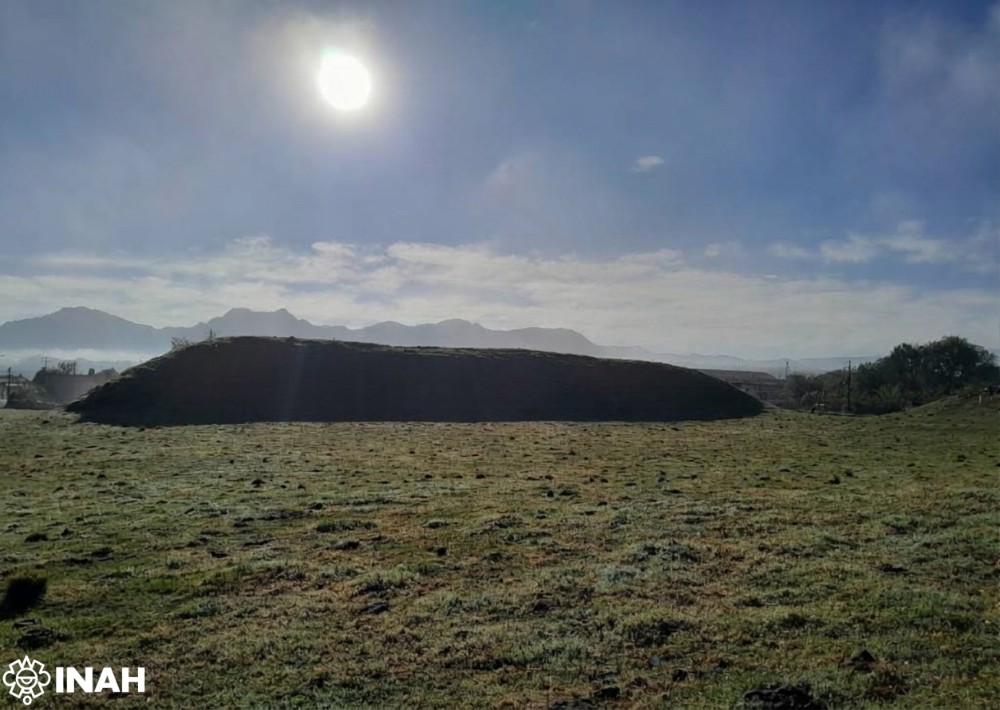
The Puebla observatory also differs from the familiar model traditionally associated with Uaxactún. Rather than simply marking the equinoxes along its central axis, its elongated platform appears to have been designed to identify other significant moments in the agricultural calendar.
According to the archaeological team, the arrangement marked the beginning of the Mesoamerican calendar in February and the harvest season in October. Observations from the eastern structure also revealed relationships between sunrise positions and the equinoxes and solstices.
These findings suggest that the complex provided a practical framework for organizing the ceremonial and agricultural year. Tracking predictable solar events would have helped communities coordinate seasonal activities while connecting them to religious practices and the arrangement of sacred spaces.
The relationship between solar orientations and agricultural cycles is well documented elsewhere in Mesoamerica. Archaeological studies have demonstrated that many ceremonial buildings were aligned with sunrise or sunset dates separated by intervals significant in Mesoamerican calendrical systems. The new observations at Teteles offer another opportunity to examine how those principles were expressed in different regional traditions.
Ancient Astronomy and the Cultural Connections of Puebla
Beyond its astronomical importance, Teteles de Ávila Castillo may provide evidence of relationships between the Maya and Huastec populations during the early development of complex societies in Mesoamerica.
Project director Alberto Diez Barroso Repizo suggests that Maya-related cultural influences may have reached the region as early as the first millennium BCE. The architectural similarities between Teteles and Maya E-Groups could contribute to discussions about the historical connections of the Huastec peoples, whose language belongs to the Mayan linguistic family.
The research has also raised questions about the origins of Totonac culture. Diez Barroso considers the possibility that the site’s early inhabitants were ancestral to populations that later developed important centers such as Yohualichan in Puebla and El Tajín in Veracruz.
The wider archaeological evidence indicates that Tetelihtic remained active from approximately 900 BCE until AD 100. Although the settlement was partially abandoned as other centers, including Cantona, Cholula, and Teotihuacan, developed, offerings dating from AD 100 to 600 suggest that its ceremonial importance continued. A later Totonac offering, dated to AD 600–900, points to another episode of ritual activity after the original settlement had been abandoned.
The observatory also offers a possible link between architecture and religious beliefs. Researchers have suggested that the alignment of a major structure with Canopus, one of the brightest stars in the night sky, may relate to the Nahua goddess Nantehuitz. That interpretation remains preliminary, but it illustrates the range of astronomical and cultural questions emerging from the investigation.
