
21 January 2026 The Future is the Product of the Past

2,600-Year-Old Scythian Noble Warrior’s Tomb Unearthed in Siberia: Rare Battle Axe, Bronze Mirror, and More

Burial includes ornate belt, ram-headed buckle, bronze mirror, and horse harness elements, revealing the elite status of the Scythian Noble Warrior.

Archaeologists in Siberia have uncovered the burial of a Scythian noble warrior dating back to the 6th century BCE, shedding new light on the martial traditions and cultural complexity of the Scytho-Siberian world.

The discovery, made on the banks of the Kem River in the Krasnoyarsk region by researchers from Siberian Federal University, has already been hailed as one of the most significant archaeological finds in recent years.
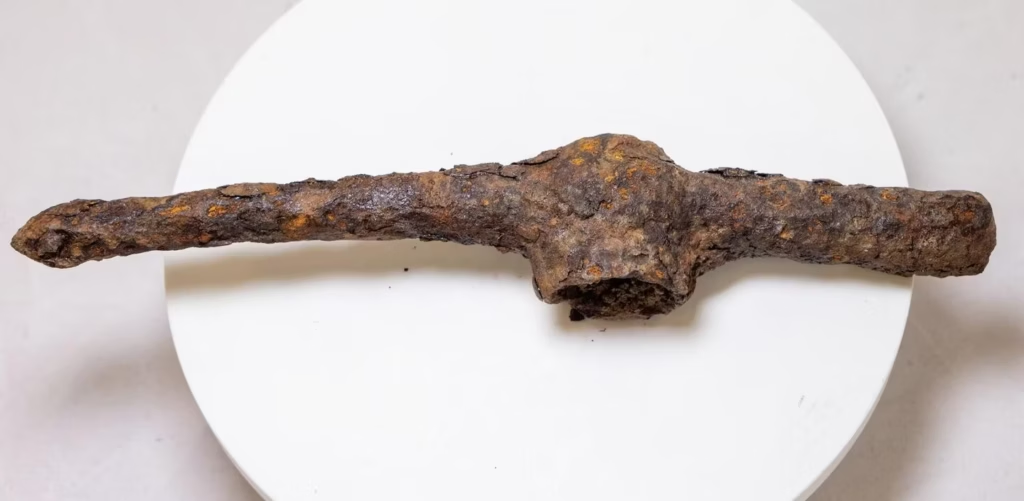
The most extraordinary find is an iron battle axe, a rare weapon for its time, as iron would not be widely used in Siberia until five centuries later. Credit: Press Service of Siberian Federal University / Evgeny Puzin

A Burial Rich in Symbols of Power

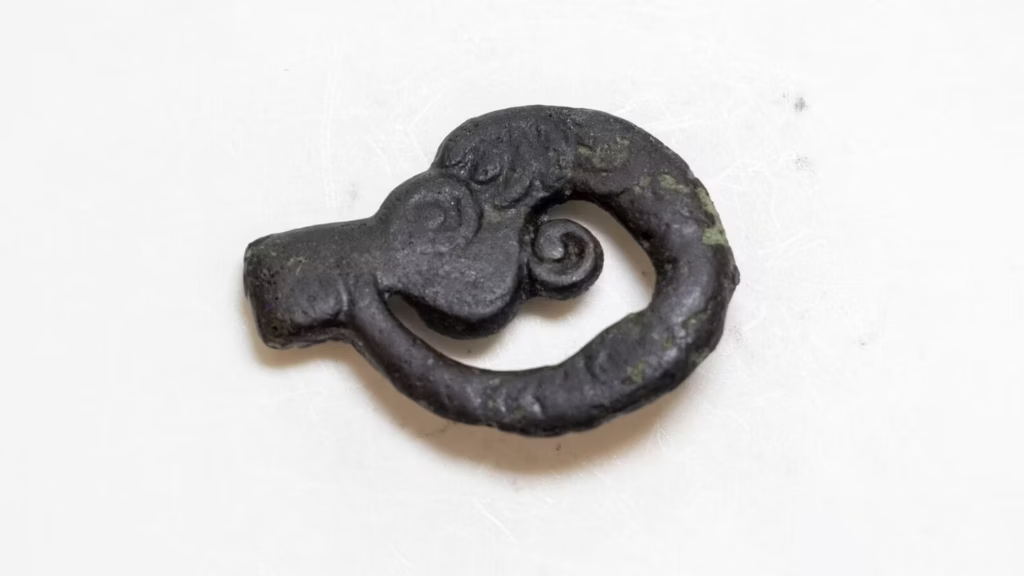
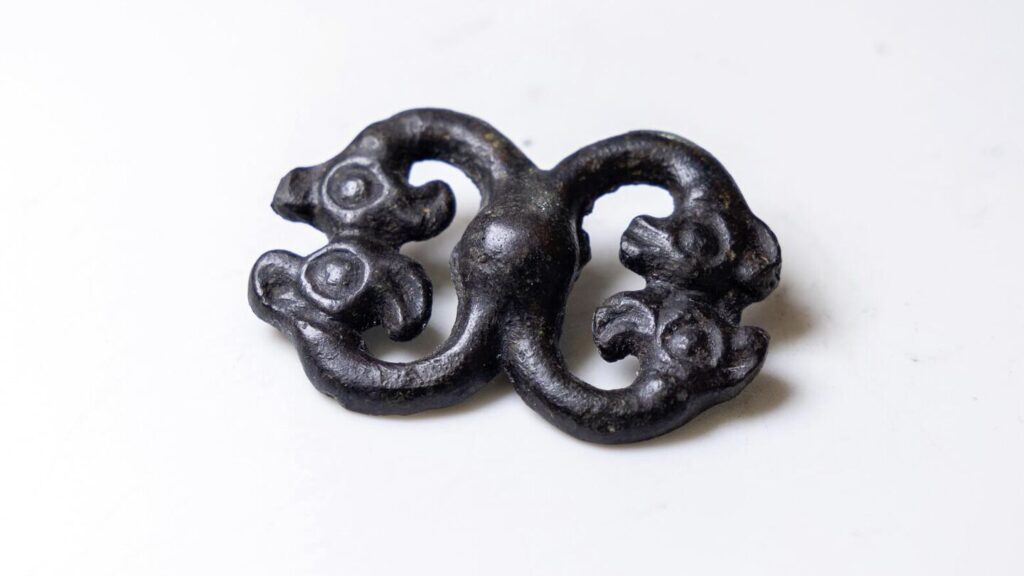
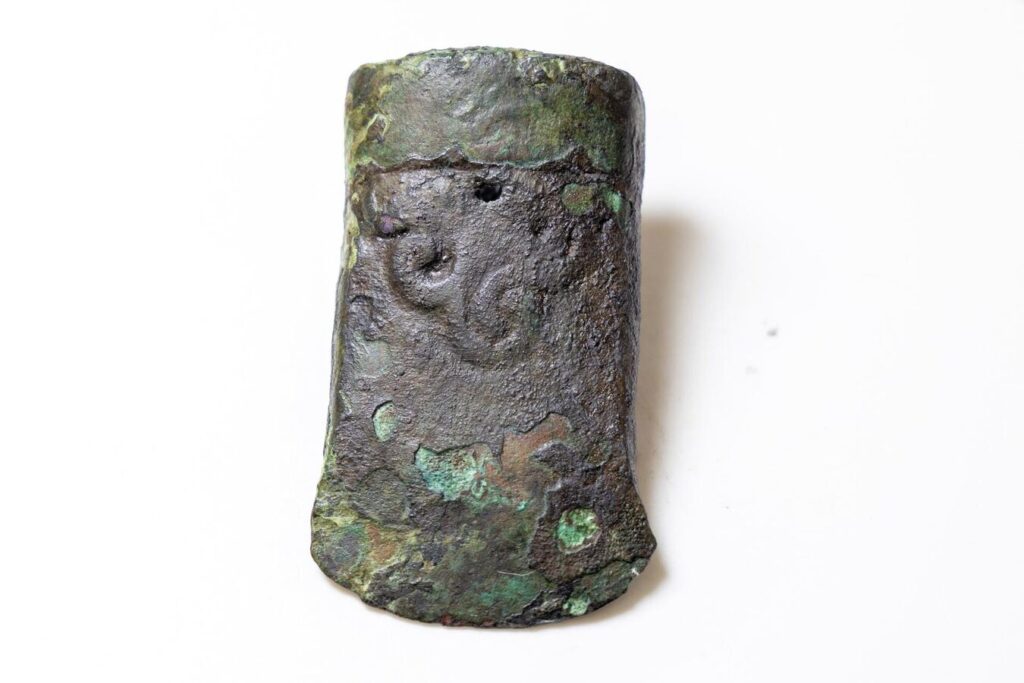
The burial chamber revealed a warrior interred with a remarkable array of possessions: a decorated belt adorned with bronze plaques, a buckle shaped like the head of a mountain ram, ornate jewelry, a polished bronze mirror, weaponry, and elements of a horse’s harness. Each object was not only a personal belonging but also a marker of status, wealth, and spiritual identity.

Among the finds, one object stands out as extraordinary: an iron battle axe known as a chekan. According to Pavel Mandryka, head of the Laboratory of Archaeology of Yenisei Siberia, this weapon was particularly rare for its time. “The chekan had a sharp point designed to pierce armor. Such an item highlights the high status of the warrior,” Mandryka explained.


📣 Our WhatsApp channel is now LIVE! Stay up-to-date with the latest news and updates, just click here to follow us on WhatsApp and never miss a thing!!


What makes the axe exceptional is its material. In Siberia, widespread use of iron would not become common until five centuries later. The presence of such an advanced weapon strongly suggests that the warrior either belonged to a privileged elite with access to distant trade networks or had migrated into the region from the southwest, bypassing the forest-steppe zones of modern Krasnoyarsk.
Credit: Press Service of Siberian Federal University / Evgeny Puzin

Weapons and Warfare of the Scythians

The Scythians were legendary across the ancient world as master horsemen and archers. Their short composite bows allowed for precision shooting from horseback, while their iron swords and bronze-tipped arrows struck fear into enemies. Yet the chekan adds a new dimension to our understanding of their arsenal. Unlike swords, which cut, or arrows, which pierced lightly armored foes, the battle axe was designed for brute force. With its pointed head, it could shatter helmets and puncture armor, making it both a practical and symbolic tool of authority.

Other items from the burial reinforce this interpretation. The belt, decorated with bronze plates, would have been a visible marker of rank. The ram-headed buckle evoked strength and virility, while the horse harness elements emphasized the inseparable bond between Scythian warriors and their steeds. Horses were not merely transportation; they were companions in battle and often buried alongside their riders to accompany them into the afterlife.
Credit: Press Service of Siberian Federal University / Evgeny Puzin

Mirrors and Rituals

Equally intriguing is the presence of a polished bronze mirror. Archaeologists believe it carried more than a decorative purpose. In Scythian culture, mirrors could serve ritual functions, acting as protective talismans or instruments in shamanic practices.

While warriors could be male or female in Scythian society—and even adolescents sometimes took on martial roles—the combination of weaponry, harness fittings, and belt ornaments in this case strongly indicates the burial of a man.
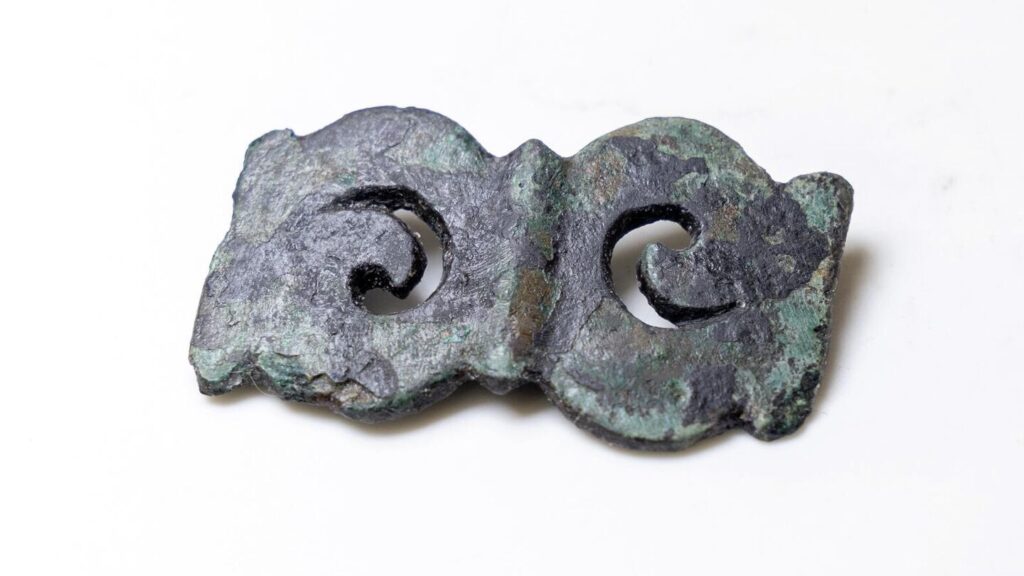
Credit: Press Service of Siberian Federal University / Evgeny Puzin

A Glimpse into the Scytho-Siberian World

This discovery is part of a broader pattern of archaeological revelations across Siberia. From frozen tombs in the Altai Mountains preserving tattooed bodies to golden treasures unearthed along the Yenisei River, the Scythians emerge not simply as raiders of the steppe but as a complex society with rich symbolism, far-reaching connections, and advanced martial traditions.

The Krasnoyarsk warrior’s grave highlights the interplay between local traditions and external influences. The use of iron, centuries ahead of its widespread adoption in Siberia, points to a flow of technology, trade, and ideas across the Eurasian steppe. At the same time, the burial’s wealth and ritual items underscore the deeply spiritual dimension of Scythian warfare, where every object—from a mirror to a horse harness—carried layers of meaning.

As excavations continue, archaeologists believe more secrets of the Scythians will surface from Siberia’s frozen ground. For now, the iron axe of the Kem River warrior stands as a silent witness to a world of power, prestige, and the enduring mystery of nomads who once ruled the steppe.

Siberian Federal University

Cover Image Credit: Press Service of Siberian Federal University / Evgeny Puzin

Related Articles

Riddle of Former Crater Lakes in the Highest Mountains of the Sahara Solved

18 August 2025

18 August 2025

An interdisciplinary research team, led by scientists from the Free University of Berlin and the Max Planck Institute for Meteorology,...

Historic bath set to turn into gastronomy gallery

4 May 2024

4 May 2024

Built between 1520 and 1540 in the Sur district of the eastern province of Diyarbakır, the historic Çardaklı Hamam is...

Chinese Team Restores Rare Tang Dynasty “Golden Armour” from Tuyuhun King’s Tomb

20 January 2026

20 January 2026

A team of Chinese conservators has unveiled a restored suit of gilded bronze armour from the Tang dynasty, believed to...

Hidden Archaeological Treasures from Cologne Cathedral

25 January 2024

25 January 2024

An area of around 4,000 square meters (43,055 square feet) is being discovered beneath the Cologne Cathedral, the largest Gothic...

A Major Etruscan Medical School Emerges at the Sacred Springs of San Casciano dei Bagni

24 December 2025

24 December 2025

New results from the 2025 excavation season at the Bagno Grande Sanctuary in San Casciano dei Bagni are reshaping how...

“Cardiff’s earliest house” unearthed during an archaeological dig may shed light on the city’s earliest inhabitants

15 July 2022

15 July 2022

Archaeological excavation in a city park in Cardiff, the capital of Wales, has uncovered what is believed to be the...

Archaeologists find rare treasure in Suzdal of Russia

15 August 2021

15 August 2021

The twentieth season of fieldwork brought an unexpected discovery to the Institute of Archeology of the Russian Academy of Sciences....

Neanderthals caused ecosystems to change 125,000 years ago

16 December 2021

16 December 2021

Researchers say Neanderthals changed the ecosystem by turning forests into grasslands 125,000 years ago. Around 125,000 years ago, these close...

The Colossal Nordic Bronze Age Hall Unearthed in Germany May Be the Legendary King Hinz Meeting Hall

5 November 2023

5 November 2023

A colossal hall from the Bronze Age was discovered during excavations near the “royal grave” of Seddin (Prignitz district) northwest...

Britain’s first Roman funerary bed is discovered in central London after 2,000 years

7 February 2024

7 February 2024

Archaeologists excavating a construction site in London have unearthed the first Roman “flat-packed” funerary furniture – a fully intact Roman...

Washi papers discovered inside a 675-year-old Buddhist statue in Japan

3 February 2024

3 February 2024

The carved head of an ancient Buddhist statue hidden in the Myooin temple in Fukuyama, Hiroshima, Japan, has revealed pages...

The Longest Greek Papyrus from the Judean Desert Sheds Light on a Pivotal Roman Court Case

31 January 2025

31 January 2025

New research by a group of Austrian and Israeli scholars has finally deciphered a 1,900-year-old scroll describing a tense court...

1,400-year-old temple from the time of the East Anglian Kings discovered at Suffolk royal settlement

21 November 2023

21 November 2023

Archaeologists have uncovered a possibly pre-Christian temple from the time of the East Anglian Kings at Rendlesham, near Sutton Hoo...

Shocking Images Appeared As The Waters Recede

8 February 2021

8 February 2021

As the dams recede, the remains of the flooded settlements come to light. This time Kayseri witnessed these images that...

2,000-Year-Old Garlanded Sarcophagus Unearthed in City of Gladiators

2 May 2025

2 May 2025

A remarkably well-preserved, 2,000-year-old sarcophagus adorned with intricate garlands has been discovered during ongoing excavations in the ancient city of...