
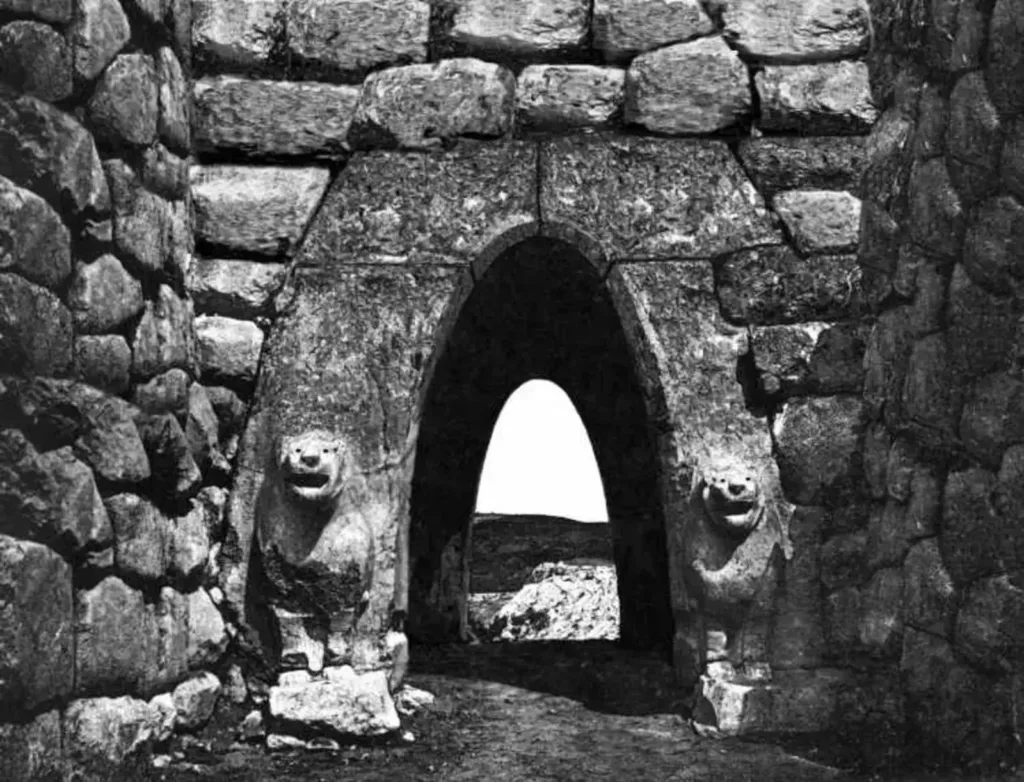
Historic photographs from Hattusa document 120 years of excavations at the ancient Hittite capital, revealing how archaeologists uncovered its monumental gates, temples and fortifications. The images, shared during the city’s 40th UNESCO World Heritage anniversary, trace the transformation of one of Anatolia’s most important Bronze Age archaeological sites.
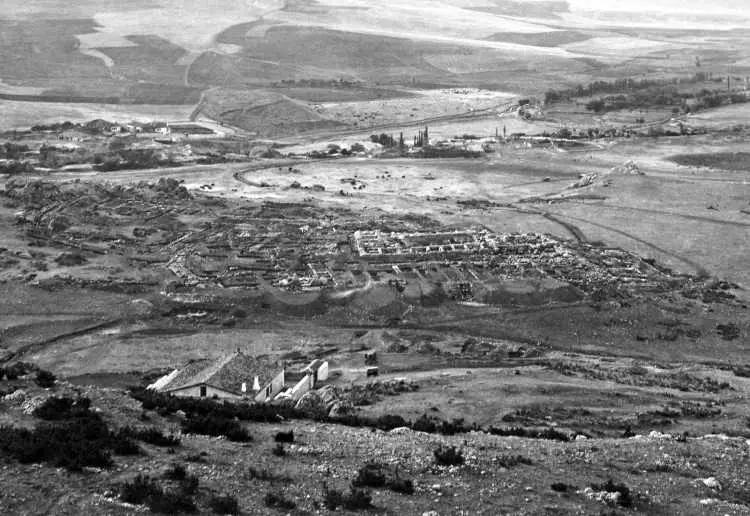
Long before visitors could walk among the monumental gateways and temple foundations of Hattusa, archaeologists encountered a very different landscape. Ancient walls lay beneath accumulated earth, architectural remains were difficult to distinguish, and the true extent of the Hittite capital had yet to emerge. Historic photographs now offer a rare glimpse of that earlier world, documenting how generations of researchers gradually reconstructed the appearance of a city that once stood at the centre of a powerful Bronze Age empire.
The Çorum Governor’s Office has shared photographs from the archives of the German Archaeological Institute and the Hattusa Excavation Directorate to mark the 40th anniversary of the city’s inscription on the UNESCO World Heritage List. The black-and-white images record excavation teams, archaeological trenches and ancient structures during different stages of investigation. Together, they provide a visual history of archaeological work that began in 1906 and continues 120 years later.
From Buried Ruins to an Ancient Capital
The archaeological exploration of Hattusa began in 1834, when French traveller Charles Texier documented the ruins near modern Boğazkale in Çorum Province, although he could not identify the ancient city. French archaeologist Ernest Chantre carried out the first excavations in 1893–1894, uncovering cuneiform tablets that attracted the attention of scholars. A major breakthrough came in 1906, when German Assyriologist Hugo Winckler and Ottoman archaeologist Theodor Makridi Bey launched systematic excavations that established the site’s identity as the Hittite capital.
Their investigations uncovered thousands of clay tablets containing royal correspondence, diplomatic treaties, religious texts, and administrative records. Archaeologists also began documenting monumental buildings, extensive fortifications and the remains of the royal citadel. These discoveries made Hattusa one of the most important sources for understanding the Hittite Empire’s political institutions, international relations, and everyday administration.
Among the diplomatic documents recovered at Hattusa is the peace treaty between the Egyptian pharaoh Ramesses II and the Hittite king Hattusili III, concluded in the 13th century BCE. The agreement followed decades of rivalry between the two powers, including the famous Battle of Kadesh. The treaty demonstrated that the Hittite Empire was one of the major political and diplomatic powers of the Late Bronze Age.
A Capital Protected by Eight Kilometres of Walls
Hattusa’s builders faced a challenging landscape. The city occupied a mountainous area rising approximately 300 metres above the surrounding valley, with rocky elevations, steep slopes and natural divisions between its districts. Rather than impose a uniform street plan on the terrain, Hittite planners adapted their fortifications and monumental buildings to the contours of the landscape.
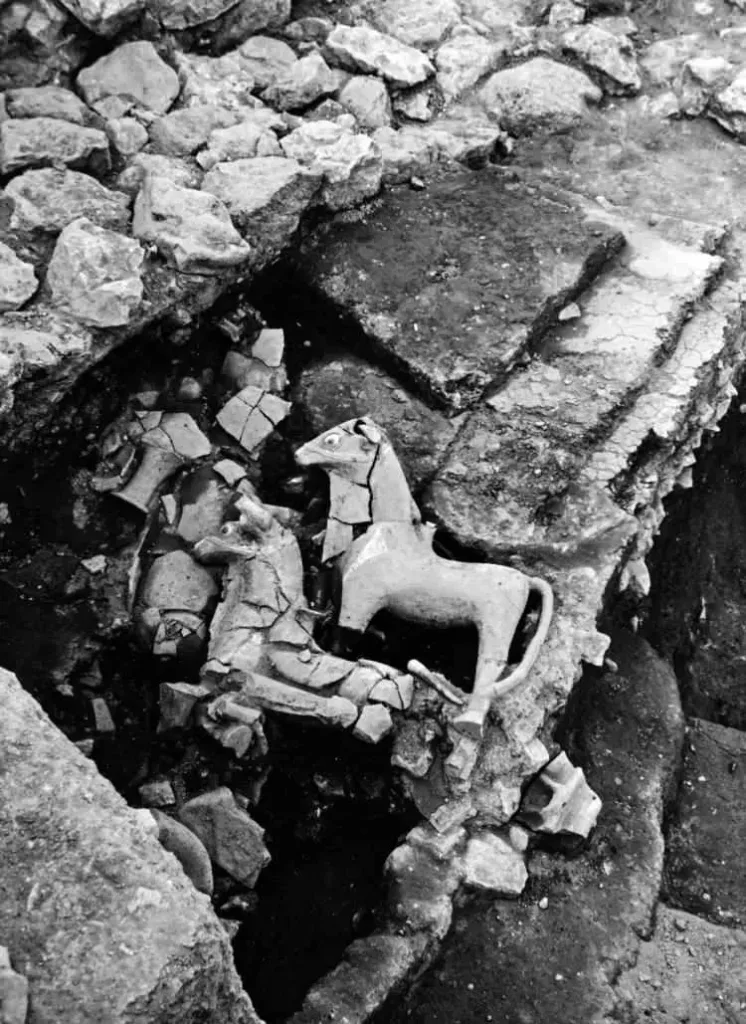
An enclosure wall stretching more than eight kilometres surrounded the city, while additional defensive walls separated important urban districts. In the Upper City, the fortifications included a double-wall system, more than 100 towers and several monumental gateways. The scale of these structures reveals the considerable resources that the Hittite rulers devoted to protecting their capital.
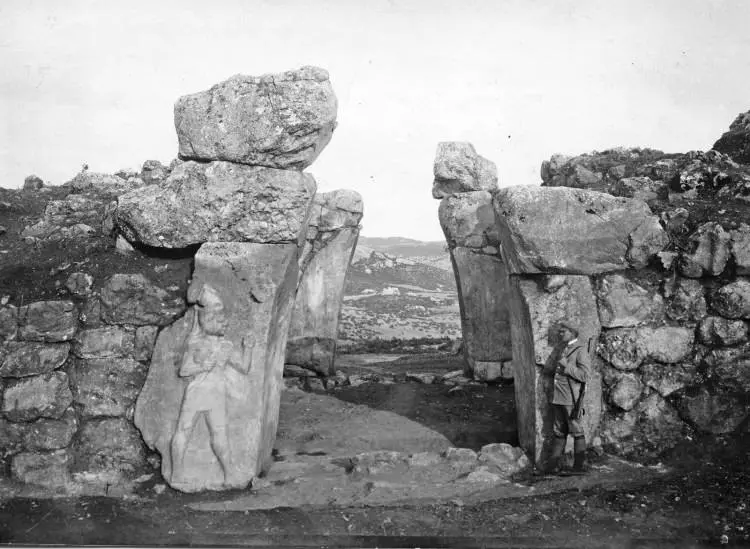
The city’s gateways combined military engineering with elaborate stone sculpture. At the Lion’s Gate, imposing lion figures flank the entrance, while the King’s Gate features a carved armed figure traditionally interpreted as a warrior deity. These sculptures were integral elements of the architecture, transforming defensive entrances into imposing displays of royal authority and religious symbolism.
Perhaps the most technically ambitious entrance was the Sphinx Gate, which crowned an enormous artificial bastion at the southern end of the Upper City. Stone-faced slopes supported the elevated structure, while stairways provided access to the gateway above. Beneath the bastion, builders constructed a stone-vaulted passage that allowed movement through the defensive complex without passing through the monumental entrance itself.
Temples, Storehouses and Sacred Architecture
Hattusa was more than a fortified royal residence. Its archaeological remains reveal an urban centre that accommodated religious institutions, administrative functions, storage facilities and residential neighbourhoods. The distinction between its Lower and Upper Cities reflected different phases of development and the distribution of important buildings across the settlement.
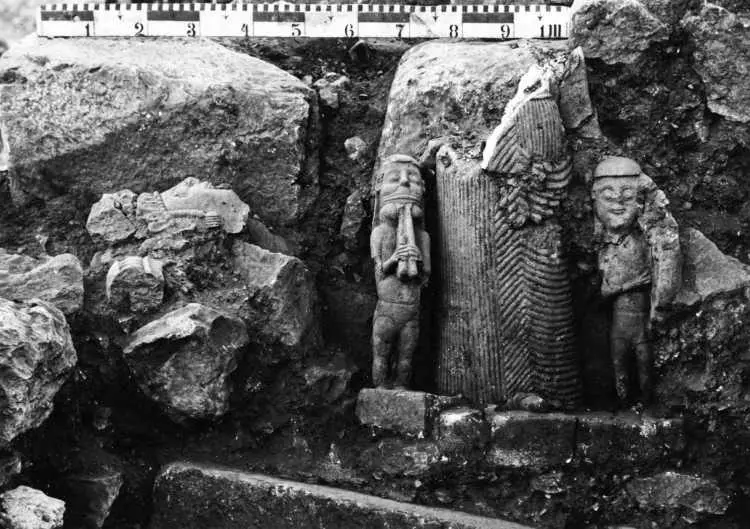
The Great Temple in the Lower City remains one of the most impressive architectural complexes at Hattusa. Dating to the 13th century BCE, the sanctuary contained a central temple building surrounded by courtyards and numerous rooms. Large storage facilities formed part of the complex, demonstrating that the temple served economic and administrative purposes alongside religious ceremonies.
The temple’s architecture also reveals the construction methods of Hittite builders. Massive stone foundations supported walls that originally incorporated mudbrick and timber, materials that have largely disappeared over the centuries. Although much of the superstructure no longer survives, the remaining foundations allow archaeologists to reconstruct the organisation and scale of the complex.
Religious architecture also dominated parts of the Upper City, where researchers identified numerous temple structures. Their distribution demonstrates the importance of divine worship in a capital whose rulers maintained relationships with a large pantheon of gods and goddesses.
The Royal Citadel and the Organisation of Power
The royal citadel at Büyükkale occupied a prominent rocky elevation overlooking parts of the ancient settlement. Its strategic position offered natural protection while separating the royal administrative centre from other urban districts. Archaeological investigations have identified building complexes, courtyards and architectural remains associated with the political administration of the Hittite state.
The separation of royal, religious and residential spaces reflects a sophisticated approach to urban organisation. Hattusa developed as a political capital whose architecture supported the practical demands of governing an empire extending across much of Anatolia and into northern Syria.
Another important monument stands at Nişantepe, where a long inscription in Hittite hieroglyphs survives on the rock face. This inscription illustrates the relationship between monumental architecture, royal communication and the written expression of political authority.
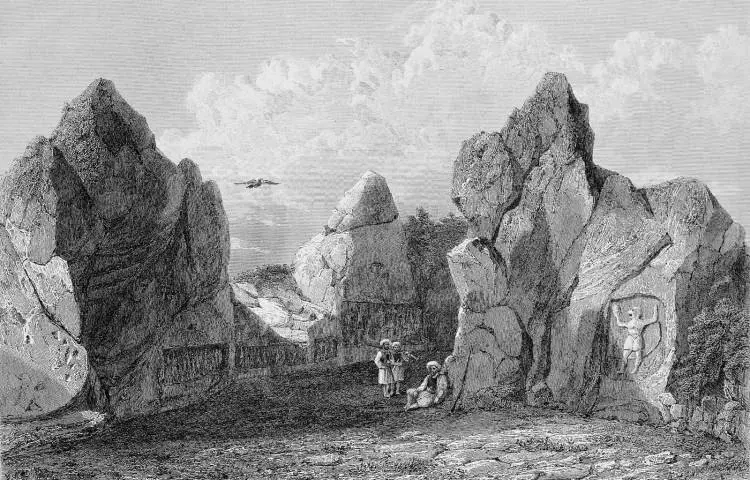
A historic engraving of the Yazılıkaya rock sanctuary near Hattusa, showing its towering natural rock formations and carved Hittite reliefs. Credit: Historical illustration – Hattusa Excavation Directorate / German Archaeological Institute
Yazılıkaya and the Sacred Landscape
Just outside the main settlement lies Yazılıkaya, a rock sanctuary that preserves some of the finest surviving examples of Hittite relief sculpture. Its natural rock chambers contain processions of deities carved directly into the stone, including figures associated with the Hittite religious pantheon.
Unlike the monumental structures within the city, Yazılıkaya incorporated natural rock formations into its sacred architecture. The arrangement of the chambers and carved figures created a ceremonial environment that connected religious imagery with the surrounding landscape.
The sanctuary’s sculptural programme provides valuable evidence about Hittite religious beliefs and artistic conventions. Together with the temples and ceremonial gateways of Hattusa, it demonstrates the prominent place of religion in the architecture of the imperial capital.
Preserving 120 Years of Archaeological History
The photographs shared during the anniversary celebrations belong to a wider effort to preserve the visual record of excavations at Hattusa. Earlier in 2026, Hitit University organised an exhibition titled 120 Years of Visual Memory of the Hattusa Excavations: 1906–2026, presenting 60 photographs selected from the archives of the German Archaeological Institute in Istanbul and the Boğazköy-Hattusa excavation directorate.
Hattusa joined the UNESCO World Heritage List in 1986 in recognition of its exceptional urban organisation, monumental buildings, fortifications and artistic heritage. Forty years later, the historical photographs offer a complementary perspective on that significance, documenting the scientific investigations that enabled archaeologists to understand the ancient city.
