
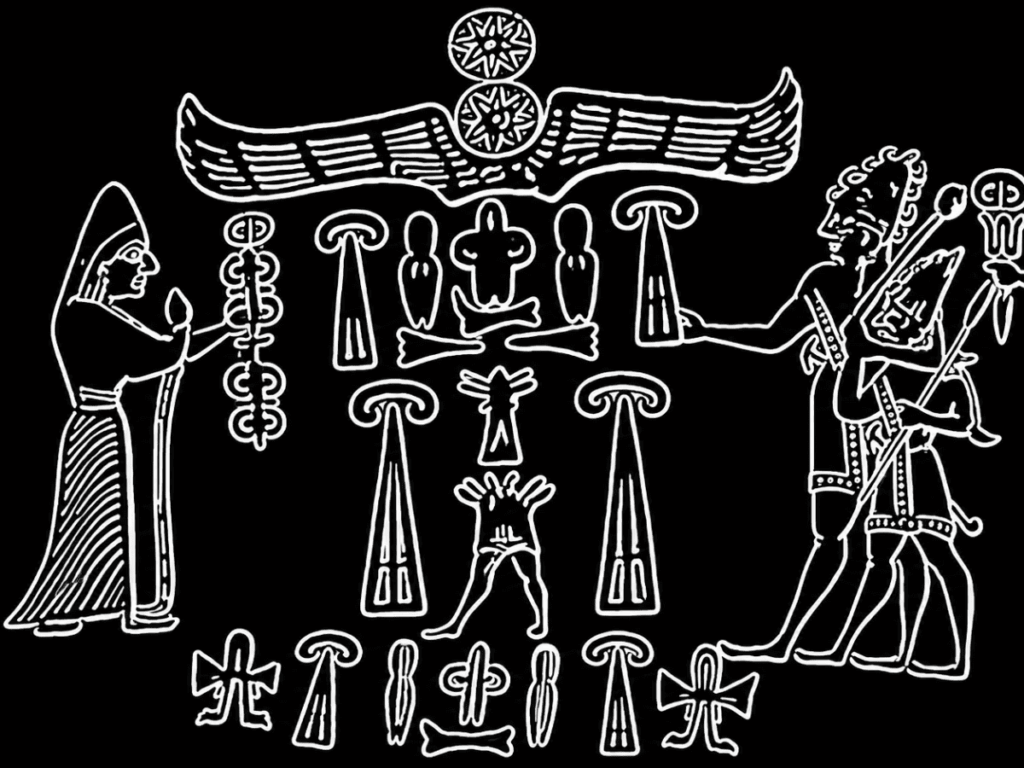
More than 3,200 years ago, a royal marriage in the eastern Mediterranean ended so badly that it required an imperial decree, a viceroy’s ruling, negotiations between kingdoms, clauses about dowry, and even rules about who could inherit the throne.
The case centers on a princess of Amurru, a small but strategically important Levantine kingdom, who married Ammistamru II, king of Ugarit one of the great commercial cities of the Late Bronze Age. When the marriage ended, it wasn’t a local family court that settled it, but the Hittite imperial system, which is exactly why historians often call this one of the earliest known international divorces.
A royal divorce written in cuneiform
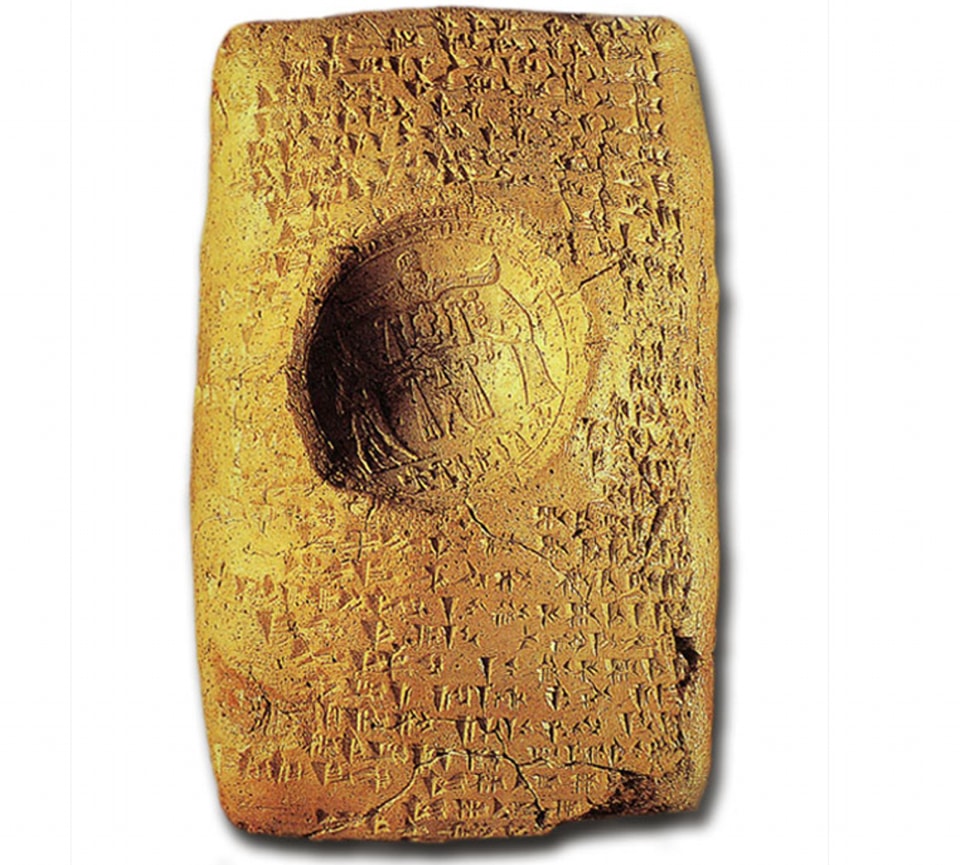
The divorce was recorded on cuneiform tablets from Ugarit, the ancient city at Ras Shamra on the Syrian coast. One of the key texts is a decree issued in the name of Tudhaliya IV, Great King of Hatti. It states that Ammistamru II had married the daughter of Bentešina, king of Amurru, but later divorced her after accusing her of wrongdoing.
The text does not preserve the woman’s personal voice. In fact, her name is not clearly given in the main dossier. She appears through titles and relationships: daughter of Bentešina, daughter of the “Great Lady,” wife of the king of Ugarit, mother of the heir, sister of the king of Amurru.
That absence is revealing. The tablet is not interested in private emotion. It is interested in power.
The decree allowed the princess to take away what she had brought with her from Amurru, but it also separated her from property and status acquired in Ugarit. It dealt with the position of her son Utri-Šarruma, the crown prince of Ugarit, and warned that if he chose to follow his mother back to Amurru, he would lose his right to succeed his father.
Who was the Amurru princess?
The princess belonged to one of the most sensitive dynastic networks of the Late Bronze Age. Her father, Bentešina, ruled Amurru, a kingdom whose location made it valuable and dangerous. Amurru lay between larger powers and had long been caught in the rivalries of Egypt, Mitanni, and the Hittite Empire.
Her mother is usually identified with the Hittite royal line. That meant the princess was not only an Amurru royal woman. She carried Hittite prestige inside the court of Ugarit.
This is what made the divorce explosive. Ammistamru was not rejecting an ordinary wife. He was removing a woman who linked three royal houses: Ugarit, Amurru, and Hatti.
Marriage in this world was diplomacy in human form. A princess could seal peace, stabilize a vassal kingdom, or bind a frontier ruler to an empire. Her body, children, dowry, and title all carried political meaning.
When the marriage collapsed, the alliance did not simply disappear. It had to be legally dismantled.
Why the Hittites became involved
The Hittite Empire was one of the major powers of the Late Bronze Age. From its capital at Hattusa in central Anatolia, it controlled a wide network of vassal kingdoms across Anatolia and northern Syria. Ugarit and Amurru both operated within that imperial world.
This made the divorce a matter of imperial management. Anger Amurru, and two important Hittite vassals could be pushed into conflict. Protect the princess too strongly, and Amurru could challenge the authority of Ugarit and the Hittite king. And if the woman’s son stayed politically tied to her, Ugarit’s succession could become unstable.
The Hittite court therefore stepped in.
Tudhaliya IV’s decree did more than approve the end of the marriage. It defined what the princess could take, what she had to leave, what her son could do, and what would happen if she later tried to return to political life in Ugarit.
The document reads almost coldly. But behind its legal language is a fierce struggle over lineage, legitimacy, and control.
Ugarit: a city where law, trade, and scandal met
Ugarit was not a provincial backwater. It was a wealthy port city connected to Egypt, Cyprus, Anatolia, Mesopotamia, and the Aegean. Its archives preserve thousands of tablets in several languages and writing systems, including Akkadian cuneiform and Ugarit’s own alphabetic cuneiform script.
Ships, merchants, diplomats, scribes, metals, timber, textiles, luxury goods, myths, rituals, and royal letters all passed through Ugarit. It was exactly the kind of place where a family dispute could become an international file.
Ammistamru II ruled in a world where the palace was both household and state. His marriage to the Amurru princess linked him to another royal court. Their son’s place in the succession made the matter even more delicate.
The decree’s concern with Utri-Šarruma shows how carefully the Hittite authorities tried to prevent the divorce from threatening the next generation. The son could remain heir, but only if he stayed within his father’s political orbit. If he followed his mother, he would lose the throne.
In that single clause, family loyalty and royal succession collide.
From divorced queen to political threat
The story did not end with the first decree. Later texts show that the affair continued. The princess returned to Amurru, but Ammistamru later pressed for her extradition. Her brother Šaušga-muwa, king of Amurru, resisted at first. The conflict produced further verdicts and accords.
The language of those later documents is harsher. The woman is increasingly described not as a royal mediator between houses, but as a danger, a wrongdoer, and finally almost as a transferable object between kings.
This is the darkest part of the case. A woman who had once embodied alliance was stripped of that political role. The same dynastic logic that made her valuable in marriage made her vulnerable after divorce.
The texts suggest that she was eventually handed back to Ammistamru and killed. The exact circumstances remain debated, but the surviving dossier makes clear that her fate was no longer treated as a private matter. It became a problem to be solved by kings.
What the first international divorce tells us
The divorce of Ammistamru II and the Amurru princess is not important because it resembles modern divorce. It does not.
It is important because it shows how marriage, law, gender, diplomacy, and empire were tied together in the Late Bronze Age. A royal woman could be central to the balance between kingdoms, yet the documents that record her life could erase her personal name. A dowry could be both family property and diplomatic capital. A son’s loyalty to his mother could threaten the succession of a kingdom.
The case also reveals the bureaucratic sophistication of the Hittite world. The Great King did not merely command armies. He regulated vassal disputes, issued legal decisions, managed royal marriages, and tried to prevent political damage from spreading across the imperial network.
Seen this way, the so-called world’s oldest international divorce is not just a scandal from Ugarit. It is a rare window into how Bronze Age states managed the human cost of diplomacy.
A marriage had joined kingdoms. A divorce showed how fragile those kingdoms could be.
C. N. Thomas, 2019, “Gender and Politics at Ugarit: The Undoing of the Daughter of the Great Lady,” Journal of the American Oriental Society 139/2, Journal of the American Oriental Society. https://doi.org/10.7817/JAMERORIESOCI.139.2.0287
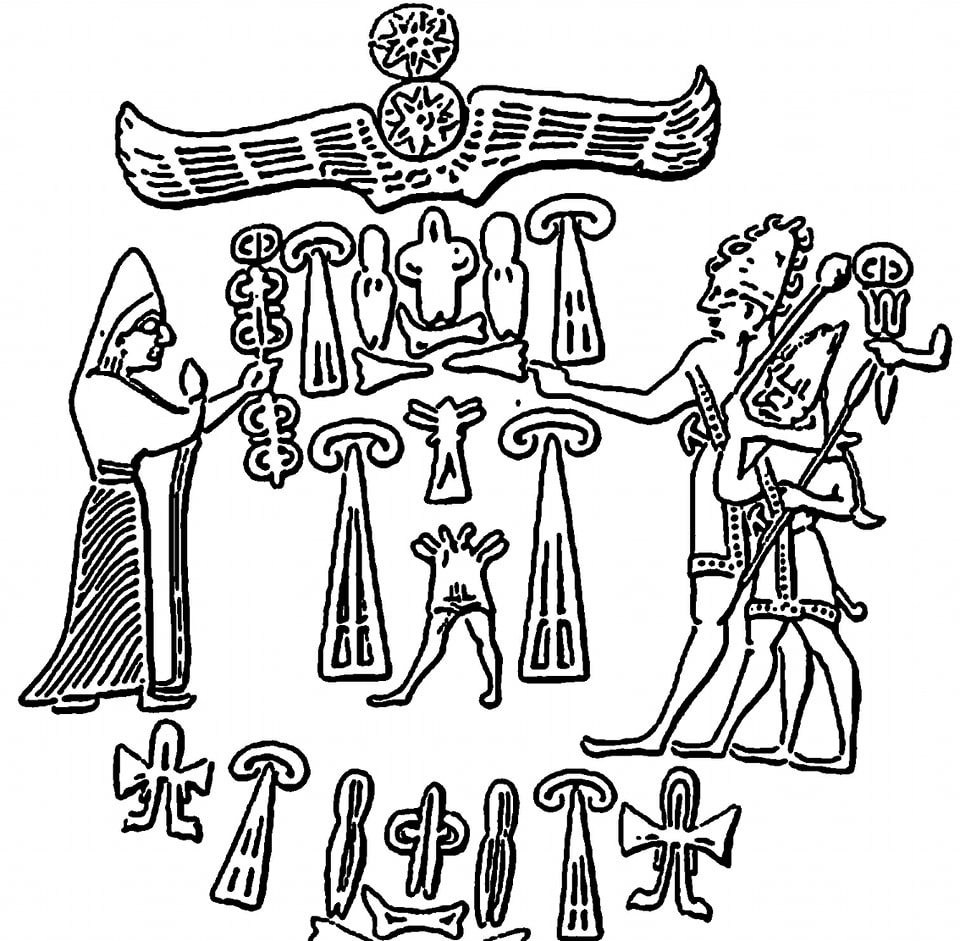
Cover Image credit: A black-background rendering of the central motif from a Hittite seal impression. Damascus National Museum.
