
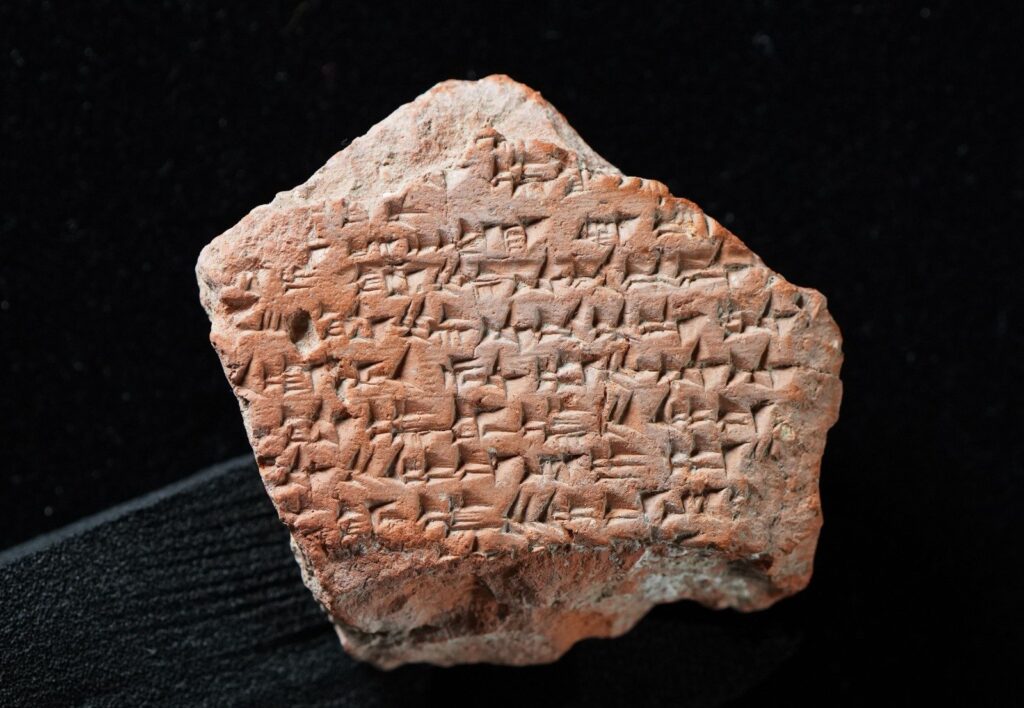
A 3,200-year-old fragment of the Kadesh Peace Treaty has been identified at the ancient Hittite capital of Hattusha in Türkiye. The cuneiform tablet preserves provisions concerning people fleeing between Egypt and the Hittite Empire, including references to protecting their homes from destruction. The discovery was announced on September 21, the International Day of Peace.
More than three millennia ago, two of the ancient world’s greatest powers reached an agreement intended to end their long-standing rivalry. Now, archaeologists working in central Türkiye have identified another surviving piece of that agreement, adding to the physical record of one of history’s most important diplomatic documents.
The fragment was unearthed at Büyükkale, the royal citadel of Hattusha, in present-day Çorum province. Scientific examinations confirmed that it belongs to an Akkadian cuneiform copy of the Kadesh Peace Treaty, concluded between Hittite King Hattusili III and Egyptian Pharaoh Ramesses II.
Türkiye’s Minister of Culture and Tourism, Mehmet Nuri Ersoy, announced the identification on September 21, 2026. The discovery is particularly notable for the section of the treaty preserved on the tablet: provisions governing the treatment of people who fled from one kingdom to the other.
Ancient Rules for People Fleeing Between Kingdoms
The tablet was discovered near Building E in Büyükkale, an area associated with the Hittite royal palace. Only one face of the fragment survives, and researchers spent approximately a year examining its inscriptions before establishing its connection to the treaty.
According to Türkiye’s Ministry of Culture and Tourism, the surviving lines correspond to provisions addressed in Articles 12–20 of the agreement. They concern people who fled from Egypt to Hatti or from Hatti to Egypt, including how the two kingdoms were expected to handle their return.
Among the readable passages are references to the destruction of people’s homes. The tablet is incomplete, however, and the ministry has not yet released a full scholarly transcription or translation of the newly identified fragment.
The broader treaty provides essential context for understanding these passages. Its provisions established reciprocal obligations to return fugitives, while certain clauses prohibited punishment and harm to the returned individuals and their families.
These were diplomatic obligations negotiated between two ancient rulers, rather than asylum protections comparable to modern refugee law. Nevertheless, the fragment offers a rare glimpse into how the Hittite and Egyptian kingdoms sought to regulate the movement and treatment of people across their borders.
How the Kadesh Peace Treaty Ended a Rivalry Between Two Empires
The treaty emerged from decades of competition between Egypt and the Hittite Empire for control and influence in the eastern Mediterranean, particularly the territories of modern-day Syria.
Around 1274 BC, the armies of Ramesses II and Hittite King Muwatalli II fought near Kadesh. Neither side achieved a decisive victory, and the struggle for regional influence continued after the battle.
Approximately 15 years later, Ramesses II and Muwatalli’s successor, Hattusili III, concluded a formal peace agreement. Dated to around 1259 BC, the treaty established peaceful relations, mutual assistance, and obligations concerning fugitives and their return.
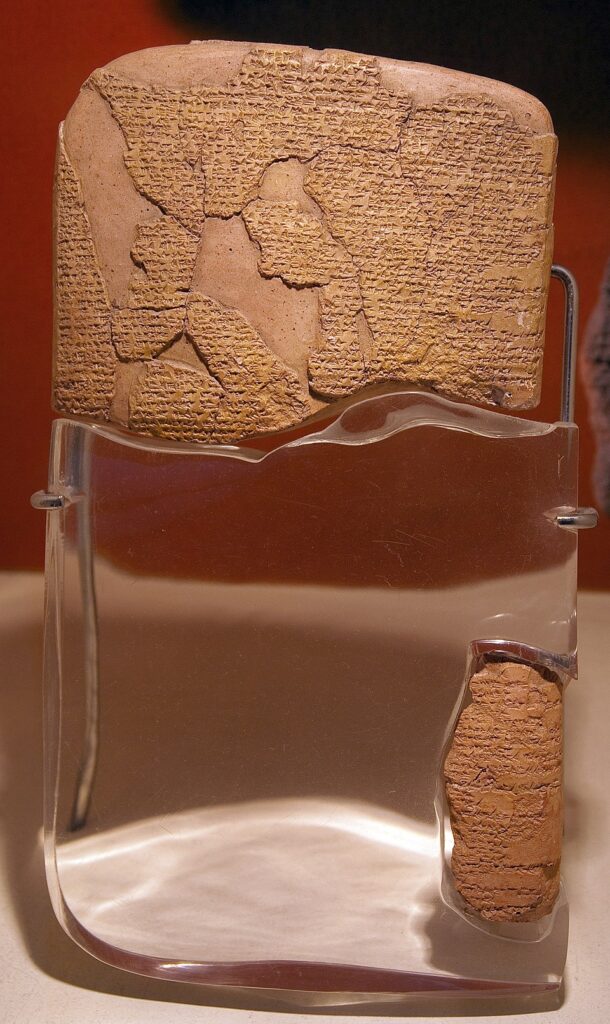
The original diplomatic documents were recorded on silver tablets, which have not survived. Fortunately, copies of the agreement were preserved in different forms: Egyptian hieroglyphic inscriptions on temple walls and Akkadian cuneiform tablets in Hattusha.
The first clay tablet fragments were recovered at the Hittite capital during excavations between 1906 and 1912. Other surviving pieces are now held in the Istanbul Archaeological Museums, the Museum of Anatolian Civilizations in Ankara, Berlin’s Museum of the Ancient Near East, and the State Hermitage Museum in St. Petersburg.
An Ancient Message Announced on World Peace Day
The timing of the announcement gave the discovery additional significance. Minister Ersoy presented the findings on September 21, the International Day of Peace, drawing attention to the treaty’s references to protecting people’s homes.
He also connected the ancient agreement with contemporary concerns about human life and dignity, expressing hope for a future in which all people, particularly Palestinians, could live in safety and peace.
Hattusha, a UNESCO World Heritage Site, has yielded thousands of cuneiform documents that illuminate the political, religious, and everyday life of the Hittite Empire. Its Boğazköy tablet archives, which include copies of the Kadesh Treaty, were also inscribed on UNESCO’s Memory of the World Register in 2001.
The newly identified fragment adds another piece to this extraordinary documentary record. Researchers hope that continued excavations at Büyükkale will reveal further missing sections, helping them reconstruct more of the treaty’s surviving Akkadian copies.
For now, the discovery offers a tangible connection to an agreement concluded more than three millennia ago, when two rival empires sought not only to establish peace between their rulers but also to determine the fate of people who crossed their borders.
