
12 February 2026 The Future is the Product of the Past

The Oldest Known Carvel-Built Shipwreck in the Nordic Region Found

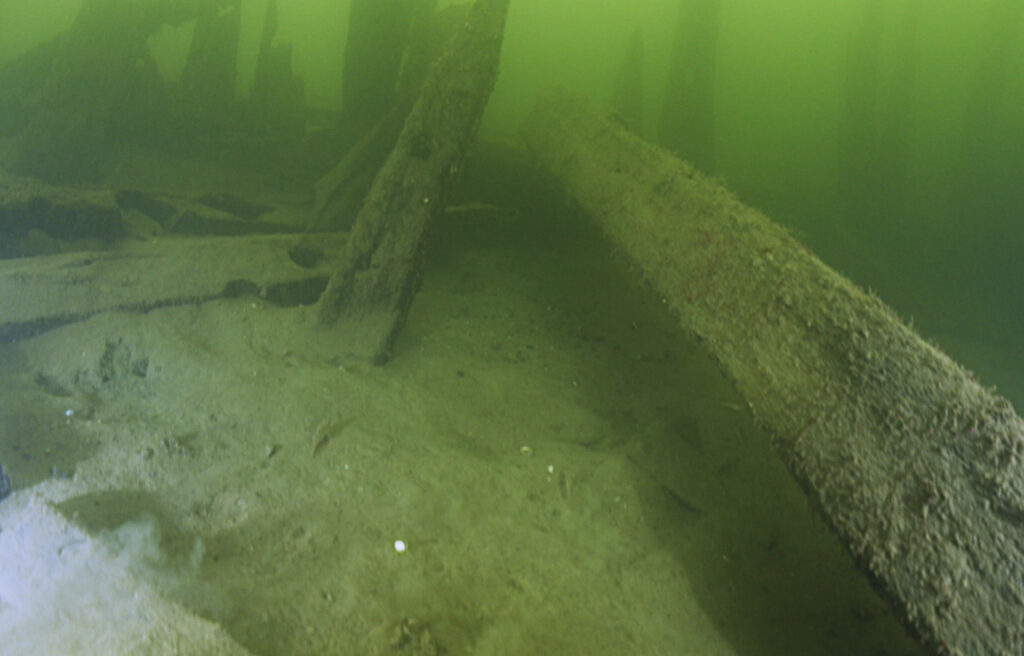
Maritime archaeologists from the Museum of Wrecks (Vrak) in Stockholm have made a groundbreaking discovery off the coast of Sweden: a shipwreck that may be the oldest confirmed carvel-built ship in the Nordic region. Located beneath the waters of Landfjärden, south of Stockholm, this remarkable find, known as Wreck 5, is believed to date back to the 1480s, with some estimates suggesting it could have been constructed as early as the 1460s.

Håkan Altrock, the museum curator and project leader, highlighted the significance of this discovery, stating, “This ship represents a fascinating link between medieval and modern shipbuilding. It has the potential to provide us with valuable new insights into an important period in Sweden’s maritime history.” The ship measures approximately 30 meters (98 ft) in length and 7 meters (23 ft) in width, with its well-preserved condition allowing the sternpost and rudder to remain upright.

What sets Wreck 5 apart from other vessels of its time is its construction technique. Unlike traditional Nordic ships built with overlapping planks, this vessel was constructed using the carvel method, which involves laying planks edge to edge to create a smooth hull. This technique, which originated in the Mediterranean around the seventh century CE, marked a significant evolution in shipbuilding, allowing for stronger and larger vessels. Researchers believe that the emergence of carvel construction was a response to the introduction of cannons on ships in the 15th century, necessitating stronger hulls to withstand enemy fire.
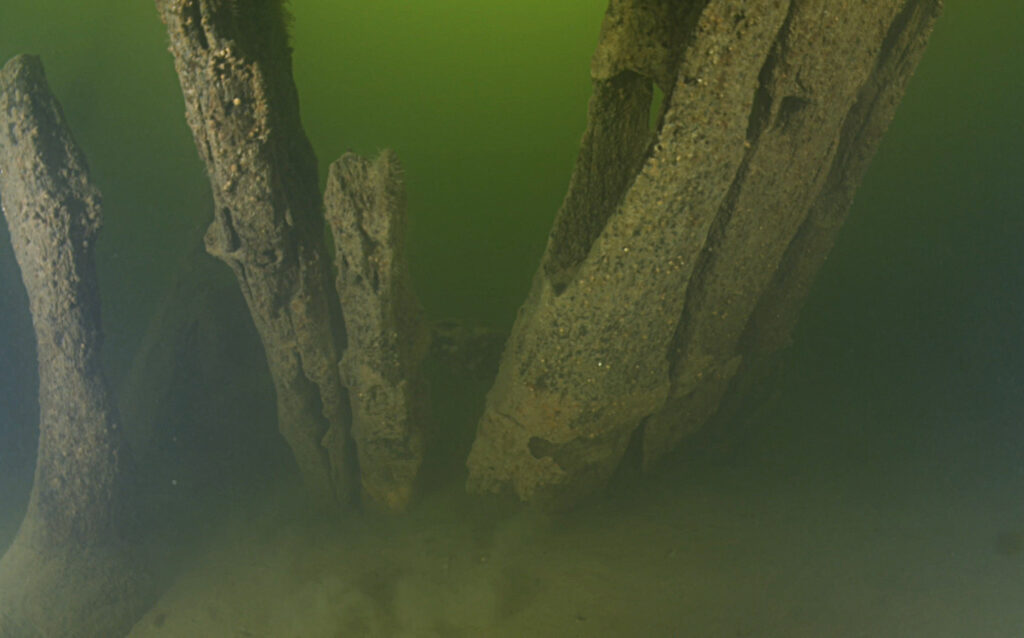
Credit: Vrak Museum of Wrecks.

Dendrochronological analysis conducted by experts from Lund University revealed that the timber used for Wreck 5 originated from either Möre in the Kalmar region or eastern Blekinge in southern Sweden. This finding aligns with historical records indicating that Swedish shipbuilding in the late 15th century was influenced by continental European techniques.

Wreck 5 is one of five known shipwrecks in the Landfjärden area, which were previously thought to be Viking ships linked to the legendary naval battle of Olaf the Holy, King of Norway. However, recent studies have shown that most of these wrecks date to the 17th and 18th centuries, making Wreck 5 the oldest among them. Initial attempts to date the wreck were inconclusive, but subsequent analyses successfully confirmed its late 15th-century origins.


📣 Our WhatsApp channel is now LIVE! Stay up-to-date with the latest news and updates, just click here to follow us on WhatsApp and never miss a thing!!


As the Vrak Museum of Wrecks continues its investigation of the maritime environment around Häringe, plans are underway to establish Wreck 5 as a separate research project. Altrock expressed enthusiasm for the future, stating, “We plan to apply for external funding for an excavation. This ship is not just a relic of the past; it is a key to understanding the evolution of shipbuilding in Sweden.”

Illustration of the remains of Wreck 5. Credit: Alexander Rauscher & Jim Hansson, Vrak Museum of Wrecks.

This discovery not only enriches our understanding of maritime history but also underscores the technological advancements that shaped naval warfare and trade in the late medieval period. As researchers delve deeper into the mysteries of Wreck 5, it promises to unveil new chapters in Sweden’s rich maritime heritage.

The Vrak Museum of Wrecks has used photogrammetry to create a digital model of Wreck 5, enabling researchers to study its structure in detail. Take a look at the wreck in digital 3D-model: Wreck 5 – 3D model.

Vrak Museum of Wrecks

Related Articles

New evidence pushes the origins of the Great Wall back by 300 years

19 February 2025

19 February 2025

Recently discovered evidence from the Changqing district of Jinan, located in East China’s Shandong Province, reveals that the origins of...

An inscription with the name of the ancient city was found at the excavation site in Gordion, the capital of the Phrygians

8 August 2022

8 August 2022

An inscription bearing the name of the ancient city was found at the excavation site in Gordion, the capital of...

Chinese Paleontologists discovered a 170-million-year-old flower

29 March 2023

29 March 2023

Chinese paleontologists discovered fossils of an ancient plant dating back approximately 170 million years. The Chinese Academy of Sciences Nanjing...

A One-of-a-Kind Roman Tomb with Bilingual Inscription: The First Monumental Discovery in Dibra, Albania

4 September 2025

4 September 2025

Archaeologists have uncovered a monumental Roman-era tomb in Strikçan, near Bulqiza, in northern Albania’s historic Dibra region, approximately 90 kilometers...

Denisovans or Homo Sapiens: Who Were the First to Settle Permanently on the Tibetan Plateau?

8 December 2021

8 December 2021

The Tibetan Plateau has long been considered one of the last places to be populated by people in their migration...

Pharaonic Hieroglyphic Inscription of Ramses III Found in Southern Jordan

20 April 2025

20 April 2025

In a remarkable archaeological breakthrough, a hieroglyphic inscription bearing the royal cartouche of Pharaoh Ramses III (1186–1155 BC) has been...

Researcher Says There is Similarity Between Mayan and Shu Cultures

12 April 2021

12 April 2021

The similarities between Mayan civilization and Shu culture draw the attention of researchers. As it is known, the Sanxingdui ruins,...

The Highest Prehistoric Petroglyphs in Europe Discovered at 3000 Meters in the Italian Alps

20 November 2024

20 November 2024

The highest petroglyphs in Europe were found at Pizzo Tresero (Valfurva) in the Stelvio National Park in the northern Italian...

More than 50 pairs of tweezers found during an excavation of a 2,000-year-old Roman settlement – Romans to blame for no-body-hair trend

31 May 2023

31 May 2023

More than 50 pairs of tweezers were found during the major excavation in Wroxeter City, Shropshire, one of the largest...

Drought accelerated Hittite Empire’s collapse

9 February 2023

9 February 2023

Researchers have offered new insight into the abrupt collapse of the  Hittite Empire in the Late Bronze Age, with an...

7500-year-old idol of Goddess Asherah located in Israel

22 May 2022

22 May 2022

Archaeologists excavating an ancient cemetery in Israel have discovered an idol they believe belongs to the goddess Ashera at a...

Spectacular ancient mosaic found in Paphos, Cyprus

21 July 2021

21 July 2021

During the excavations carried out on Fabrika Hill in Kato Paphos, Cyprus, an ancient mosaic floor belonging to the Hellenistic...

2nd-Century BC Thracian Warrior with Ceremonial Wreath Discovered

3 August 2025

3 August 2025

Archaeologists Uncover Richly Furnished Grave of Thracian Warrior with Horse, Weapons, and Gold-Gilded Ornaments in Southern Bulgaria A new archaeological...

A surprising discovery in Lublin countryside! Ancient figurines of Egyptian and Roman gods found

6 May 2023

6 May 2023

Two ancient figurines depicting the Egyptian god Osiris and a bust of the Roman god Bacchus were found in the...

Archaeologists discover 1200-year-old Wari temple complex in Peru

24 February 2023

24 February 2023

Archaeologists from the University of Illinois Chicago have uncovered a temple complex constructed by the Wari Empire 1,200 years ago...