
6 December 2025 The Future is the Product of the Past

Prehistoric Masterpiece Discovered in Northern Sweden: White Quartzite Arrowhead

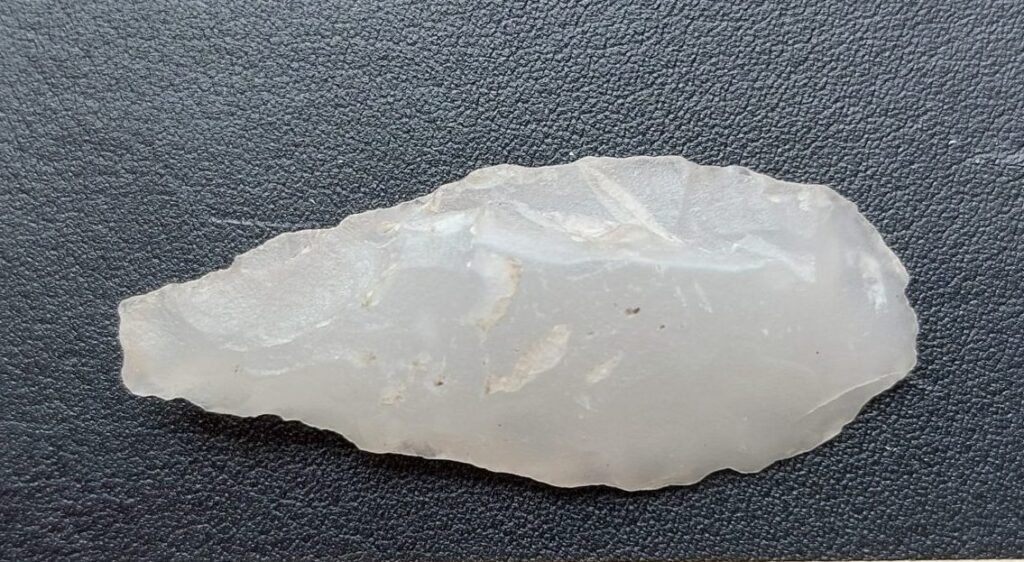
A bifacially crafted arrowhead made of white quartzite has become the most remarkable discovery at an archaeological excavation in northern Sweden. Unearthed at the Hedkammen ridge, just south of Bureå, this rare artifact reveals exceptional skill and craftsmanship, pointing to advanced prehistoric technology and long-distance material exchange networks over 2,500 years ago.

A Unique Artifact in the North

The arrowhead is not only finely made but also carved from white quartzite, a material rarely used for such tools in this region. Its symmetrical form, sharp edges, and bifacial pressure-flaking technique suggest it was not just a utilitarian object, but potentially a high-status item or used in ceremonial contexts. Given the precision required to shape quartzite, the find showcases the technological capabilities of prehistoric communities in northern Scandinavia during the Late Bronze Age or Early Iron Age.

“This is prehistoric craftsmanship at its finest,” says Olof Östlund of Skellefteå Museum, who is documenting the excavation.
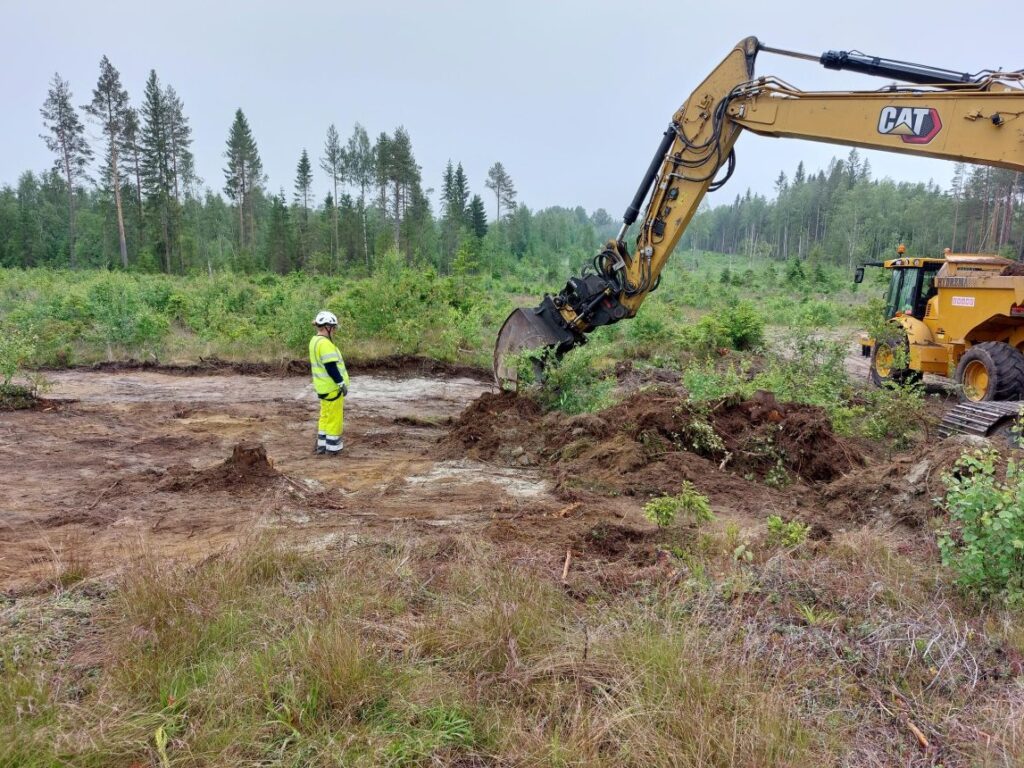
Clearing with an excavator supervised by Anna Lindström. Credit: Arkeologerna

Large-Scale Excavation Reveals Over 300 Features

The arrowhead is part of a broader excavation project at Hedkammen, where archaeologists have cleared 16,000 square meters across two main areas on either side of the ridge. So far, the team has registered about 300 archaeological features, including:

Hearths


📣 Our WhatsApp channel is now LIVE! Stay up-to-date with the latest news and updates, just click here to follow us on WhatsApp and never miss a thing!!


Cooking pits

Fire-cracked stone clusters

Red-burnt sand features

Stone alignments likely linked to ancient boat landings or storage structures

Many of these features are located near natural harbors that were likely in use around 500 BCE, reinforcing the idea of Hedkammen as a coastal activity center during prehistoric times.
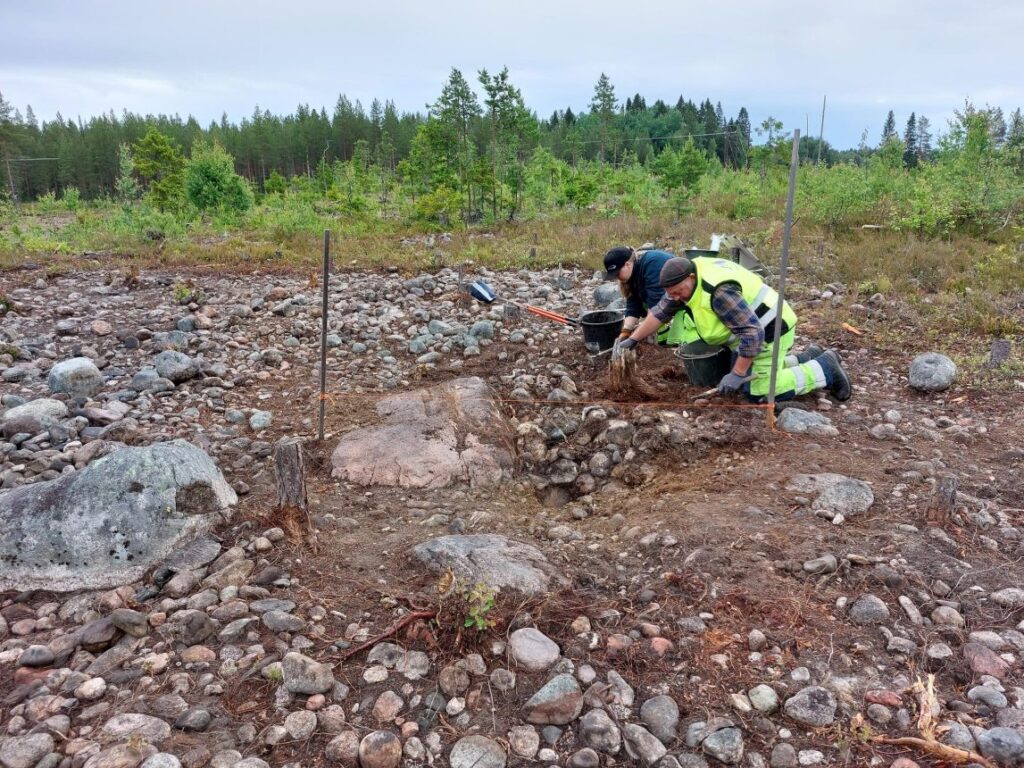
Arwo Pajusi and Josefin Matala are examining one of the stone settings. Credit: Arkeologerna

Traces of Life from 500 BCE to the Middle Ages

The excavation has revealed signs of continuous human presence from around 500 BCE to the late medieval period. Alongside the arrowhead, archaeologists have uncovered:

Burnt bones

Asbestos-tempered and mica-tempered ceramics

Stone tools and flakes in quartz, quartzite, flint, and slate

Flint scraper tools—rare in the region

One flint flake shows a polished surface, suggesting it may have originated from a reworked axe, possibly imported from Denmark, as previous chemical studies of similar flint tools in northern Västerbotten have shown. This points to trade or contact routes between Scandinavia’s southern and northern regions during the prehistoric era.

In addition, archaeologists discovered foundation stones (syllstenar) once used for timber buildings, possibly from a later settlement phase, adding another layer to the site’s historical significance.
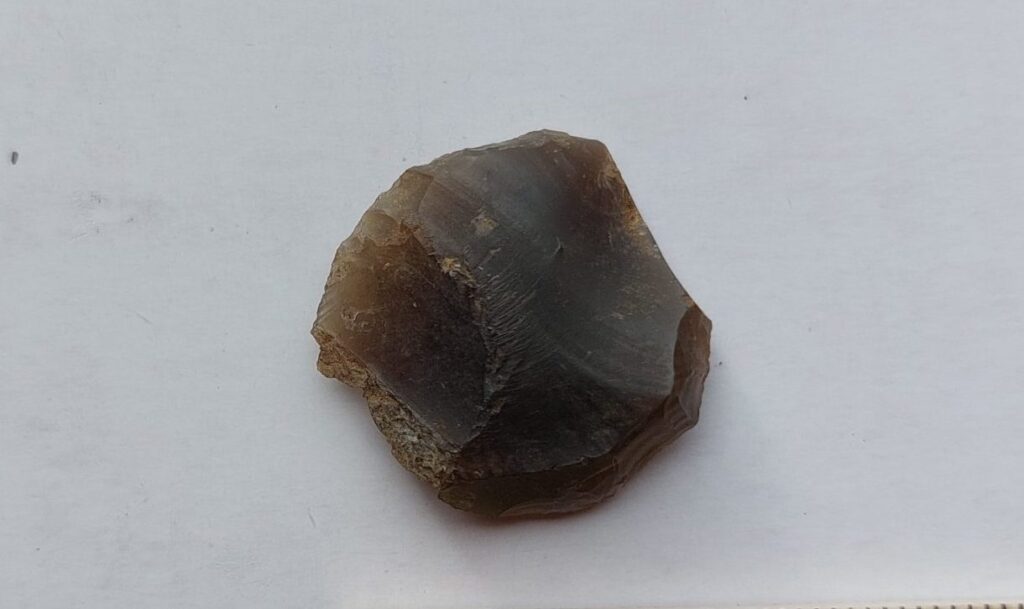
Flint scraper. Credit: Arkeologerna

Burial Monuments and Public Engagement

The site also contains four stone cairns (burial mounds)—two of which were previously excavated in the 1990s. Work has already begun on the remaining two, which may offer further insight into prehistoric burial practices.

To engage the public, guided tours are being held every Wednesday in July, from 1:00 PM to 2:00 PM. The first event attracted around 75 participants, demonstrating strong local interest in archaeology and cultural heritage.

Collaboration Driving Discovery

The excavation is a joint effort between Arkeologerna, Västerbottens Museum, and Skellefteå Museum. The collaboration has been praised for its smooth execution and knowledge-sharing among professionals.

“It’s incredibly valuable to learn from one another and to uncover history together,” says Östlund.

Arkeologerna

Cover Image Credit: Bifacially flaked arrowhead made of white quartzite. Arkeologerna

Related Articles

At a dig site in western Turkey, a centuries-old Byzantine fortress will be revealed

24 December 2021

24 December 2021

Excavation of vast Byzantine-era fortifications considered to be about 900 years old has begun at a dig site in western...

Excavation of the Temple of Athena Began in the Ancient City of Aigai

15 October 2021

15 October 2021

The foundations of the Temple of Athena were unearthed during the ongoing excavations in the ancient city of Aigai, located...

Outstanding Bronze Age artifacts discovered in the Auvergne-Rhône-Alpes region of France

23 August 2021

23 August 2021

Hundreds of bronze objects have been discovered buried in pottery in the Auvergne-Rhône-Alpes region of France. The research team, led...

Ceremonial cave site from Postclassic Maya period discovered in Yucatán Peninsula

21 December 2021

21 December 2021

Archaeologists have discovered a ceremonial cave site in Chemuyil on the Yucatán Peninsula, Mexico, that dates from the Postclassic Maya...

Researchers extract ancient DNA from a 2,900-year-old clay brick

6 September 2023

6 September 2023

Researchers have successfully extracted ancient DNA from a 2,900-year-old clay brick, uncovering a wealth of information about the plant life...

Buried Secrets: How a Roman Sailor’s Gravestone Resurfaced in a New Orleans Yard

9 October 2025

9 October 2025

A routine yard cleanup in New Orleans turned into an international archaeological mystery when a homeowner uncovered a 2nd-century Roman...

Homo Bodoensis may be the ancestor of modern humans

28 October 2021

28 October 2021

Although modern humans are the only surviving human lineages, their kinship with other human species that roamed the world is...

Iron Age stone altar and gold-plated ceremonial sword discovered in Kazakhstan

14 August 2021

14 August 2021

A stone altar and a gold-plated ceremonial sword used in the early Iron Age were discovered during excavations along the...

45,000 years ago, Neanderthals in the Swabian Jura used complex tool-making techniques

13 September 2021

13 September 2021

Findings that will change our perception of Neanderthals’ sophistication A team from the University of Tübingen have proved that Middle...

Małopolskie Region Reveals Oldest Evidence of Metal Mining in Poland, Dating Back 1,000 Years Earlier Than Previously Thought

16 February 2025

16 February 2025

Researchers have uncovered the oldest confirmed evidence of metal ore mining and metallurgy in Poland through the study of lead...

Secrets of the Ancient Walls: 1,700-Year-Old Roman Altar Unearthed at Vuçak Castle in Kosovo

19 April 2025

19 April 2025

Excavations at Vuçak Castle in the Kosovo countryside have led to a remarkable discovery: a Roman altar dating back to...

It may have been designed in Nevali Çori before Göbeklitepe was built

10 October 2021

10 October 2021

Göbeklitepe, Nevali Çori, Karahantepe, and Taştepeler, which will make us rethink what we know about human history, change the information...

Queen Kubaba: Some 4,500 years ago, a woman rose to power and reigned over one of the largest civilizations in ancient Mesopotamia

28 December 2023

28 December 2023

Is it possible to say who was the first queen in history? Given the size and diversity of human civilization,...

Rescue work begins on a 160-year-old shipwreck, the largest and best-preserved wooden shipwreck ever discovered underwater in China

3 March 2022

3 March 2022

Rescue work has begun on a 160-year-old shipwreck in China, the largest and best-preserved wooden wreck ever discovered underwater. This...

Cosmic cataclysm 1,500 years ago may have caused downfall of the Hopewell Culture

3 February 2022

3 February 2022

Researchers at the University of Cincinnati find evidence of cosmic cataclysm 1,500 years ago at 11 ancient sites in three...