
7 November 2025 The Future is the Product of the Past

Ancient Tombs and 2-Meter Sarcophagus with Hieroglyphics Unearthed Near Aga Khan Mausoleum in Aswan

A joint Egyptian-Italian archaeological team has unearthed a significant collection of ancient rock-cut tombs near the Aga Khan Mausoleum on Aswan’s West Bank, shedding new light on burial practices during the Greek and Roman periods in Egypt. The discovery, led by the Supreme Council of Antiquities and the University of Milan, includes a remarkably preserved limestone sarcophagus, hieroglyphic inscriptions, and several mummified remains—including children.

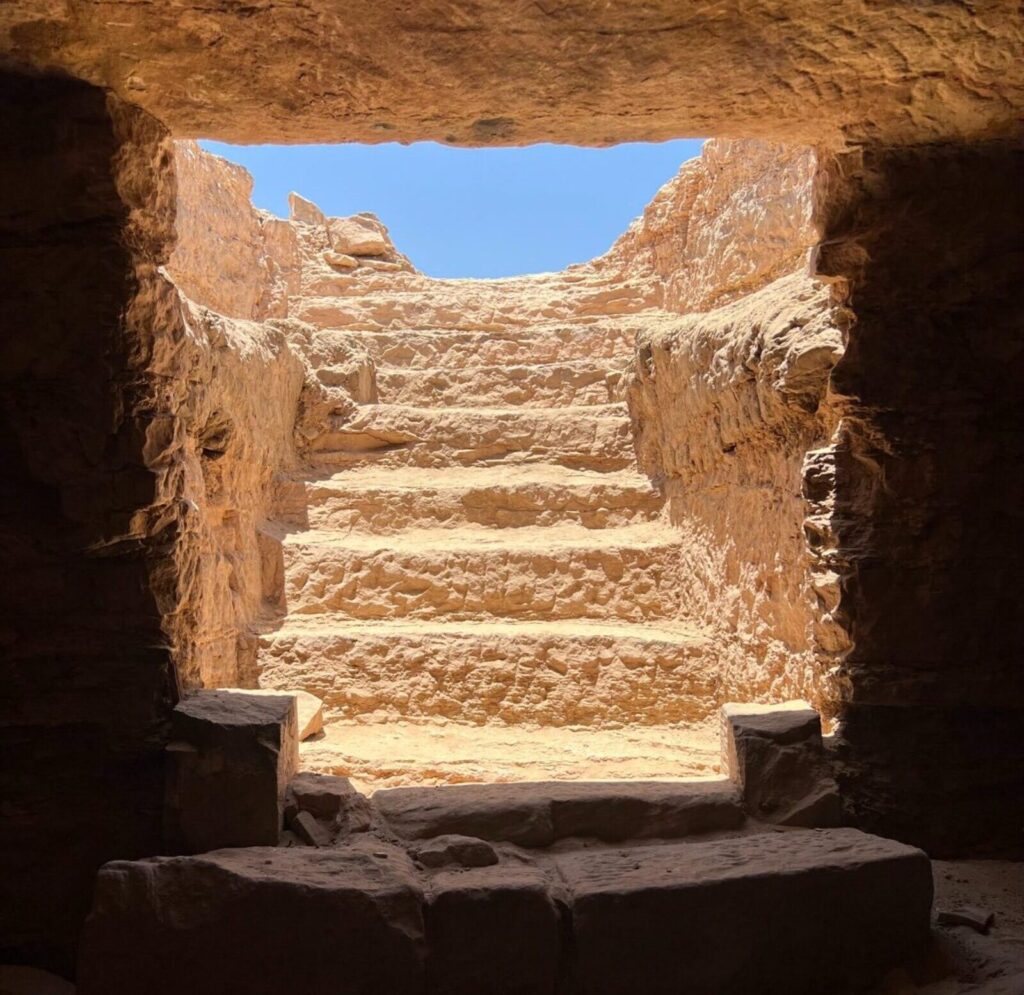
Among the most striking finds is Tomb 38, carved deep into the hillside and accessed via a nine-step staircase flanked by adobe offering platforms. Inside the chamber, archaeologists discovered a 2-meter-tall limestone sarcophagus, intricately carved with the likeness of a high-ranking official named Ka-Mesio. The sarcophagus lid features a sculpted human face adorned with a traditional Egyptian wig and fine gold decorations.

Flanking the sarcophagus are two vertical columns of well-preserved hieroglyphic inscriptions, invoking local Aswan deities and referencing Ka-Mesio’s family members. These inscriptions offer valuable insight into funerary traditions, religious beliefs, and personal commemoration practices during the Ptolemaic and Roman periods.

Excavation leader Dr. Patrizia Piacentini and Egyptologist Fahmy Amin confirmed that the tomb’s architecture—complete with rock-hewn platforms and strategic use of natural terrain—reflects the adaptation of Egyptian burial customs under foreign rule.
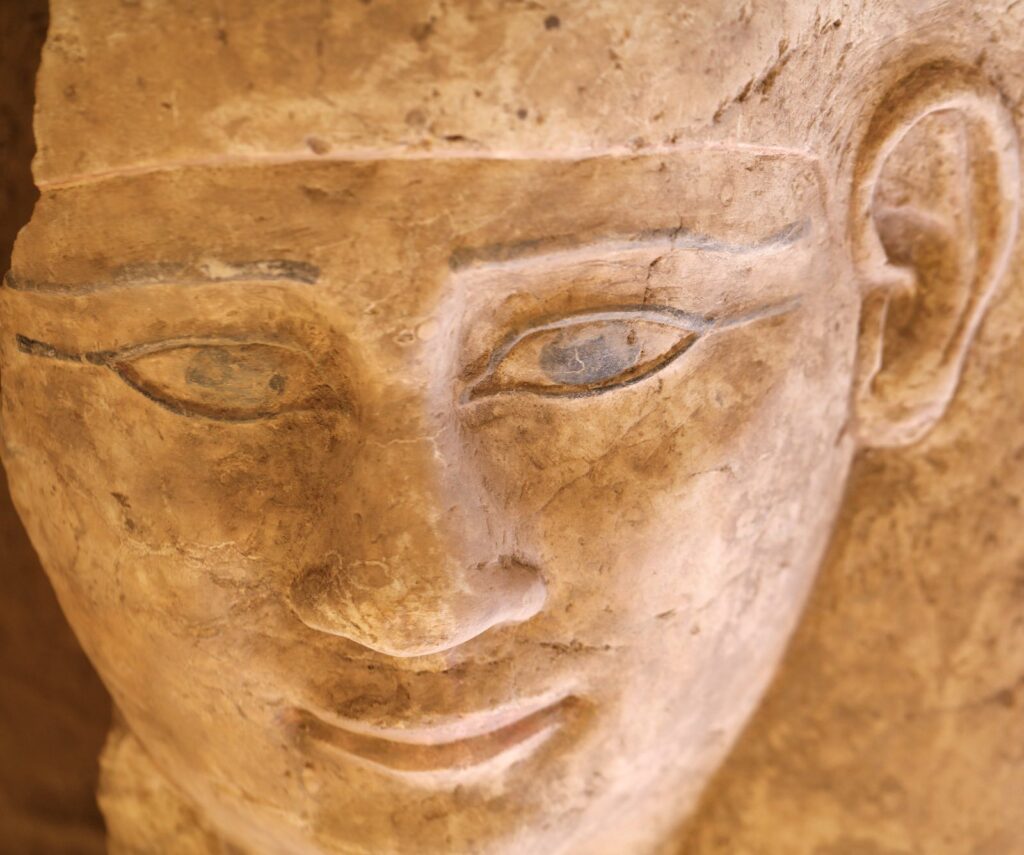
Limestone sarcophagus lid showing the idealized face of Ka-Mesio, found in Tomb 38 in Aswan’s necropolis. Credit: Ministry of Tourism and Antiquities of Egypt

In addition to Tomb 38, the team uncovered multiple burial chambers across the necropolis, revealing a stratified social landscape: affluent families were interred in elevated areas of the plateau, while middle-class tombs were constructed along the slopes. Several mummies of children were also recovered, suggesting prolonged familial use of the tombs across generations.


📣 Our WhatsApp channel is now LIVE! Stay up-to-date with the latest news and updates, just click here to follow us on WhatsApp and never miss a thing!!


“These findings enrich our understanding of the cultural diversity and continuity of ancient Egyptian civilization,” said Egypt’s Minister of Tourism and Antiquities, Sherif Fathy. “Aswan continues to be a treasure trove of archaeological heritage.”

Medical imaging and biological studies are scheduled for the coming autumn season to further analyze the mummified remains. Researchers hope to uncover information about the health, genetics, and causes of death of the individuals buried within the complex.
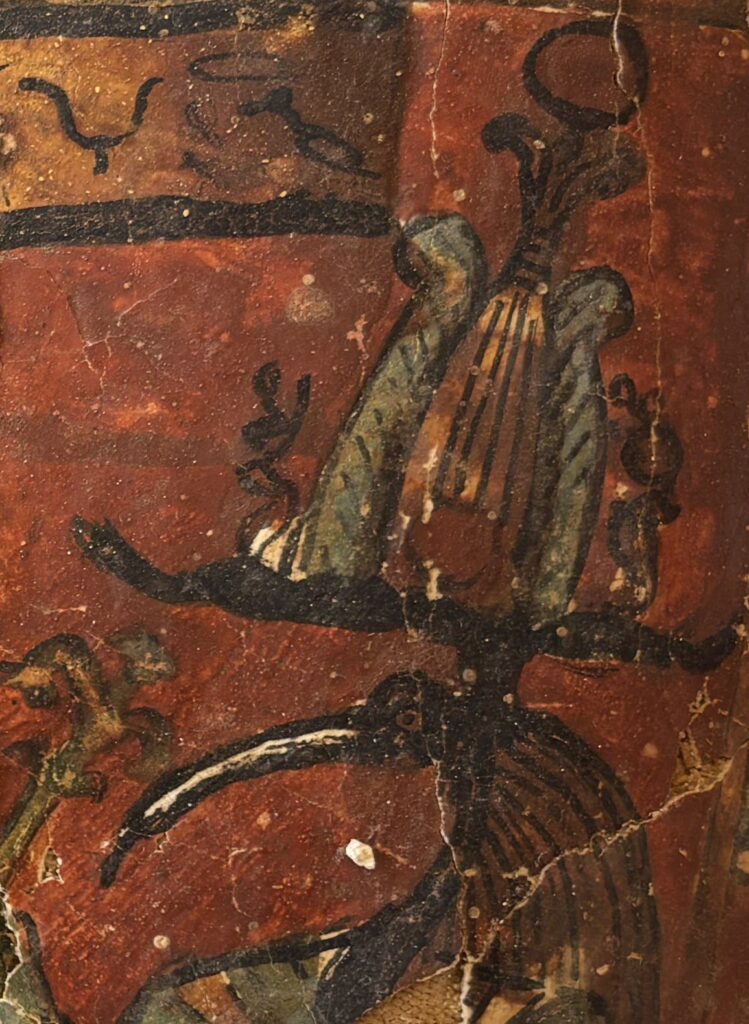
Decorative elements from Tomb 38, part of a recently uncovered rock-cut burial complex near the Aga Khan Mausoleum in Aswan.  Credit: Ministry of Tourism and Antiquities of Egypt
Decorative elements from Tomb 38, part of a recently uncovered rock-cut burial complex near the Aga Khan Mausoleum in Aswan. Credit: Ministry of Tourism and Antiquities of Egypt

Mohamed Abdel-Badie, head of Egypt’s Antiquities Sector, noted that earlier excavation seasons revealed additional tombs and funerary terraces in the nearby Sidi Osman area, characterized by unique architectural adaptations to the rocky desert terrain. Many of the tombs from the Ptolemaic period were later repurposed during the Roman occupation, a testament to the region’s enduring significance across centuries.

Since its launch in 2019, the joint archaeological mission has continued to make strides in documenting Egypt’s mortuary legacy, contributing critical knowledge to the study of ancient Mediterranean civilizations.

Ministry of Tourism and Antiquities of Egypt

Cover Image Credit: Ministry of Tourism and Antiquities of Egypt

Related Articles

Hornelund Brooches: Exquisite Viking Gold Ornaments with Norse and Christian Symbolism Unearthed in Denmark

5 August 2025

5 August 2025

The Hornelund Brooches are rare and captivating examples of Viking Age goldsmithing, discovered in southwestern Jutland, Denmark. These two intricately...

Flying reptile discovered in Scotland dubbed ‘Jurassic fighter jet’

24 February 2022

24 February 2022

The jawbone of a 170 million-year-old pterosaur, described as the world’s best-preserved skeleton of the prehistoric winged reptile, was discovered...

Anaweka Waka: New Zealand’s Most Significant Archaeological Find Gets a Permanent Home

29 July 2025

29 July 2025

Discovered in 2012, New Zealand’s most significant archaeological find may soon become the centerpiece of a purpose-built wharewaka in Golden...

Archaeologists Uncovered a Terracotta Commander and Warriors at the Mausoleum of China’s First Emperor

12 January 2025

12 January 2025

Archaeologists have unearthed a rare 2,000-year-old statue depicting a high-ranking military commander at the famous Terracotta Army site in China:...

Anglo-Saxon monasteries were more resilient to Viking attacks than thought

31 January 2023

31 January 2023

Researchers from the University of Reading’s Department of Archaeology have found new evidence that Anglo-Saxon monastic communities were more resistant...

The Earliest Evidence of a Domesticated Dog in the Arabian Peninsula

9 April 2021

9 April 2021

Dogs have been the best friend of humans since ancient times. Although it is not known exactly when dogs were...

7,000-Year-Old Animal-Figured Seals Found in Arslantepe, Anatolia’s First City-State

27 August 2024

27 August 2024

Archaeologists working at the Arslantepe Mound (Turkish: Arslantepe Höyük), a UNESCO World Heritage Site in Türkiye’s eastern Malatya province and...

Mine-clearance divers discovered an ancient shipwreck dating from the 3rd century BC

25 June 2023

25 June 2023

As a result of collaborative training exercises between Croatian and Italian naval mine-clearance divers, one of the earliest fully preserved...

Newly discovered inscribed brick may reveal Elamite water supply system in Western Iran

15 January 2024

15 January 2024

Archaeologists discovered a brick inscribed with Akkadian script, marking the Elamite water supply system, alongside some intricately patterned bricks in...

Researchers Examine 4,000 Bricks to Solve the Secrets of an Ancient Roman Metropolis of Trier

12 April 2025

12 April 2025

Trier, once a significant economic and political center in the northern provinces of the Roman Empire, is set to be...

Earliest Evidence of Bronze Production in the Southern Levant Unearthed at Site of El-Ahwat

11 August 2025

11 August 2025

Archaeologists working at the site of El-Ahwat in northern Israel have uncovered the earliest known evidence of on-site bronze production...

Ruins of China’s earliest state academy found in east China

21 February 2022

21 February 2022

The ruins of ancient China‘s first government-run institution of higher learning, built in 374 BC, have been discovered in the...

Analysis of Butchered Bones, Somerset Pit Reveals Bronze Age Cannibalism

17 December 2024

17 December 2024

Archaeologists have uncovered the bloodiest massacre in early Bronze Age Britain and evidence of Bronze Age cannibalism. It is the...

Truncated conical tombs 3,000 years old found in the Chapultepec Forest

26 November 2023

26 November 2023

Archaeologists from the National Institute of Anthropology and History (INAH) unearthed 10 truncated conical tombs, approximately 3,000 years old, at...

Czech experimental archaeologists successfully completed their 1-month voyage in the Aegean Sea using a replica of a prehistoric vessel

17 July 2023

17 July 2023

Radomír Tichý, an archeology professor at the University of Hradec Králové who is also the director of the Všestary Archeopark,...