
11 November 2025 The Future is the Product of the Past

Mosaic Discovered in Illegal Dig in Zile Points to Ancient Roman Public Structure

Zile, a district in the Tokat province of northern Türkiye, has long been recognized as one of Anatolia’s most historically rich settlements. With a history dating back nearly 900,000 years, Zile has served as a cradle for numerous civilizations, including the Hittites, Phrygians, and Romans.

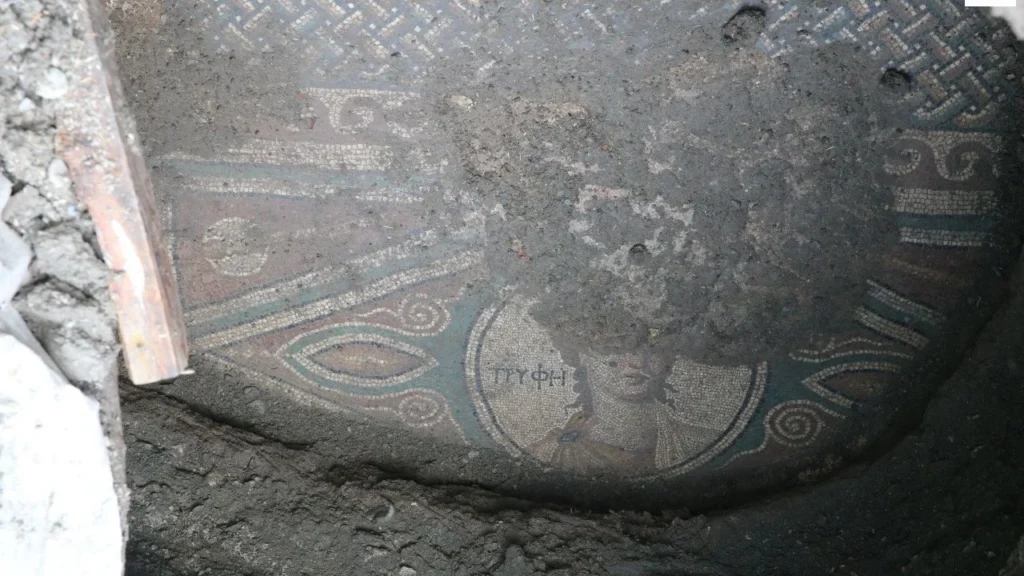
Recently, an intricately crafted Roman mosaic was unearthed during an illegal excavation in the region—an unexpected find that now sheds new light on Zile’s ancient past and its possible role as a Roman civic center.

Mosaic Suggests Presence of a Roman Public Building

The mosaic was discovered during an unauthorized dig in Zile and has since captured the attention of archaeologists and heritage authorities. Initial expert assessments suggest that the mosaic likely adorned the floor of a public building from the Roman period. The presence of vibrant green, yellow, blue, and white tiles, alongside inscriptions referring to “abundance, prosperity, peace, and well-being,” strongly indicate a public or communal function of the site.

According to archaeologist Halis Alıcı, from the Yağıbasan Madrasa Museum of Turkish-Islamic Science History, such mosaics are commonly associated with Roman civic architecture. “We typically encounter mosaics of this kind in Roman public buildings — military recruitment centers, health facilities, marketplaces, or political meeting spaces,” Alıcı stated. He added that the stylistic and chromatic features of the mosaic point to a date ranging from the mid to late Roman period, potentially around 400 BCE or later.
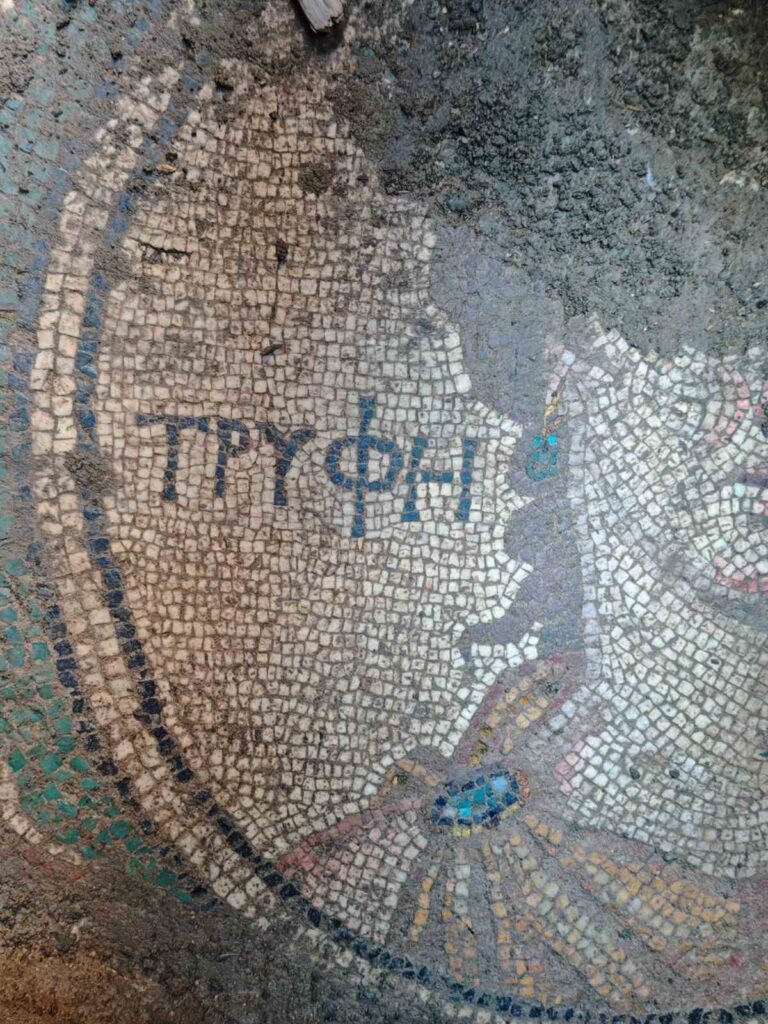
Initial expert assessments suggest that the mosaic likely adorned the floor of a public building from the Roman period. Credit: İHA

Not Just Art—A Message of Civic Identity

Experts emphasize that Roman mosaics often served purposes beyond decoration. These works were symbolic representations of power, ideology, and public values. The specific words found in the Zile mosaic — abundance, prosperity, peace, and well-being — echo the ideals of civic life promoted during the Roman Empire, particularly in public spaces used for governance or communal activity.


📣 Our WhatsApp channel is now LIVE! Stay up-to-date with the latest news and updates, just click here to follow us on WhatsApp and never miss a thing!!


This discovery underscores the sociopolitical importance of the site and suggests that Zile may have held regional administrative or military significance during the Roman period.

A Site of Rich Archaeological Potential

Zile has previously yielded significant finds from multiple historical eras, including the nearby Horoztepe and Maşat Höyük excavation sites. However, this newly discovered mosaic not only adds a layer to Zile’s Roman history but also highlights the ongoing threat of illegal excavations. Fortunately, local authorities quickly intervened, covering the mosaic with a protective tent and tarp to prevent further damage while plans for formal excavation and preservation are developed.

Zile’s Tourism and Cultural Value on the Rise

As public awareness of the mosaic grows, there is hope that the site will soon become an officially recognized archaeological zone, contributing to Zile’s cultural tourism potential. Locals and history enthusiasts alike are calling for proper preservation, documentation, and eventual public exhibition of the mosaic, which could become a central attraction in promoting Zile’s ancient heritage.

A New Chapter in Tokat’s Roman Legacy

This remarkable find is more than just a beautiful floor decoration—it is a window into the civic life of ancient Zile and a testament to its historical depth. As scientific excavations continue, archaeologists expect more insights into urban planning, community structure, and Roman influence in northern Anatolia. The mosaic may be the beginning of a new chapter in Tokat and Zile’s archaeological narrative.

Cover Image Credit: İHA

Related Articles

5000-year-old jewelry factory found in Rakhi Garhi in India’s Indus Valley region

9 May 2022

9 May 2022

The Archaeological Survey of India (ASI) has made an important discovery by finding the remains of a 5000-year-old jewelry factory...

Polish archaeologists discover papyruses containing a list of Roman centurions at Berenike

23 May 2024

23 May 2024

Papyruses with lists of Roman centurions stationed in Egypt were found by Polish archaeologists in Berenike. These unique documents were...

The oldest fortification system in Anatolia is about 8000 years old “Kuruçay Höyük”

14 May 2022

14 May 2022

Kuruçay höyük is located near the village Of Kuruçay, fifteen kilometers south of Burdur. The mound itself is situated upon...

Intricate Design Revealed on 1100-Year-Old Gold-Inlaid Ritual Spear from Japan’s Island of the Gods

13 June 2025

13 June 2025

A recent archaeological breakthrough on Japan’s sacred Okinoshima Island has unveiled an ornately decorated iron spear from the late Kofun...

Roman gilded silver fragment uncovered in Norfolk baffles researchers

27 March 2023

27 March 2023

In Norfolk, a metal detector uncovered an ancient Roman fragment made of gilded silver. The piece was clearly a part...

Archaeologists have found an intriguing Iron Age “shrine” in the Yorkshire Wolds

19 September 2021

19 September 2021

Archaeologists have discovered an interesting ancient Iron Age “shrine” in the Yorkshire Wolds, which was marked out by meticulously placed...

The oldest meerschaum artifact found in Anatolia; of Çavlum Seal

18 July 2021

18 July 2021

The stamp seal unearthed during the rescue excavations of Çavlum Village on the Eskişehir Alpu Plain is the oldest meerschaum...

Ancient necropolis of stillborn babies and very young children found in Auxerre, France

8 June 2024

8 June 2024

A team from INRAP, France’s national archaeology and preservation agency, unearthed a necropolis dedicated to stillborn and very young children...

14,000-year-old settlement discovered in western Turkey

26 November 2021

26 November 2021

During the rescue excavation carried out in a cave in Dikili, İzmir, in western Turkey, 14 thousand-year-old stone tools and...

Huge ancient stone murals discovered in central China: “It is an important discovery that enriches and rewrites the art history of the Song Dynasty”

10 October 2022

10 October 2022

Two stone murals from the Northern Song Dynasty (960-1127) have been discovered in Henan Province, central China, and are the...

Ancient Hittite Archives Unearthed at Kayalıpınar: 56 Cuneiform Tablets and 22 Seal Impressions Found

18 September 2025

18 September 2025

Archaeologists excavating the ancient Hittite city of Kayalıpınar (ancient Šamuḫa) in Sivas province have uncovered a remarkable collection of 56...

Roman soldier’s 1,900-year-old payslip uncovered in Masada

16 February 2023

16 February 2023

During excavations at Masada, archaeologists from the Israel Antiquities (IAA) uncovered a papyrus payslip dated to 72 BC belonging to...

Ancient Greek Marble Workshop Unearthed on Paros Island

20 May 2025

20 May 2025

The world of ancient Greek art continues to amaze modern scholars, with recent excavations on Paros Island unveiling a long-lost...

Archaeologists Found Probable Evidence of the Existence of Amazons in Azerbaijan

27 March 2024

27 March 2024

Archaeological research carried out in Azerbaijan recently likely confirmed the existence of Amazons, female warriors from Greek mythology. During excavations...

Neanderthals too may have Developed a System of Numerical Notation

2 June 2021

2 June 2021

People developed numbers tens of thousands of years ago, according to archeological findings. Scholars are now investigating the first comprehensive...