
10 June 2026 The Future is the Product of the Past

5,500-Year-Old ‘Polish Pyramids’ Discovered by Archaeologists in Western Poland

Archaeologists in western Poland have uncovered two massive prehistoric structures dubbed the “Poland pyramids,” offering a remarkable glimpse into one of Europe’s earliest agricultural societies.

These megalithic tombs, estimated to be over 5,500 years old, were unearthed in the General Dezydery Chłapowski Landscape Park in the village of Wyskoć, located in the Wielkopolska region.

The discovery was made by researchers from Adam Mickiewicz University in Poznań during a field survey using advanced remote sensing technology. According to experts, the structures date back to the 4th millennium BC and were constructed by the Funnelbeaker Culture, a Neolithic society known for its monumental burial architecture.

What Are the Poland Pyramids?

Often referred to as “Polish pyramids” or “giants’ graves,” these megalithic tombs are large, elongated earth mounds built in a distinctive trapezoidal shape. Some measure up to 200 meters in length and rise to a height of four meters. The front of each mound is significantly wider and higher than the tail end, forming a dramatic triangular silhouette that has earned them their nickname.

Archaeologists believe these structures served as communal burial sites for significant individuals within the Funnelbeaker Culture. Despite being a relatively egalitarian society, key figures such as tribal leaders, priests, or shamans were buried in these grand tombs.


📣 Our WhatsApp channel is now LIVE! Stay up-to-date with the latest news and updates, just click here to follow us on WhatsApp and never miss a thing!!


“Each generation built its own megalith, honoring the deceased who played a vital role in their community,” said Artur Golis, chief specialist in nature and landscape protection from the Wielkopolska Province Landscape Parks Complex.
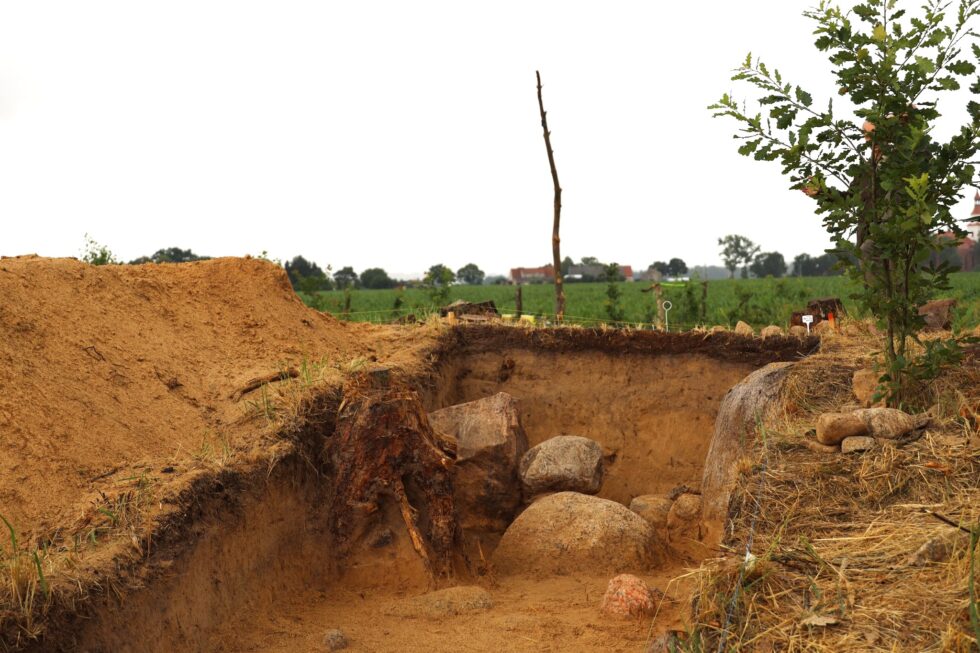
Archaeologists in western Poland have uncovered two massive prehistoric structures dubbed the “Poland pyramids”. Credit:  Zespół Parków Krajobrazowych Województwa Wielkopolskiego
Archaeologists in western Poland have uncovered two massive prehistoric structures dubbed the “Poland pyramids”. Credit: Zespół Parków Krajobrazowych Województwa Wielkopolskiego

Ancient Engineering Feats

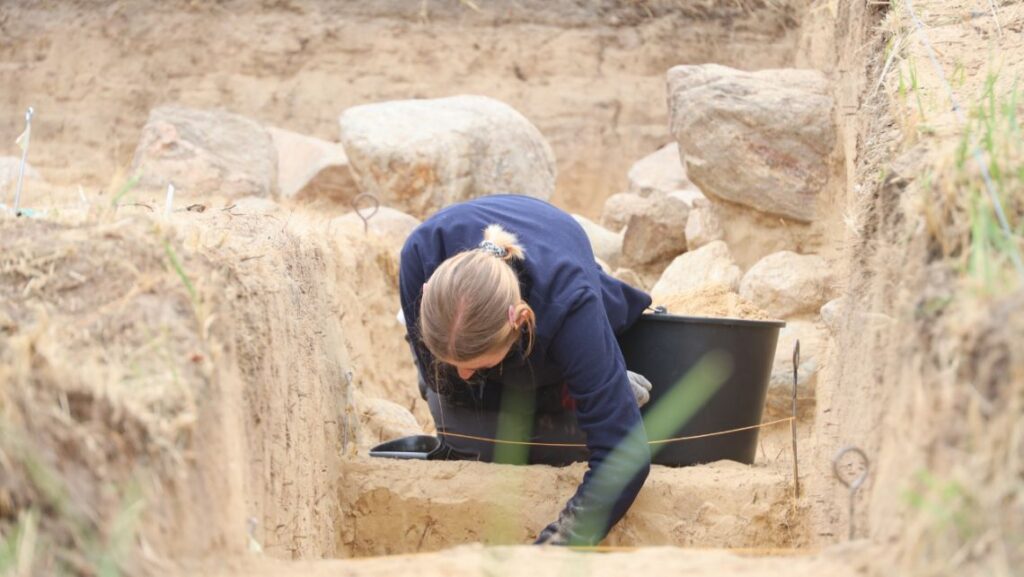
The construction of the Poland pyramids is considered a remarkable achievement of Neolithic engineering. These tombs were built using massive stones—some weighing up to 10 tons—which were transported over long distances using rudimentary tools and communal labor.

Excavations revealed that the megalithic structures were carefully aligned with the cardinal directions, hinting at a sophisticated understanding of astronomy among the builders. Though time has displaced much of the stonework, some elements of the original construction remain intact.

“The largest boulders that formed the entrance of the tomb are missing, likely taken by locals over centuries for building purposes,” Golis noted.

Burial Practices and Grave Goods

Typically, a single skeleton would be laid inside each tomb in a supine position, with the legs pointing east. While no human remains have yet been recovered from the newly unearthed sites, archaeologists are optimistic that grave offerings—such as pottery, stone axes, and even opium vessels—may still be buried nearby.

“These artifacts could provide further insight into the spiritual and daily lives of the Funnelbeaker people,” Golis added.
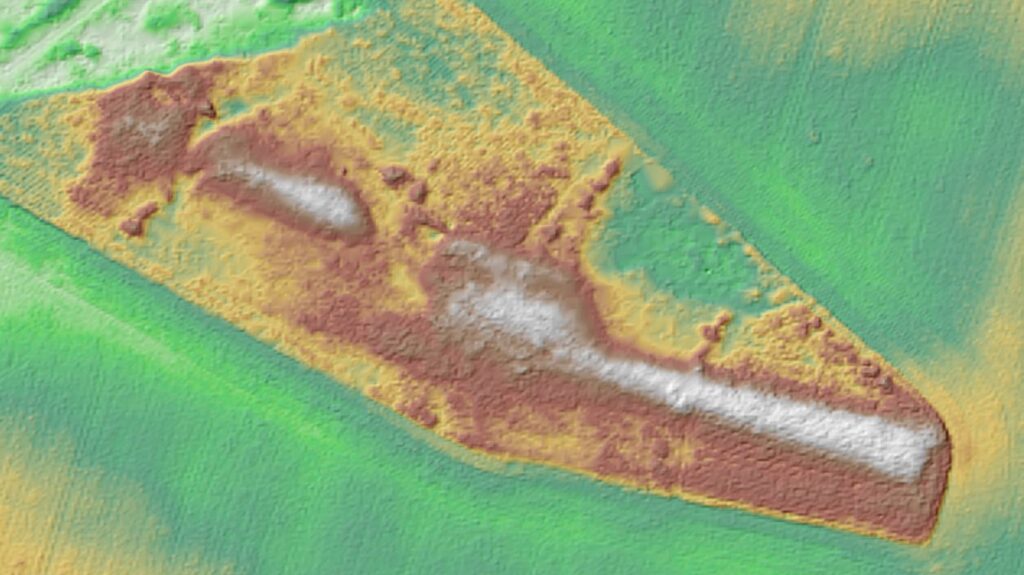
The discovery was made by researchers from Adam Mickiewicz University in Poznań during a field survey using advanced remote sensing technology. Credit: Zespół Parków Krajobrazowych Województwa Wielkopolskiego

A Rare Find in Wielkopolska

While most Poland pyramids have historically been found in the Kuyavian region in northwestern Poland, the discovery in Wielkopolska marks only the second such finding in this area. The first similar structures were identified here in 2019, making the current find especially significant for regional archaeology.

Out of five promising locations surveyed in the area, two were confirmed to contain these ancient tombs. Excavations at one of the sites have already yielded promising results, and further research is expected to deepen understanding of these rare structures.

A Window into Prehistoric Europe

The Poland pyramids offer a rare window into the social, religious, and architectural sophistication of Neolithic Europe. As one of the earliest examples of monumental burial construction on the continent, these tombs underscore the cultural richness of early agricultural societies that once thrived in the dense forests of Central Europe.

With ongoing research and excavation, these ancient structures continue to shape our understanding of human history—and serve as enduring monuments to the ingenuity of Poland’s prehistoric inhabitants.

PAP

Cover Image Credit: Zespół Parków Krajobrazowych Województwa Wielkopolskiego

Related Articles

Remains of a Submerged Roman Harbor Discovered in Slovenia

7 March 2024

7 March 2024

Archaeologists from the Institute of Underwater Archaeology (ZAPA) have uncovered the remains of a submerged Roman harbor, off the coast...

Mysterious Handprints Found in the Ancient Mayan Cave

1 May 2021

1 May 2021

In Mexico, home to ancient civilizations such as the Maya, Aztec, and Inca, archaeologist Sergio Grosjean found dozens of mysterious...

Human Activity on Curaçao Began Centuries Earlier Than Previously Believed

28 March 2024

28 March 2024

New research co-led by Simon Fraser University and the National Archaeological Anthropological Memory Management (NAAM Foundation) in Curaçao extends the...

Central Turkey’s largest Byzantine mosaic structure found

28 October 2021

28 October 2021

A 300-square-meter (3,330 square feet) ​floor mosaic belonging to the Late Roman-Early Byzantine period was discovered during excavation work in...

A Roman bridge from the Republican era was discovered on Via Tiburtina

27 February 2022

27 February 2022

The remains of a rare Republican-era bridge have been discovered on the 12th kilometer of the Via Tiburtina, the ancient...

Khirbet Midras pyramid and  Archaeological Site in Israel

28 November 2022

28 November 2022

Khirbet Midras (Arabic) or Horvat Midras (Hebrew) is one of several antiquities sites located within the Adullam Grove National Park,...

The Golden Helmet of Leiro: A Bronze Age Masterpiece Hidden for Millennia on Spain’s Atlantic Coast

20 March 2026

20 March 2026

On a rugged stretch of Galicia’s Atlantic coastline, where waves carve stories into stone, an extraordinary object once lay hidden...

Byzantine-Era Monastic Complex Discovered in Sohag, Egypt

8 January 2026

8 January 2026

Archaeologists in Upper Egypt have uncovered the remains of a remarkably well-preserved monastic residential complex dating back to the Byzantine...

In Poland, a 45-meter-long mysterious tunnel found under the ruins of the Saxon Palace

9 September 2023

9 September 2023

A mysterious underground tunnel was found under the ruins of the Saski Palace in Pilsudski Square in Warsaw, the capital...

Traces of Lost Early Christian Churches Beneath the White City: Mosaic Evidence from Ancient Antipatrea, Albania

9 March 2026

9 March 2026

Explore the hidden traces of lost early Christian churches beneath the White City of Berat. Mosaic evidence from ancient Antipatrea...

Sixth-Century Sword Unearthed in Anglo-Saxon Cemetery near Canterbury, England

28 December 2024

28 December 2024

A spectacular sixth-century sword has been unearthed in an Anglo-Saxon cemetery in southeast England, and archaeologists say it is in...

7,700-year-old Pottery of a Human Head and Jewelry Workshop Unearthed in Kuwait

28 November 2024

28 November 2024

A team of Kuwaiti and Polish archaeologists have uncovered a jewelry workshop at the prehistoric Ubaid period (5500–4000 B.C.) site...

First of Its Kind: 1,400-year-old Silla Crown Adorned with Jewel Beetle Wings Unearthed in South Korea

24 May 2025

24 May 2025

In a dazzling discovery blending nature and royalty, archaeologists in South Korea have unearthed a 1,400-year-old crown adorned with jewel...

Unique ‘Excalibur’ Sword Found Upright in Ground Unearthed in Spain Holds Islamic Origins

26 April 2024

26 April 2024

Researchers have finally unraveled the mysteries of the historical sword discovered in Spain 30 years ago, which they named ‘Excalibur’...

3,000-Year-Old Rare British-Style Sickle Unearthed in France

9 August 2025

9 August 2025

On August 6, 2025, France’s Inrap (Institut national de recherches archéologiques préventives) announced a remarkable archaeological find at Val-de-Reuil, in...