
11 November 2025 The Future is the Product of the Past

4th Century BC Greek Shipwreck Discovered Near Croatian Island of Vis – One of the Adriatic’s Oldest

A significant archaeological find has been confirmed off the coast of Komiža, near the Croatian island of Vis, where researchers have uncovered the remains of a Greek merchant ship dating back to the 4th century BC — a crucial period when the ancient Greeks established colonies on the Adriatic islands of Issa (modern-day Vis) and Pharos (now Hvar).

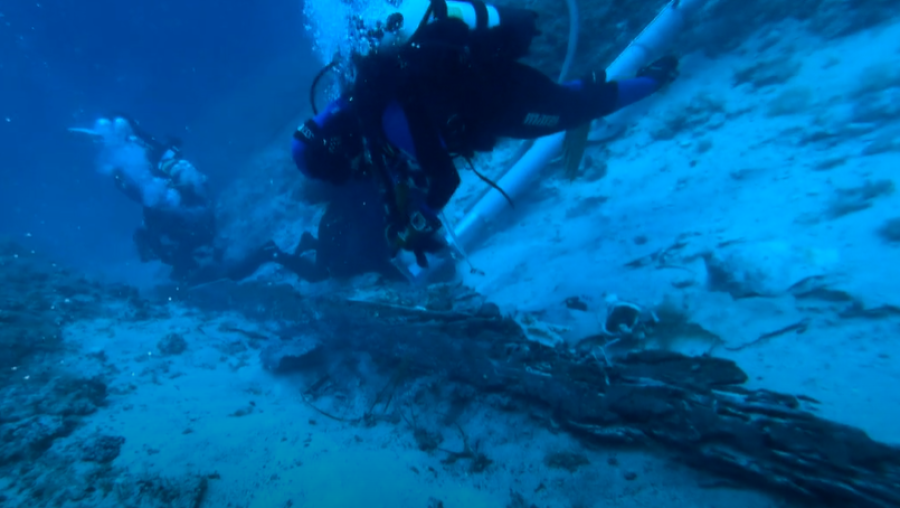
The wreck, located at a depth of 30 to 50 meters, was initially spotted in 2023. Now, experts from the Underwater Archaeology Department of the Croatian Conservation Institute have officially confirmed the site’s exceptional historical value.

“From our first dive, we sensed the site was something extraordinary,” said diver Marko Lete in an interview with HRT. “We recovered a coin, still undergoing analysis, but the surrounding pottery clearly indicated a 4th century BC origin. This makes it one of the oldest shipwrecks ever discovered in the Adriatic Sea.”

As excavations progressed, the team uncovered well-preserved artefacts, including fine Hellenistic pottery, personal items, human remains, and a remarkably intact section of the ship’s wooden hull.

Jurica Bezak, lead archaeologist and senior conservator at the Croatian Conservation Institute, highlighted the ship’s exceptional state of preservation.


📣 Our WhatsApp channel is now LIVE! Stay up-to-date with the latest news and updates, just click here to follow us on WhatsApp and never miss a thing!!


“This site has no equal in the region,” Bezak stated. “The luxury ceramics and the lead-plated wooden structure are extraordinarily well-preserved, offering unique insights into ancient shipbuilding techniques.”

The ship is believed to have been transporting supplies to the newly established colony of Issa. Among the cargo were amphorae, fine ceramics, containers filled with olive oil, spices, and preserved food — artifacts that shed light on the daily life and trade practices of early Greek settlers in the Adriatic.
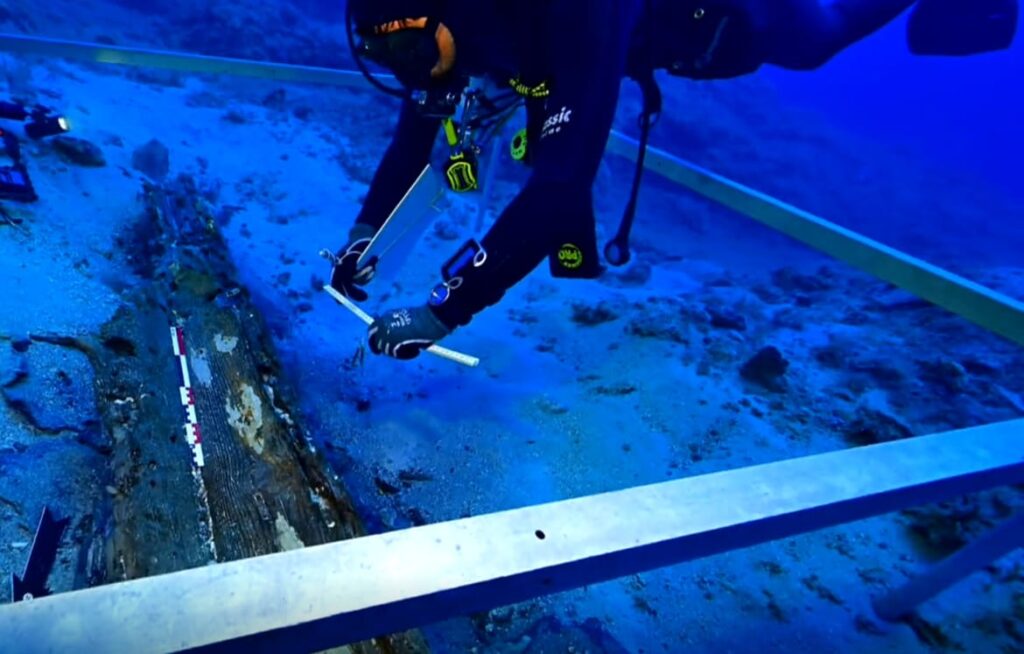
Photo: Underwater Archaeology Department of the Croatian Conservation Institute / Screenshot / HRT

“Some items emerging from the silt appear as if they were made yesterday,” Lete added, praising the craftsmanship and engineering of the ancient vessel.

Bezak noted the broader cultural importance of the discovery:

“Beyond its archaeological significance, this find will enhance the cultural and educational landscape of Vis. Once restored, many of the recovered artefacts will be displayed in the island’s museum, benefitting both the local community and tourism.”

The Croatian Conservation Institute continues to lead the ongoing excavation in collaboration with local diving clubs and the Vis Heritage Museum. Research at the site is expected to continue for several years due to the complexity and delicacy of the preservation process.

The Founding of Issa and Pharos in the 4th Century BC

The 4th century BC was a transformative era for the Adriatic region, marked by the expansion of Greek colonial influence. During this period, Greek settlers from Syracuse in Sicily founded the colony of Issa (on the island of Vis) around 397 BC. Shortly thereafter, they helped establish Pharos (on Hvar Island) in 384 BC.

These colonies played a crucial role in the spread of Hellenic culture, trade, and maritime dominance in the eastern Adriatic. Issa, in particular, became a thriving center of commerce and culture, complete with fortifications, public buildings, and its own coinage. It served as a key strategic outpost for Greek influence in the region and later played a pivotal role during Roman expansion.

The discovery of this 4th-century BC shipwreck offers direct physical evidence of that era’s advanced shipbuilding and trade networks, providing a rare connection to the daily life and seafaring practices of early Greek colonists in the Adriatic Sea.

You can see the video here…

Cover Image Credit: HRT

Related Articles

Lovingly gazing mosaics restored in Turkey’s Metropolis

16 October 2021

16 October 2021

In the ancient city of Metropolis in the Torbali district of the western Izmir province, mosaics portraying Eros, the Greek...

A Roman statue of the sea god Triton discovered near A2, London Road

13 September 2023

13 September 2023

Archaeologists have uncovered a Roman Statue of Triton during excavations in preparation for a housing development in Kent, England. Archaeologists...

The 3200-year-old Mycenaean figure that brought Ephesus together with the Hittite civilization: Found in the excavations of Ayasuluk Tepe

11 June 2022

11 June 2022

A 3,200-year-old Mycenaean figurine that could change the perspective on the history of civilization in Western Anatolia during the Bronze...

The museum’s “Oscar” Awards had Received this Year by the Troy Museum and the Odunpazarı Modern Museum

11 May 2021

11 May 2021

At the European Museum of the Year Awards (EMYA) online ceremony on May 6, Turkey’s renowned Troy Museum and Odunpazar...

First Female Viking Grave Discovered In Swedish Mountains

21 August 2022

21 August 2022

A mountain hiker in Jämtland, in central Sweden, on his way camping in Kalffällen, made a surprising discovery. The discovery...

800-year-old Jin dynasty palace complex found in Beijing Olympic Village

9 February 2022

9 February 2022

While building the athletes’ Olympic Village for this year’s Winter Games in Beijing, China found the remains of an ancient...

Extraordinary 27,000-Year-Old Gravettian Female Figurine Head Discovered at Amiens-Renancourt, Northern France

9 July 2025

9 July 2025

Recent archaeological excavations at the Amiens-Renancourt 1 site in northern France have unveiled an extraordinary Gravettian-era female figurine head, dating...

The first Iberian lead plate inscribed with an archaic script was found at Pico de Los Ajos in Yátova

13 June 2021

13 June 2021

At the Pico de Los Ajos site in Valencia, Spain, a rare lead sheet engraved in ancient Iberian was unearthed....

Archaeologists Uncover Early Bronze Age Ceremonial Complex in Murayghat, Jordan

4 August 2025

4 August 2025

Archaeologists have uncovered striking evidence of an ancient ceremonial complex in Murayghat, Jordan, that could rewrite what we know about...

The first and largest astronomical observatory of the 6th century BC discovered in Egypt’s Kafr El-Sheikh

24 August 2024

24 August 2024

Archaeologists in Egypt unveiled the first and largest astronomical observatory from the 6th century BCE in the Buto Temple at...

Traces of fossilized crabs in the Zagros Mountains, Iran which may hint at a hotbed of biodiversity dating from 15 million years

18 April 2022

18 April 2022

A group of paleontologists from the  University of Tehran has discovered traces of fossilized crabs in the Iranian which may...

An extraordinary votive treasure was unearthed in the ancient Roman bath sanctuary of San Casciano Dei Bagni in Italy

7 August 2022

7 August 2022

In San Casciano Dei Bagni, a Tuscan hill town famous for its hot springs, 40 miles southeast of Siena, unique...

Unveiling the Secrets of the “Air-Dried Chaplain”: A Unique Mummification Method Discovered in Austria

4 May 2025

4 May 2025

Researchers investigating a remarkably well-preserved mummy discovered in the church crypt of St. Thomas am Blasenstein, a small village in...

A woman was buried in a canoe on her way to the ‘destination of souls’ 800 years ago

25 August 2022

25 August 2022

According to new research, Up to 800 years ago, mourners buried a young woman in a ceremonial canoe to represent...

Sensational Discovery in Salzburg: 1,800-Year-Old Roman Ship’s Bow Unearthed During Renovation

11 September 2025

11 September 2025

Archaeologists conducting excavations amid the renovation of the Neue Residenz in Salzburg’s Old Town have discovered a Roman ship’s bow...