
13 January 2026 The Future is the Product of the Past

Archaeologists Discover Ivan III’s Seal in Moscow — The First Grand Ducal and Final Lead Seal Ever Found

Archaeologists uncover the first grand ducal seal from Moscow, linked to the founder of the centralized Russian state.

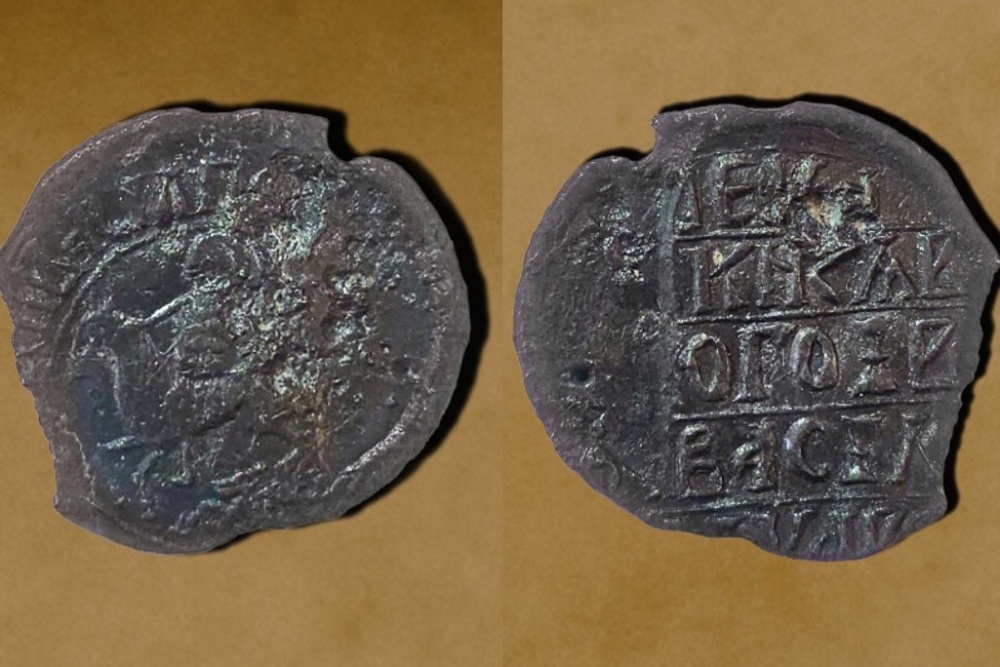
Archaeologists conducting excavations in Romanov Lane, near the Church of the Icon of the Mother of God, have uncovered a one-of-a-kind historical artifact: a lead seal from the era of Ivan III the Great (Ivan Vasilyevich). This rare find, announced by Moscow Mayor Sergey Sobyanin, marks a milestone in the city’s archaeological record — it is the first grand ducal seal discovered in Moscow and the last known example from the era of lead seals, which were later replaced by wax.

A Symbol of Sovereignty: Seal of Ivan the Great

On one side of the seal is an engraved image of St. George the Victorious, a prominent symbol in Russian heraldry. The reverse bears the inscription: “Seal of Prince Ivan Vasilievich the Great.” Seals like this one were used to validate crucial political and diplomatic documents during Ivan III’s reign — a period of transformation that shaped the future of the Russian state.

Why This Discovery Matters

The seal was unearthed in a cultural layer dated to the first half to the mid-16th century. Although more than 3,000 artifacts have been discovered at the site over recent years, this seal stands out as the most valuable, due to its connection with one of Russia’s most influential rulers.
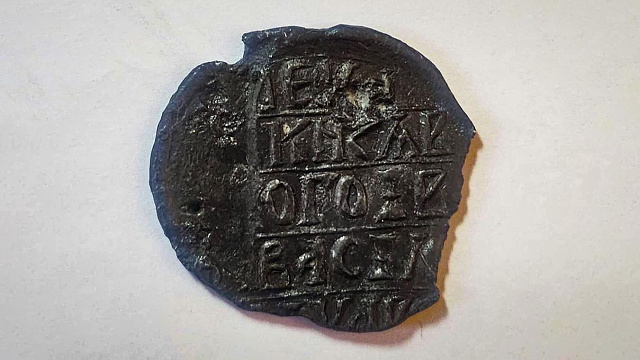
The reverse side of the seal bears the inscription: “Seal of Prince Ivan Vasilievich the Great. Credit: Official Telegram channel of Moscow Mayor Sergey Sobyanin

Ivan III: The Architect of a Unified Russia

Often referred to as the “gatherer of Russian lands,” Ivan III (1440–1505) was a central figure in the formation of the Russian state as we know it today. His reign, which lasted from 1462 to 1505, marked the end of Mongol-Tatar domination over the Russian territories, as he successfully asserted full independence from the Golden Horde. In an effort to consolidate his power and unify the realm, Ivan introduced a centralized legal code, the Sudebnik of 1497, which laid the foundation for a cohesive legal system across the expanding Russian lands.


📣 Our WhatsApp channel is now LIVE! Stay up-to-date with the latest news and updates, just click here to follow us on WhatsApp and never miss a thing!!


One of Ivan’s most lasting contributions was his architectural and symbolic transformation of Moscow. He commissioned the construction of the modern Moscow Kremlin, including the Assumption Cathedral, which became the religious and political heart of the Russian state. Beyond his architectural achievements, Ivan III redefined the nature of Russian governance by establishing the basis for autocracy, setting the stage for the centralized Tsarist rule that would dominate Russia for centuries.

The recently discovered lead seal bearing his name offers a rare and tangible connection to this pivotal moment in history — a time when the foundation of modern Russia was being laid.
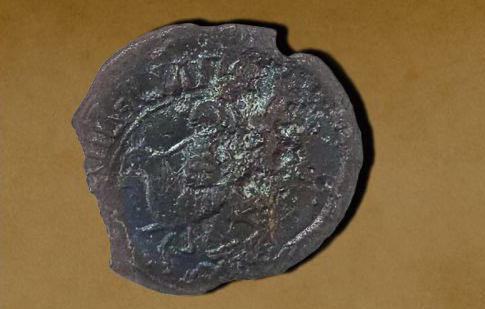
The obverse of the lead seal depicts St. George the Victorious, a symbol widely associated with Moscow and Russian statehood. Credit: Official Telegram channel of Moscow Mayor Sergey Sobyanin

The artifact has already undergone professional restoration and will be transferred to the Museum Fund of the Russian Federation, ensuring its preservation and public display.

A Rare Glimpse into Medieval Russia

This discovery not only enriches Moscow’s archaeological record but also provides valuable insight into the administration and symbolism of medieval Russian power. For historians and archaeologists alike, the Seal of Ivan III is more than a relic — it’s a silent witness to the formation of the Russian state.

Cover Image Credit: Official Telegram channel of Moscow Mayor Sergey Sobyanin

Related Articles

Archaeologists unearth the Torah Ark of the Great Synagogue of Vilna, destroyed in Lithuania

30 August 2021

30 August 2021

In Vilnius, the capital of Lithuania, in excavation exposed the Torah ark and bimah (raised prayer platform) of the Great...

A ‘very rare’ clay figurine of god Mercury and a previously unknown Roman settlement were discovered at the excavation site in Kent

23 February 2024

23 February 2024

At a previously unknown Roman settlement that was formerly next to a busy port but is now 10 miles from...

Cuneiform Clues Reveal Körzüt as “The Sacred City of Haldi,” in Urartu Kingdom

6 August 2025

6 August 2025

Excavations in eastern Türkiye uncover a major religious center of the Urartian Kingdom—The Sacred City of Haldi, shedding new light...

Large Roman Complex found in Swiss Gravel Quarry

30 August 2023

30 August 2023

Archaeologists have discovered the remains of walls of a Roman building complex built nearly 2,000 years ago in the Äbnetwald...

700-Year-Old Church Becomes a Museum

31 January 2021

31 January 2021

It was learned that the 7-century-old church in Akçaabat, Trabzon will serve as a museum from now on. St. The...

12,000-year-old ‘public building’ unearthed in southeastern Turkey’s Mardin

27 September 2022

27 September 2022

Archaeologists have discovered the remains of a “public building” thought to be 12,000 years old at Boncuklu Tarla in the...

The Iremir Mound illuminates the pre-Urartian period in East Van

27 July 2021

27 July 2021

Archaeological findings unearthed in the excavations carried out at the İremir Mound in the Gürpınar district of Van, in eastern...

Ancient Roman Breakwater Discovered Underwater in Misenum: Sculptures and Architecture Reused to Tame the Sea

27 June 2025

27 June 2025

An underwater excavation off the coast of Bacoli, in southern Italy, has uncovered a remarkable Roman-era breakwater built from reused...

Forget Barter: Ancient Tally Sticks Rewrite the True Story of Money

29 September 2025

29 September 2025

Ancient tally sticks — carved wooden and bone records of debts and taxes — are rewriting what we thought we...

Egypt unearths ancient quarters of mining leader in the Sinai Peninsula during the Middle Kingdom

19 January 2022

19 January 2022

The Egyptian Ministry of Tourism and Antiquities announced recently that an Egyptian archaeological mission working in Wadi Al-Nasab in South...

Ritual Sacrifice of Pregnant Woman: Ecuador may Reflect the Community’s Fear of Her Power

28 January 2025

28 January 2025

In a remarkable archaeological find in Ecuador, researchers have uncovered the rich burial of a pregnant woman and her fetus,...

Frozen but Not Forgotten: 2,500-Year-Old Tattoos of Siberian Ice Mummy Digitally Reconstructed

31 July 2025

31 July 2025

Siberian Ice Mummy: Unveiling Ancient Tattoo Traditions of Iron Age Siberia In a groundbreaking fusion of archaeology and modern imaging,...

Megalithic structure found in Kazakhstan was probably a place of worship for miners in the Bronze Age

2 September 2024

2 September 2024

Archaeologists investigating a megalithic monument in the Burabay district of the Akmola region of Kazakhstan have revealed that the monument...

New ancient ape from Türkiye challenges the story of human origins

2 September 2023

2 September 2023

A recently discovered fossilized ape from a site in Turkey that is 8.7 million years old is inspiring scientists to...

10,000-year-old Sculptures and Figurines holding Phallus of the Taş Tepeler in the southeast Turkey

17 June 2022

17 June 2022

One of the common features of male depictions with similar features found in the region called Taş Tepeler (Stone Hills),...